

Leg scars have a special talent for hanging around long after the original drama is over. One bad shave, one enthusiastic mosquito bite scratch session, one bike mishap, one surgery, and suddenly your shin is keeping receipts. The good news: most leg scars can be softened, flattened, brightened, or made much less noticeable. The less-fun news: very few scars disappear completely. Skin is amazing, but it is not a time machine.
If you want the shortest possible answer, here it is: the best way to improve scars on legs depends on what kind of scar you have. A dark mark from an old bite is different from a raised surgical scar, and both are different from an indented acne or chickenpox scar. Once you know what you are looking at, you can choose treatments that actually make sense instead of throwing random jars, oils, and internet hacks at your legs and hoping for a miracle.
First, Know What Kind of “Scar” You Have
Before you start treating a mark on your leg, it helps to know whether it is a true scar, lingering discoloration, or both. People often use the word scar for any stubborn mark, but dermatology is pickier than that.
1. Flat, dark, red, or brown marks
These are often post-inflammatory marks left behind after shaving bumps, folliculitis, bug bites, ingrown hairs, or healed cuts. They may not be true scars. They are usually easier to fade than raised or indented scars, but they can take months, especially if the area gets sun exposure.
2. Raised scars
These include hypertrophic scars and keloids. Hypertrophic scars stay within the borders of the original injury and may flatten over time. Keloids can grow beyond the original wound and are more stubborn. If your leg scar is thick, itchy, rubbery, or still growing, it is time to think beyond home remedies.
3. Indented or pitted scars
These are depressed scars caused by lost collagen. They can happen after injuries, infections, severe folliculitis, or inflamed breakouts on the thighs or calves. Creams can help the skin look better, but procedures usually make the biggest difference.
4. Tight scars or contractures
If a scar feels tight, painful, or limits movement around the knee or ankle, that is not a cosmetic issue anymore. That is a medical issue, and it deserves professional evaluation.
What Actually Helps Leg Scars at Home
Let’s begin with the home-care category, which is where many people either do too little or way too much. Scar care should look more like a calm routine than a chemistry experiment.
Keep the wound clean and moist while it heals
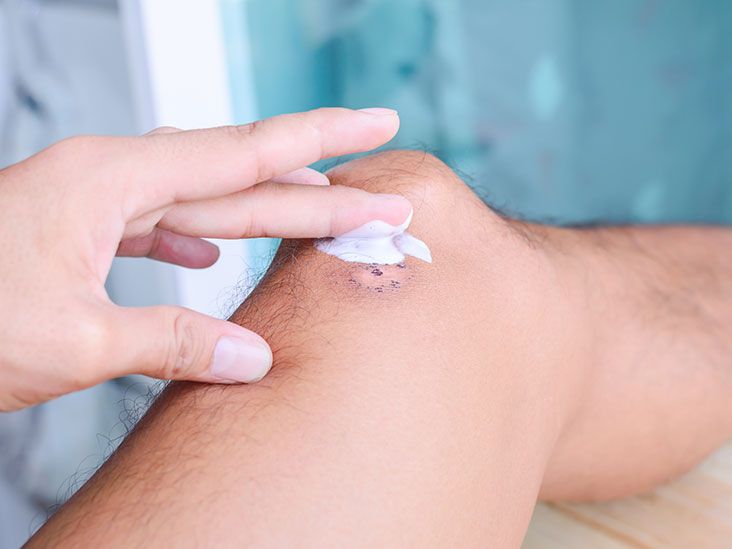
If the injury is still fresh, the goal is prevention. Gently wash with mild soap and water, then protect the area with petroleum jelly and a clean bandage. This helps the wound heal in a moist environment, which can reduce scab formation and may lower the risk of a more noticeable scar. Translation: don’t let the cut dry out like a raisin and expect glowing results.
Do not pick, scratch, or “speed things up”
Picking scabs, scratching itchy healing skin, or repeatedly shaving over a fresh wound can worsen inflammation and increase scarring. This is especially true on the legs, where friction from pants, socks, workouts, and bedsheets can already make healing harder.
Skip harsh products
Hydrogen peroxide, rubbing alcohol, rough scrubs, lemon juice, and “burn-it-off” style home hacks may irritate the skin and slow healing. They are excellent ways to turn a minor mark into a longer-lasting problem. Your scar does not need punishment. It needs patience.
Use sunscreen on healed scars
This step is wildly underrated. Once the wound has closed, broad-spectrum SPF 30 or higher can help prevent scars from becoming darker and more noticeable. Sun exposure tends to deepen discoloration, especially on the legs in shorts, skirts, swimsuits, or athletic wear. If your scar gets sunlight, sunscreen is not optional if fading is the goal.
Try silicone gel or silicone sheets
If there is one over-the-counter option with the strongest support behind it, this is the one. Silicone sheets and silicone gels are commonly recommended for raised scars and newer scars because they can help flatten, soften, and reduce redness over time. They are not magical, but they are much more evidence-based than random “scar miracle” creams with dramatic packaging and suspiciously dramatic promises.
For best results, use silicone consistently for weeks to months. Think of it as a long game. Scar care is not a one-week makeover montage.
Massage the scar gently
Once the wound is fully healed and your clinician says it is safe, gentle scar massage may help soften firm tissue and improve flexibility. A simple fragrance-free moisturizer can work for this. Massage is especially useful when a scar feels stiff or lumpy, but it should not be painful. If the area gets redder, more irritated, or more raised, back off.
Moisturize, but keep expectations realistic
A bland moisturizer or petroleum jelly can support the skin barrier and reduce dryness and itching. That helps the scar look better overall, even if it does not erase it. On the other hand, ingredients like vitamin E and onion extract are heavily marketed for scars, but the evidence is limited. They are not forbidden, but they should not be treated like the crown jewels of scar care.
Can Retinoids, Acids, or Brightening Products Help?
Sometimes yes, but only if you match the product to the problem.
For dark marks and discoloration
If your “scar” is mostly pigment rather than texture, products that encourage cell turnover may help. Over-the-counter retinoids, gentle exfoliating acids, and brightening ingredients can improve the appearance of old marks over time. The catch is that leg skin can be surprisingly sensitive, especially after shaving, so irritation can create even more discoloration. Start slowly and use sunscreen faithfully.
For indented scars
Topicals have limits. They may improve the overall look of the skin, but deep pitted scars usually need professional treatments that stimulate collagen or physically reshape the scar.
For raised scars
Topical treatments usually play a supporting role. Silicone is more useful than a random active serum here. If a scar is thick or itchy, dermatologist treatments tend to work much better than shelf browsing.
Professional Treatments That Can Improve Scars on Legs
If home care has plateaued, the next step depends on your scar type, skin tone, and how aggressive you want to be. A dermatologist or plastic surgeon can usually tell pretty quickly which lane makes sense.
1. Corticosteroid injections
These are a go-to treatment for raised scars and keloids. They can soften, flatten, and reduce itching. Multiple sessions are often needed, so this is usually a series, not a one-and-done moment.
2. Laser treatment
Lasers can reduce redness, improve texture, and remodel scar tissue. Some lasers target color, while others stimulate collagen. This is one reason copying a friend’s treatment plan is not always smart; the right laser depends on what your scar is doing.
3. Microneedling
Microneedling can help improve texture and stimulate collagen, especially for indented scars. It may also help certain surgical scars look smoother. This is usually better handled by a professional than by a bargain device from the internet that arrives in a box full of mystery and regret.
4. Chemical peels
Peels are more helpful for discoloration and superficial texture changes than for thick raised scars. People with deeper skin tones should choose providers carefully because irritation can trigger post-inflammatory hyperpigmentation if treatment is too aggressive.
5. Dermabrasion or resurfacing procedures
These procedures remove or remodel the top layers of skin and may improve some scars, especially textural irregularities. Recovery can be more involved, so these are best discussed with a specialist rather than booked on a whim between errands.
6. Fillers or subcision for depressed scars
If a scar is tethered downward, procedures that release the scar or add volume underneath it can improve the contour. These are more common for facial scars, but selected leg scars may also respond depending on the location and depth.
7. Pressure therapy
This is often used for raised scars, burn scars, or post-surgical scars. Compression garments or wraps may help reduce thickening, though they require consistency and patience. Scar care really loves consistency. It is annoyingly committed to that theme.
8. Scar revision surgery
Scar revision can improve the appearance of a scar, reduce tightness, or make a scar lie more naturally along the skin. But it does not mean “delete scar.” It means “trade an obvious scar for a better scar.” In the right situation, that is still a very good deal.
How Long Does It Take to See Improvement?
Usually longer than people hope and shorter than doom-scroll comments suggest. Many scars continue to mature for 12 to 18 months. Newer scars often respond better to treatment than older ones, which is why early care matters. Dark marks may fade over several months. Raised scars can take months of silicone or injections. Procedural results often come in stages, not overnight.
If you are checking your leg in bathroom lighting every 12 hours, it may feel like nothing is happening. Take a photo every few weeks instead. Scar progress is often subtle enough that real change hides inside slow change.
When to See a Dermatologist
Make an appointment if your leg scar is raised, painful, itchy, spreading, darkening rapidly, limiting movement, or making you self-conscious enough that you keep changing how you dress or move. Also get help if you are not sure whether the mark is really a scar. Sometimes a persistent “scar” is actually ongoing inflammation, an ingrown hair cycle, venous skin changes, or another condition that needs treatment first.
The Best Strategy, Based on Scar Type
For fresh cuts or scrapes
Clean gently, keep the area moist with petroleum jelly, cover it, avoid picking, and use sunscreen after healing.
For dark marks after bites, bumps, or shaving
Focus on sun protection, gentle skin care, and fade-friendly products that do not irritate the area.
For raised scars
Use silicone consistently and consider medical treatment early, especially if the scar is thick, itchy, or expanding.
For indented scars
Think procedures sooner rather than later. Creams may help the surrounding skin, but collagen-stimulating treatments usually do more.
Common Mistakes That Make Leg Scars Worse
- Picking scabs and scratching healing skin.
- Using harsh DIY remedies that irritate the area.
- Ignoring sunscreen on exposed legs.
- Expecting one product to erase a years-old scar in ten days.
- Treating a raised scar like a dark mark or vice versa.
- Trying aggressive treatments on freshly healed skin without guidance.
What Real-Life Experience Usually Teaches People
Here is the part nobody loves but almost everyone eventually learns: scar improvement is usually more about routine than heroics. People often start out wanting the one best cream, the one secret oil, or the one treatment that makes the scar vanish before beach season. Then reality shows up wearing sensible shoes. The people who do best are usually the ones who stop changing products every four days, protect the area from the sun, and stick with a plan long enough for skin biology to do its slow, fussy job.
A common experience goes like this: someone gets a scrape on the shin, lets it dry out, peels the scab too early, forgets sunscreen, and ends up with a dark mark that lasts for months. Later, they have another scrape, but this time they keep it clean, use petroleum jelly, cover it, and leave it alone. The second mark still exists, but it tends to heal flatter and fade faster. That is not glamorous advice, but it works often enough that dermatologists keep repeating it.
Another very relatable scenario involves shaving nicks, ingrown hairs, and the mysterious urge to “fix” everything immediately. Many people with leg scars say the biggest improvement happened when they stopped attacking every bump with a scrub, tweezer, acid pad, and determination usually reserved for home renovation shows. Once irritation settled down, the skin finally had a chance to recover. In other words, less chaos sometimes equals better skin.
People with raised scars often describe a different journey. They try oils first because oils feel gentle and hopeful. Then they realize the scar is still thick, itchy, or getting taller like it has personal ambitions. That is usually the moment a professional treatment plan starts to make more sense. Silicone, compression, or injections may not sound as exciting as a miracle cream, but they are often the difference between “I guess I live with this forever” and “Oh, this is actually getting better.”
There is also the emotional side, which deserves more honesty. Leg scars can mess with clothing choices, sports confidence, dating confidence, and simple things like wearing shorts without thinking about it. Plenty of people say the hardest part was not the scar itself but the feeling of constantly noticing it. What helps over time is seeing progress, even small progress. A scar that is less red, less raised, less tight, or easier to cover with normal skin tone is still progress. It counts.
And finally, the most useful real-world lesson may be this: the goal does not have to be “perfect skin.” It can be “skin that bothers me a lot less.” That shift matters. When people stop chasing total erasure and start aiming for smoother texture, lighter color, less itch, and less self-consciousness, treatment often feels more successful and less frustrating. Your legs do not need to look airbrushed to look good. They just need care, time, and a plan that matches the kind of scar you actually have.
Conclusion
If you want to get rid of scars on your legs, the smartest move is to stop thinking of all scars as the same problem. Some need simple wound care and sunscreen. Some respond well to silicone and scar massage. Some need a dermatologist, a laser, an injection, or scar revision. The best results usually come from early care, realistic expectations, and matching the treatment to the scar type. In plain English: use science, not superstition.