

A backyard pool is a beautiful thing. It turns a regular Saturday into a mini vacation, gives kids a place to burn off mysterious amounts of energy, and makes your patio feel like a resortminus the overpriced smoothies. But a pool is also a little like a pet: it needs regular attention, clean water, safe habits, and the occasional stern conversation when it starts turning green.
Learning how to maintain a pool does not have to feel like studying chemistry while wearing flip-flops. The secret is consistency. A few minutes of pool care each day can prevent algae, cloudy water, irritated eyes, equipment damage, and those dramatic “nobody swim!” moments right before a family barbecue. This guide breaks down pool maintenance into simple, practical steps so you can enjoy clear water, safer swimming, and fewer surprises all season long.
Why Pool Maintenance Matters
Pool maintenance is not just about making the water look pretty for Instagram. Clean, balanced pool water helps protect swimmers from germs, keeps chlorine working effectively, prevents slippery algae growth, and extends the life of your pump, filter, liner, tile, plaster, and metal parts.
When water chemistry drifts out of range, problems snowball quickly. Low sanitizer can allow bacteria and algae to multiply. High or low pH can irritate skin and eyes and reduce chlorine performance. Poor circulation can leave “dead spots” where debris settles and algae parties like it rented the place. A clogged filter makes the pump work harder, and neglected safety equipment can turn a fun swim day into a preventable emergency.
The good news? Most pool problems are easier to prevent than fix. A simple routinetest, skim, brush, circulate, clean, inspectgoes a long way.
The Five Pillars of Pool Care
Think of pool maintenance as a team sport with five players. If one player falls asleep, the whole team suffers.
1. Circulation
Moving water is healthier water. Your pump pulls water through the skimmer and main drain, sends it through the filter, and returns it to the pool. This movement helps distribute sanitizer evenly and prevents debris from settling. Poor circulation often shows up as cloudy water, algae in corners, or dirt collecting in certain areas.
2. Filtration
Your filter removes dirt, pollen, body oils, leaves, sunscreen residue, and other debris. Sand, cartridge, and diatomaceous earth filters all work differently, but they share one rule: they must be cleaned or backwashed regularly to do their job.
3. Water Chemistry
Balanced pool water is comfortable for swimmers and easier on equipment. The most important measurements are free chlorine or sanitizer level, pH, total alkalinity, calcium hardness, and cyanuric acid for outdoor chlorine pools.
4. Physical Cleaning
Even with good filtration, your pool still needs brushing, skimming, and vacuuming. Leaves, dirt, and algae do not politely remove themselves. Brushing walls, steps, ladders, and corners helps prevent buildup where circulation is weaker.
5. Safety
A well-maintained pool is not only clearit is secure. Safe pool ownership includes barriers, supervision, drain safety, proper chemical storage, working rescue equipment, and basic emergency readiness.
Ideal Pool Water Levels: A Simple Reference
Always follow your pool professional’s advice, product labels, and local regulations, especially if your pool has special equipment such as a salt chlorine generator, heater, plaster finish, or automated chemical system. For many residential pools, these common target ranges are a helpful starting point:
| Water Test | Common Target Range | Why It Matters |
|---|---|---|
| Free Chlorine | 1–4 ppm; often at least 2 ppm when stabilizer is used | Kills germs and helps prevent algae |
| pH | 7.2–7.8 | Protects swimmer comfort and chlorine effectiveness |
| Total Alkalinity | 80–120 ppm | Helps stabilize pH |
| Calcium Hardness | Often 200–400 ppm, depending on surface type | Helps prevent scaling, corrosion, or surface damage |
| Cyanuric Acid | Commonly 30–50 ppm for many outdoor chlorine pools | Protects chlorine from sunlight but can reduce chlorine strength if too high |
Daily Pool Maintenance Tips
You do not need to become a full-time pool butler, but a quick daily check can save you from bigger problems later.
Skim the Surface
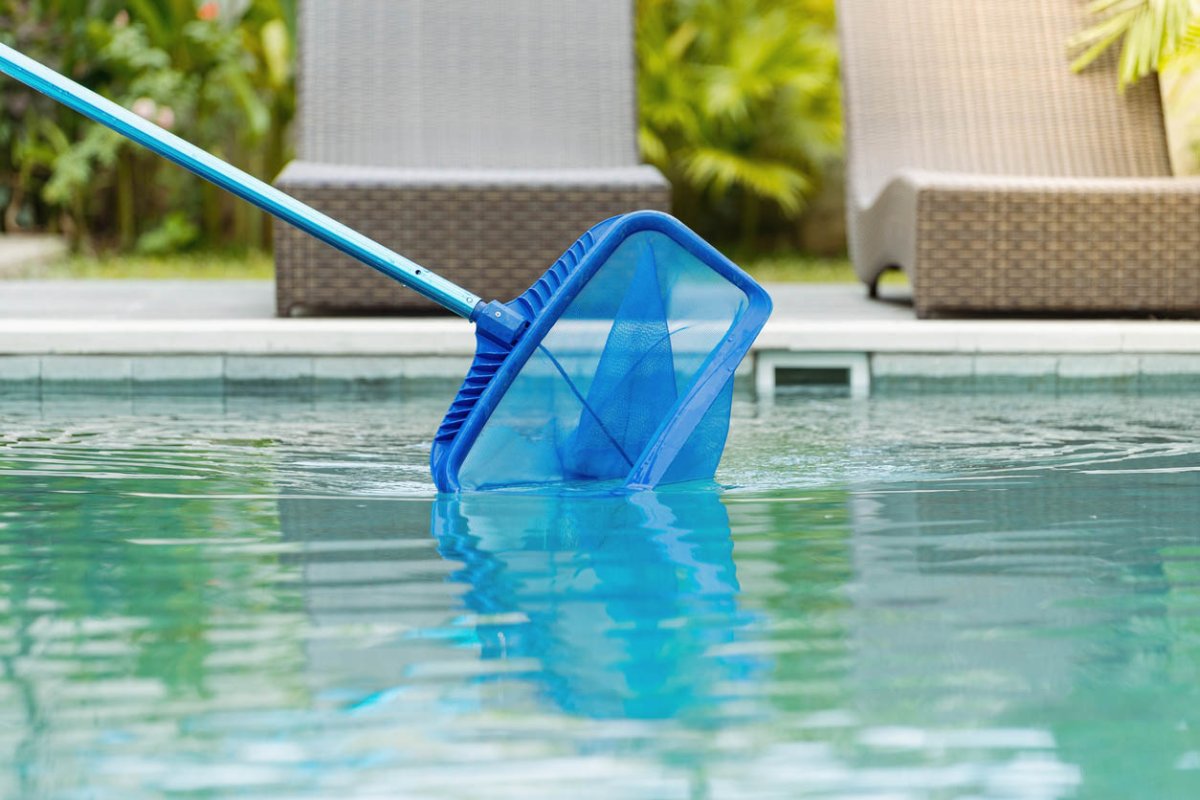
Use a leaf net to remove leaves, bugs, grass clippings, and floating debris. This takes only a few minutes and keeps debris from sinking, staining, or clogging your skimmer basket. If your yard has trees, your pool may need more skimming after windy days or storms.
Check the Water Level
Pool water should usually sit around the midpoint of the skimmer opening. If the water is too low, the pump may draw air and lose prime. If it is too high, the skimmer may not pull debris from the surface effectively. Splashing, evaporation, and heavy rain can all change water level quickly.
Look Before Anyone Swims
Before swim time, do a fast visual inspection. The water should be clear enough to see the bottom drain or deepest point. The drain cover should be secure. No electrical cords should be near the water. Gates should latch. Rescue equipment should be nearby. If the water is cloudy, green, strongly smelly, or oily, pause swimming until the problem is fixed.
Test Chlorine and pH Frequently
During peak season, test chlorine and pH several times per week, and daily when the pool gets heavy use, after storms, or during very hot weather. Test strips are quick, liquid kits are often more precise, and digital kits can be useful for owners who like numbers that do not require squinting at color blocks like a confused art critic.
Weekly Pool Maintenance Checklist
A weekly pool routine keeps small issues from turning into “why is the water the color of pea soup?” issues.
Brush Walls, Steps, and Corners
Brush the pool walls, floor, steps, benches, ladders, and behind handrails. Algae likes shady, low-flow areas. Brushing breaks up biofilm and helps sanitizer reach surfaces. Use the right brush for your pool finish: nylon brushes are common for vinyl, fiberglass, and painted surfaces, while stainless steel brushes may be used carefully on some plaster pools.
Vacuum the Pool
Manual vacuuming, robotic cleaners, suction cleaners, and pressure-side cleaners all help remove debris from the floor. Even if you use an automatic cleaner, inspect the pool manually. Robots are helpful, but they are not magical underwater housekeepers with emotional intelligence.
Empty Skimmer and Pump Baskets
Leaves and debris can restrict water flow. Empty skimmer baskets and the pump basket regularly. Turn off the pump before opening the pump basket lid, and make sure the lid’s O-ring is clean and properly seated before restarting the system.
Clean or Backwash the Filter
Filter maintenance depends on your filter type. Sand and diatomaceous earth filters are typically backwashed when the pressure gauge rises above the clean starting pressure. Cartridge filters are removed and rinsed when dirty. Do not over-clean a sand filter unnecessarily, because a slightly dirty sand bed can sometimes filter finer particles better than freshly backwashed sand.
Shock When Needed
Shocking means raising the sanitizer level temporarily to oxidize contaminants and help restore water clarity. You may need to shock after heavy swimming, a pool party, heavy rain, visible algae, strong chlorine odor, or a combined chlorine problem. Follow the product label exactly, add chemicals safely, and keep swimmers out until the sanitizer level returns to the recommended range.
Monthly Pool Maintenance Tasks
Once a month, go beyond the basics and inspect the whole pool system.
Inspect Equipment
Check the pump, filter, heater, valves, pipes, unions, and visible plumbing for leaks, cracks, unusual noise, or vibration. A small drip near a fitting may seem harmless, but over time it can waste water, pull air into the system, or damage equipment.
Check the Pressure Gauge
Know your filter’s clean pressure reading. If pressure is much higher than normal, the filter may need cleaning. If pressure is unusually low, the system may have a clogged basket, low water level, suction leak, or pump problem.
Inspect Pool Surfaces
Look for stains, rough patches, loose tiles, torn liners, cracks, rust marks, or scaling. Catching surface problems early can prevent expensive repairs. If your pool has plaster, monitor calcium hardness and pH carefully because aggressive water can etch surfaces.
Clean the Waterline
Sunscreen, body oils, pollen, and dust often collect along the waterline. Use a pool-safe tile or vinyl cleaner and a soft brush or sponge. Avoid household cleaners unless the label says they are safe for pool use; many cleaners can foam, cloud water, or interfere with chemistry.
How Long Should You Run the Pool Pump?
Many homeowners run the pump long enough to circulate the full volume of water at least once per day, but the ideal runtime depends on pool size, pump flow rate, plumbing, filter type, weather, swimmer load, and whether you use a variable-speed pump. In hot weather or heavy-use periods, longer circulation may be needed.
Variable-speed pumps can often run longer at lower speeds while using less energy than old single-speed pumps. They also tend to be quieter, which your neighbors may appreciate unless they enjoy the soothing sound of “small airport runway” beside the fence.
A practical approach is to start with a daily schedule, monitor water clarity and chemistry, then adjust. If the pool stays clear, sanitizer remains stable, and debris is being removed well, your circulation schedule is probably working. If cloudy water or algae appears, circulation may be one of the first things to review.
Pool Chemical Safety: Do Not Freestyle This Part
Pool chemicals are useful, but they demand respect. Chlorine products, acids, oxidizers, and algaecides can cause fires, toxic fumes, burns, or dangerous reactions when handled incorrectly.
Use Chemicals Safely
Read the full label before using any product. Wear eye protection and gloves when directed. Add chemicals in the correct order and dosage. Never mix pool chemicals together. Never mix old and new products. Never mix chlorine with acid. Keep containers closed until use, and use clean, dry scoops dedicated to that specific product.
Store Chemicals Properly
Store pool chemicals in original containers with readable labels. Keep them locked away from children and pets, in a cool, dry, well-ventilated area. Keep liquids away from dry chlorine products. Keep acids separate from chlorine. Do not store pool chemicals near gasoline, fertilizers, paint, food, animal feed, or anything combustible.
Add Chemicals With Patience
More is not always better. Adding extra chlorine, extra acid, or extra clarifier “just to be safe” can create new problems. Measure the pool volume, calculate the dose, add gradually when appropriate, circulate the water, and retest. Pool care rewards patience. Panic-dumping chemicals is how backyard pools become science fair projects with lounge chairs.
How To Prevent Algae
Algae prevention is much easier than algae removal. Algae usually appears when sanitizer is low, circulation is poor, brushing is neglected, or nutrients build up in the water.
To prevent algae, maintain proper chlorine levels, brush weekly, run the pump consistently, clean the filter, remove debris, and test after storms or heavy use. Pay attention to ladders, light niches, steps, and shaded corners. If you see yellow, green, or black spots, act early. Brush the area, test the water, balance pH, and treat according to the type of algae and your pool professional’s guidance.
Cloudy Pool Water: Common Causes and Fixes
Cloudy water is one of the most common pool complaints. It can be caused by low sanitizer, high pH, poor filtration, heavy swimmer load, fine debris, algae beginning to grow, high calcium hardness, or poor circulation.
Start with testing. If pH is high, adjust it. If chlorine is low, restore sanitizer. If the filter is dirty, clean or backwash it. Brush and vacuum. Run the pump longer. Avoid swimming until the water is clear enough to see the bottom. Cloudiness is not just cosmetic; it can hide a person in distress and may signal poor sanitation.
Pool Safety Tips for the Whole Season
Safe enjoyment means combining clean water with smart habits. A clear pool can still be dangerous without supervision and barriers.
Use Layers of Protection
Install a four-sided fence that separates the pool from the house and yard, with a self-closing, self-latching gate. Consider door alarms, pool alarms, and a safety cover. Keep furniture, planters, and toys away from fences so children cannot climb over.
Assign a Water Watcher
When children are swimming, one responsible adult should actively watch the water without distractions. That means no scrolling, grilling, long conversations, or “I thought you were watching.” At parties, rotate the water watcher every 15 to 20 minutes so supervision stays fresh.
Respect Drains and Suction Fittings
Keep swimmers away from drains, pipes, and suction openings. Make sure drain covers are secure and compliant. Long hair should be tied back, and loose swimsuit strings should be avoided. If a drain cover is broken or missing, close the pool until it is repaired.
Keep Rescue Gear Nearby
Have a reaching pole, life ring, first aid kit, and phone near the pool. Adults who own pools should consider learning CPR. In an emergency, seconds matter.
Opening and Closing the Pool
Seasonal pool maintenance begins before the first cannonball. When opening a pool, remove and clean the cover, clear debris, inspect equipment, reconnect fittings, raise the water level, start circulation, test the water, balance chemistry, and clean thoroughly before swimming.
At the end of the season, closing properly protects your pool from freeze damage, stains, algae, and equipment problems. Balance the water, clean the pool, lower the water level if required for your cover and climate, winterize plumbing, remove or protect accessories, and install a secure cover. In cold climates, professional winterization may be worth it, especially if you are not comfortable blowing out lines or protecting equipment from freezing.
Real-Life Pool Maintenance Experiences: Lessons From a Full Season
Anyone can read a pool-care checklist, nod confidently, and then forget everything the first time three kids, two dogs, one thunderstorm, and a bag of lawn clippings attack the water in the same weekend. Real pool ownership teaches lessons fast.
One of the biggest lessons is that “clear yesterday” does not guarantee “clear today.” After a hot weekend with lots of swimmers, sunscreen, snacks, and enthusiastic splashing, chlorine can drop quickly. The pool may still look fine in the evening, then appear dull or slightly hazy the next morning. That is the moment to test and correct, not the moment to whisper, “Maybe it will fix itself.” It rarely does. Pools are not known for emotional growth.
Another experience many owners share is the importance of brushing. New pool owners often rely completely on the filter and vacuum. Then one day they notice green dust on a step, a yellow patch near a ladder, or a slippery corner behind the stairs. That is when brushing suddenly feels less optional. A weekly brush-down keeps surfaces clean and helps chlorine reach the places water flow does not naturally favor.
Storms also teach humility. Heavy rain can dilute chemicals, wash dirt into the pool, overflow the waterline, and fill skimmer baskets with leaves. The best post-storm routine is simple: remove debris, check the water level, empty baskets, test chemistry, brush, and run the pump. Waiting a few days after a storm often turns a 20-minute cleanup into a weekend rescue mission.
Pool parties offer another useful lesson: plan before people arrive. Test and balance the water the day before. Make sure the pump is running well, the bathroom has towels, rescue gear is visible, and someone is assigned to watch children. After the party, skim, empty baskets, and test again. A pool can handle fun, but it appreciates a little aftercarelike the rest of us.
Many homeowners also learn that chemical storage matters more than they expected. Keeping chlorine tablets, shock, acid, and test supplies in a messy corner of a hot garage is asking for trouble. A clean, dry, ventilated, organized storage area makes pool care safer and easier. Label everything, keep lids tight, separate incompatible products, and never use a mystery scoop from one bucket in another.
The most satisfying experience is when the routine finally clicks. You skim while coffee brews. You test before the weekend. You brush on the same day every week. You know your filter’s normal pressure. You can hear when the pump sounds different. The pool becomes less of a chore and more of a rhythm. That rhythm is what keeps the water inviting all seasonnot luck, not miracles, and definitely not ignoring the green spot “just one more day.”
Conclusion
Maintaining a pool all season comes down to regular testing, steady circulation, clean filtration, safe chemical handling, physical cleaning, and strong safety habits. You do not need to overcomplicate it. Skim often, brush weekly, vacuum as needed, keep sanitizer and pH in range, clean the filter, inspect equipment, and never treat supervision as optional.
A well-maintained pool is more than clear water. It is a safer, more comfortable place for family, friends, and guests to relax. With a simple routine and a little attention, your pool can stay sparkling from the first warm weekend to the final swim of the season. And yes, you still get full credit if you do all this while wearing sunglasses and pretending you are the manager of a five-star resort.
Note: This article synthesizes practical pool-care, water-quality, chemical-safety, drowning-prevention, and energy-efficiency guidance from reputable U.S. public health, consumer safety, water safety, and pool industry resources. Always follow product labels, equipment manuals, and local rules for your specific pool.