

Kick the Can is what happens when hide-and-seek, tag, teamwork, and mild neighborhood chaos all decide to meet in the same backyard. It is simple enough for kids to learn in five minutes, active enough to make everyone sleep well later, and strategic enough that the sneakiest player suddenly becomes the MVP. Best of all, you do not need expensive gear, uniforms, scoreboards, or a coach with a whistle. You need a can, a safe place to run, a few players, and a willingness to dramatically whisper, “Go, go, go!” from behind a tree.
This classic outdoor game has been played for generations because it blends freedom with structure. One player guards the can while the others hide. Captured players go to “jail,” but a brave teammate can kick the can and set everyone free. That rescue mechanic is the secret sauce. Unlike regular tag, where being caught means waiting around, Kick the Can gives every player a reason to keep watching, planning, and cheering.
In this guide, you will learn how to play Kick the Can in 14 clear steps, including setup, rules, safety tips, winning strategies, variations, and real-life playing experiences that make the game more exciting. Whether you are organizing a family reunion, summer camp activity, birthday party, neighborhood game night, or old-school recess revival, this guide will help you run the game smoothly without turning the backyard into a tiny legal department.
What Is Kick the Can?
Kick the Can is a traditional outdoor group game that combines elements of hide-and-seek and tag. One player is chosen as “It” or the “guard.” A can, bucket, plastic container, or another safe kickable object is placed in an open central area. The remaining players hide while the guard counts. After counting, the guard searches for hidden players. When a player is found and tagged or called out, depending on the version being played, that player goes to jail. Any free player can sneak back to the can and kick it to release the jailed players.
The main keyword here is simple: how to play Kick the Can. But the real point is even simpler: stay hidden, rescue your friends, avoid getting caught, and try not to laugh so loudly that you give away your hiding spot behind the recycling bin.
What You Need to Play Kick the Can
Before starting, gather the basic materials and choose your space carefully. The game works best outdoors, especially in yards, parks, playgrounds, campgrounds, or wide open areas with safe hiding spots.
Basic Equipment
- One empty can, plastic bucket, or soft kickable container
- At least 3 players, though 6 to 12 players is more exciting
- A safe outdoor area with hiding places
- A clearly marked “jail” or holding area
- Optional: cones, chalk, rope, or sticks to mark boundaries
A metal can may feel traditional, but a plastic bucket or lightweight container is safer for younger children. Avoid sharp edges, glass, heavy objects, or anything that could hurt a foot. The can should be loud enough to notice when kicked but not so dangerous that it turns a friendly game into a podiatry appointment.
How to Play Kick the Can: 14 Steps
Step 1: Choose a Safe Playing Area
Pick a space with room to run and several hiding spots. A backyard, park, school field, or campground can work well. Avoid streets with traffic, steep slopes, thorny bushes, water hazards, construction areas, and places where players might trip over tools, hoses, rocks, or garden gnomes with suspiciously judgmental faces.
Set clear boundaries before the game begins. Players should know exactly where they can and cannot hide. Good boundaries prevent arguments and keep everyone from disappearing three houses away like tiny wilderness explorers.
Step 2: Select the Can
Choose a safe object to serve as the can. A plastic coffee container, small bucket, soft foam block, or empty lightweight can works well. Place it in a central open area where players can approach it from multiple directions. The can should be visible enough for the guard to protect and accessible enough for hiders to attempt a rescue.
Step 3: Mark the Home Base
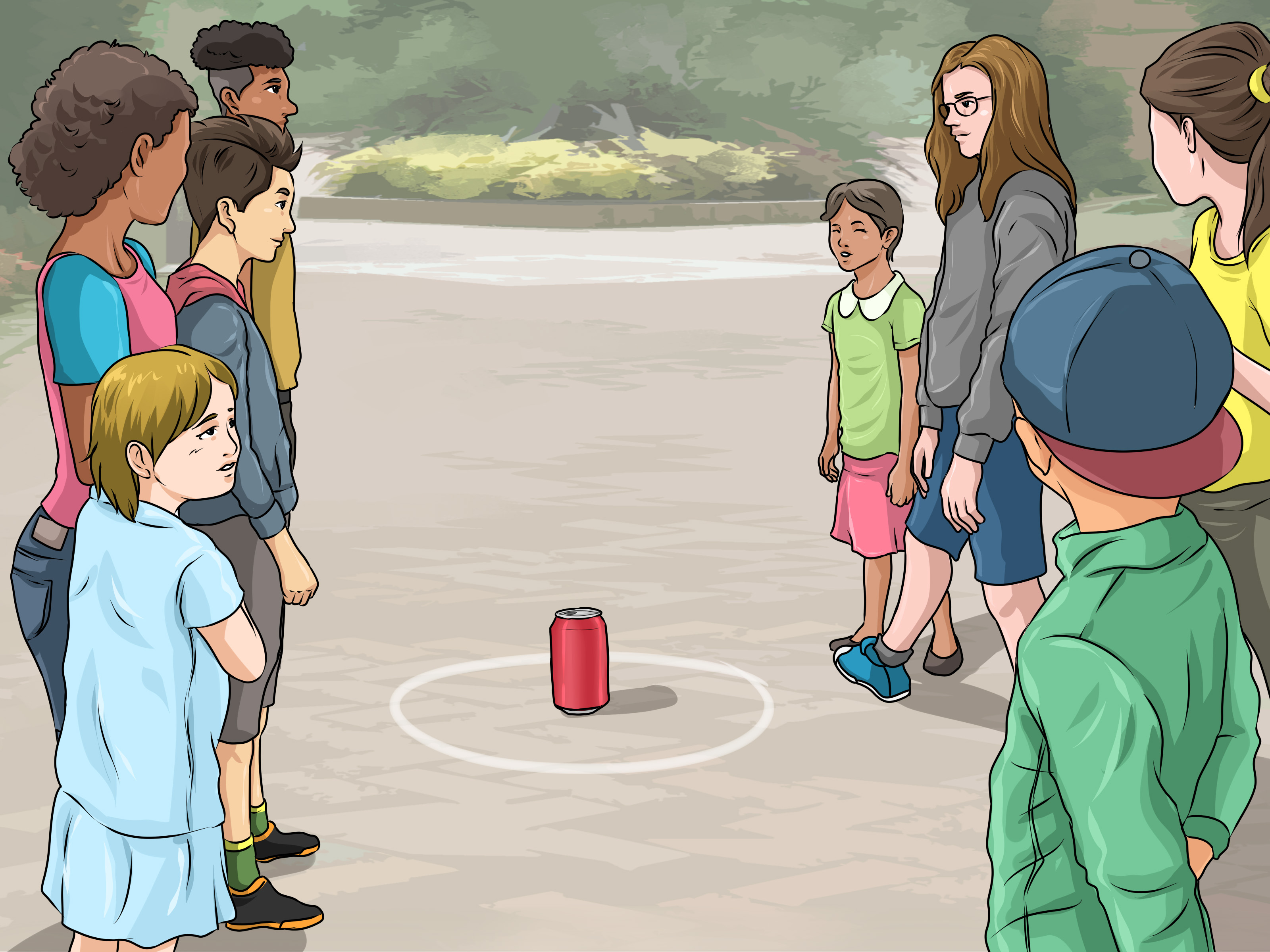
The can area is usually called home base. You can draw a circle around it with chalk, use cones, or simply agree that the can’s location is the center of play. The guard must return the can to this spot whenever it is kicked away. This reset period gives other players time to run and hide again.
Step 4: Create a Jail Area
Choose a jail or holding zone for captured players. It should be close enough to the can that jailed players can watch the action, but not so close that they block the game. A porch step, picnic table, tree, bench, or marked patch of grass can work. The jail should be visible and safe, because nobody wants the prisoner zone to be located in poison ivy. That is not strategy. That is poor planning.
Step 5: Choose the First Guard
Pick one player to be “It,” also called the seeker, finder, or guard. You can choose by volunteering, drawing straws, playing rock-paper-scissors, or using the classic “who was late gets to be It” method, which is not official but is emotionally satisfying.
The guard’s job is to find hidden players and prevent free players from kicking the can. The hiders’ job is to avoid capture and rescue teammates when possible.
Step 6: Decide the Counting Number
The guard stands near the can, closes their eyes, and counts out loud while everyone else hides. The counting number depends on the size of the play area and the age of the players. For a small yard, counting to 20 or 30 may be enough. For a large park, count to 50 or even 100.
Counting out loud matters because it lets players know how much time they have. It also prevents the guard from speed-counting like an auctioneer selling invisible cattle.
Step 7: Let the Hiders Scatter
While the guard counts, all other players run and hide within the agreed boundaries. Players may hide behind trees, bushes, picnic tables, sheds, playground equipment, or other safe objects. In many versions, hiders are allowed to move during the game instead of staying frozen in one hiding place. This makes Kick the Can more strategic than ordinary hide-and-seek.
Step 8: Begin the Search
When the guard finishes counting, they announce that the search has begun. A classic call might be, “Ready or not, here I come!” The guard then looks for hidden players while keeping an eye on the can. This is the challenge: if the guard wanders too far from home base, someone may sprint in and kick the can. If the guard stays too close to the can, it becomes harder to find everyone.
Step 9: Capture a Player
There are two common ways to capture players. In a tagging version, the guard must physically tag the player. In a call-out version, the guard must clearly identify the player by name and hiding place, such as “I see Maya behind the oak tree!” Some groups add a race-to-the-can rule: once spotted, the hider and guard both run to the can, and whoever gets there first wins that moment.
Before playing, decide which capture rule you will use. Younger kids often enjoy simple tagging. Older kids and mixed-age groups may prefer call-outs or race-to-base rules because they add suspense without requiring rough contact.
Step 10: Send Captured Players to Jail
When a player is captured, they go to the jail area and wait. Jailed players should not block the can, distract the guard unfairly, or secretly form a tunnel system under the lawn. They can cheer, groan, whisper advice, and dramatically beg for rescue, which is basically half the fun.
Step 11: Kick the Can to Free Players
Any player who is still free may try to sneak or sprint to the can and kick it before the guard catches them. If the hider successfully kicks the can, all jailed players are released and may run to hide again. The guard must retrieve the can, place it back at home base, and restart the search.
This rescue rule is what makes the game exciting. A player who seems hidden and quiet may suddenly burst from behind a tree, kick the can, and become a backyard legend for approximately seven minutes.
Step 12: Continue Until the Round Ends
The round continues until the guard captures all the players or until a set time limit expires. If the guard captures everyone, the guard wins the round. If players keep freeing each other until time runs out, the hiders can be considered the winners. For younger players, a 10- to 15-minute round is usually enough. For older kids, 20- to 30-minute rounds can work well.
Step 13: Choose the Next Guard
After each round, choose a new guard. Many groups make the first captured player become the next guard. Others choose the last player captured, the player who kicked the can most successfully, or anyone who volunteers. Rotating the guard keeps the game fair and prevents one unlucky person from becoming the permanent neighborhood security department.
Step 14: Adjust the Rules for Your Group
Kick the Can is flexible. You can adjust rules for age, group size, space, and energy level. For a large group, use two guards. For younger children, shorten the boundaries and allow more rescues. For older players, add a rule that the guard must touch the can while calling out a captured player. The best version is the one everyone understands before the round begins.
Important Kick the Can Rules to Agree On First
Because Kick the Can has many local variations, clear rules prevent mid-game debates. Before starting, answer these questions:
- Does the guard capture by tagging, calling out, or racing to the can?
- How far can players hide?
- Can hiders change hiding spots?
- Does kicking the can free everyone or only one player?
- How long does each round last?
- What happens if the guard calls out the wrong person?
- Can jailed players talk to free players?
Setting these rules in advance keeps the game friendly. It also reduces the chance of someone yelling, “That does not count!” with the passion of a courtroom attorney.
Winning Strategies for Hiders
Stay Close Enough to Rescue
Hiding far away may keep you safe, but it also makes it harder to kick the can. Great hiders choose spots that offer cover and a path back to home base. Think like a squirrel with a mission.
Watch the Guard’s Pattern
Most guards develop habits. Some always search left first. Some drift too far from the can. Some get distracted by obvious hiding places. Watch carefully and move when the guard’s back is turned.
Use Teamwork
One player can distract the guard while another sneaks toward the can. This does not mean cheating. It means strategy, communication, and the noble art of yelling “Over here!” before running away like a cartoon raccoon.
Winning Strategies for the Guard
Do Not Abandon the Can
The guard must search, but the can is the heart of the game. If you run too far after one player, another may rescue the entire jail. Move in circles around home base and return often.
Capture the Closest Threat First
If you see one player far away and another creeping near the can, stop the rescuer first. A single successful kick can undo several captures, so protect the can like it contains the last slice of pizza.
Use Clear Calls
In call-out versions, be specific. Say the player’s name and location clearly. Vague calls lead to arguments. “I see someone near something” is not a capture. It is a weather report with sneakers.
Safety Tips for Playing Kick the Can
Kick the Can is active and fun, but a little planning makes it safer. Inspect the play area before starting. Remove sharp objects, loose branches, tools, wires, and tripping hazards. Make sure players wear shoes that are comfortable for running. Avoid playing near roads, driveways, pools, or areas with poor visibility.
For summer games, remind players to drink water and take breaks. If it is very hot, play in the shade, shorten rounds, or move the game to early morning or evening. For dusk or nighttime versions, use glow sticks, flashlights, or reflective markers, and keep boundaries much smaller. Night games can be thrilling, but nobody needs to sprint heroically into a lawn chair.
Fun Variations of Kick the Can
Classic Race-to-the-Can Version
When the guard spots a player, both race to the can. If the guard reaches it first and calls the player out, the hider goes to jail. If the hider kicks it first, the hider stays free and may release everyone.
Tagging Version
The guard must tag players before sending them to jail. This version is simple and energetic, making it a good choice for younger groups.
One-Player Release Version
Instead of freeing everyone when the can is kicked, only one jailed player is released. This makes the game longer and more challenging for hiders.
Two-Guard Version
For large groups, use two guards. This balances the game and prevents endless rescues. It also gives the guards someone to blame when the can gets kicked anyway.
Glow Kick the Can
Use a glow-in-the-dark bucket or tape glow sticks around the can. Keep the playing area small and safe. This version is great for campouts, family gatherings, and summer evenings.
Why Kids Still Love Kick the Can
Kick the Can remains popular because it gives children a rare mix of movement, imagination, independence, and teamwork. Players run, hide, plan rescues, manage risk, solve problems, and cooperate without needing a screen or a complicated rulebook. The game also works for mixed ages because younger players can hide close to base while older players take bigger risks.
It is also wonderfully low-pressure. Nobody needs to be the fastest athlete to contribute. A quiet player can become the perfect rescuer. A bold player can distract the guard. A strategic player can organize timing from jail. Everyone has a role, even the kid who mostly giggles behind a shrub and somehow survives until the final minute.
Common Mistakes to Avoid
The biggest mistake is choosing a play area that is too large. If players hide too far away, the game slows down. Another mistake is using unclear rules. Decide before the round whether captures require tagging, calling out, or racing to the can. Also avoid placing the jail too far from home base, because jailed players should still feel involved.
Finally, do not let the guard camp directly on top of the can for the entire game. Some guarding is fair, but standing over the can without searching makes the game dull. A good house rule is that the guard must actively search and cannot remain within a few steps of the can for too long unless a hider is nearby.
Best Ages and Group Sizes
Kick the Can works best for children ages 6 and up, teens, and playful adults who are willing to admit that running from a seven-year-old is surprisingly intense. For younger children, keep the rules simple and use a smaller area. For older children and teens, add strategy with larger boundaries, race-to-base captures, or time limits.
A group of 5 to 12 players is ideal. With only 3 players, the game still works but feels quieter. With more than 15 players, consider adding a second guard or creating teams to keep the game balanced.
Field-Tested Experiences: What Playing Kick the Can Actually Feels Like
The first thing you notice when playing Kick the Can is that the can becomes strangely powerful. Before the game starts, it is just a plastic bucket or an empty container. Five minutes later, it is the most important object in the universe. Everyone is watching it. The guard circles it nervously. The hiders stare at it from behind trees. The jailed players whisper rescue plans like they are planning a moon landing.
One of the best experiences comes from playing with a mixed-age group. Younger kids often hide in obvious places because they are excited and cannot resist peeking. Older kids tend to move more carefully, waiting until the guard walks too far away. Adults, meanwhile, usually begin with confidence and then discover that crouching behind a bush is not as easy as it was twenty years ago. Still, adults make excellent dramatic distractions. A parent pretending to be slow can suddenly sprint toward the can, and the entire group erupts.
Another memorable part of Kick the Can is the jail area. In many games, jail becomes a tiny comedy club. Captured players groan, negotiate, shout encouragement, and offer very questionable advice. “Run now!” someone yells, even though the guard is standing three feet from the can. The best jailed players help without ruining the game. They cheer for bold rescue attempts and make the round feel exciting even while they are technically out.
The most thrilling moment is always the rescue run. A free player waits behind cover while the guard searches the far side of the yard. Everyone sees the opportunity forming. The jailed players go silent. The runner leans forward. Then, suddenly, they sprint. The guard turns. Shoes slap the grass. Someone screams. The runner reaches the can and kicks it just before being tagged. The can rolls away, the jail explodes with freed players, and the guard stands there wearing the ancient expression of betrayal known to every seeker in history.
Kick the Can also teaches small lessons without announcing them. Kids learn to watch space, time their movements, respect boundaries, and handle losing a round without melting into a puddle of injustice. They learn that bravery is useful, but patience is often better. They learn that rescuing others can be more satisfying than simply staying safe. Most importantly, they learn that fun does not need to be complicated. Sometimes the perfect game is a group of friends, a patch of grass, and one very important can.
For parties or camps, the best experience comes when an adult explains the rules clearly, plays one practice round, and then steps back. Children quickly invent tactics and traditions. They may name the jail, create secret signals, or develop local rules such as “no hiding behind cars” or “the porch is lava.” That flexibility is part of the charm. Kick the Can belongs to whoever is playing it.
At the end of a good game, players are usually sweaty, laughing, and ready for water. The can may be dented, the hiding spots may be exposed, and the guard may demand a rematch. That is exactly how the game should end. Kick the Can is not about perfect scoring. It is about movement, suspense, teamwork, and the kind of outdoor fun that makes ordinary places feel like adventure zones.
Conclusion
Learning how to play Kick the Can is easy, but mastering it takes quick thinking, teamwork, patience, and a good sense of timing. The basic rules are simple: choose a guard, hide, avoid capture, rescue jailed players by kicking the can, and keep playing until everyone is caught or time runs out. With clear boundaries, safe equipment, and agreed-upon rules, Kick the Can can turn a backyard, park, or campground into a lively game arena.
Whether you play the classic version, a tagging version, a race-to-the-can version, or a glow-in-the-dark variation, the game offers something modern families often need more of: active outdoor fun that does not require a login, charger, or subscription. Just set down the can, start counting, and prepare for the glorious sound of someone yelling, “They kicked it!”