

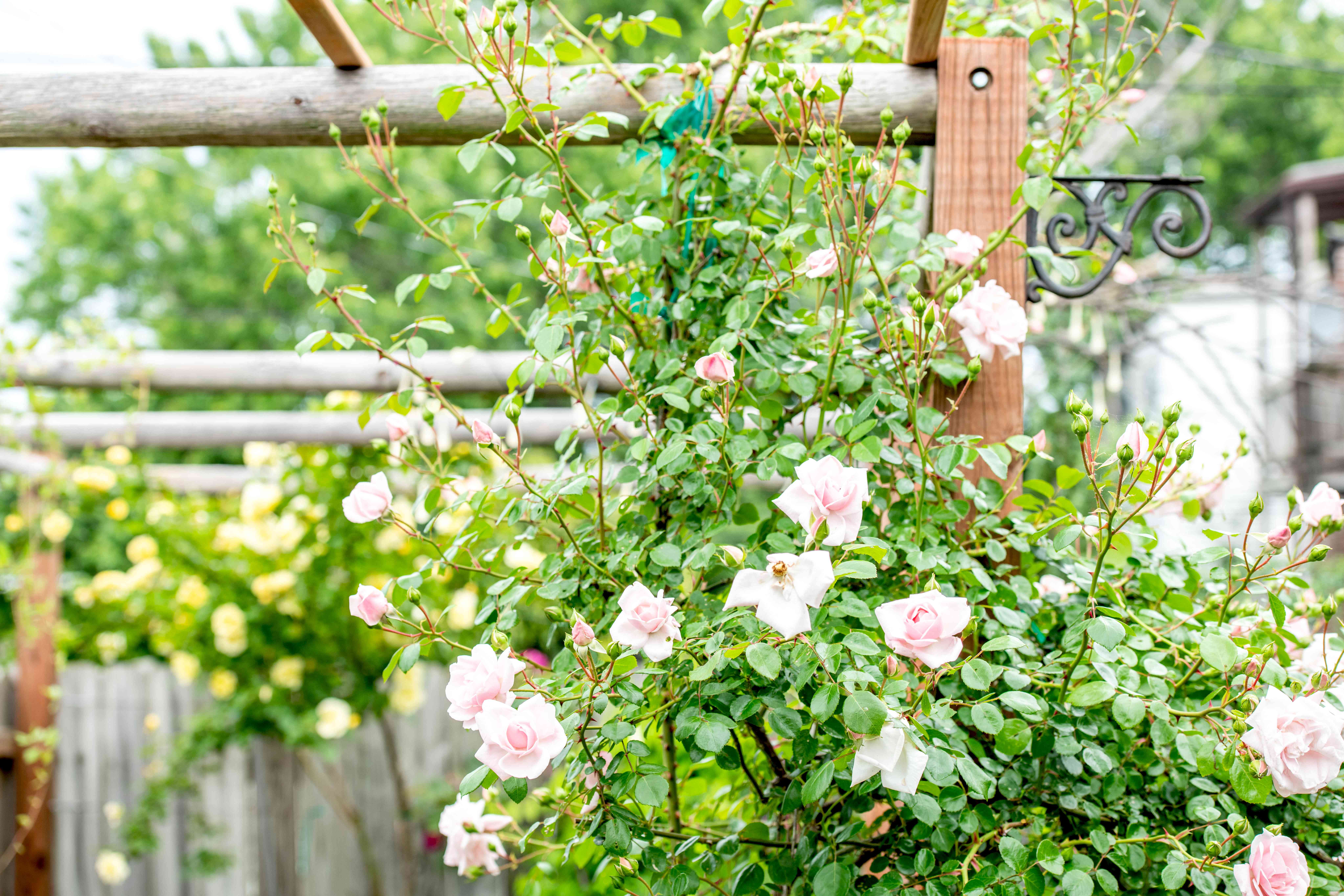
A fence is basically a blank canvas that screams, “Please decorate me!” And climbing roses are the overachievers of the garden world: dramatic, fragrant, and only slightly murdery with the thorns. The trick is that climbing roses don’t actually climb like ivy. They don’t cling. They don’t latch. They don’t politely follow rules. They just grow long canes and hope you’ll be the responsible adult in the relationship.
This guide shows you exactly how to train climbing roses along a fence for maximum bloom coverage, then prune them without accidentally deleting next season’s flowers. You’ll get a practical step-by-step method, a seasonal schedule, and fixes for the most common “Why is it only blooming at the top like a floral toupee?” problems.
Why Training Matters (More Than Pruning, Honestly)
If you take one idea from this article, make it this: training is how you get flowers all along the fence. When canes grow straight up, the rose tends to push growth and blooms toward the tips. When you guide those canes horizontally or on a gentle diagonal, the plant responds by producing more side shoots (laterals) along the length of the cane. More laterals = more flowering points = more blooms = more smugness.
Know Your Type: Climber vs. Rambler (Your Pruning Depends on It)
Repeat-Blooming Climbers
Most modern climbing roses are repeat bloomers: they flower in waves through the growing season. On these, you typically keep the long “main canes” (the structural framework) and prune the smaller “lateral shoots” to encourage fresh flowering stems.
Once-Blooming Ramblers
Ramblers are the enthusiastic cousins who show up to the party once, bring fireworks, and then disappear. They usually bloom heavily once a year, often on wood produced the previous season. That means timing matters: many ramblers are pruned after flowering so you don’t remove next year’s show.
Before You Start: Make Your Fence Rose-Ready
1) Check the Fence Like a Skeptical Contractor
Roses get heavy. Wet foliage, wind load, and years of thickening canes can turn a flimsy fence into modern art. Wiggle posts. Look for rot. If the fence already leans, don’t add a 12-foot climber and call it “rustic charm.”
2) Add a Training System (Because Roses Don’t Come With Velcro)
On a wood privacy fence, the gold standard is a set of horizontal wires running across the fence. Think of it as a ladder for tying in canes. Install eye screws along posts, then run galvanized wire in rows (often every 12–18 inches). This gives you anchor points so you can spread canes in a fan or zigzag pattern.
On chain-link, you can tie directly to the mesh, but many gardeners add a second layer like plastic trellis netting or tensioned wires to make positioning easier and keep canes from rubbing.
3) Use the Right Ties (Your Rose Shouldn’t Need Therapy)
- Best: soft plant tie tape, stretchy garden ties, silicone ties, or old nylon stockings.
- Okay: jute twine (check often; it can tighten as canes thicken).
- Avoid: thin wire directly on canes (it can cut in and girdle).
Tie canes loosely. Roses thicken over time, and a “tight little bow” can become a tourniquet by July.
The Training Plan: Turn Long Canes Into a Blooming Wall
Choose Your Shape: Fan, Zigzag, or “Whatever Fits”
The goal is even coverage across the fence while keeping as much of each main cane as close to horizontal as your rose will tolerate.
- Fan: multiple main canes spread outward from the base like a handheld fangreat for wide fence panels.
- Zigzag: a single long cane woven left-right-left across wiresgreat for narrow spaces and maximum bloom along one cane.
- Diagonal sweep: canes angled 30–45° when true horizontal would snapstill encourages laterals nicely.
Step-by-Step: Training a Climbing Rose on a Fence
- Start when canes are flexible. Early spring and early summer are prime because new growth bends more easily. If you wait until canes are woody, they’ll bend like dry spaghetti: loudly and with heartbreak.
- Identify main canes vs. laterals. Main canes are thicker, longer, and originate near the base. Laterals are smaller side shoots that come off main canes and usually carry most flowers.
- Pick 3–6 main canes to build your framework. You don’t need 27 “main canes.” That’s a bramble situation. Choose the healthiest, best-placed ones.
- Spread and position. Guide selected canes outward along wires: near-horizontal if possible, or a gentle diagonal. Aim for even spacing so light and air can move through.
- Tie in every 12–18 inches. Add ties as needed to prevent whipping in wind. Keep ties loose enough to slide a finger under them.
- Fill gaps with new shoots. As the plant sends up fresh long canes, train them into empty fence areas rather than stacking everything in one crowded corner.
Example: A 6-Foot Wood Fence “Bloom Ladder” Setup
Let’s say you want coverage from 1 foot to 6 feet high across an 8-foot fence panel: install 4–5 wire rows (around 18″, 30″, 42″, 54″, and near the top). Train two main canes as a wide fan, then zigzag a third cane across the middle wires to fill the “blank spots” where the fan naturally thins. Result: flowers from waist level to the top, not just a bouquet hovering at the roofline.
How To Prune Climbing Roses on a Fence (Without Wrecking the Show)
The Three Cuts You’ll Make Most Often
- Health cuts: remove dead, diseased, damaged, or crossing wood.
- Structure cuts: remove one or two truly old, unproductive canes at the base (as needed) to make room for younger canes.
- Flowering cuts: shorten lateral shoots so they produce strong, bloom-ready stems.
Year 1–2: Mostly Training, Minimal Pruning
New climbing roses are busy building roots and long canes. In the first couple of years, prune lightly: remove dead or broken stems, tidy obvious problems, and focus on training. Heavy pruning early can slow the development of the long framework canes you actually need to cover a fence.
Year 3 and Beyond: The Repeat-Blooming Climber Routine
Once your framework canes are established, annual pruning becomes simple (and weirdly satisfying). Here’s a reliable routine for most repeat-blooming climbers:
- Sanity and safety first. Put on thorn-proof gloves and long sleeves. If you value your forearms, this is not the moment for “confidence.”
- Clean up the mess. Cut out dead, diseased, or damaged wood. Remove thin, weak, twiggy growth that won’t support good flowers. If two canes rub, keep the better-placed one.
- Preserve the main canes (mostly). The long main canes are your fence coverage. Don’t chop them back unless they’re truly misplaced or you’re reducing size for a specific reason.
- Shorten lateral shoots. Prune laterals back to a few buds or a short length (often just a few inches), so they produce vigorous flowering stems rather than a tangled mop.
- Renew old wood when needed. If the plant is congested or has very old canes that barely flower, remove one at the base and train a younger replacement cane into that space.
- Retie and reposition. After pruning, retrain any flexible new canes to improve coverage. This is where a fence-trained rose goes from “fine” to “whoa.”
Pruning Once-Blooming Ramblers
For many ramblers, the main pruning happens right after flowering. You remove some of the oldest canes to stimulate new growth from the base, then train those long new canes along the fence for next year’s bloom. If you prune hard in late winter, you may remove the wood that would have carried the big bloom display.
Summer Touch-Ups: Deadheading and Light Shaping
During the growing season, you can:
- Deadhead repeat bloomers to encourage rebloom (cut spent flowers back to a strong leaflet junction).
- Redirect new canes while they’re still bendyyour future self will thank you.
- Remove obvious problems (broken canes after storms, diseased bits, or shoots growing straight into walkways).
When To Train and Prune (A Practical U.S. Seasonal Calendar)
Late Winter to Early Spring (Dormant Season)
In many regions, this is the main annual pruning window for repeat-blooming climbers: just as buds swell and you’re past the worst cold snaps. In colder climates, wait until the worst of winter is truly over; in warmer climates, pruning often happens earlier. The goal is to avoid stimulating tender growth right before a hard freeze.
Late Spring / Early Summer (After First Flush)
This is a great time for:
- Light shaping
- Deadheading and tidying
- Major training moves (because canes are flexible)
- Pruning many once-blooming ramblers right after their bloom show
Fall (Mostly “Don’t”)
Avoid heavy pruning in fall in many climates. It can trigger tender new growth that’s easily damaged by cold. In fall, focus on tying in loose canes for wind protection, removing diseased foliage, and general cleanup.
Common Fence-Rose Problems (And How To Fix Them Fast)
Problem: “It Only Blooms at the Top”
Cause: too-vertical main canes (classic). Fix: retrain one or two long canes into a horizontal or zigzag pattern across the fence. Prune laterals to encourage new flowering shoots. Within a season, you should see more bloom points along the length.
Problem: Canes Are Too Stiff to Bend
Cause: older, woody canes. Fix: work with younger canes instead. Train new long shoots early while they’re flexible. If you must reposition a stiff cane, do it gradually over days (a little bend, tie, wait, bend more). No heroics.
Problem: Jungle Density, Poor Airflow, Mildew/Black Spot
Cause: overcrowding and wet leaves. Fix: thin crossing growth, open the center, and space canes so light and air can move. Water at the base rather than overhead when possible, and clean up fallen leaves.
Problem: Lots of Growth, Not Many Blooms
Common culprits include too much shade, overfeeding with high nitrogen, or lack of training. Ensure the plant gets strong sun, train canes outward, and avoid “lawn fertilizer drift” that turns roses into leafy teenagers who won’t get off the couch.
Problem: Suckers (Mystery Canes from Below the Graft)
If you have a grafted rose, shoots from below the graft union can be rootstock suckers. Remove them at the point of origin rather than just trimming the top, or they’ll keep returning like an uninvited guest.
Tools, Technique, and Thorn Diplomacy
- Bypass pruners: for most cuts.
- Loppers: for thick canes.
- Pruning saw: for ancient, woody canes.
- Disinfectant: 70% isopropyl alcohol is easy and effective for quick blade wipes.
- Gloves: real rose gloves (gauntlet style if you like your wrists unpunctured).
Make clean cuts about 1/4–1/2 inch above an outward-facing bud when you’re shaping. Angle cuts so water doesn’t sit on the bud. Then clean up clippingsdisease loves free leftovers.
Quick FAQ
How far apart should I plant climbing roses along a fence?
It depends on the variety’s mature width and your patience level, but many climbers need several feet to develop a good framework. If you want a continuous wall, choose varieties known for vigor and plan spacing that allows each plant to fill its section without becoming a tangled border dispute.
Can I train a climbing rose on a chain-link fence?
Absolutely. Tie canes loosely to the mesh and consider adding wires or a secondary trellis to make training easier and reduce cane abrasion.
Should I cut main canes back every year?
Usually no. For most repeat-blooming climbers, main canes provide the structure and coverage. You typically prune laterals and only remove main canes when they’re old, unproductive, damaged, or poorly placed.
Conclusion: A Fence of Roses Is Built, Not Born
Training and pruning climbing roses on a fence isn’t complicatedit’s just consistent. Build a support system, guide main canes outward and near-horizontal, then prune laterals to keep flowering strong. Do that each year and your fence becomes a living wall: blooms at eye level, fragrance in the air, and a thorny reminder to strangers that your garden has boundaries. Literally.
Field Notes: of Real-World Experiences (So You Don’t Learn the Hard Way)
Gardeners who grow climbing roses on fences tend to collect the same “I wish someone told me this earlier” moments. Here are the big onesserved with a side of humor and a strong recommendation for gloves.
1) The best training day is the day you notice a new long shoot. People often wait until “next weekend,” and by next weekend the cane has matured from flexible to “I am now a wooden dowel with opinions.” If you can bend it easily today, tie it in today. Even five minutes of gentle guiding saves you an hour of wrestling later.
2) Zigzag training is the cheat code for small spaces. Many gardeners start with a fan shape, then realize their fence panel is narrow or their rose produced one outrageously long cane. Zigzagging that cane left and right across wires keeps more buds along the cane at productive angles, filling the fence with blooms instead of shooting straight up and flowering only at the top.
3) Loose ties are not optional. It’s incredibly common to tie a cane snugly “just for now,” forget it, and later discover the tie has cinched into the cane like a belt after Thanksgiving dinner. A loose tie should be loose enough to accommodate thickeningcheck a few times a season, especially during rapid growth.
4) Over-pruning is usually a fear; under-training is usually the real problem. Gardeners often blame pruning when blooms are sparse, but the bigger culprit is vertical growth. A rose can have perfect cuts and still flower mostly at the top if the canes are trained like flagpoles. When in doubt, retrain first, prune second.
5) Wind turns long canes into whips. If your fence line is exposed, add ties more frequently and use multiple anchor points. Storms can snap canes at the base, which is painful for you and the plant. Many gardeners also learn to keep canes off sharp fence edges that can rub and wound stems over time.
6) Old canes don’t need to be punished, but they do need to be managed. Mature climbers can get crowded. A common strategy is “one old cane out, one young cane in”: remove a tired, unproductive cane at the base and train a vigorous new shoot into that spot. This keeps the framework youthful without scalping the plant.
7) Your walkway is not a training lane. Climbing roses love sending shoots toward sunlightand often that means into paths. Experienced gardeners redirect those shoots early, before they become thorny tripwires. If you wait, you’ll end up pruning them off anyway, which is basically the rose’s version of “I made this for you and you rejected me.”
8) Cleanup is surprisingly powerful. People focus on cuts and ties, then ignore the pile of diseased leaves beneath the plant. Clearing fallen foliage, improving airflow, and watering at the base often makes the rose look better than any fancy product. Healthy leaves fuel blooms.
9) Fertilizer can’t fix shade. A climber in too much shade tends to stretch and sulk. Gardeners often try to “feed it into blooming,” but the result is extra leafy growth. If possible, improve sun exposure or choose a variety known to perform with fewer hours of direct light.
10) The first real payoff usually hits after a couple seasons. New climbers can be slow to cover a fence. The gardeners who end up with jaw-dropping rose walls are the ones who spend the early years building a framework: training long canes, filling gaps, and pruning lightly. Then the rose “gets it,” and suddenly the fence is blooming like it’s trying to win a trophy.