

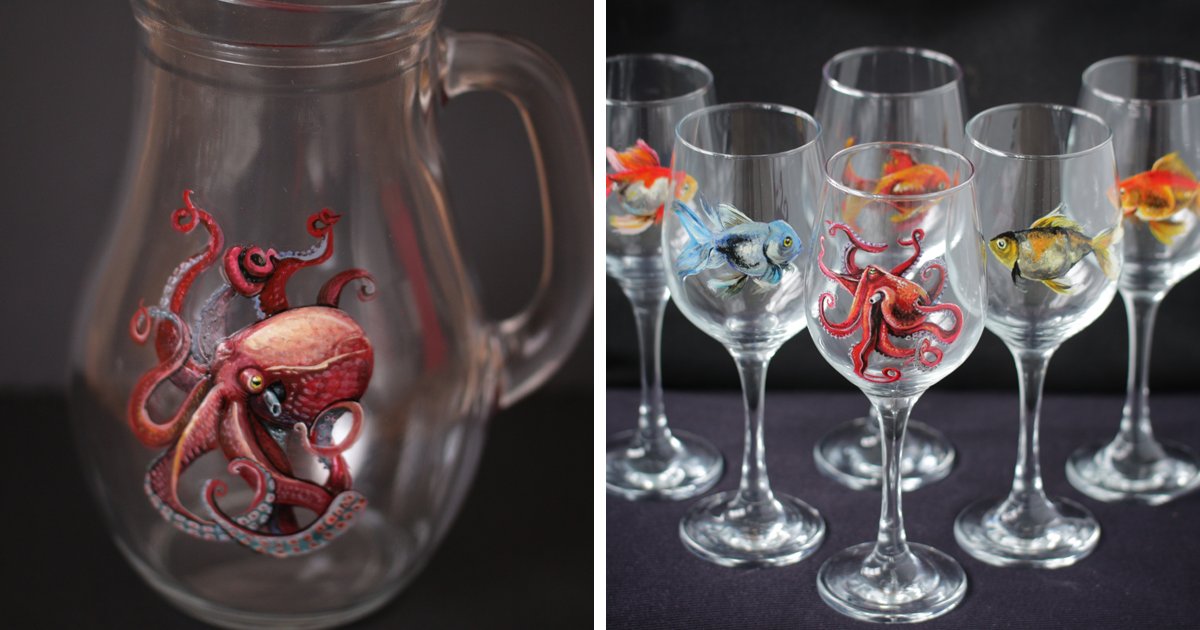
Some artists paint oceans. Some paint fish. And then there are the wonderfully stubborn creative souls who look at an ordinary drinking glass and think, “You know what this needs? A tiny aquatic roommate with dramatic lighting.” That is the playful magic behind realistic fish painted on glasses: a handmade art form where glassware becomes part aquarium, part optical illusion, and part conversation starter for anyone who has ever mistaken paint for a living creature.
The concept sounds simple at first. Take a clear glass, paint a fish on it, let the transparency do its thing, and enjoy the compliments. But realistic glass painting is not a “dab of orange, two dots for eyes, and call it Nemo” situation. The best pieces use reflections, shadows, scale patterns, transparent fins, and the natural curve of the glass to make the fish appear suspended inside the object. When done well, the result feels like a tiny underwater scene frozen in mid-swim.
This style became especially charming through the work of Romanian artist Silvia Popescu, whose realistic fish and animal paintings on glasses, jars, cups, dispensers, and other everyday objects turned kitchenware into tiny visual surprises. Her idea reportedly began with a painted fish for her son, then grew into a broader experiment with glass as a surface. The beauty of the concept is that it does not shout. It waits quietly on a shelf until someone leans closer and says, “Hold on… is that fish real?” Congratulations, art has successfully pranked the eye.
Why Realistic Fish On Glasses Are So Fascinating
Realistic fish painted on glasses work because they combine two things our brains love: transparency and movement. Glass lets light pass through, bend, and bounce, while fish naturally suggest motion even when they are perfectly still. Put the two together and the viewer’s brain starts filling in the blanks. A curved wine glass becomes water. A jar becomes a miniature tank. A soap dispenser becomes, somehow, the fanciest bathroom aquarium in the neighborhood.
Unlike canvas, glass does not give the artist a forgiving, matte surface. It reflects everything: the room, the window, the artist’s hand, and occasionally the artist’s worried facial expression when one tiny brushstroke goes rogue. That reflective quality is exactly what makes the finished piece so alive. A painted fish on glass can look different from every angle. Turn the glass slightly and the tail seems to shift. Place it near a window and the colors glow. Fill it with clear liquid and the illusion deepens.
Fish are also perfect subjects for this medium. Their bodies already contain gradients, translucent fins, metallic scales, and color shifts. Bettas, goldfish, koi, guppies, angelfish, and tropical species all have visual drama built in. They are basically nature’s tiny swimming fashion shows, minus the runway music.
The Artist’s Concept: From Simple Cup To Miniature Aquatic World
The origin story behind this kind of glass fish painting has a delightfully human quality. Instead of beginning in a sterile studio with a ten-page manifesto, it began with family life, curiosity, and a child’s fascination with fish. That matters because the finished work still carries that feeling. These are not cold technical exercises; they feel personal, affectionate, and slightly mischievous.
Popescu’s approach shows how an everyday object can become a stage. A fish painted on a sippy cup is not just decoration. It turns the cup into a pretend aquarium. A jar with a painted fish feels like a captured little scene, though no real fish had to file a complaint with management. A soap dispenser with aquatic artwork makes a sink area feel unexpectedly whimsical. The joke is gentle: the fish is not inside the glass, but the illusion is strong enough to make people pause.
That pause is the heart of the work. In a world full of fast scrolling, realistic fish glass art rewards slow looking. You notice the eye first, then the fin, then the curve of the body, then the way the glass itself completes the environment. The object is useful, decorative, and a tiny performance all at once.
How Glass Creates The Optical Illusion
The secret weapon is not only paint. It is the glass itself. Clear glass creates depth because the viewer sees the artwork, the opposite side of the object, and the background beyond it at the same time. Curved glass also distorts the image slightly, which can make a fish look as if it is floating or bending naturally in water.
For realistic glass painting, an artist must think in layers. The first layer may establish the main shape of the fish. Later layers add darker shadows, highlights, scale details, gill lines, and fin transparency. Because glass is slick, the paint needs control. Too much pressure can drag the paint instead of placing it. Too little patience can turn a graceful goldfish into something that looks emotionally confused.
Reflection is another major part of the illusion. Real fish scales catch light unevenly, so painted highlights must be placed carefully. A white or pale stroke along the back can suggest wet shine. Tiny broken marks on the body can imitate scales. Soft gray or blue shadows can make the fish appear rounded instead of flat. The eye, usually the smallest but most important detail, must feel glossy and alert. A fish with a lifeless eye ruins the illusion faster than a cat walking across a wet painting.
Popular Objects For Realistic Fish Glass Painting
Drinking Glasses
Drinking glasses are the classic choice because they already suggest water. A painted goldfish near the lower curve of a tumbler can appear to swim inside the cup, especially when the glass is filled. Stemless wine glasses, tall tumblers, and clear mugs all offer different visual effects.
Glass Jars
Jars offer more surface area and a stronger aquarium feeling. A fish painted on a jar can be paired with painted plants, bubbles, pebbles, or soft water shadows. The jar shape also gives the piece a nostalgic, handmade quality, as if someone rescued an ordinary pantry item and gave it a second career in fine art.
Soap Dispensers
A fish on a soap dispenser is both funny and clever. Bathrooms and kitchens already involve water, so aquatic imagery feels natural. The transparent liquid inside the dispenser can enhance the illusion, making the fish seem surrounded by a watery environment. It is probably the only time washing your hands feels like visiting a boutique aquarium.
Vases And Decorative Bottles
Vases and bottles allow the artist to go further with composition. A tall glass bottle can hold a vertical scene with reeds, bubbles, and a fish swimming upward. A round vase can make the fish appear magnified. These pieces are less about daily use and more about display, which gives the artist freedom to add more detail.
The Materials Behind The Magic
Most glass-painting projects use paints formulated to adhere to slick surfaces such as glass or ceramic. Acrylic enamel and multi-surface glass paints are common choices because they can produce strong color, smooth coverage, and lasting results when properly cured. Some products air dry over time, while others can be baked in an oven according to manufacturer instructions. The important point is simple: regular craft paint may not behave well on glass unless it is designed for that purpose.
Surface preparation matters. Glass should be clean, dry, and free of oils before painting. Many artists wipe the surface with alcohol before starting because fingerprints can prevent paint from gripping evenly. This step is not glamorous, but neither is watching a perfect fin peel off because someone skipped cleaning. Art has rules. Glass has opinions.
Brushes also matter. Fine liners help with delicate fins and scale marks. Small round brushes are useful for shaping bodies. Soft brushes can create smooth gradients. Some artists use sponges or markers for certain effects, but realistic fish usually require the kind of tiny brushwork that makes your hand question its life choices.
What Makes A Painted Fish Look Real?
Realism depends on observation. A convincing fish is not just a colorful oval with fins. It has anatomy, rhythm, and weight. The body tapers. The fins are thin and sometimes translucent. The eyes sit in the head with a glossy dome. The mouth may be tiny, puckered, or slightly open. The tail moves from a central spine, even when frozen in paint.
Color is equally important. Fish rarely have one flat color. A goldfish may shift from orange to yellow to pale cream. A betta may move from blue to purple to red. A koi may have bold patches that follow the body’s curve. These transitions help the viewer believe the fish has volume.
The best realistic fish paintings also include imperfections. Nature is not symmetrical in a copy-and-paste way. A slightly uneven fin, a broken scale highlight, or a tiny shadow near the gill can make the fish feel more alive. Perfect geometry may look neat, but organic detail feels real.
Why This Concept Works So Well Online
Realistic fish on glasses are built for the internet because they deliver an instant “wait, what?” moment. The viewer sees a familiar object first, then realizes something unusual is happening. That visual twist encourages people to zoom in, share, comment, and ask how it was done. In SEO terms, the artwork has strong curiosity value. In human terms, it is simply fun.
Posts featuring handmade glassware, optical illusion art, realistic painting, and upcycled household objects often attract readers because they combine creativity with approachability. People may not be able to paint a museum-level portrait, but they can imagine transforming a jar or cup. That accessibility makes the concept inspiring rather than intimidating.
There is also a comforting handmade quality to the work. In an age of mass-produced home décor, a hand-painted fish on a glass feels personal. It has tiny choices, tiny flaws, and tiny triumphs. It says, “A human spent time here,” which is a surprisingly powerful message for something that may sit beside a kitchen sink.
Going Further With The Concept
The phrase “went even further with the concept” is where things get especially interesting. Once an artist understands how glass and realism interact, the possibilities expand quickly. Fish can become part of larger underwater scenes. A single cup can become a tiny ecosystem. A set of glasses can feature different species, turning a dinner table into a stylish reef without the maintenance costs.
The concept can also move beyond fish. Birds, insects, frogs, cats, dogs, and fantasy creatures can all benefit from the depth and shine of glass. However, fish remain uniquely suited to the medium because glass naturally implies water. Even when the object is empty, the viewer’s mind adds an invisible aquarium around the painted subject.
Artists can also experiment with placement. A fish painted near the bottom of a glass appears grounded in the object. A fish painted diagonally across the curve looks active. A fish split across two sides can create a wraparound illusion. Add subtle bubbles, reeds, or water plants and the object becomes a miniature narrative.
Care, Use, And Practical Considerations
Hand-painted glassware can be beautiful and functional, but it should be treated with care. Paint manufacturers often recommend curing glass paint properly before use. Many glass paints are not intended for direct contact with food or drink, so designs are usually placed away from rims and eating surfaces. Hand washing is often the safest choice, even when a product says top-rack dishwasher safe. Handmade objects enjoy gentle treatment. They are artists, not gym socks.
Microwaves are another concern. Painted glassware is generally not something to casually microwave unless the product instructions clearly allow it. Heat, moisture, and rough washing can all shorten the life of the artwork. For display pieces, the rules are simpler: keep them clean, avoid scraping the painted area, and let the light do its magic.
Why Fish Art Has Lasting Appeal
Fish have appeared in decorative art for centuries, from ancient glass vessels and ceramics to modern aquarium-inspired design. Their shapes are instantly recognizable, their colors are endlessly varied, and their movement suggests calm, mystery, and life below the surface. A fish can feel playful, elegant, symbolic, or simply adorable depending on how it is painted.
On glass, fish gain another layer of meaning. They seem to belong there. The transparent surface becomes water, the reflections become ripples, and the object becomes a small illusion of life. This is why realistic fish glass painting feels more immersive than painting the same fish on paper. The material participates in the image.
500 Extra Words: Personal Experiences And Reflections On Painting Realistic Fish On Glasses
If you have ever tried painting on glass, you know it is a little like trying to draw on an ice cube that has opinions. The surface is smooth, shiny, and not especially interested in helping. The first time you place a brushstroke on glass, you may expect the paint to behave like it does on paper. It does not. It slides, pools, streaks, or politely removes itself when you go over it too many times. This is why realistic fish painting on glasses teaches patience faster than a meditation app with a strict grandmother.
The experience usually begins with excitement. You clean the glass, gather your brushes, choose a reference image, and imagine a perfect little koi swimming across the curve. Then reality arrives wearing tiny wet shoes. The first layer looks pale. The second layer looks better but still flat. The fin that seemed easy in your sketch suddenly becomes a transparent ribbon requiring five shades and emotional support. But slowly, something changes. The fish starts to appear.
One of the most satisfying moments is adding the eye. Before the eye, the fish is a shape. After the eye, it becomes a character. A tiny white highlight can make the whole creature feel awake. That is the moment when the glass stops being a glass and starts becoming a scene. You turn it toward the light, and the curved surface gives the fish a strange depth. It may not be perfect, but it feels alive enough to make you grin.
Another memorable part of the process is learning how much the object itself affects the painting. A straight glass gives one kind of illusion. A round jar gives another. A bottle stretches the image. A curved vase can magnify the fish until it looks as if it is swimming through a bubble. This makes every project slightly unpredictable. You are not just painting on a surface; you are collaborating with the shape.
There is also a special pleasure in using ordinary household objects. A forgotten jar, a plain tumbler, or an empty dispenser can suddenly become something worth displaying. This gives the work a quiet upcycling spirit. The object does not need to be expensive. It only needs clarity, shape, and enough surface area for imagination to move in. In that sense, realistic fish glass painting is wonderfully democratic. Your next canvas might be sitting in the cupboard beside the mismatched mugs.
The biggest lesson from this topic is that small art can have a big emotional effect. A painted fish on a glass will not change the laws of physics, solve traffic, or convince laundry to fold itself. But it can make someone stop, smile, and look twice. That is not nothing. In fact, that is the exact kind of small surprise that makes handmade art so valuable. It brings wonder into the everyday, one tiny fish at a time.
Conclusion: Tiny Aquariums For The Imagination
Realistic fish painted on glasses prove that art does not need a giant canvas to feel magical. Sometimes all it needs is a clear surface, a steady brush, and the courage to turn an ordinary object into something delightfully unexpected. Whether painted on a cup, jar, vase, or soap dispenser, these fish create the illusion of life inside glass without needing water, filters, fish food, or the panic of realizing you forgot to clean the tank.
The charm of this concept lies in its balance of technical skill and playfulness. It celebrates realism while keeping a sense of humor. It respects the beauty of fish while transforming household glassware into miniature scenes. Most importantly, it reminds viewers that creativity often begins with a simple question: what else could this object become?
For artists, realistic fish glass painting offers a rewarding challenge. For viewers, it offers surprise. For anyone with a cupboard full of plain glasses, it offers a dangerous new hobby. You have been warned.