

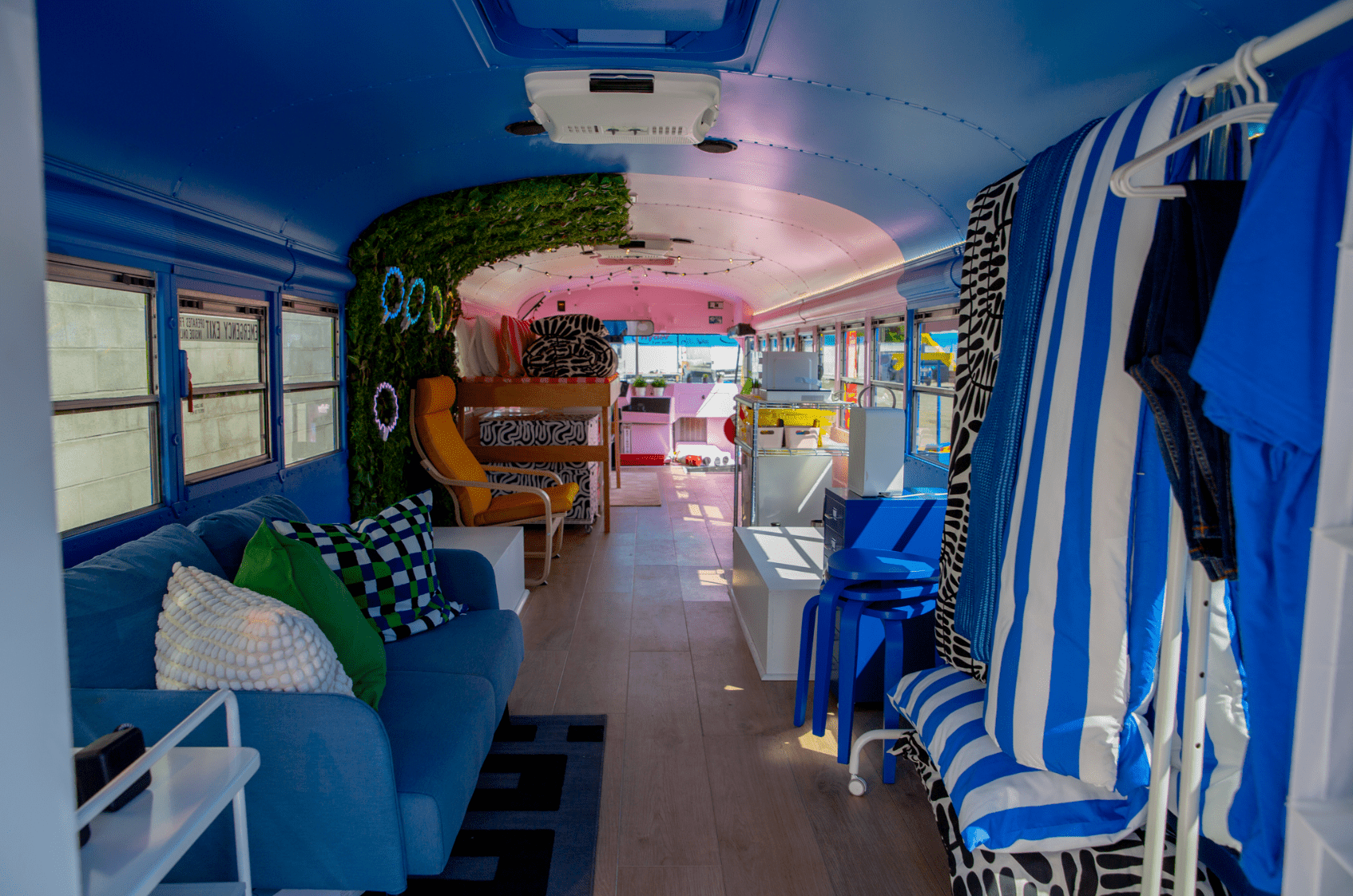
Just when you thought back-to-college season could not possibly squeeze in one more checklist, one more mini fridge debate, or one more “Do I really need a rolling cart?” conversation, IKEA rolled up with the kind of answer only IKEA could dream up: a bus. Not just any bus, either. A branded, decked-out, dorm-ready, inspiration-on-wheels kind of bus. And honestly? We get the hype.
Officially called the IKEA Ready for College bus tour, this first-ever campus activation felt like a very smart collision of retail, design, and student reality. Instead of waiting for college students to trek out to a giant blue store on the outskirts of town, IKEA brought the showroom to them. That is the magic here. The brand did not just sell storage bins and bedding. It sold a vision of small-space living that felt approachable, playful, and surprisingly personal.
In a season usually ruled by cardboard boxes, panic-buy desk lamps, and that one parent loudly asking where the towel aisle is, IKEA found a way to make dorm shopping feel a little less like a chore and a lot more like an event. That is why people were obsessed. This was not a bus. This was a moving mood board for student life.
What IKEA’s First-Ever College Bus Tour Actually Was
The headline-friendly version is simple: IKEA created a mobile pop-up experience designed for students heading back to campus. But the real appeal was in the details. Inside the bus, IKEA built a walkable showroom inspired by college living. Instead of vague design ideas floating around on Pinterest, students could step into a compact, tactile, real-world setup that showed how IKEA products work in the tiny, shared, occasionally chaotic reality of dorm life.
The activation leaned hard into experience, which was exactly the right move. Students could browse small-space solutions, check out styling ideas, and interact with the brand in a way that felt more fun than transactional. The tour reportedly featured a “Home Away from Home” showroom, giveaways, a planting station, a custom Dala horse moment, and a FRAKTA Bag Bar. Translation: it gave students practical ideas, plus enough playful extras to make the event feel Instagrammable without becoming painfully try-hard.
That balance matters. Young shoppers can sniff out forced marketing from a mile away. What made this campaign land is that it solved a real problem while still being entertaining. Students need bedding, storage, seating, organization, and multiuse pieces. They also want personality. They want a dorm room that does not look like a waiting room with extension cords. IKEA understood both sides of that equation.
Why This Campaign Was So Smart
1. It Met Students Where They Actually Are
One of the biggest barriers to shopping IKEA has always been logistics. People love the products, but getting to a full-size store is not always easy, especially for students without cars. Dorm move-in season is already a circus of scheduling, buying, hauling, assembling, and realizing halfway through that nobody remembered command hooks.
By bringing a curated IKEA experience directly to campuses, the brand removed friction from the process. That is not just clever marketing; it is smart retail strategy. It says, “We know your life is busy, your room is small, your budget is real, and your transportation options may be questionable. So we came to you.”
That message feels current because convenience is not a bonus anymore. It is the expectation. And for college students, convenience often determines which brand wins.
2. It Made Small-Space Living Feel Inspiring Instead of Miserable
Dorm rooms are not exactly known for their spacious elegance. They are more often known for questionable lighting, mystery flooring, and furniture that seems designed by someone who has never tried to store socks, snacks, and a semester’s worth of emotional support items in one place.
IKEA’s sweet spot has always been small-space solutions. The CollegeBus tour turned that strength into a story. Rather than showing products on a cold shelf, it styled them in context. A utility cart is not just a utility cart when it becomes bedside storage, snack central, and beauty organizer all in one. A chair is not just a chair when it helps make a standard-issue room feel like your room.
This is the difference between selling stuff and selling possibility. Students do not only want to purchase products. They want help imagining how those products can make a bland, temporary room feel livable, efficient, and a little bit like home.
3. It Understood That Gen Z Likes Experiences With a Point
There is a reason campus tours and pop-ups keep showing up in retail strategy conversations. They create buzz, yes, but they also create memory. A student may forget a banner ad in three seconds flat. They are much less likely to forget decorating a planter, walking through a tiny bus showroom, customizing a blue bag, and immediately texting their roommate, “We need to redo our side of the room.”
The best brand experiences give people something to do, something to photograph, and something useful to remember. IKEA’s bus tour checked all three boxes. It turned ordinary college shopping needs into an event with texture and energy. That is how brands move from being known to being liked.
Why the Tour Felt Bigger Than a Marketing Stunt
Here is what makes this launch interesting from an industry perspective: it did not feel random. It felt like part of a broader push by IKEA to get closer to how Americans actually shop. In recent years, the company has been experimenting with smaller formats, planning points, pickups, and city-friendly concepts. Later in 2024, reporting also showed IKEA testing on-campus bookstore displays and order pickup in the Chicago area. That makes the bus tour feel less like a cute one-off and more like a test case in meeting younger shoppers in more flexible ways.
In other words, the bus was adorable, but it was also strategic.
College students are a high-value audience for a home brand. They may be buying a duvet cover and a few glasses today, but they are also future apartment renters, first-home furnishers, and long-term customers in the making. If IKEA can become the brand students associate with affordable style, easy organization, and “I can make this weird little room work,” that relationship has real staying power.
What Students Can Learn From the IKEA Bus Tour
Budget First, Decorate Second
One reason IKEA continues to click with students is that it understands financial reality. College decorating exists at the crossroads of aspiration and “Please do not make me spend $90 on a trash can.” The bus tour reinforced a useful mindset: start with the essentials, then layer in personality.
That means prioritizing items that pull double duty. Think storage that looks decent, seating that can migrate from dorm to apartment, or a side table that can also function as a study perch. Good dorm design is not about packing in more. It is about choosing smarter.
Vertical Space Is Your Best Friend
If square footage is limited, the only logical move is to look up. IKEA has long excelled at helping people use vertical space, and that principle is practically a dorm-room commandment. Carts, shelves, hooks, hanging organizers, and stackable storage are the real overachievers of college life. The bus tour’s small-space setups helped show that organization does not need to be boring to be effective.
Function Does Not Have to Kill Personality
This may be the campaign’s most lovable message. A dorm room can be efficient without looking painfully clinical. Plants, soft textiles, color, playful accessories, and smart layout choices can do a lot of heavy lifting. IKEA did not pitch style and function as opposites. It presented them as roommates who finally learned how to coexist.
Why Everyone Online Had the Same Reaction: “Okay, This Is Cute”
The public response makes sense because the idea hits several cultural sweet spots at once. It is practical. It is mobile. It is visual. It is student-centered. And it manages to feel nostalgic and modern at the same time. A school bus is instantly recognizable, but turning one into a mini showroom is delightfully unexpected.
It also helps that IKEA is already a beloved character in the home-and-design universe. People do not just shop IKEA; they talk about IKEA, hack IKEA, complain about assembling IKEA, then go back and buy more IKEA. The brand has enough cultural familiarity to make a stunt like this feel exciting rather than confusing.
And let us be honest: there is something deeply satisfying about the idea of walking into a bus and emerging with better opinions about dorm storage. It is weird in the best possible way.
What This Means for the Future of Back-to-College Shopping
Back-to-college shopping used to be pretty linear. Make a list, go to a big-box store, argue over bedding colors, buy way too many plastic bins, and call it a day. But younger consumers increasingly expect shopping to be more personalized, more convenient, and a little more fun.
IKEA’s first-ever CollegeBus tour points toward a more experiential version of seasonal retail. Instead of pushing products from a distance, brands are showing up in person, curating solutions, and building emotional connection around everyday purchases. That matters because dorm shopping is not only retail. It is a life transition. Students are setting up independence, identity, and routine all at once.
A brand that can step into that moment with actual help, rather than just noise, has a real advantage.
The Experience: What the IKEA CollegeBus Tour Feels Like in Real Life
Picture the scene. It is late summer. Campus is waking up again. Parents are unloading cars with the grim determination of people who have already made three “last-minute” shopping runs. Students are pretending they are calm. Nobody is calm. There are rolling suitcases, giant comforters in crinkly plastic, and at least one person carrying a lamp that absolutely did not survive the trip.
Then the IKEA bus shows up.
Suddenly, this very ordinary move-in chaos gets an upgrade. The bus is bright, branded, and impossible to ignore. People wander over because they are curious, then stay because the setup actually makes sense. Inside, the layout feels less like a sales pitch and more like the answer key to several common college problems. Where do I put my snacks? How do I make this room feel less beige? Can one cart solve three issues at once? Why does this tiny chair somehow make the whole setup look cooler?
The beauty of the experience is that it shrinks overwhelm. Dorm shopping can be abstract when you are walking through endless aisles or scrolling online. A styled bus showroom makes decisions feel concrete. You can see proportions. You can understand how a few thoughtful pieces work together. You start mentally editing your own space without even trying.
Outside the bus, the extras keep the energy going. A planting station is not just cute; it gives students a tiny piece of life to take back to a very cinder-block environment. The FRAKTA Bag Bar taps into one of IKEA’s most iconic items and turns it into a memory, not just a carryall. The Dala horse moment adds that slightly whimsical Scandinavian flourish that reminds you this is still IKEA, not a generic dorm sale with better fonts.
The whole thing feels designed for conversation. Friends compare notes. Roommates swap opinions. Parents point at smart storage ideas with the enthusiasm of people who secretly wish this bus had existed when they were in college. Even students who came over for the novelty walk away with an actual takeaway: maybe a product idea, maybe a design tip, maybe just the reassuring thought that a tiny room does not have to feel depressing.
That is what makes the experience resonate. It understands that college is emotional as much as logistical. Students are not just furnishing a room. They are preparing for a new season of life. So when a brand steps in with humor, color, smart ideas, and a little encouragement, it lands differently. It feels helpful. It feels memorable. It feels surprisingly human.
And that, more than anything, explains the obsession. The IKEA CollegeBus tour took an everyday retail category and made it feel personal, social, and fun. It transformed dorm prep from a bland shopping errand into a shared experience with style, utility, and just enough weird charm to be irresistible.
Final Take
IKEA’s first-ever CollegeBus tour worked because it did more than show products. It showed empathy. It recognized the stress, excitement, budget pressure, and design ambition wrapped up in college move-in season and answered with something equal parts practical and playful.
The bus was smart branding, yes. But it was also a lesson in modern retail: go where your audience is, solve real problems, make the experience memorable, and do not underestimate the power of a good storage cart in a tiny room.
So yes, we are obsessed. Not because it was flashy for the sake of being flashy, but because it made total sense. And in a world full of marketing gimmicks that evaporate on contact, a bus full of small-space solutions and student-friendly inspiration is refreshingly hard to hate.