

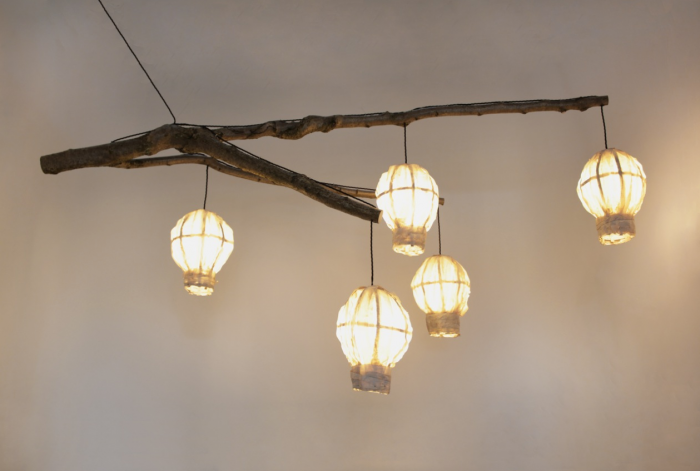
If you think pendant lights are just ceiling jewelry with a wiring diagram, Sebastian Cox would like a polite word. His Hazel Pendant Lights, introduced during London Design Week at Tent 2012, were not simply decorative objects. They were a design argument hanging in midair: that irregular wood, ancient woodland management, and contemporary interiors could all get along beautifully without anyone needing to wear a name tag.
That is what makes these lights so memorable. They are not polished into submission. They do not pretend hazel wants to be marble, brass, or some hyper-minimal cylinder that looks like it was assembled by a particularly strict robot. Instead, they lean into the twists, knots, bends, and shavings of coppiced hazel, turning the so-called leftovers of woodland work into sculptural lighting with real personality.
More than a decade later, the Hazel Pendant Lights still feel strikingly current. In a design world now obsessed with sustainability, natural materials, biophilic interiors, and pieces that tell a story, Cox’s lights look less like a trend piece and more like an early warning shot. He was already asking the questions the industry is still trying to answer: What if beauty is found in irregularity? What if sustainability can also be sensual? What if design starts in the forest, not the factory?
Why the Hazel Pendant Lights Still Matter
The short answer is that they manage to do three difficult things at once. They feel rustic without being clunky, refined without being precious, and sustainable without sounding like a lecture in a hemp tote bag. That balancing act is rare.
Each Hazel Pendant Light was crafted from especially characterful pieces of coppiced hazel, paired with shades made from fine hazel shavings. In other words, Cox did not hide the parts that traditional furniture production might reject. He celebrated them. Twisted branches affected by climbing ivy or clematis, odd curves, and lively surface variation became the whole point. This is material honesty at its best: the wood is allowed to look like wood, not a heavily edited version of itself.
That choice also gives the lights their emotional pull. Smooth, standardized products can be beautiful, sure, but they rarely feel alive. Cox’s hazel pendants feel almost found rather than manufactured. They carry a quiet wildness. Even indoors, they suggest hedgerows, thickets, woodland margins, and handwork. They look as though nature wandered inside, cleaned up nicely, and decided to stay for dinner.
The Designer Behind the Glow
Sebastian Cox built his reputation on a deep connection to British woodlands, especially coppiced hazel. His studio grew out of research into coppicing during his academic work in sustainable design, and that interest became the foundation of a design practice centered on woodland management, local timber, and contemporary craft. In plain English: this was never just about making attractive furniture and lighting. It was about creating a viable design language for materials that many people had overlooked.
That background matters because the Hazel Pendant Lights make much more sense when you realize they were never conceived as random rustic decor. They are part of a larger worldview. Cox has long argued, through both his work and collaborations, that traditional practices can be radically relevant when paired with modern design thinking. His approach treats wood not as nostalgic ornament, but as a serious material for the future.
That helps explain why his later work continued pushing into new territory, including mycelium-based lighting and furnishings made with wood waste. Seen in that larger arc, the Hazel Pendant Lights were an early and elegant signpost. They showed the studio’s fascination with underused material, ecological thinking, and forms that retain a sense of natural origin.
What Makes Hazel Such a Smart Material?
It grows with purpose
Hazel is tied to coppicing, an ancient method of woodland management in which stems are cut back so the tree or stool can regenerate new growth. For a designer like Cox, that means a renewable stream of material with genuine ecological meaning. It is not just “wood, but make it green.” It is wood linked to a living management system.
It has built-in character
Hazel does not behave like a rigid, anonymous board. It bends, twists, forks, and surprises. Those physical qualities make it less predictable than mass-market materials and far more expressive in the right hands. Cox clearly saw that unpredictability not as a problem, but as a design opportunity.
It rewards close looking
The pendant shades made from thin hazel shavings are especially clever because they transform a byproduct into a poetic detail. The wood softens light while quietly showing its own making. You do not just see a lampshade; you see process, texture, and the hand of the maker. That is a very different experience from looking at a generic shade bought in a flat-pack aisle under fluorescent lighting and mild emotional duress.
London Design Week Was the Perfect Stage
There is something fitting about these lights emerging during London Design Week. The event has long been a place where material experimentation, craft, interiors, and design culture overlap. Cox’s work fit the mood, but it also stood apart.
While plenty of design launches aim to impress with polish, novelty, or technology, the Hazel Pendant Lights offered a different kind of freshness. Their innovation was not flashy. It came from reframing what counts as valuable. Instead of chasing sleek perfection, Cox brought viewers face-to-face with the beauty of natural irregularity and the intelligence of old woodland practices. That is a subtler kind of innovation, and arguably the more enduring kind.
At a fair filled with objects competing for attention, the hazel pendants had a strong visual advantage: they were sculptural, tactile, and just unusual enough to stop people in their tracks. But their deeper advantage was conceptual. They did not merely look different. They meant something.
How the Lights Work in Real Interiors
One reason the Hazel Pendant Lights have aged well is that they are flexible in mood. In the right setting, they can read as rustic, artisanal, minimal, or quietly luxurious. That range is hard to pull off.
Entry halls
Grouped together, the pendants create a strong first impression. They bring height, movement, and a sense of welcome without feeling overly formal. Because the hazel branches vary, the arrangement looks collected rather than mechanically matched.
Dining spaces
Over a dining table, the lights introduce warmth and conversation-starting texture. They can soften a modern room or sharpen a more traditional one. In either case, they work because they bring a bit of nature overhead without turning the space into a cabin-themed costume party.
Stairwells and double-height spaces
This is where the pendants become especially theatrical. A vertical cluster highlights their organic silhouettes and emphasizes the length and irregularity of the hazel. In a stairwell, they can feel almost like a suspended woodland installation.
Interiors that need soul
Some rooms are technically perfect and spiritually asleep. The Hazel Pendant Lights are good medicine for that condition. Their asymmetry, texture, and visible material story add warmth to clean-lined interiors that might otherwise feel a little too edited.
Design Lessons Hidden in the Hazel
The success of these lights offers a few broader lessons for designers, stylists, and homeowners.
Imperfection can be the luxury
For years, luxury interiors often leaned on rare stone, glossy finishes, and immaculate uniformity. Cox’s lights suggest a different definition. Here, luxury comes from uniqueness, craft, and connection to place. No two pieces are exactly alike, and that is the point.
Local material can feel global
There is nothing provincial about using coppiced hazel from British woodland. In fact, the more rooted the material is, the more universal the design becomes. Good design travels because the idea is strong, not because the material has been stripped of identity.
Sustainability works best when it is beautiful
This may be the most important lesson of all. People rarely fall in love with a carbon footprint spreadsheet. They fall in love with objects. The Hazel Pendant Lights succeed because they make ecological thinking desirable, tactile, and memorable. They do not ask viewers to choose between conscience and beauty.
From Hazel to Mycelium: A Design Evolution
Looking back now, the Hazel Pendant Lights also feel like the beginning of a larger material journey. Cox’s later lighting experiments with mycelium and wood waste show the same core instincts: respect for overlooked material, fascination with natural process, and a desire to build a more regenerative design language.
That continuity matters. It proves the Hazel Pendant Lights were not a one-off charming idea. They were part of a coherent philosophy that continued to evolve. The materials changed, the research deepened, and the methods expanded, but the central mission stayed remarkably steady: use design to reconnect people with the living systems behind the objects in their homes.
In that sense, the hazel pendants were both a beautiful product and a thesis statement. They announced that Cox was less interested in dominating nature than in collaborating with it.
What Makes the Lights So Visually Memorable?
Part of the answer is contrast. The roughness of the branches meets the delicacy of the shavings. The earthy material is suspended in a refined interior context. The forms are irregular, but the composition can still feel elegant and balanced. That tension keeps the eye engaged.
Another reason is that the lights are legible from a distance and rewarding up close. Across the room, you notice the silhouette. Up near the fixture, you notice the layers, textures, and fine workmanship. Great design often operates on both levels. It gets your attention quickly, then keeps it once you move closer.
Finally, the lights carry narrative. People like objects with stories, especially when the story is not marketing fluff. Here, the story is embedded in the material itself: coppiced woodland, hand selection, wood shavings, irregular branches, natural growth, and a maker who saw possibility where others saw leftovers. That is not branding pasted onto a product. That is the product.
The Experience of Encountering Hazel Pendant Lights
To really understand these lights, it helps to think beyond specification sheets and staged photos. The experience of encountering Hazel Pendant Lights in a room is different from simply recognizing them as “nice lighting.” They change the atmosphere in ways that are subtle at first and then oddly powerful.
Imagine walking into a hallway with high ceilings and neutral walls. The space is handsome but a little restrained, like it has good manners and excellent posture. Then you look up. Suspended above is a cluster of hazel pendants, each branch slightly different, each shade made from delicate shavings that catch and soften the light. Suddenly the room is no longer just polished. It feels inhabited. It feels storied. It feels like someone made a deliberate choice to bring texture, nature, and a bit of unpredictability into a controlled interior shell.
That emotional shift is part of the design success. The lights introduce movement where there might otherwise be stillness. Because hazel is naturally irregular, your eye travels differently across the composition. You do not scan it once and move on. You linger. You notice the bends in the wood, the layered shavings, the slightly different distances between each hanging element. The arrangement feels composed, but not over-managed. It is the visual equivalent of a conversation that is intelligent without sounding rehearsed.
There is also a sensory warmth to the material. Hazel does not reflect light with the hard gleam of metal or the clean sharpness of glass. It absorbs, diffuses, and humanizes. The result is a glow that feels intimate rather than performative. In a dining room, that can make a table feel more inviting. In an entry, it can make guests slow down and actually look around instead of barreling straight to the nearest chair and asking for the Wi-Fi.
What stays with you most, though, is the tension between wildness and restraint. These are not raw branches tossed onto a ceiling in the name of “organic style.” They are carefully chosen and carefully framed. The craftsmanship is clear. But the design never scrubs away the evidence of growth, weather, or time. That balance gives the lights their emotional charge. They feel both designed and discovered.
In a world full of lighting that tries very hard to look expensive, the Hazel Pendant Lights do something more interesting. They look meaningful. They suggest that a room can be elegant without being sterile, natural without being cliché, and sustainable without waving a giant banner that says, “Please compliment my ethics.” That is why people remember them. They do not just brighten a room. They deepen it.
Final Thoughts
The Hazel Pendant Lights from Sebastian Cox are a reminder that the best design ideas often begin with a shift in perspective. Instead of asking how to force a material into a fashionable shape, Cox asked what the material already wanted to say. Instead of rejecting irregular branches and shavings, he elevated them. Instead of separating sustainability from beauty, he fused them.
That is why these lights remain so compelling. They are visually distinctive, materially intelligent, and emotionally resonant. They capture the spirit of London design at its best: inventive, thoughtful, rooted in craft, and unafraid to make old knowledge feel new again.
Plenty of pendant lights illuminate a room. These illuminate an idea. And frankly, that is a much harder trick to pull off.