

After Avengers: Endgame closed the Infinity Saga with a snap, a sacrifice, and enough emotional wreckage to power a thousand fan edits, Marvel Studios faced the superhero equivalent of cleaning up after a wedding where the cake exploded. What comes after Iron Man, Captain America, Black Widow, and the biggest crossover event in modern blockbuster history? Apparently, the answer was: multiverse chaos, cosmic immortals, martial arts dragons, grief-soaked Wakanda politics, screaming goats, and Spider-Man accidentally breaking reality like a teenager dropping a phone with no case.
Yes, Marvel’s Phase Four films look absolutely bonkersand that is not an insult. If anything, “bonkers” may be the most accurate SEO-friendly word for a movie slate that began with a grounded spy thriller and ended with a kingdom mourning its king while introducing an underwater empire. Phase Four was not just another chapter in the Marvel Cinematic Universe. It was a messy, ambitious, fascinating rebuilding era where Marvel tried to answer one enormous question: how do you keep a universe exciting after it already saved the universe?
What Is Marvel Phase Four?
Marvel Phase Four is the first major MCU phase after the Infinity Saga. In film terms, it includes Black Widow, Shang-Chi and the Legend of the Ten Rings, Eternals, Spider-Man: No Way Home, Doctor Strange in the Multiverse of Madness, Thor: Love and Thunder, and Black Panther: Wakanda Forever. These Marvel Phase Four movies arrived between 2021 and 2022, a period when theatrical releases, streaming habits, and fan expectations were all changing at once.
The phase also connected heavily with Disney+ series such as WandaVision, Loki, The Falcon and the Winter Soldier, Hawkeye, and What If…?. That mattered because Phase Four was not built like a simple movie staircase. It was more like a comic book shop after an earthquake: colorful, exciting, confusing, and full of things you suddenly needed to understand before the next big issue.
Why Phase Four Felt So Wild
The earlier MCU phases had a clear destination. Phase One built the Avengers. Phase Two expanded the universe. Phase Three pushed everything toward Thanos. Phase Four, by comparison, felt like Marvel opening every door in the mansion at once and yelling, “Good luck, everybody!” That is exactly why it became so interesting.
Instead of one obvious villain or one central team, Marvel Phase Four films explored grief, legacy, identity, alternate realities, secret histories, and new heroes. Natasha Romanoff looked backward. Shang-Chi looked inward. The Eternals looked across thousands of years. Peter Parker looked into the multiverse and immediately regretted it. Doctor Strange looked at reality like it was a house with too many mirrors. Thor looked for inner peace and found Christian Bale doing nightmare villain business in black-and-white shadows. Wakanda looked at the future while carrying the unbearable weight of loss.
Black Widow: A Spy Thriller That Arrived Late but Still Hit Hard
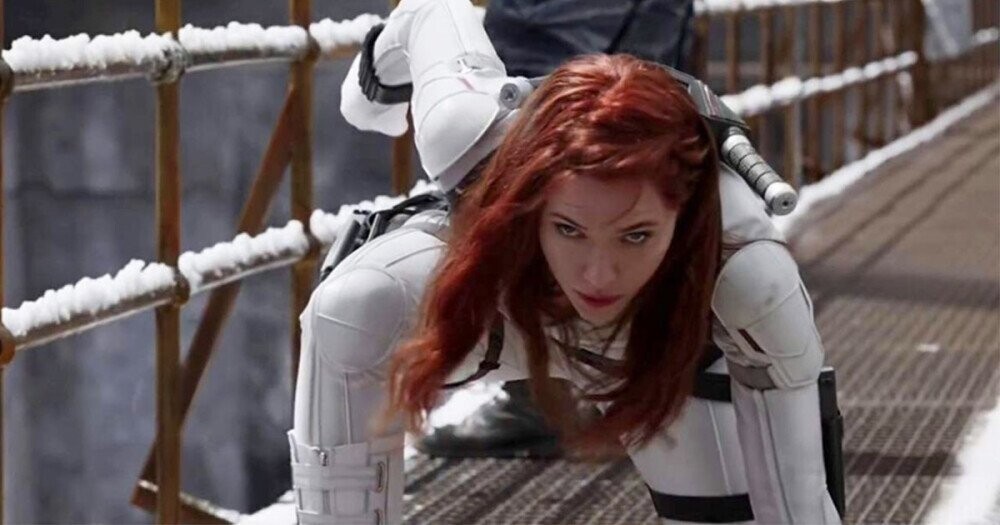
Black Widow opened Phase Four with a story that technically takes place before Infinity War. That timing made the film feel like a long-awaited missing chapter rather than a forward leap. Still, Natasha Romanoff’s solo film brought valuable emotional context to a character who had spent years supporting everyone else’s drama while rarely getting her own spotlight.
The movie leaned into espionage, family trauma, and hand-to-hand action. Its biggest long-term contribution may have been Florence Pugh’s Yelena Belova, who walked into the MCU with sarcasm, emotional damage, and enough charisma to steal scenes like she had a license for it. Black Widow may not be the strangest Phase Four film, but it set the tone for a phase obsessed with unfinished business.
Shang-Chi: Marvel Discovers the Joy of a Really Good Punch
Shang-Chi and the Legend of the Ten Rings was one of Phase Four’s cleanest wins. It introduced Simu Liu’s Shang-Chi, gave the MCU its first Asian-led superhero film, and delivered some of the best fight choreography in the franchise. The bus sequence alone deserves a tiny trophy and maybe its own health insurance policy.
What made Shang-Chi work was its balance. It had family drama, mythic fantasy, martial arts spectacle, comedy, and Tony Leung giving Wenwu the kind of tragic villain energy that makes viewers whisper, “Okay, he is wrong, but he is also very sad and extremely well-dressed.” The film expanded the MCU without requiring a spreadsheet. That is a superpower in itself.
Eternals: Cosmic Ambition With a Capital C
If Shang-Chi was a fresh, focused origin story, Eternals was Marvel grabbing a telescope, pointing it at creation itself, and saying, “Let’s get philosophical.” Directed by Chloé Zhao, the film introduced ancient alien beings who had secretly lived on Earth for thousands of years. It asked huge questions about purpose, obedience, love, humanity, and whether a giant space god emerging from the ocean would ruin beachfront property values.
Eternals divided audiences, but its ambition is hard to ignore. It looked and felt different from the standard MCU house style. It widened Marvel mythology, introduced Celestials on a massive scale, and suggested that the universe was much older, stranger, and more morally complicated than viewers had previously imagined. Was it perfect? No. Was it bonkers? Absolutely. It had ten new heroes, ancient monsters, cosmic judgment, and a cliffhanger large enough to need its own ZIP code.
Spider-Man: No Way Home Turned Nostalgia Into a Superpower
Spider-Man: No Way Home was the Phase Four film that turned movie theaters into group therapy sessions with cheering. Tom Holland’s Peter Parker tries to fix his identity problem with magic, which is exactly the kind of teenage decision-making that makes sense when your mentor was a billionaire who built flying armor in a cave.
The film brought together villains and heroes from previous Spider-Man franchises, transforming the MCU multiverse from a concept into a crowd-pleasing emotional event. Willem Dafoe’s Green Goblin, Alfred Molina’s Doctor Octopus, Jamie Foxx’s Electro, and the return of earlier Spider-Men turned No Way Home into both a sequel and a celebration of twenty years of superhero cinema.
But beneath the fan-service fireworks, the movie worked because it hurt. Peter’s final choice reset his life in devastating fashion. Everyone forgets him, and he becomes a more traditional Spider-Man: alone, broke, homemade suit, city lights, emotional baggage included at no extra charge. It was spectacular, heartbreaking, and yes, completely bonkers.
Doctor Strange in the Multiverse of Madness: Horror Crashes the MCU Party
Doctor Strange in the Multiverse of Madness took the multiverse and threw it into a Sam Raimi blender. The result was one of Marvel’s strangest theatrical entries: part superhero sequel, part horror movie, part Wanda Maximoff tragedy, part alternate-universe cameo machine.
The movie pushed Doctor Strange, Wong, America Chavez, and Wanda through realities that bent the MCU’s visual language. There were dreamwalks, demonic spirits, collapsing universes, magical music-note combat, and a zombie Doctor Strange wearing a cloak made of tortured souls. That sentence sounds like someone lost a bet in a writers’ room, yet there it is, on screen, in a Disney blockbuster.
Its greatest strength was also its biggest debate point: Wanda’s transformation into the Scarlet Witch as a terrifying antagonist. For viewers who followed WandaVision, her grief made emotional sense, even if the leap into full horror-villain mode felt abrupt to some. Either way, Phase Four used Multiverse of Madness to prove that the MCU could still surprise audiences with tone, style, and a few jump scares that made popcorn briefly airborne.
Thor: Love and Thunder Went Full Space Rock Opera
Thor: Love and Thunder may be the most “your mileage may vary” film in Phase Four. Taika Waititi returned after Thor: Ragnarok, bringing color, jokes, classic rock energy, and goats who scream like they have seen box-office projections. The movie sends Thor on a self-discovery journey while Gorr the God Butcher targets deities across the universe.
Christian Bale’s Gorr gave the film a haunting villain, while Natalie Portman’s Jane Foster returned as the Mighty Thor, wielding Mjolnir and carrying a moving cancer storyline. The contrast between goofy comedy and serious tragedy created a strange rhythm. For some fans, it was too much tonal whiplash. For others, it was comic-book absurdity in pure form.
Still, Love and Thunder belongs in the conversation because Phase Four was all about risk. Not every swing landed, but the movie never played it safe. It had gods, children in cages, jealous weapons, Russell Crowe’s Zeus, shadow monsters, and a hero trying to figure out who he is after losing nearly everyone. Subtle? No. Memorable? Definitely.
Black Panther: Wakanda Forever Closed Phase Four With Grief and Grandeur
Black Panther: Wakanda Forever ended Phase Four on its most emotional note. Following the death of Chadwick Boseman, the film became both a sequel and a tribute. Ryan Coogler built a story about mourning, leadership, anger, and national identity while introducing Namor and the underwater civilization of Talokan.
The film’s power came from its willingness to let grief sit in the room. Queen Ramonda, Shuri, Nakia, Okoye, and M’Baku all respond to loss differently, and the movie gives those reactions space. Angela Bassett’s performance brought thunder without needing a hammer. Letitia Wright’s Shuri carried the impossible burden of becoming central to a story shaped by real-world heartbreak.
At the same time, Wakanda Forever expanded the MCU’s political map. Wakanda was no longer the only hidden advanced civilization with a claim to power, history, and protection. Talokan made the world feel bigger and more dangerous. As a Phase Four finale, it did not tie every thread together with a neat bow. Instead, it left the MCU grieving, changing, and moving forward.
The Box Office Story: Phase Four Was Still a Giant
Even with pandemic-era disruption, shifting release strategies, and mixed critical reactions, Marvel Phase Four films remained major box-office events. Spider-Man: No Way Home became one of the highest-grossing films in MCU history. Doctor Strange in the Multiverse of Madness, Thor: Love and Thunder, and Black Panther: Wakanda Forever also delivered huge global totals. The idea that Marvel suddenly stopped being popular during Phase Four is too simple. The better argument is that audiences became more selective, louder, and less willing to treat every MCU release as automatic homework.
That shift matters for SEO readers and Marvel fans alike. Phase Four was not a failure. It was a transition phase released during an unstable time for theaters and entertainment habits. Some films soared. Some split the fanbase. All of them showed Marvel trying to stretch beyond the formula that made the Infinity Saga so dominant.
Why Marvel’s Phase Four Films Look Absolutely Bonkers in Hindsight
Looking back, the wildness of Phase Four comes from contrast. The same phase gave us a grounded Natasha Romanoff story and a movie about immortal space beings debating whether Earth should survive. It gave us a martial arts family drama and a multiverse Spider-Man reunion. It gave us horror-flavored Doctor Strange, romantic space Viking Thor, and a Black Panther sequel shaped by real grief.
That variety made the phase feel uneven, but it also made it fascinating. Earlier Marvel phases often felt like roads leading to the same destination. Phase Four felt like seven roads leading into fog, portals, oceans, pocket dimensions, and occasionally a karaoke night with Asgardians. It was experimental by blockbuster standards, even when it remained inside the familiar Marvel machine.
Experience Section: Watching Phase Four Felt Like Riding a Roller Coaster Built by Loki
Watching Marvel Phase Four as a fan experience was different from watching the Infinity Saga unfold. During the earlier years, the MCU felt surprisingly organized. You could sense the pieces moving toward something. Nick Fury appeared, the Tesseract glowed, Thanos smirked, and fans collectively behaved like detectives who owned too many Funko Pops. Phase Four did not offer that same clean feeling. Instead, it felt like Marvel handed viewers a box of puzzle pieces from three different puzzles and said, “Trust us, this may become a dragon.”
That uncertainty was part of the fun. Seeing Shang-Chi in a theater, for example, felt refreshing because the film did not rely heavily on Avengers nostalgia. The fight scenes had rhythm and impact. The family conflict felt personal. The fantasy elements arrived like a sudden invitation to a secret corner of the MCU that had been waiting behind a waterfall. It reminded audiences that Marvel could still introduce a new hero and make the room care without requiring Iron Man’s shadow to hover over every frame.
Spider-Man: No Way Home, on the other hand, felt like a communal event. It was the kind of movie where the audience reaction became part of the memory. People did not just watch it; they gasped, laughed, pointed, whispered, and occasionally made noises normally reserved for sports bars. The nostalgia worked because it was tied to Peter Parker’s emotional collapse. The cameos were exciting, but the loneliness at the end is what stayed with viewers after the cheering stopped.
Then came Doctor Strange in the Multiverse of Madness, which felt like Marvel sneaking a haunted house into a superhero franchise. The Raimi touches gave it a weird personality: dramatic zooms, creepy spirits, and Wanda moving through scenes like grief had become a supernatural weather event. It was not the smoothest MCU movie, but it had images that stuck in the brain. In a phase sometimes criticized for being scattered, at least this one had a pulse, a scream, and a zombie sorcerer.
Thor: Love and Thunder was the experience that best captured Phase Four’s problem and promise. One moment, it wanted to be a goofy cosmic comedy; the next, it wanted to break your heart with Jane Foster’s illness. The tonal juggling did not work for everyone, but it was never boring. Even its flaws were loud, colorful, and wearing a cape.
Finally, Wakanda Forever felt less like a standard Marvel finale and more like a memorial with blockbuster battles attached. It asked viewers to mourn alongside the characters, and that made it heavier than most franchise entertainment. By the end of Phase Four, the MCU no longer felt like one neat machine. It felt like a living universe after trauma: uncertain, emotional, sometimes chaotic, but still capable of wonder.
Conclusion
Marvel’s Phase Four films look absolutely bonkers because they are the product of a franchise trying to reinvent itself after its biggest ending. Not every experiment worked perfectly, and not every movie satisfied every fan. But Phase Four deserves credit for refusing to simply replay the Infinity Saga with different costumes. It introduced new heroes, expanded the multiverse, explored grief, changed legacy characters, and pushed Marvel into stranger territory.
If the Infinity Saga was Marvel’s grand symphony, Phase Four was the jam session afterward: messy, loud, surprising, occasionally brilliant, and sometimes one screaming goat away from total madness. That is exactly why it remains one of the most interesting periods in the MCU.