

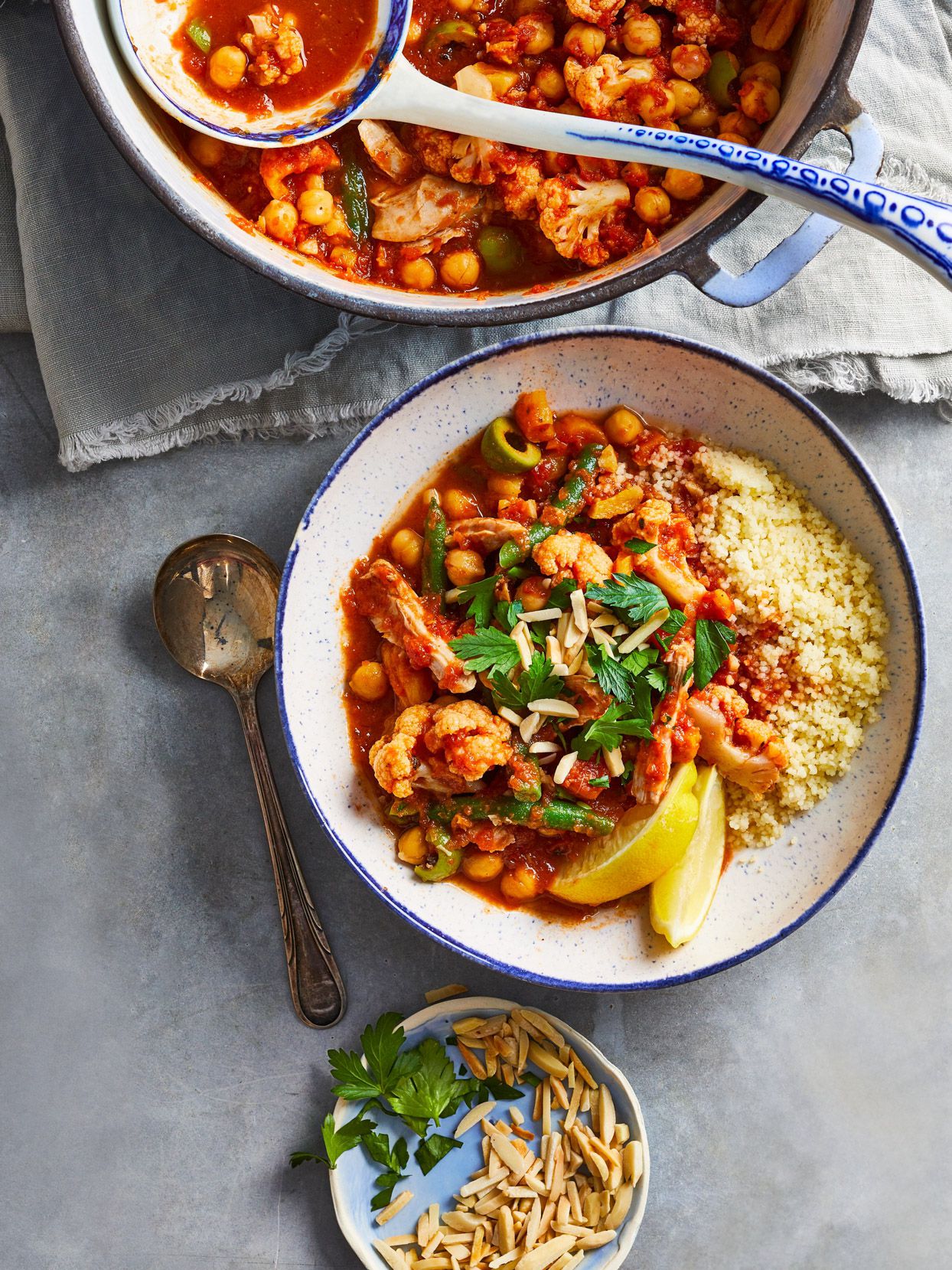
Note: This Moroccan chicken and cauliflower stew recipe is written for home cooks who want big flavor, simple technique, and a cozy one-pot dinner that tastes like it has been simmering with excellent life choices.
A Cozy Moroccan-Inspired Stew for Weeknights and Slow Sundays
There are dinners that quietly sit on the table, and then there are dinners that enter the room wearing perfume, gold earrings, and a confident little smirk. This Moroccan chicken and cauliflower stew recipe belongs to the second group. It is fragrant with cumin, ginger, cinnamon, turmeric, paprika, garlic, tomatoes, olives, chickpeas, and a bright squeeze of lemon. The chicken turns tender, the cauliflower soaks up the spiced broth, and the whole pot becomes the kind of meal that makes people hover near the stove pretending they are “just checking.”
This stew is inspired by the flavors commonly found in Moroccan chicken tagines: warm spices, savory broth, gentle sweetness, briny olives, and citrusy brightness. But you do not need a traditional clay tagine to make it. A Dutch oven, heavy soup pot, or deep skillet with a lid works beautifully. That is good news, because most of us have enough specialty cookware already judging us from the cabinet.
The beauty of this Moroccan chicken stew is balance. Cauliflower keeps it hearty without making it heavy. Chickpeas add body and protein. Dried apricots or golden raisins bring a mellow sweetness. Green olives and lemon wake everything up at the end. The result is a healthy chicken stew that feels comforting, colorful, and deeply satisfying.
Why This Moroccan Chicken and Cauliflower Stew Works
A great stew is not just ingredients floating in liquid and hoping for the best. The secret is layering. First, the chicken is seasoned and browned to build flavor. Then the aromatics go in: onion, garlic, and ginger. Next, the spices bloom in the oil, which helps release their fragrance. Finally, tomatoes, broth, cauliflower, chickpeas, olives, and dried fruit simmer together until the sauce tastes rich and rounded.
Warm spices create depth
Moroccan-inspired cooking often uses spices such as cumin, coriander, ginger, turmeric, paprika, cinnamon, black pepper, and sometimes saffron or ras el hanout. In this recipe, you can use individual spices or a prepared Moroccan spice blend. Cumin gives earthiness, cinnamon adds warmth, turmeric contributes color, paprika brings gentle sweetness, and ginger gives the stew a lively kick.
Cauliflower makes the stew hearty but fresh
Cauliflower is a smart vegetable for stew because it absorbs sauce like a tiny edible sponge. It becomes tender without disappearing completely, especially when added after the chicken has already simmered for a while. Cut the florets into medium pieces so they cook evenly and stay pleasantly firm instead of becoming cauliflower confetti.
Chicken thighs stay juicy
Boneless, skinless chicken thighs are ideal for this recipe because they remain tender during simmering. Chicken breasts can work, but they cook faster and can become dry if overcooked. If using breasts, cut them into large chunks and reduce the simmering time slightly. For food safety, chicken should reach an internal temperature of 165°F.
Ingredients
Main ingredients
- 2 pounds boneless, skinless chicken thighs, cut into large chunks
- 1 medium head cauliflower, cut into medium florets
- 1 can chickpeas, drained and rinsed
- 1 large yellow onion, diced
- 4 cloves garlic, minced
- 1 tablespoon fresh ginger, grated
- 1 can crushed tomatoes
- 2 cups low-sodium chicken broth
- 1/2 cup green olives, pitted and halved
- 1/2 cup dried apricots, chopped, or golden raisins
- 2 tablespoons olive oil
- 1 tablespoon lemon juice
- 1 teaspoon lemon zest
- Fresh cilantro or parsley, for garnish
- Salt and black pepper, to taste
Moroccan spice blend
- 2 teaspoons ground cumin
- 1 teaspoon smoked or sweet paprika
- 1 teaspoon ground coriander
- 1 teaspoon ground turmeric
- 1 teaspoon ground ginger
- 1/2 teaspoon ground cinnamon
- 1/4 teaspoon cayenne pepper, optional
- 1/2 teaspoon kosher salt
- 1/2 teaspoon black pepper
If you have ras el hanout, you can substitute 1 1/2 to 2 tablespoons for the spice blend. Ras el hanout varies from brand to brand, so taste as you go. Some blends are floral and sweet; others arrive with more heat and attitude.
How to Make Moroccan Chicken and Cauliflower Stew
Step 1: Season the chicken
Pat the chicken dry with paper towels. This small step matters because dry chicken browns better. Place the chicken in a bowl and toss it with half of the spice blend. Let it rest for 10 to 15 minutes while you chop the onion, cauliflower, and garlic. If you have time, season it up to several hours ahead and refrigerate it.
Step 2: Brown the chicken
Heat olive oil in a Dutch oven or heavy pot over medium-high heat. Add the chicken in a single layer and brown it for 3 to 4 minutes per side. Do this in batches if needed. Crowding the pot traps steam, and steamed chicken is not the goal here. We want golden edges, not sadness.
Transfer the browned chicken to a plate. It does not need to be fully cooked yet because it will finish simmering in the stew.
Step 3: Build the aromatic base
Reduce the heat to medium. Add the onion to the same pot and cook for 5 minutes, stirring often, until softened. Add the garlic and fresh ginger and cook for 30 to 60 seconds. Stir in the remaining spice blend and let it bloom for another 30 seconds. The pot should smell incredible at this point. If anyone wanders into the kitchen asking what is for dinner, congratulations, the spices are working.
Step 4: Add tomatoes and broth
Pour in the crushed tomatoes and chicken broth, scraping the bottom of the pot to release browned bits. Those browned bits are concentrated flavor, also known as “the reason your stew tastes like you knew what you were doing.” Bring the mixture to a gentle boil.
Step 5: Simmer the chicken
Return the chicken and any juices to the pot. Reduce the heat to low, cover, and simmer for 20 minutes. The chicken will begin to tenderize while the broth becomes richer and more aromatic.
Step 6: Add cauliflower, chickpeas, apricots, and olives
Stir in the cauliflower florets, chickpeas, dried apricots, and olives. Cover and simmer for 15 to 20 minutes, or until the cauliflower is tender and the chicken is fully cooked. If the stew becomes too thick, add a splash of broth. If it seems too thin, simmer uncovered for a few minutes.
Step 7: Finish with lemon and herbs
Turn off the heat and stir in lemon juice and lemon zest. Taste and adjust the seasoning with salt, pepper, or a pinch of cayenne. Finish with chopped cilantro or parsley. Serve warm with couscous, rice, quinoa, flatbread, or cauliflower rice.
Helpful Tips for the Best Flavor
Do not skip browning
Browning the chicken creates a deeper, more savory stew. It may be tempting to toss everything into the pot and walk away, but those extra minutes at the beginning make the final dish taste fuller and more developed.
Add cauliflower at the right time
Cauliflower cooks faster than chicken thighs. Add it after the chicken has simmered for a while so it becomes tender but not mushy. Medium florets usually need about 15 to 20 minutes.
Balance sweet, salty, and acidic flavors
The dried apricots add sweetness, olives add saltiness, and lemon brings acidity. If the stew tastes flat, it probably needs lemon or salt. If it tastes too sharp, add a few more chopped apricots or a small drizzle of honey.
Use preserved lemon if you have it
Preserved lemon is a classic Moroccan ingredient that gives stews a salty, citrusy complexity. If using it, rinse it lightly, remove the seeds, finely chop the peel, and stir in 1 to 2 tablespoons near the end. Reduce added salt because preserved lemons are already salty.
Serving Ideas
This Moroccan chicken and cauliflower stew is flexible enough for a weeknight dinner and impressive enough for guests. For a traditional-feeling meal, serve it with couscous and a sprinkle of fresh herbs. Couscous is fast, fluffy, and excellent at catching the sauce. For a gluten-free option, serve the stew over rice, quinoa, millet, or cauliflower rice.
A side of warm flatbread also works beautifully. Use it to scoop up the broth, because leaving sauce behind would be a tiny kitchen tragedy. For freshness, add a simple cucumber salad, orange slices with mint, or a leafy green salad with lemon vinaigrette.
Variations
Make it spicy
Add 1 to 2 teaspoons of harissa paste with the garlic and ginger. Harissa brings chile heat, garlic, and smoky depth. Start small because brands vary widely. Some are gentle; others kick the door open.
Make it vegetarian
Skip the chicken and double the chickpeas. Add carrots, sweet potatoes, zucchini, or butternut squash. Use vegetable broth instead of chicken broth. Simmer until the vegetables are tender and finish with lemon and herbs.
Make it lower carb
Leave out the chickpeas and dried fruit, increase the cauliflower, and serve the stew with cauliflower rice. You will still get the warm Moroccan-inspired flavor without as many carbohydrates.
Make it extra rich
Use bone-in chicken thighs or drumsticks. They take longer to cook, usually 35 to 45 minutes before adding the cauliflower, but they create a deeper broth. Remove the skin before simmering if you prefer a less fatty stew.
Storage and Meal Prep
This stew is a meal-prep champion. Store leftovers in an airtight container in the refrigerator for up to 4 days. The flavor often improves overnight as the spices settle into the broth. Reheat gently on the stovetop or in the microwave, adding a splash of broth or water if needed.
You can also freeze Moroccan chicken and cauliflower stew for up to 3 months. For best texture, slightly undercook the cauliflower if you know you plan to freeze it. Thaw overnight in the refrigerator and reheat until steaming hot.
Common Questions
Can I use frozen cauliflower?
Yes. Add frozen cauliflower directly to the pot during the final 10 to 12 minutes of cooking. It will soften faster than fresh cauliflower, so keep an eye on it.
Can I make this in a slow cooker?
Yes. Brown the chicken and sauté the aromatics first for the best flavor. Then transfer everything except the cauliflower, olives, lemon, and herbs to the slow cooker. Cook on low for 5 to 6 hours or high for 3 to 4 hours. Add cauliflower during the final 45 minutes, then finish with olives, lemon, and herbs.
Can I make this in an Instant Pot?
Yes. Use the sauté function to brown the chicken and cook the onion, garlic, ginger, and spices. Add tomatoes, broth, chicken, chickpeas, and apricots. Pressure cook for 8 minutes, then quick release. Add cauliflower and olives, then simmer on sauté mode until the cauliflower is tender. Finish with lemon and herbs.
What does Moroccan chicken stew taste like?
It tastes warm, savory, lightly sweet, and aromatic. The spices are flavorful but not necessarily hot. The olives and lemon brighten the stew, while chickpeas and cauliflower make it filling.
Nutrition Notes
This Moroccan chicken and cauliflower stew is naturally rich in protein from the chicken and chickpeas. Cauliflower adds fiber, vitamin C, and volume without making the dish feel heavy. Using low-sodium broth helps control salt, especially because olives and preserved lemon can be salty. For a lighter bowl, serve it as is. For a heartier dinner, add couscous, rice, or bread.
My Real-Life Experience With Moroccan Chicken and Cauliflower Stew
The first time I made a Moroccan-style chicken stew at home, I learned two things quickly. First, my kitchen could smell like a spice market in the best possible way. Second, cinnamon in a savory dish is not weird; it is quietly brilliant. A small amount of cinnamon does not make the stew taste like dessert. Instead, it rounds out the cumin, ginger, paprika, and tomatoes, giving the broth warmth and depth.
This Moroccan chicken and cauliflower stew recipe became one of those meals I started making when I wanted something comforting but not boring. Chicken soup is lovely, of course, but sometimes it feels like it has put on slippers and gone to bed early. This stew, on the other hand, shows up with color, texture, and a little personality. The cauliflower makes it feel wholesome, the chickpeas make it filling, and the olives keep each bite interesting.
One of the best experiences with this recipe is watching the transformation in the pot. At first, it is just chicken, vegetables, tomatoes, and spices. Then the broth starts to darken. The apricots soften and release sweetness. The cauliflower absorbs the sauce. The olives add little bursts of briny flavor. By the time the lemon goes in at the end, the stew tastes complete, as if all the ingredients finally agreed on a group project and turned it in early.
This is also a forgiving recipe, which makes it friendly for real home kitchens. If you are missing apricots, use raisins. If you do not have chickpeas, use white beans. If you want more vegetables, add carrots or sweet potatoes. If you enjoy heat, stir in harissa. If someone at the table is spice-shy, keep the cayenne out and let people add chili flakes to their own bowls. The recipe adapts without throwing a tantrum.
Another reason I like this stew is that it works for leftovers. Some meals are best on day one and become a shadow of themselves later. This one improves. After a night in the refrigerator, the spices deepen, the sauce thickens slightly, and the chicken becomes even more flavorful. It is excellent for lunch the next day, especially over rice or couscous. It also reheats well without losing its charm, which is more than I can say for certain office microwave fish situations.
For serving, I like a bowl with couscous, fresh parsley, a little extra lemon, and a spoonful of yogurt on the side. The yogurt is not required, but it cools the spices and makes the stew feel creamy without adding heavy cream. If serving guests, I place the pot right on the table with bowls of herbs, lemon wedges, toasted almonds, and warm flatbread. It looks generous and relaxed, which is exactly the mood this dish deserves.
The biggest lesson from making Moroccan chicken and cauliflower stew is simple: do not rush the flavor-building steps. Brown the chicken. Let the spices bloom. Taste before serving. Add lemon at the end. These little details turn a basic stew into something memorable. And when a dinner is healthy, hearty, colorful, and capable of making your kitchen smell amazing, it earns a permanent spot in the recipe rotation.
Conclusion
Moroccan chicken and cauliflower stew is the kind of recipe that proves healthy comfort food does not have to be plain. With tender chicken, cauliflower, chickpeas, tomatoes, olives, dried fruit, lemon, and warm spices, every bowl delivers sweet, savory, tangy, and aromatic flavor. It is easy enough for a weeknight, flexible enough for meal prep, and special enough to serve when you want dinner to feel a little more exciting than usual.
Make it once, and you may find yourself keeping cauliflower, chickpeas, and olives on standby like a person with delicious priorities. This stew is cozy, practical, and full of characterthe culinary equivalent of a soft blanket with a passport stamp.