

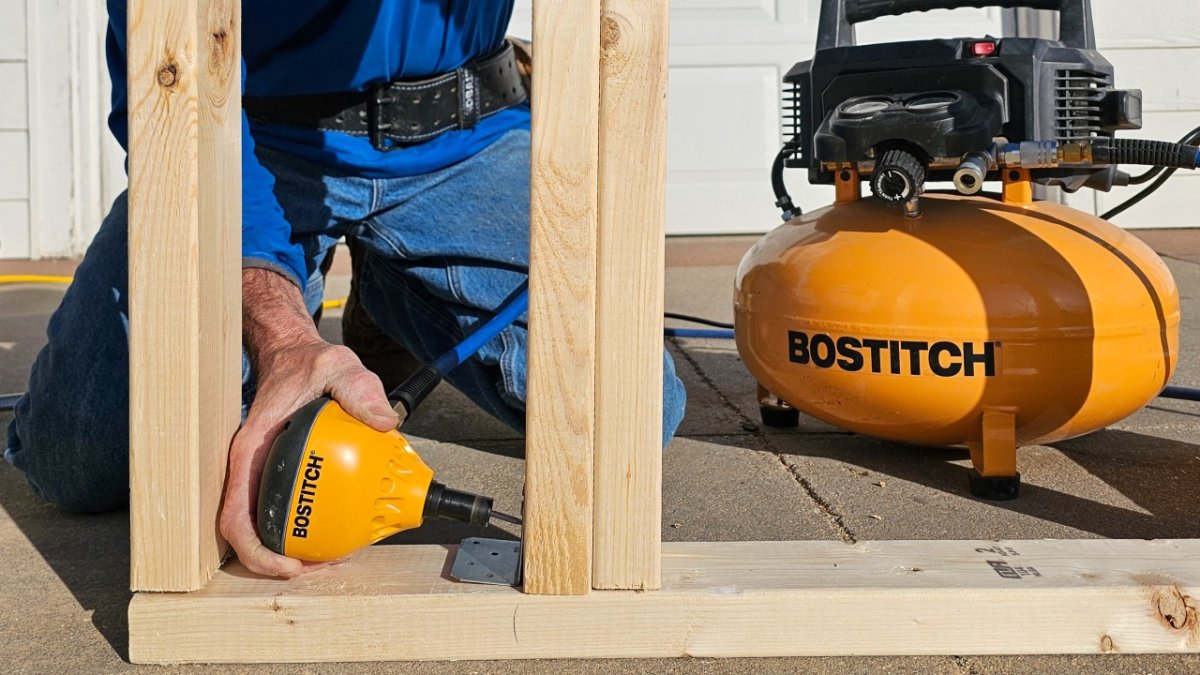
If you have ever tried to swing a hammer inside a joist bay, behind blocking, or in that one deeply annoying corner where your framing nailer absolutely will not fit, you already know the problem a palm nailer is supposed to solve. It is the tool-world equivalent of a tiny bulldozer with anger issues: compact, direct, and weirdly satisfying.
For this review, we synthesized official specifications, retailer data, repair references, and hands-on U.S. testing coverage to evaluate the Bostitch PN100K palm nailer. The result is a clearer picture of what this pneumatic palm nailer does well, where it falls short, and whether it deserves space in your shop, truck, or “I swear I’ll organize this garage next weekend” corner.
The short version: the Bostitch palm nailer is not a gimmick, and it is not a replacement for a framing nailer. It is a specialized problem-solver. In tight spaces, awkward angles, and connector-heavy work, it can save serious time, spare your knuckles, and keep your language more family-friendly than manual hammering usually allows.
Quick Verdict
Best for: framing touch-ups, joist hangers, metal connectors, fence work, deck repairs, and any spot too cramped for a traditional nail gun.
Bottom line: the Bostitch PN100K earns high marks for power, versatility, compact access, and nail-size flexibility. Its biggest knocks are that it still needs a compressor setup, and some kits do not include the 1/4-inch air fitting you need to get started. That missing fitting is a tiny part with an outsized talent for being inconvenient.
What Is the Bostitch Palm Nailer, Exactly?
The Bostitch PN100K is a pneumatic impact palm nailer designed to drive loose bulk nails one at a time in places where swinging a hammer is awkward or impossible. Instead of firing a collated strip of nails like a standard framing nailer, it uses rapid percussive force to hammer a single nail into the workpiece once you apply pressure against the nail head.
That makes it especially useful for jobs like:
- installing joist hangers and metal connectors
- finishing framing nails in cramped bays
- deck and fence repairs
- driving nails in corners, overhead spaces, or between studs
- punch-list work where a full-size nail gun is overkill
Official and retail specs consistently describe the PN100K as a compact, one-handed, air-powered tool with a magnetic hardened-steel nose, interchangeable nose pieces, and support for a wide nail range. In plain English, that means it is built for awkward jobs and likes to show off in cramped spaces.
Key Specs That Actually Matter
Size and Weight
The PN100K weighs about 2.9 pounds, which is light enough for one-handed use but substantial enough to feel like a real tool rather than a noisy toy. Multiple sources also note its compact body, with a height around 5-1/4 inches, which helps it slide into framing cavities and other low-clearance spaces.
Nail Compatibility
One of the biggest advantages here is nail range. The Bostitch PN100K is commonly listed as handling 5D to 70D bulk nails, roughly 1-3/4 inches to 7 inches, depending on the nail type and the nose installed. That is broader versatility than many smaller palm nailers offer, and it is a major reason this model often gets picked over bargain options.
Air Requirements
The tool uses a 1/4-inch air connection. Pressure guidance varies slightly across listings, but the safest summary is this: it is typically used in the 80 to 100 PSI zone for normal work, while official documentation allows operation up to about 125 PSI. Air consumption is modest for a pneumatic tool, but you still need a compressor and hose setup that can keep up.
Included Accessories
Depending on the seller, the kit usually includes three nose pieces, a nose wrench, hex wrench, lubricant, spare O-rings, and a case, plus some version of a leather comfort glove or sheath. That accessory bundle is one of the PN100K’s strongest selling points because it makes the tool more adaptable for different nail sizes and applications.
How the Bostitch Palm Nailer Performs in Real Work
Hands-on review coverage paints a pretty consistent picture: the Bostitch PN100K performs best when the job is awkward, tight, and annoying. That is not an insult. That is its love language.
Testers repeatedly praised the tool for driving framing nails, joist-hanger nails, and smaller finish-style nails without much drama. The magnetic nose helps hold the nail in place, which matters more than it sounds. When you are wedged between studs or reaching into an overhead corner, “hold the nail steady with one hand and don’t drop it” stops being a small detail and becomes the whole game.
The interchangeable nose pieces are another big win. Instead of forcing one nose design to handle every fastener, the PN100K gives you multiple options so the tool feels more adaptable on mixed projects. If you move between connector nails, framing nails, and smaller loose nails, this flexibility is not just nice to have. It is what separates a useful specialty tool from a dust collector.
Comfort is also better than you might expect from something that is essentially a handheld air hammer for nails. Reviewers consistently mention reduced vibration, a solid ergonomic feel, and less hand fatigue than cheaper palm nailers. It still makes noise. It still vibrates. It still feels like power tool business, not spa day. But it is manageable for extended use.
Another strength is flush driving. When the compressor is set appropriately and the user keeps steady pressure on the tool, the PN100K tends to drive nails until the heads sit flush with the wood. That makes it practical for finish-up work where half-driven nails would otherwise require a hammer-and-set cleanup routine.
What the Bostitch Palm Nailer Gets Right
1. It Solves a Real Problem
The best tools do not invent a problem so they can sell you a solution. They take a frustrating, common task and make it easier. This palm nailer absolutely does that. If you ever work around framing repairs, connectors, decks, fencing, or old-house oddities, the PN100K can save time and arm strain.
2. The Nail Range Is Impressive
Many mini palm nailers are perfectly fine until you ask them to do more than one type of job. The Bostitch PN100K is more versatile than that. Its broader nail compatibility gives it a wider working life, especially for contractors or serious DIYers who want one specialty tool that can cover several scenarios.
3. The Magnetic Nose Helps More Than Marketing Suggests
Magnetic nail holding sounds like one of those feature bullets you skim past on a product page. In real use, it matters. Anything that reduces fumbling in cramped locations is a quality-of-life upgrade, and the PN100K earns points there.
4. Serviceability Looks Better Than Average
Official documentation, diagrams, and replacement parts are relatively easy to find for the PN100/PN100K platform. That is good news for long-term ownership. Pneumatic tools live hard lives, and being able to source O-rings, magnets, and internal parts means this is not necessarily a one-problem-and-done purchase.
Where It Falls Short
1. It Is Still a Pneumatic Tool
If you already own a compressor, air hose, and fittings, great. If not, the total cost of entry rises quickly. A palm nailer makes perfect sense when it plugs into a setup you already use. It makes less sense when buying it means starting from scratch with an entire air-tool ecosystem.
2. The Missing Air Fitting Complaint Is Real
One of the most repeated criticisms in hands-on coverage is that some kits do not include the required 1/4-inch air fitting. That is not a deal-breaker, but it is a classic “come on, really?” moment. It is a little like buying a new lamp and discovering the bulb is apparently a luxury add-on.
3. The Leather Accessory Is Not a Headliner
Some kits include a leather comfort glove or sheath. In theory, that sounds rugged and useful. In practice, at least one major tester found it unimpressive and not especially necessary. The real stars are the noses, the magnetic tip, and the compact body. The leather piece feels more like a bonus extra than a reason to buy.
4. It Does Not Replace a Framing Nailer
This is a finishing-specialty-access tool, not your main production nailer. If you are framing an entire wall in open space, use a framing nailer. If you are trying to finish the last stubborn connector nails in a cramped spot, that is where the palm nailer earns its keep.
Bostitch Palm Nailer vs. Other Options
Within the broader market, the PN100K occupies a smart middle ground. It is more versatile and heavy-duty than many mini palm nailers, yet still more compact than full-size nail guns. Compared with tiny palm nailers, it offers a wider nail range and stronger kit value. Compared with cordless palm nailers, it is often lighter in hand and less expensive upfront, though you trade away the freedom of battery power.
That trade-off matters. If you work in remote spots without easy compressor access, a cordless model may make more sense. But if your workflow already revolves around pneumatic tools, the Bostitch palm nailer remains a strong buy because it delivers performance without dragging you into another battery platform. Your charger shelf has probably suffered enough.
Who Should Buy the Bostitch PN100K?
You should seriously consider this tool if you are:
- a contractor who regularly deals with hangers, blocking, repairs, or tight framing situations
- a deck or fence builder who hates finishing nails by hand in cramped corners
- a remodeler working in older homes where nothing is square and every access point is rude
- a serious DIYer who already owns a compressor and wants faster, cleaner tight-space nailing
You can probably skip it if you are:
- doing only occasional light-duty nailing with plenty of open access
- starting from zero with no compressor and no other pneumatic tools
- expecting it to replace your framing nailer for everyday production work
Final Review: Is the Bostitch Palm Nailer Worth It?
Yes, for the right user, the Bostitch PN100K is worth it. This is a well-regarded pneumatic palm nailer that consistently performs where larger tools fail: in tight, awkward, frustrating spaces that turn ordinary nailing into a wrist-cramping circus act.
Its biggest strengths are clear: compact access, broad nail compatibility, magnetic nail control, solid driving power, and useful included accessories. Its weaknesses are also straightforward: you need an air setup, and the missing fitting issue is silly enough to deserve a side-eye.
If your work regularly involves joist hangers, connectors, deck repairs, fencing, or cramped framing tasks, this tool makes a compelling case for itself. It is not flashy. It is not trendy. It is not trying to become your whole personality. It just does a very specific job very well, which is exactly what a specialty tool should do.
Extended Real-World Experience: What Using a Bostitch Palm Nailer Actually Feels Like
The most useful way to understand the Bostitch palm nailer is not by staring at specs. It is by imagining the kind of job that makes you mutter, “There has to be a better way than this.” That is the moment this tool enters the scene like a small yellow problem-solver with compressed-air confidence.
Picture a deck repair. You can reach the board. You can see the joist hanger. You can even hold the nail where it needs to go. What you cannot do is swing a hammer without skinning your knuckles, bouncing off surrounding framing, or inventing three new curse words before lunch. A full-size framing nailer is too bulky. A drill-and-screw workaround feels slow. The Bostitch palm nailer, by contrast, lets you place the nail, push forward, and let the tool chatter the fastener home. That rhythm is why people like palm nailers so much. They turn a miserable motion into a controlled one.
The experience is also less fatiguing than many first-time users expect. Because the PN100K sits in the hand rather than hanging off a long nose and magazine, it feels more balanced in cramped work. You are guiding it, not wrestling it. There is still vibration, of course, but good palm nailers reduce the harshness enough that you can keep working without feeling like your hand just shook hands with a jackhammer.
Another thing users tend to notice quickly is the convenience of the magnetic nose. On paper, that sounds small. On the job, it is a sanity-saver. When you are holding yourself in an awkward position on a ladder, or leaning over framing, or trying to start a nail in a shadowy corner, not dropping that fastener matters. A lot. The Bostitch does a good job of keeping setup simple: place nail, position tip, apply pressure, keep pushing until the head finishes flush. It is a straightforward workflow, and straightforward is beautiful when the alternative is a comedy sketch involving a loose nail and a hammer.
The tool also feels most at home on the kind of jobs that pile up in real life: adding blocking, tightening a repair, reaching the last few impossible nails, or finishing where your bigger nailer taps out. It is not the hero of the whole build. It is the cleanup hitter. The closer. The specialist who shows up, solves the weird problem, and then quietly goes back in the case.
That is ultimately the Bostitch palm nailer experience: less drama, less awkward hammer swinging, and a lot more “finally.” And in construction, remodeling, and repair work, “finally” is often worth every penny.