

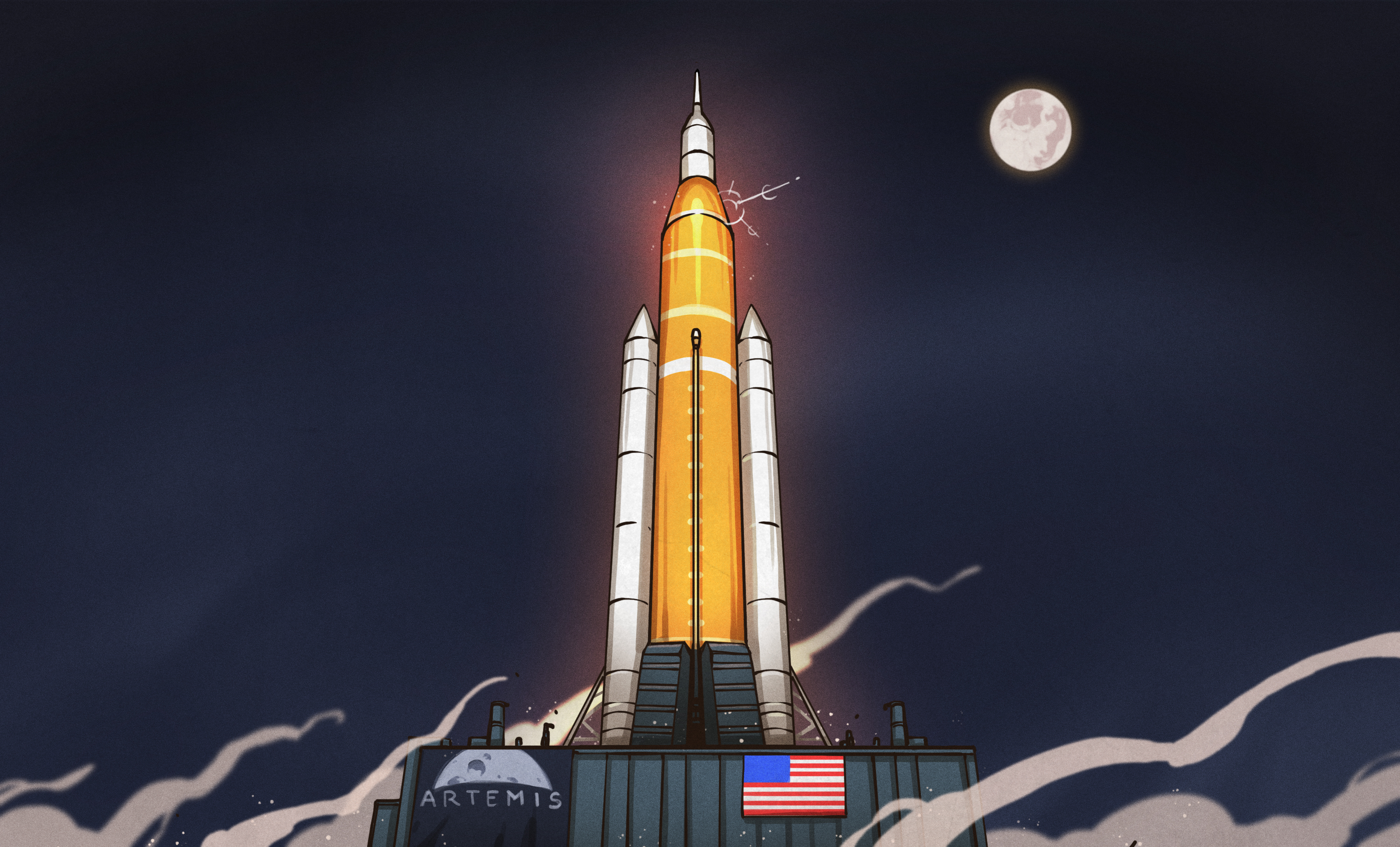
NASA’s Artemis II mission has already given space fans plenty to cheer about: a powerful Space Launch System rocket, the Orion spacecraft, four astronauts, a lunar flyby, and the kind of Moon-to-Earth drama that makes even your GPS app feel underqualified. But one of the most interesting parts of the story happened far from the launchpad. Before the mission, NASA sought volunteers to help passively track Orion as it traveled from Earth to the Moon and back.
This was not the usual “sign up for a newsletter and receive a shiny space badge” kind of volunteer opportunity. NASA was looking for technically capable participants with serious ground equipment, radio-frequency expertise, and the patience to listen for faint spacecraft signals across hundreds of thousands of miles. In other words, this was volunteering for people whose hobby antennas make backyard barbecue grills look small.
The effort shows how NASA is expanding the way deep-space missions can be supported. While the agency’s official communications networks remain the backbone of mission operations, Artemis II also became a test case for broader public-private participation in spacecraft tracking. The result is a fascinating blend of human exploration, commercial space capability, amateur radio skill, academic research, and good old-fashioned “let’s see if we can hear a spaceship from here” curiosity.
What Was NASA Asking Volunteers To Do?
NASA sought volunteers to passively track the Artemis II Orion spacecraft during its crewed journey around the Moon. “Passively” is the important word here. Volunteers were not steering the spacecraft, sending commands, or playing cosmic air traffic controller. Their job was to receive signals transmitted by Orion and collect tracking data that NASA could later analyze.
In practical terms, selected participants used their own antennas, receivers, and ground systems to monitor radio waves from Orion. By measuring how those signals changed over time, especially through Doppler shifts, observers could help estimate spacecraft motion and position. A Doppler shift is the same basic idea behind the changing pitch of a passing ambulance siren, except this ambulance is a spacecraft flying around the Moon, and nobody is stuck in traffic.
NASA’s goal was not to replace its official communications infrastructure. Instead, the agency wanted to understand what additional capabilities exist outside government networks. Commercial companies, universities, international partners, nonprofit organizations, and highly skilled amateur radio operators all represent a growing ecosystem that may support future lunar and Mars missions.
Why Artemis II Needed Serious Tracking Support
Artemis II was a major milestone in NASA’s Moon-to-Mars exploration plan. The mission launched NASA astronauts Reid Wiseman, Victor Glover, and Christina Koch, along with Canadian Space Agency astronaut Jeremy Hansen, aboard Orion for a crewed lunar flyby. The flight tested the spacecraft’s life support, navigation, propulsion, power, thermal control, communications, and crew systems in deep space.
Unlike a satellite circling Earth every 90 minutes, Orion traveled far beyond low Earth orbit. That distance makes communication and navigation more challenging. Signals take longer to travel. Antennas must be precisely aimed. Engineers must maintain reliable contact while the spacecraft moves through a changing gravitational environment influenced by Earth and the Moon.
NASA’s Near Space Network and Deep Space Network provided the primary communications and tracking support. These networks are the heavy lifters of space communication. The Near Space Network supports missions near Earth, around the Moon, and in cislunar space, while the Deep Space Network uses giant antennas in locations around the world to communicate with spacecraft across the solar system.
The volunteer tracking project added another layer of learning. By inviting outside participants to collect independent tracking data, NASA could study how non-government ground stations perform during a real crewed deep-space mission. This is especially important as lunar activity increases and more spacecraft, landers, satellites, and commercial services operate around the Moon.
From Volunteer Call To Selected Tracking Teams
NASA first issued its call for Artemis II tracking volunteers in 2025. The agency wanted participants capable of receiving Orion’s radio signals and submitting tracking data in formats NASA could evaluate. The opportunity built on a similar effort from Artemis I, the uncrewed test flight that sent Orion around the Moon in 2022.
During Artemis I, a smaller group of volunteers successfully tracked Orion and provided useful lessons. NASA learned that outside tracking data can be valuable, but it also learned that formatting, quality control, and standards matter. Space data is not a place where “close enough” should be the motto. Artemis II therefore came with more specific expectations for how tracking data should be collected and submitted.
NASA later selected 34 global participants for the Artemis II tracking effort. The group included commercial service providers, academic institutions, government partners, nonprofits, amateur radio organizations, and individual radio enthusiasts. Together, these participants represented dozens of ground assets across multiple countries. That wide participation showed how much interest Artemis II generated beyond NASA’s own facilities.
Who Were The Volunteers?
The word “volunteer” may sound casual, but many participants were highly experienced space communications professionals or technically advanced hobbyists. Some came from commercial satellite communications companies. Others represented universities with radio astronomy or engineering programs. A few were individual amateur radio operators with impressive experience tracking spacecraft signals.
This mix matters. Commercial providers may one day offer NASA additional communication and navigation services. Universities can contribute research, student training, and new technical approaches. Amateur radio operators bring a culture of experimentation, signal hunting, and practical ingenuity. They are the people who can look at a faint signal buried in noise and say, “That tiny wiggle is interesting,” while the rest of us are still trying to pair Bluetooth headphones.
The Artemis II tracking effort also reflected the international nature of modern space exploration. The mission itself included a Canadian astronaut, and the tracking participants came from several countries. Deep-space exploration is no longer a single-agency, single-nation activity. It is becoming a networked effort involving public institutions, private companies, universities, and citizen experts.
How Passive Spacecraft Tracking Works
Passive spacecraft tracking is based on receiving signals already transmitted by a spacecraft. Orion sends radio signals for communications, telemetry, and mission operations. Ground stations equipped with appropriate antennas and receivers can detect those signals when geometry, frequency, equipment sensitivity, and local conditions line up.
One useful measurement is Doppler shift. As Orion moves relative to a ground station on Earth, the received frequency changes slightly. Careful analysis of that frequency shift can reveal information about spacecraft velocity and trajectory. Combine observations from multiple locations, and the data can become even more useful.
For Artemis II, volunteers were not simply pointing a dish at the Moon and hoping for the best. They had to understand frequencies, timing, signal processing, antenna gain, equipment calibration, and data standards. Weather, local radio interference, Earth’s rotation, and spacecraft geometry could all affect results. In other words, it was a volunteer opportunity with homework.
Why NASA Wants Outside Tracking Capabilities
NASA’s Artemis program aims to establish a long-term human presence at the Moon and prepare for future crewed missions to Mars. That future will require robust communication and navigation infrastructure. As more missions operate in lunar space, demand on NASA’s networks will grow.
By testing outside tracking capabilities now, NASA can better understand how commercial, academic, and citizen-operated systems might support future missions. These systems could potentially provide backup observations, supplemental data, regional coverage, technology demonstrations, or specialized services.
This fits NASA’s broader “commercial-first” direction in some areas of space operations. The agency already works with commercial providers for cargo, crew transportation, lunar payload deliveries, communications services, and technology development. Artemis II tracking volunteers gave NASA another way to evaluate what the wider aerospace community can contribute.
The Difference Between Tracking Orion And Watching Artemis II Online
NASA also made Artemis II easy for the general public to follow through online tools. The Artemis Real-time Orbit Website, often called AROW, allowed users to see Orion’s position, mission duration, distance from Earth, distance from the Moon, and other mission details. The NASA app also offered mission tracking features, including augmented reality options for users who wanted to point their phones and visualize Orion’s location.
That public tracking experience was different from the volunteer radio-tracking program. AROW was designed for anyone with internet access. The volunteer program was for people and organizations with advanced technical equipment capable of independently receiving Orion’s signals.
Both forms of participation are valuable. Casual viewers could feel connected to the mission, while technical volunteers contributed data and demonstrated real-world tracking capabilities. One group clicked a website. The other group aimed antennas at deep space. Both got to say, with varying degrees of nerd credibility, “I tracked Artemis II.”
Why Artemis II Was So Important
Artemis II was NASA’s first crewed mission under the Artemis campaign and the first time humans traveled to the Moon’s neighborhood in more than 50 years. Unlike Artemis I, which tested Orion without astronauts, Artemis II put a crew inside the spacecraft and evaluated how systems performed with people aboard.
The mission did not land on the Moon. That job belongs to future Artemis missions. Instead, Artemis II was a crewed flight test, designed to prove that Orion and supporting systems could safely carry astronauts through deep space and return them home. The mission helped NASA prepare for future lunar surface missions and, eventually, Mars exploration.
The flight also gave engineers a chance to study how the crew interacted with Orion’s systems. Astronauts tested manual controls, monitored automated operations, observed spacecraft performance, participated in science activities, and evaluated habitability inside the capsule. In human terms, the mission helped answer a simple but important question: can people safely live and work in this spacecraft beyond Earth orbit?
What NASA Learned From Volunteer Tracking
The Artemis II volunteer tracking effort was not just about collecting data points. It was about learning how diverse ground systems can contribute to a major human spaceflight mission. NASA could compare data quality, formatting, timing accuracy, and operational reliability across different participants.
That matters because future missions may need flexible communications support. Lunar missions may include orbiters, landers, rovers, relay satellites, habitats, commercial payloads, and crewed vehicles. The more activity there is around the Moon, the more important it becomes to have resilient, redundant, and scalable tracking and communication options.
Volunteer and commercial tracking can also help inspire innovation. A university team may develop improved signal-processing methods. A private company may demonstrate a service NASA could use later. An amateur radio expert may prove that a clever setup can produce surprisingly good observations. Space exploration has always benefited from unexpected contributors, and Artemis II continued that tradition.
Why Amateur Radio Still Matters In The Space Age
It may seem funny that amateur radio operators still play a role in an era of reusable rockets, advanced satellites, artificial intelligence, and spacecraft with solar arrays wider than a small apartment. But radio remains fundamental to spaceflight. Every deep-space mission depends on sending and receiving signals across enormous distances.
Amateur radio operators often have deep practical knowledge of antennas, propagation, weak-signal reception, Doppler correction, and noise reduction. Those skills are directly relevant to spacecraft tracking. Many radio enthusiasts are also comfortable experimenting with equipment, documenting observations, and collaborating across borders.
That is why the Artemis II opportunity captured attention in the ham radio community. It was a rare chance to participate in a crewed lunar mission from Earth. Nobody had to wear a spacesuit. Nobody had to eat rehydrated shrimp cocktail. But with the right equipment and expertise, volunteers could help listen to one of the most historic spacecraft flights of the modern era.
What This Means For Future Moon And Mars Missions
The Artemis II volunteer tracking project points toward a future where space mission support is more distributed. NASA will still rely on its official networks for mission-critical communications, but outside capabilities may increasingly supplement government infrastructure.
As lunar exploration grows, communications may become more like an ecosystem than a single pipeline. Commercial relay networks, lunar navigation services, university ground stations, international partners, and specialized tracking providers could all play roles. That approach may improve resilience. If one system is overloaded, unavailable, or poorly positioned, another may help fill the gap.
For Mars, the challenge becomes even bigger. Mars missions involve much longer distances, greater signal delays, and more complex communication planning. Lessons learned from lunar missions like Artemis II can help NASA build the habits, standards, and partnerships needed for the next giant leap.
Experiences Related To Tracking The Artemis II Mission
Imagine being one of the volunteers selected to track Artemis II. Launch day would not feel like an ordinary workday. Your coffee might taste the same, your chair might squeak the same, and your inbox might still contain five emails titled “quick question,” but somewhere above the Atlantic and then far beyond Earth, Orion would be carrying four people toward the Moon. Your job would be to listen.
The experience would begin with preparation long before liftoff. A volunteer team would need to test antennas, verify receiver performance, check timing systems, review predicted frequencies, study mission timelines, and prepare data submission workflows. There would be no room for “we’ll figure it out when the spaceship gets here.” Spacecraft do not politely circle back because someone forgot to update software.
During the mission, tracking Orion would likely feel like a blend of science, engineering, and quiet suspense. Unlike watching a rocket launch on a livestream, passive tracking is not always visually dramatic. The excitement may appear as a line on a screen, a frequency shift, or a signal emerging from background noise. To most people, that might look like electronic spaghetti. To a trained operator, it can mean: there it is.
There is also something deeply human about the experience. The signal is not just from a machine. It comes from a spacecraft carrying astronauts. Every data point is connected to a crew living inside a capsule, checking systems, looking back at Earth, and flying through a place where only a small number of humans have ever traveled. That makes the work feel less like a technical exercise and more like standing on the shoreline of history with a very expensive fishing rod.
For university teams, the mission could become a real-time classroom. Students might learn about orbital mechanics, radio-frequency engineering, data processing, and mission operations in a way no textbook can fully match. For commercial providers, it could become a proof point: a chance to show that their systems can contribute to human spaceflight support. For amateur operators, it could become a career highlight, the kind of story that begins with “So there I was, tracking a spacecraft near the Moon…” and immediately improves any dinner conversation.
The experience would also teach patience. Deep-space tracking is not always smooth. Signals fade. Equipment behaves badly at the least convenient moment. Local interference appears like an uninvited guest. Weather can complicate observations. Timing must be precise. Data must be clean. The Moon, despite being very photogenic, is not particularly concerned with anyone’s troubleshooting schedule.
Still, that is part of the appeal. The Artemis II volunteer tracking effort gave people outside NASA a meaningful way to participate in exploration. Not everyone can launch aboard Orion, build a rocket, or work in Mission Control. But skilled people around the world can contribute from ground stations, labs, campuses, and backyards. Space exploration becomes larger when more people have a real role in it.
For readers, the takeaway is simple: Artemis II was not only a mission about astronauts flying around the Moon. It was also a mission about connection. NASA connected Orion to Earth through official networks, connected the public through real-time tracking tools, and connected experts around the world through a volunteer data effort. That is the future of exploration: not one signal, one station, or one audience, but a global network listening together.
Conclusion
NASA’s call for volunteers to track the Artemis II mission was more than a clever public engagement campaign. It was a practical test of how commercial providers, researchers, international partners, nonprofit groups, and amateur radio experts can support the next era of lunar exploration. By passively tracking Orion’s radio signals, selected volunteers helped NASA study the strengths and challenges of outside tracking capabilities during a crewed deep-space mission.
Artemis II proved that returning humans to the Moon’s neighborhood is not only about rockets and capsules. It is also about communication, navigation, data, standards, teamwork, and resilience. As NASA moves toward long-term lunar exploration and future Mars missions, those invisible signals between spacecraft and Earth will matter as much as the spectacular flames at launch.
In the end, the Artemis II volunteer tracking effort reminds us that space exploration is becoming more open, more distributed, and more collaborative. The Moon may be far away, but with the right antenna, the right expertise, and a little cosmic patience, people on Earth can still be part of the journey.
Note: This publish-ready article is written in original American English and synthesizes current public information about NASA, Artemis II, Orion, SCaN, the Near Space Network, the Deep Space Network, volunteer spacecraft tracking, and public Artemis mission tracking tools.