

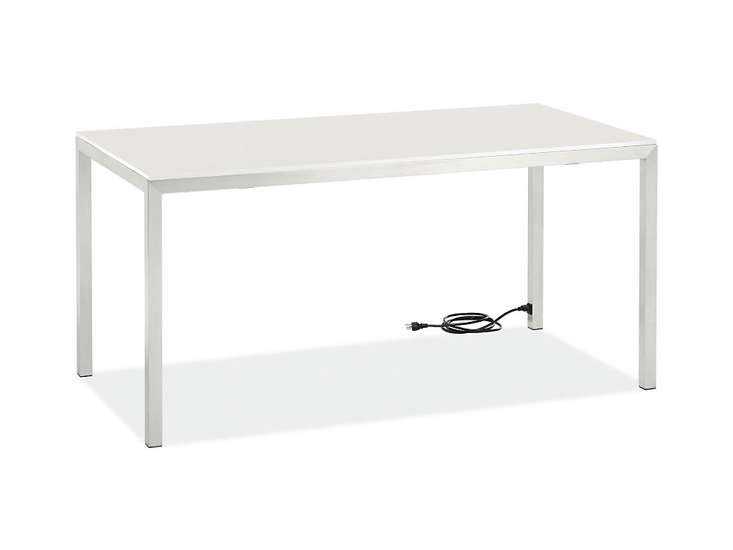
There are desks that simply hold your laptop, and then there are desks that understand your laptop, your phone, your monitor, your lamp, your headphones, and your mysterious charging cable collection that seems to multiply after midnight. Portica Desks with Power and USB Outlets belong in the second group. They are designed for people who want a modern workspace that looks calm, clean, and intentionally styled, even when the workday itself is powered by coffee, calendar reminders, and a heroic number of browser tabs.
The Portica desk style is known for its sleek stainless steel base, minimalist profile, customizable top options, and built-in power access. Instead of forcing you to crawl under the desk like a determined raccoon every time your phone battery hits 7%, powered Portica-style desks bring outlets and USB charging closer to the work surface. The result is a workspace that feels more organized, more functional, and far less tangled.
For home offices, studios, executive rooms, and hybrid work setups, this kind of desk solves a very modern problem: how to keep technology within reach without letting cords take over the room. A regular desk gives you surface area. A powered Portica desk gives you surface area, charging access, visual order, and a quiet little productivity boost every time you plug in without performing yoga under the table.
What Makes Portica Desks with Power and USB Outlets Different?
The basic appeal of a Portica desk is simple: clean lines, premium materials, and a no-fuss modern shape. But the powered version adds a practical layer that makes the design especially useful for today’s office electronics. Depending on the model or configuration, Portica desks have been offered with integrated power outlets and USB ports placed discreetly on or beneath the desk structure, often near the back leg or underside of the base.
That hidden placement matters. A desk with visible cords running everywhere can make even the most expensive office look like a technology garage sale. Portica’s approach keeps the charging function close but visually quiet. Your laptop, monitor, desk lamp, phone, tablet, and small accessories can stay connected without turning your workspace into a cable jungle.
Clean Modern Design
Portica desks are often associated with a stainless steel base, mitered corners, and a light architectural look. The frame gives the desk a polished appearance without feeling bulky. This makes the design flexible enough for a home office, a creative studio, or a professional workspace where the desk faces the room instead of hiding against a wall.
Integrated Charging Convenience
The built-in outlets and USB ports are the real everyday luxury. They are not flashy, but they are the feature you appreciate ten times a day. Need to charge a phone during a meeting? Plug it in. Need to power a second monitor? Done. Need to charge wireless earbuds before a video call? No dramatic search party required.
Customizable Workspace Feel
Portica-style desks are often available in different sizes and top materials, such as wood, glass, stone, quartz, MDF, or other finish options, depending on current availability. That flexibility lets the desk fit different rooms and design personalities. A maple or walnut top feels warm and classic. A glass top looks lighter and more modern. A stone or quartz surface can feel refined and executive. Basically, your desk can say “creative director,” “financial strategist,” or “I finally stopped working from the dining table.”
Why Built-In Power Matters in a Home Office
A desk with built-in power outlets is not just about convenience. It changes how the entire workstation functions. Most people use more devices than they realize: laptop, external monitor, phone, tablet, task light, speaker, printer, docking station, camera charger, smartwatch charger, and possibly one device nobody remembers buying but everyone is afraid to unplug.
When power is built into the desk, those tools become easier to manage. Instead of stretching cords across the floor or stacking power strips in awkward places, you can create a central charging zone. This improves the look of the workspace and can also reduce daily friction. Small frustrations matter. If your setup is annoying every morning, your desk is already arguing with you before your first email.
Fewer Visible Cords
One of the strongest reasons to choose a powered Portica desk is cord control. Even a beautiful office can look messy when cables hang from every edge. Integrated outlets help route power more intentionally. Pair the desk with cable clips, Velcro ties, a cord sleeve, or an under-desk cable tray, and the setup can look impressively tidy.
Better Device Access
USB ports are especially helpful for smaller electronics. Phones, headphones, tablets, wireless keyboards, and small accessories often need charging throughout the day. Having USB access built into the desk means you can keep those devices close without occupying every wall outlet in the room.
A More Professional Setup
For remote workers and small business owners, the desk is part of the background. A clean workspace looks better on video calls, feels more intentional, and helps create a mental boundary between “I am working” and “I am answering email from a pile of laundry.” A Portica desk with power and USB outlets supports that professional atmosphere while still being practical.
Best Uses for Portica Desks with Power and USB Outlets
Portica desks are versatile, but they are especially useful in spaces where technology, design, and organization need to coexist peacefully. Think of them as the Switzerland of office furniture: calm, neutral, polished, and very good at handling cables.
Home Office Workstations
For a dedicated home office, a powered Portica desk can support a laptop, monitor, task lamp, and charging area without needing an extra visible power strip on the floor. A 60-inch or larger desk can provide enough room for a primary monitor, keyboard, mouse, notebook, and a small décor piece that says, “Yes, I am a person with taste.”
Executive Offices
The clean stainless steel base and customizable top options make Portica desks suitable for professional environments. In an executive office, the desk can face outward into the room because the back and sides look finished. The built-in power feature keeps devices charged while preserving a polished impression.
Creative Studios
Designers, writers, editors, photographers, and digital creators often use several devices at once. A powered desk helps manage chargers for drawing tablets, camera batteries, external drives, speakers, and laptops. The minimalist design also leaves the visual focus on the work itself rather than on clutter.
Shared Work Areas
In shared workspaces, built-in power is a major advantage. People can plug in quickly without moving furniture or negotiating with the nearest wall outlet. L-shaped Portica-style configurations can also create more work surface for collaboration, paperwork, or dual-monitor setups.
How to Choose the Right Portica Desk Configuration
Buying a powered desk is not just about picking the prettiest top and calling it a day, although that is definitely the fun part. You also need to consider size, power placement, room layout, and how your devices will actually be used.
Measure the Room First
Before choosing a desk, measure the room carefully. A desk that looks perfect online may feel enormous once it arrives. Leave enough space behind your chair so you can move comfortably. Also consider where the nearest wall outlet is located. Even with built-in power, the desk still needs to connect to a wall source.
Choose the Right Desktop Size
A 60-inch-wide desk can work well for many home offices, especially if you use one monitor and a laptop. A 72-inch desk gives more breathing room for dual monitors, paperwork, speakers, or creative equipment. Deeper desks, such as 30 inches or more, are often more comfortable for monitor distance because they prevent the screen from sitting too close to your face.
Think About Power Placement
Check whether the power module is positioned on the left or right side, under the desk, or near a back leg. This matters more than people think. If your wall outlet is on the left but the cord exits on the right, you may need better cable routing. If you charge your phone on the right side of the desk, right-side USB access may feel more natural.
Match the Top Material to Your Lifestyle
Wood tops bring warmth and texture, but they may need more care around spills, heat, and scratches. Glass tops look sleek and visually light, but fingerprints will treat them like a personal diary. Stone or quartz tops feel substantial and upscale, though they can be heavy and may require careful handling. MDF or laminate options can offer a clean look with practical durability, depending on the finish.
Ergonomics: A Beautiful Desk Still Needs a Smart Setup
A Portica desk can look fantastic, but your body still needs a comfortable workstation. Good ergonomics are not reserved for people with fancy office chairs and suspiciously perfect posture. They are for anyone who has ever stood up after three hours of work and made a noise usually associated with old doors.
Start with chair height. Your feet should rest flat on the floor or on a footrest. Your knees should have enough clearance under the desk. Your keyboard and mouse should sit close enough that your shoulders stay relaxed. Your wrists should remain fairly straight while typing.
Monitor placement also matters. A good rule is to keep the monitor directly in front of you, roughly an arm’s length away, with the top of the screen at or slightly below eye level. If you use a laptop for long sessions, consider adding an external keyboard, mouse, and laptop stand. A laptop alone forces a compromise: either the screen is too low or the keyboard is too high. Your neck and shoulders will notice, and they will not send a thank-you card.
Safety Tips for Desks with Built-In Outlets
Built-in power is convenient, but it should be used thoughtfully. A powered desk is best for typical office electronics, such as laptops, monitors, chargers, lamps, and small accessories. It is not the place for high-wattage appliances. Do not plug in space heaters, microwaves, coffee makers, or other heavy-load devices through a desk power module. That is not productivity; that is inviting your electrical system to have a dramatic moment.
Always check the desk’s current product specifications, power rating, and manufacturer instructions before use. Avoid overloading the outlets, and do not daisy-chain power strips. If the cord, plug, or outlet area becomes hot, loose, cracked, or damaged, stop using it and have it inspected or replaced. Built-in power should make work easier, not turn your office into a cautionary tale.
Use the Right Devices
Safe desk power use usually means office electronics only. A laptop charger, phone charger, LED task lamp, monitor, or docking station is generally the kind of device people expect to use at a powered desk. High-draw appliances belong directly in appropriate wall outlets, not in furniture power modules.
Keep Cords Ventilated and Visible Enough
Hiding cords is good. Burying cords under rugs, crushing them behind furniture, or twisting them into a knot worthy of a sailor’s exam is not good. Route cords neatly, but make sure they are not pinched, overheated, or stretched tightly.
Portica Desk vs. Regular Desk: Is Built-In Power Worth It?
A regular desk can still be excellent. If you only use a notebook and a laptop, you may not need built-in power. But if you work with several devices, a powered Portica desk can feel like a major upgrade. The value comes from convenience, cleaner cable management, and a more intentional workspace.
Compared with budget computer desks that include basic charging stations, a Portica-style desk is more design-focused. It is less about adding shelves, LED strips, or gaming features, and more about combining modern furniture craftsmanship with practical power access. Compared with a traditional executive desk, it feels lighter, cleaner, and better suited to contemporary technology.
Styling Ideas for a Powered Portica Desk
The minimalist frame gives you freedom to style the desk in several ways. For a warm modern look, pair a wood top with a leather chair, a ceramic lamp, and a woven rug. For a sharper office feel, choose a darker top with a black or neutral ergonomic chair and matte accessories. For a light studio look, use a glass or pale wood top with white storage and a slim monitor arm.
Because the desk already has a clean structure, avoid overcrowding the surface. A monitor, keyboard, mouse, lamp, notebook, and one personal object are often enough. If the personal object is a tiny dinosaur wearing glasses, even better. Good design should have at least one moment of joy.
Simple Accessories That Improve the Setup
A monitor arm can free up surface space and improve screen height. A cable tray can hide adapters and excess cord length. A desk mat can protect the top and create a defined work zone. A small drawer unit or mobile file cabinet can add storage if the desk itself has none. The goal is to keep the Portica desk looking open, not empty, and functional, not chaotic.
Common Mistakes to Avoid
The first mistake is buying the desk without measuring the room. The second is assuming all USB ports charge at the same speed. Some older USB-A ports may charge slowly compared with newer USB-C options. The third mistake is ignoring cable routing until after setup. Plan where the main cord will go before placing the desk.
Another common mistake is treating the built-in outlets as unlimited power. They are not. Use them for suitable office electronics and respect the rating. Finally, do not forget lighting. A beautiful desk under bad lighting is like a movie star in a parking garage security camera. It may still be good, but it is not living its best life.
Experience Notes: Living With Portica Desks with Power and USB Outlets
The everyday experience of using a powered Portica desk is less about one dramatic feature and more about dozens of tiny conveniences. The first thing you notice is the surface. A clean rectangular desk with a slim metal base makes the room feel more open. It does not visually shout. It quietly says, “I have my life together,” which is helpful even on days when your inbox strongly disagrees.
The second thing you notice is how often you use the outlets. A phone charger can stay plugged in without dangling across the floor. A laptop charger can live in one consistent place. A desk lamp can connect without needing an ugly extension cord. If you use a monitor, the cable setup becomes easier to control because everything can route toward one area instead of spreading like digital spaghetti.
For people who work from home, this matters more than it sounds. When the workspace is easier to reset, you are more likely to keep it clean. At the end of the day, you can unplug a laptop, straighten the chair, place the notebook back in position, and leave the desk looking ready for tomorrow. That small ritual helps separate work time from personal time. The desk becomes a workstation instead of a random table where tasks go to multiply.
A powered Portica desk is also useful for people who switch between tasks. You might write in the morning, take video calls at noon, review documents in the afternoon, and charge a tablet before evening reading. Built-in USB ports reduce the number of adapters on the surface. The fewer objects fighting for space, the easier it is to focus.
There is also a design benefit that only becomes obvious after a few weeks. Because the power is integrated, you do not feel the same temptation to add bulky external power strips on top of the desk. That keeps the visual line clean. If the desk has a beautiful wood, glass, or stone top, the material remains the star instead of being covered by chargers and cables.
Still, the best experience comes from planning the setup carefully. Place the desk near a wall outlet if possible. Use cable ties from day one. Decide which devices deserve permanent power and which should be plugged in only when needed. Keep high-wattage appliances away from the desk outlets. If you add a monitor arm, make sure it works with the chosen top material and edge design. If you use a glass or stone top, check manufacturer guidance before clamping accessories.
After living with a powered desk, a standard desk can feel surprisingly inconvenient. You may wonder how you tolerated crawling under furniture just to plug in a phone. The Portica approach works because it combines grown-up design with practical charging access. It does not look like a tech gadget, but it behaves like a very helpful one. That is the sweet spot: furniture that looks elegant when the laptop is closed and works hard when the calendar is full.
Final Thoughts
Portica Desks with Power and USB Outlets are ideal for anyone who wants a modern desk that does more than sit there looking attractive. They combine minimalist design, customizable materials, built-in charging convenience, and cleaner cable management. For home offices, professional workspaces, and creative studios, they offer a practical way to keep devices powered without sacrificing style.
The best version for you depends on room size, device needs, power placement, and surface preference. Choose carefully, set it up ergonomically, respect the electrical rating, and add smart cable management. Do that, and your desk will not just hold your work. It will support it, organize it, and quietly make your day feel a little less chaotic.