

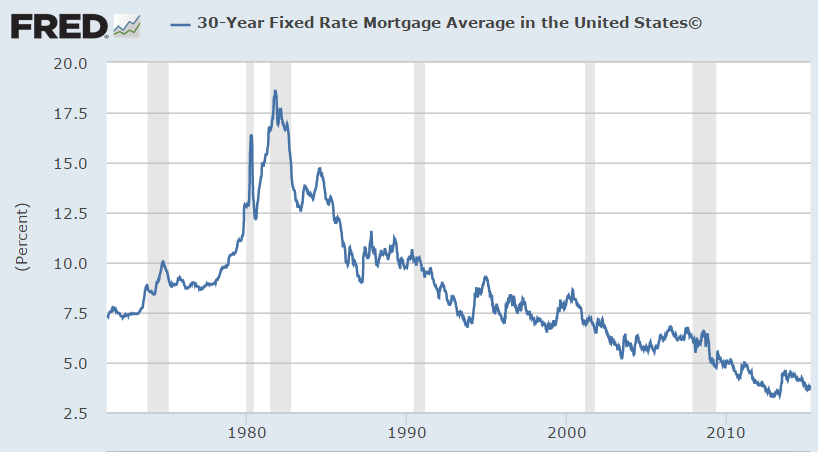
A 30-year fixed-rate mortgage is the financial equivalent of a long-term relationship: predictable, dependable, and occasionally expensive enough to make you question your life choices. It remains one of the most widely used home loan options in the United States because it spreads repayment across 360 monthly installments while keeping the interest rate unchanged for the life of the loan.
That combination gives homebuyers lower required monthly payments than they would typically face with a shorter loan term. However, stretching a mortgage across three decades also means slower equity growth and considerably more interest paid over time.
Is a 30-year fixed mortgage a sensible path to homeownership, or is it simply an extremely polite way to remain in debt until your kitchen cabinets become fashionable again? The answer depends on your income, financial priorities, expected time in the home, and tolerance for risk.
What Is a 30-Year Fixed-Rate Mortgage?
A 30-year fixed-rate mortgage is a home loan scheduled to be repaid through monthly payments over 30 years. The mortgage interest rate is established when the loan closes and does not change during the repayment period. The Consumer Financial Protection Bureau distinguishes this structure from an adjustable-rate mortgage, whose rate may rise or fall after an introductory period.
Each scheduled payment includes principal and interest. Principal reduces the amount you owe, while interest compensates the lender for providing the money. Many homeowners also make one combined monthly payment that includes property taxes, homeowners insurance, and possibly mortgage insurance.
The “fixed” label applies to the interest rate and scheduled principal-and-interest payment. It does not freeze your entire housing bill in carbonite. Property taxes, insurance premiums, homeowners association fees, and other ownership expenses may increase over time.
How a 30-Year Mortgage Payment Works
Fixed-rate mortgages are generally fully amortizing loans. That means the scheduled payments are calculated so the principal balance reaches zero at the end of the term, assuming all payments are made as required.
During the early years, a larger percentage of each payment goes toward interest. As the balance declines, the interest portion gradually shrinks and more money goes toward principal. Your amortization schedule shows this month-by-month transition.
A Simple Mortgage Example
Suppose you borrow $300,000 with a hypothetical 6.5% fixed interest rate for 30 years. Your monthly principal-and-interest payment would be approximately $1,896.
If you made only the scheduled payments for all 360 months, you would pay approximately $382,633 in interest, bringing the total principal and interest paid to roughly $682,633. Taxes, insurance, closing costs, mortgage insurance, and maintenance would be additional expenses.
Now compare that with the same $300,000 balance repaid over 15 years at the same hypothetical rate. The payment would rise to about $2,613, but total interest would fall to approximately $170,398. The shorter loan demands about $717 more each month while saving more than $212,000 in interest.
Real 15-year mortgage rates are often lower than comparable 30-year rates, which can make the lifetime savings even greater. However, actual pricing depends on market conditions, credit, down payment, property type, points, fees, and lender policies.
Advantages of a 30-Year Fixed-Rate Mortgage
1. Lower Required Monthly Payments
The most obvious benefit is affordability. Spreading the balance across 30 years usually produces a lower required payment than repaying the same amount over 10, 15, or 20 years.
Freddie Mac notes that a 30-year term generally delivers a lower monthly payment because of the extended repayment period, while shorter terms create higher payments but faster equity growth and lower lifetime interest.
A lower payment may help buyers qualify for a home without devoting an uncomfortable percentage of their income to housing. It may also leave room for utilities, repairs, retirement contributions, childcare, travel, or the shocking number of throw pillows a new home apparently requires.
2. Protection From Future Interest-Rate Increases
Once the loan is closed at a fixed rate, general market-rate increases do not change the mortgage rate. This stability can be particularly valuable for homeowners planning to remain in the property for many years.
An adjustable-rate mortgage may initially offer a lower rate, but future adjustments can increase both the rate and payment. A fixed mortgage removes that uncertainty from the principal-and-interest portion of the household budget.
3. Predictable Long-Term Budgeting
Homeowners know what their scheduled principal-and-interest payment will be one year, ten years, or twenty-five years after closing. That predictability makes long-term financial planning easier.
Inflation may also reduce the real burden of a fixed payment over time. A $1,900 payment could feel substantial today but relatively manageable in the future if household income and general prices rise. The payment stays numerically similar even though the purchasing power of those dollars changes.
4. More Monthly Cash-Flow Flexibility
A lower required payment does not prevent borrowers from making additional principal payments. Homeowners can pay the minimum during expensive months and pay extra when bonuses, tax refunds, commissions, or other funds become available.
This flexibility can be useful for households with variable income. A 15-year mortgage may force a higher payment every month, while a 30-year mortgage allows the borrower to imitate a shorter repayment schedule voluntarily without being permanently committed to it.
Before adopting this strategy, verify how the lender applies extra payments and whether the loan contains a prepayment penalty. Most standard mortgages do not impose one for ordinary additional principal payments, but assumptions are not a substitute for reading the loan documents.
5. More Money Available for Other Goals
The difference between a 15-year and 30-year payment could be directed toward an emergency fund, employer retirement-plan match, diversified investments, education savings, or higher-interest debt.
This can be financially productive when the borrower uses the cash-flow difference deliberately. It works less impressively when the “investment strategy” turns into restaurant delivery, unused streaming subscriptions, and a garage containing four exercise machines currently serving as laundry racks.
6. Broad Availability
Thirty-year fixed-rate loans are available through many conventional mortgage programs and government-backed programs such as FHA, VA, and USDA loans for eligible borrowers and properties.
The structure is familiar to lenders, real estate agents, appraisers, and closing professionals. Borrowers can often request quotes from several lenders, making it easier to compare interest rates, annual percentage rates, points, lender credits, and closing costs.
7. Potential Tax Benefits for Eligible Homeowners
Some homeowners may deduct qualified mortgage interest when they itemize federal deductions and satisfy applicable rules. Current IRS guidance generally limits the mortgage interest deduction for newer acquisition debt to interest on up to $750,000 of qualifying debt, or $375,000 for married taxpayers filing separately. Different limits may apply to qualifying older debt.
A tax deduction should not be treated as a dollar-for-dollar reimbursement. It reduces taxable income rather than directly refunding every dollar of interest. Many households receive no additional mortgage-interest benefit because taking the standard deduction is more favorable than itemizing. Consult a qualified tax professional about your situation.
Disadvantages of a 30-Year Fixed-Rate Mortgage
1. Much More Interest Over the Life of the Loan
The greatest drawback is the long-term borrowing cost. Lower payments feel friendly each month, but the lender collects interest for a much longer period.
Even a modest difference in the mortgage rate can produce a large lifetime cost when multiplied across 360 payments. Borrowers should evaluate both the monthly payment and the total projected interest shown in their loan disclosures.
2. Slower Equity Growth
Equity is the difference between the home’s market value and the amount owed against it. Because early payments on a 30-year mortgage are interest-heavy, the principal balance declines slowly during the first several years.
Home appreciation can increase equity, but appreciation is not guaranteed. If home prices decline shortly after the purchase, a buyer with a small down payment and limited principal reduction could have little equity or even owe more than the home is worth.
3. The Interest Rate May Be Higher Than a Shorter-Term Rate
Lenders commonly charge a higher rate for a 30-year fixed mortgage than for a 15-year fixed mortgage. A longer term exposes the lender and mortgage investor to additional inflation, interest-rate, and prepayment uncertainty.
The borrower therefore experiences two cost disadvantages: interest accrues over more years, and it may accrue at a higher rate.
4. It Can Encourage Buyers to Stretch Their Budget
A lower monthly payment may make a more expensive property appear affordable. However, receiving approval for a large loan does not mean the payment will fit comfortably alongside every other financial goal.
Mortgage qualification focuses heavily on documented income, debt, assets, and credit. It may not fully capture plans such as starting a business, caring for an aging parent, having children, changing careers, or retiring early.
A practical home budget should include the mortgage payment, taxes, insurance, utilities, routine maintenance, major repairs, association fees, and savings. The roof will not postpone retirement just because the dishwasher developed a personality disorder.
5. Mortgage Insurance May Increase the Cost
Conventional borrowers who make a down payment below 20% may be required to pay private mortgage insurance. PMI protects the lender rather than the homeowner if the borrower defaults.
For many qualifying conventional mortgages, federal law provides rights to request PMI cancellation after the balance reaches a specified level and requires automatic termination under certain conditions. FHA and other government-backed mortgage insurance programs follow different rules.
A low-down-payment loan can make homeownership possible sooner, but buyers should understand how mortgage insurance affects both the monthly payment and long-term cost.
6. Refinancing Is Not Free or Guaranteed
Borrowers sometimes choose a 30-year mortgage with the plan to refinance when rates decline. That plan may work, but it is not guaranteed.
Future refinancing depends on interest rates, income, employment, credit, home value, debt obligations, lender requirements, and closing costs. A lower market rate is useful only when the homeowner qualifies and the projected savings exceed the refinancing expenses.
Restarting another 30-year term can also extend the payoff date. A lower payment may feel like a victory while quietly adding years of interest unless the borrower continues paying on an accelerated schedule.
7. Debt May Follow You Into Retirement
Someone who takes out a 30-year mortgage at age 45 and follows the standard schedule could still be making payments at age 75. That may be manageable for a household with substantial retirement income, but burdensome for someone relying primarily on Social Security or limited savings.
The relevant question is not merely, “Can I make this payment today?” It is also, “How does this loan fit with the year I hope to retire?”
30-Year Fixed Mortgage vs. 15-Year Fixed Mortgage
| Feature | 30-Year Fixed Mortgage | 15-Year Fixed Mortgage |
|---|---|---|
| Required monthly payment | Usually lower | Usually higher |
| Lifetime interest | Usually much higher | Usually substantially lower |
| Equity growth | Slower | Faster |
| Typical interest rate | Often higher | Often lower |
| Monthly flexibility | Greater | Lower |
| Best suited for | Buyers prioritizing affordability and flexibility | Buyers prioritizing rapid payoff and interest savings |
The better choice is not automatically the mortgage with the lowest lifetime interest. A 15-year loan that leaves a household without emergency savings can create more financial risk than a carefully managed 30-year loan.
Conversely, a borrower who can comfortably make the higher payment may find that a shorter term provides guaranteed interest savings and faster progress toward debt-free homeownership.
Who May Benefit From a 30-Year Fixed Mortgage?
A 30-year fixed-rate mortgage may be appropriate for buyers who:
- Want the lowest practical required principal-and-interest payment.
- Expect to remain in the home for many years.
- Prefer predictable payments over potential ARM savings.
- Need room in the budget for retirement contributions or other goals.
- Have variable income and value the option to make extra payments voluntarily.
- Are purchasing in a high-cost market where a shorter-term payment would be difficult.
Who Should Consider Other Mortgage Options?
A different loan structure may deserve consideration when a borrower:
- Can easily afford a 15-year or 20-year payment.
- Wants to eliminate housing debt before retirement.
- Plans to own the property for only a short period.
- Qualifies for an attractive adjustable-rate mortgage and understands the adjustment risks.
- Prioritizes rapid equity growth and minimal lifetime interest.
- Would use the lower 30-year payment mainly to purchase more house than the budget safely supports.
How to Compare 30-Year Mortgage Offers
Compare APR, Not Just the Advertised Rate
The interest rate determines the interest charged on the balance, while the annual percentage rate incorporates the interest rate plus certain points, broker fees, and other loan charges. APR is therefore a broader measure of borrowing cost.
APR is especially useful when comparing loans with the same term and repayment structure, although it assumes the borrower keeps the loan for its full scheduled period. Someone planning to sell or refinance sooner should also compare upfront costs and break-even periods.
Request Loan Estimates From Multiple Lenders
The CFPB recommends requesting and comparing multiple Loan Estimates. These standardized disclosures help borrowers review the interest rate, projected payment, closing costs, cash required at closing, and other loan terms.
Compare offers on the same day when possible because mortgage pricing can change with market conditions. Make sure the quotes use the same loan amount, down payment, occupancy type, lock period, and assumptions.
Understand Points and Lender Credits
Discount points generally require more money at closing in exchange for a lower rate. Lender credits reduce upfront closing costs but usually come with a higher interest rate.
Paying points may make sense when the borrower expects to keep the mortgage long enough for monthly savings to recover the upfront expense. It may be less useful for someone likely to move or refinance before reaching the break-even point.
Do Not Ignore Total Cash Needed
The down payment is only one part of the transaction. Buyers may also need funds for lender fees, title services, appraisal charges, prepaid interest, escrow deposits, inspections, moving expenses, immediate repairs, and emergency reserves.
Draining every available dollar to close can turn the first plumbing problem into a financial crisis. A home emergency fund is not glamorous, but neither is learning to collect ceiling water in a salad bowl.
Practical Experiences With a 30-Year Fixed-Rate Mortgage
Real-world experience shows that the biggest value of a 30-year fixed mortgage is not simply its lower payment. It is the ability to choose how aggressively to repay the loan as life changes.
Consider a couple purchasing their first home while also paying for childcare. A 15-year mortgage might save a large amount of interest, but its higher mandatory payment could leave little room for medical bills, vehicle repairs, or retirement savings. They choose a 30-year fixed mortgage and keep six months of expenses in reserve. During ordinary months, they add $200 to principal. During costly months, they make only the required payment. The loan provides flexibility without forcing them to refinance or borrow when life becomes expensive.
Another homeowner chooses a 30-year term because the payment is comfortable, but never creates a plan for the monthly savings. The difference disappears into lifestyle spending. Ten years later, the homeowner is surprised by how much principal remains. The mortgage did exactly what the contract promised; the missing ingredient was a deliberate repayment strategy.
A third borrower receives an annual bonus and sends part of it directly to principal. Extra payments reduce the balance on which future interest is calculated. After several years, this homeowner has effectively shortened the repayment period while retaining the safety of a lower required payment. This approach works particularly well for workers whose income includes commissions, profit-sharing, seasonal earnings, or unpredictable bonuses.
Long-term owners often appreciate the fixed payment most when interest rates rise. New buyers may face substantially higher financing costs, while the existing homeowner keeps the rate established years earlier. That mortgage can become a valuable financial asset, although it may also discourage moving because selling the home means giving up the favorable loan.
The opposite experience occurs when rates decline. A borrower may watch neighbors refinance into lower payments and feel stuck with an expensive rate. Refinancing could help, but closing costs, appraisal issues, reduced income, or a lower credit score may limit the benefit. This is why buyers should be comfortable with the original loan rather than assuming a future refinance will rescue an uncomfortable payment.
Homeowners also learn that “fixed payment” is easy to misunderstand. The principal-and-interest amount remains stable, but escrow payments may rise when property taxes or insurance premiums increase. A household that budgets only for the original total payment can be surprised by an annual escrow adjustment. Reviewing tax assessments and insurance renewals helps prevent the mortgage statement from delivering an unwanted jump scare.
Retirement timing creates another important lesson. Homeowners who make only scheduled payments may carry the mortgage for all 30 years. Those who want the loan gone before retirement can calculate the extra monthly principal needed to reach a specific payoff date. Even relatively modest recurring payments can shorten the term, but emergency savings and high-interest debt should usually be considered before accelerating a low-rate mortgage.
The most successful borrowers tend to treat the 30-year term as a flexible framework rather than permission to ignore the balance. They review the mortgage annually, track equity, check whether PMI can be removed, confirm extra payments are applied to principal, and reassess whether refinancing or accelerated payoff supports their current goals.
The least satisfying experiences usually begin with focusing exclusively on the monthly payment. A low payment can disguise a high purchase price, expensive fees, mortgage insurance, or a rate that is uncompetitive. The payment matters, but so do the total loan cost, financial reserves, expected ownership period, and the opportunity cost of the money used for the home.
Ultimately, the 30-year fixed mortgage works best when its flexibility is used intentionally. It can protect cash flow, support stable budgeting, and provide room for competing priorities. It becomes far more expensive when borrowers repeatedly postpone extra payments without using the money for anything that improves their financial position.
Conclusion: Is a 30-Year Fixed Mortgage Worth It?
A 30-year fixed-rate mortgage is neither automatically good nor automatically bad. It is a trade-off. Buyers receive a lower required monthly payment, protection from future rate increases, predictable principal-and-interest costs, and flexibility to make additional payments. In exchange, they usually accept a higher interest rate than a shorter-term borrower, slower equity growth, and substantially more total interest.
The right decision depends on more than qualifying for the payment. Consider job stability, emergency savings, retirement goals, other debts, expected time in the home, and how the cash-flow difference will actually be used.
Before closing, obtain multiple Loan Estimates, compare APRs and total costs, review mortgage insurance requirements, and test the payment against an honest household budget. A mortgage may last 30 years, but the decision should not be made in 30 minutes.
Note: Mortgage calculations in this article are illustrative and exclude taxes, insurance, mortgage insurance, association fees, closing costs, and other expenses. Loan pricing and qualification standards vary. This content is educational and is not individualized financial, legal, lending, or tax advice.