

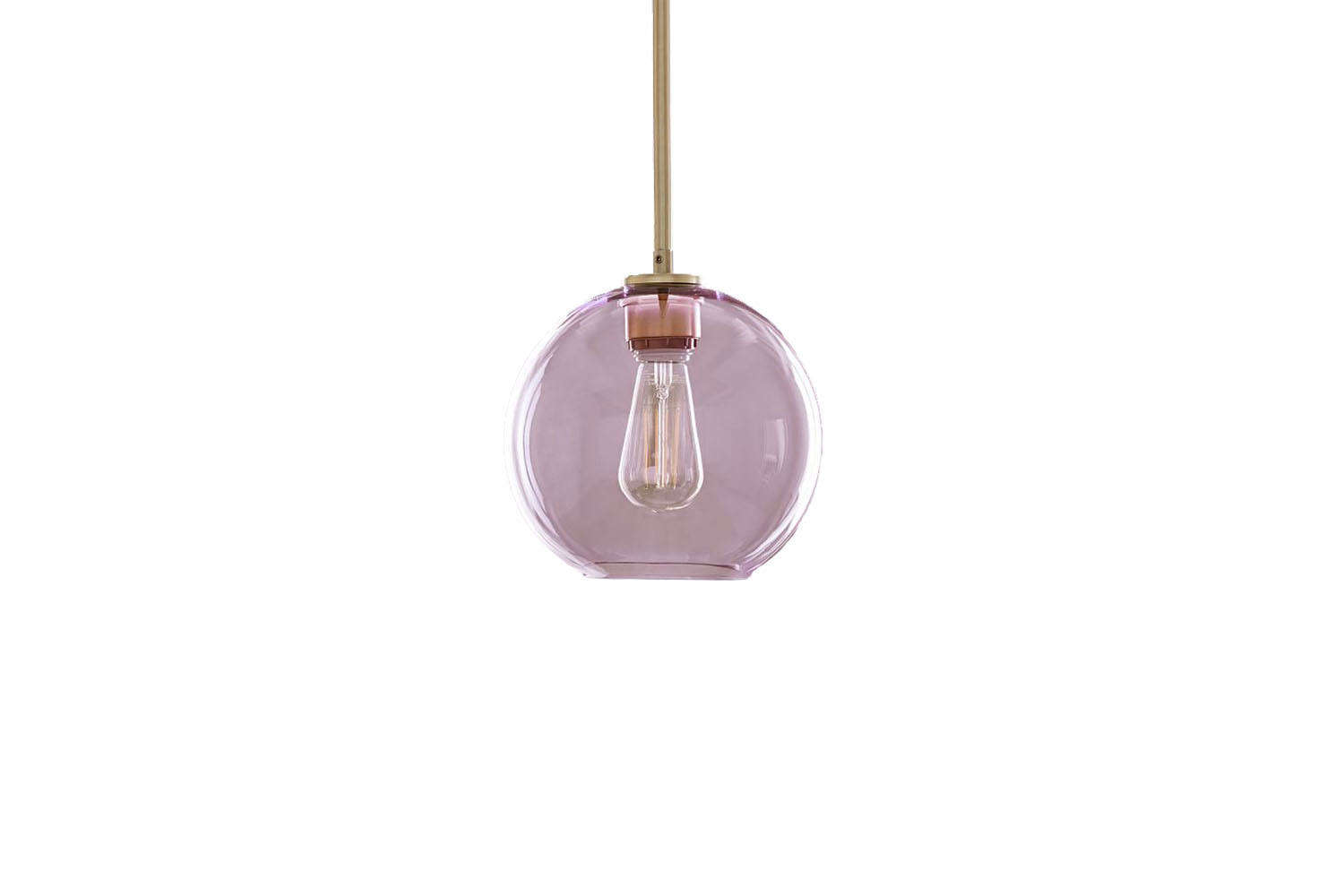
Some homes have a “statement sofa.” Others have a “statement wall.” And then there are the brave souls who let their
ceiling do the talking. Enter the sculptural glass globe pendant: part lighting fixture, part floating
artwork, part “wow, you really have your life together” illusion.
A glass globe pendant is exactly what it sounds likea luminous sphere suspended from above. But add the word
sculptural and it stops being “a light” and starts being “a moment.” The best ones don’t just illuminate a room;
they edit it, the way a good haircut edits your face. (If your haircut has ever made you look like a founding
father, you understand why editing matters.)
What Makes a Glass Globe Pendant “Sculptural”?
A standard pendant hangs and shines. A sculptural glass globe pendant has intentionshape, proportion, and a little bit
of drama. It might be perfectly spherical and minimalist, or slightly oversized and mesmerizing, or paired with a
distinctive metal stem, cap, or cluster arrangement that reads like modern art.
“Sculptural” doesn’t have to mean complicated. Sometimes it’s the simplest formsclean lines, thoughtful materials, and a
just-right silhouettethat look the most elevated. In design terms, this is the lighting equivalent of wearing a plain
white tee that somehow looks expensive.
Why Everyone Loves the Globe Shape
It’s a universal shape (and your room knows it)
The globe is friendly. It has no sharp edges. It works with modern kitchens, cozy breakfast nooks, vintage-inspired dining
rooms, and even that moody hallway where you keep meaning to hang art. A globe pendant can feel mid-century, contemporary,
transitional, or softly traditional depending on the finish and glass type.
It gives “design” without screaming “I watched one renovation show”
When you choose a sculptural globe, you’re not just adding brightnessyou’re adding a focal point. Design publications
regularly highlight statement pendants as an easy way to elevate a space, because lighting can function like a piece of
decor that also happens to be useful.
Choosing the Right Glass: Clear, Opal, or Something In Between
The glass isn’t just a vibeit changes how the light behaves. Before you commit to a globe that looks gorgeous online and
then blinds you like a tiny sun in real life, pick the glass type based on how you actually live in the space.
Clear glass globes
- Look: airy, crisp, slightly sparkly
- Light effect: brighter and more direct; the bulb is visible
- Best for: spaces where you want visual lightness (small kitchens, narrow hallways) or you love the look of a decorative bulb
Clear glass is fantastic when you want that “floating orb” effect. Just remember: if the bulb is visible, you’ll want a
bulb that’s pretty, and you may want a dimmer for comfort.
Opal (milk) glass globes
- Look: soft, timeless, gently matte
- Light effect: diffused, less glare, bulb is mostly hidden
- Best for: dining areas, living spaces, and anywhere you don’t want to stare into the bulb during conversation
Opal/milk glass is the “good lighting” of pendant shadesit smooths everything out. It’s especially helpful over tables and
islands where people sit, talk, and occasionally make eye contact like polite adults.
Split finishes, smoke glass, and other “designer” options
Some globes mix clear and opal sections for a more sculptural effect, or use smoke-tinted glass to soften the light while
still showing the bulb. These are great when you want the fixture to feel like a feature, not an afterthought.
Where Sculptural Glass Globe Pendants Shine the Most
Over a kitchen island
The kitchen island is the modern home’s stage: cooking, homework, snacks, awkward standing meetings, and that one friend
who always perches on a stool and narrates your chopping technique. A globe pendant works here because it provides focused
light while looking intentional.
A widely used guideline is to hang pendants so the bottom of the fixture sits about 30–36 inches above the countertop.
This keeps sightlines open while providing functional task lighting.
Spacing matters too. Many designers aim to keep pendants evenly distributed, leaving comfortable breathing room between each
globe and a little margin at the ends of the island so the layout feels balanced rather than crowded.
Style tip: If you’re using two pendants, go slightly larger for presence. If you’re using three, keep them a
little smaller so the lineup feels airy, not like a row of bowling balls.
Above a dining table
Dining areas love glass globes because they feel celebratory without being fussy. The go-to guideline is to hang the pendant
so the bottom of the fixture is about 30–36 inches above the tabletop. That’s usually high enough to keep
faces visible across the table and low enough to make the table feel anchored and “lit on purpose.”
For scale, a common rule is choosing a fixture that feels proportionate to the tableoften in the neighborhood of
about half to two-thirds of the table’s width for visual balance. If you have a long rectangular table,
a linear arrangement (multiple globes or a multi-light bar) often feels more natural than one lonely orb in the middle.
In an entryway or hallway
A globe pendant in an entry instantly reads as curated. In tighter passages, choose a smaller globe or a semi-flush style
so you’re not playing an accidental game of “duck and welcome home.”
How to Pick the Right Size (Without Guessing and Hoping)
A sculptural pendant works when it’s in proportion to the room. Too small and it looks like a placeholder. Too big and it
looks like your house is auditioning for a spaceship movie.
Use the surface as your anchor
- Over an island: think in terms of coverage and spacingmultiple smaller globes often look cleaner than one oversized globe (unless you’re going for a single-statement look).
- Over a table: the fixture should feel scaled to the tabletop, not the ceiling. The table is the visual “base.”
Consider ceiling height
Higher ceilings can handle a slightly longer drop (and sometimes a larger globe). Standard-height ceilings typically look
best when pendants follow the classic 30–36 inch clearance above surfaces. If your ceilings are taller, many designers
adjust the drop length upward a bit so the fixture still feels balanced in the room.
Light Bulbs, Color Temperature, and Dimmers: The Unsexy Details That Make It Feel Luxurious
The pendant is the outfit. The bulb is the personality. And yes, the wrong bulb can ruin the whole party.
Brightness: think lumens, not watts
Modern lighting is judged by lumens (brightness), not watts (energy use). When you’re choosing bulbs, look at the lumens
on the package so you know how bright it will actually beespecially in kitchens where you want task-ready light.
Warm vs. neutral light
Most homes look inviting with warm white bulbs (commonly in the 2700K–3000K range). Warm light tends to be
flattering and cozyespecially when you’re using opal glass that already softens the glow.
Dimmers are not optional (okay, technically they arebut you’ll miss them)
A dimmer lets your sculptural glass globe pendant do double duty: brighter for cooking and cleanup, softer for dinner,
calmer for late-night snacking when you’re trying not to fully “wake up” your brain.
If you’re using LEDs, check compatibility between the bulb and the dimmer. Brands like Lutron maintain compatibility tools
and tested lists to help reduce flicker and get smoother dimming performance.
Materials and Finishes That Play Nicely With Glass
Glass is the star, but the hardware sets the tone. A few classic pairings:
- Brass + opal glass: warm, timeless, slightly vintage, always flattering
- Matte black + clear glass: modern contrast, crisp edges, graphic feel
- Polished nickel + clear or opal: clean and bright, great for transitional spaces
- Bronze + smoke glass: moody, dramatic, excellent for dining rooms and bars
Safety and Installation Notes (A.K.A. Don’t “Wing It” With Electricity)
Most globe pendants are hardwired fixtures. Many are UL-rated and some are damp-rated for certain locations, but details
vary by model. If your pendant is heavier (especially hand-blown glass), make sure the ceiling box and support are
appropriate. When in doubt, a licensed electrician is the most cost-effective way to avoid turning “statement lighting”
into “statement problem.”
Care and Cleaning: Keeping the Globe Actually Glowy
Glass globes are gorgeous… and also excellent at collecting fingerprints, dust, and cooking residue. The good news: keeping
them clean is mostly about being gentle and consistent.
Go soft, not scratchy
Many homeowners find that a little mild dish soap and a soft, non-abrasive wipe (even just your hand and a soft cloth)
helps prevent micro-scratches that can make glass look cloudy over time.
Remove the shade when possible
If the globe or shade can be removed safely, washing it in the sink with soap and water is often the easiest way to get rid
of grease and fingerprintsespecially for kitchen pendants. Always make sure the power is off and the shade is fully cool
before cleaning.
For hard-to-reach fixtures
An extendable duster or microfiber cloth on a telescoping pole can help you keep up with dust without turning cleaning day
into an extreme sport. Use a stable step stool or ladder when needed and avoid risky balancing acts.
Styling Ideas That Make a Sculptural Glass Globe Pendant Look “Designed”
1) The single statement globe
One oversized globe over a small round table or in an entryway can feel like a gallery piececlean, bold, and calm.
2) The classic trio over an island
Three globes in a row creates rhythm. Keep them consistent in size and drop length for a polished look, or vary the drops
slightly if you want a more sculptural, installation-like effect.
3) The cluster moment
A cluster of globes at different heights can turn an ordinary stairwell or double-height space into a showstopper. The key
is to treat it like compositionspacing, height variation, and negative space matter.
4) Layer the lighting
Pendants look best when they’re part of a lighting “team”: ambient lighting (ceiling/recessed), task lighting (under-cabinet
or focused fixtures), and accent lighting (sconces or lamps). In kitchens especially, designers often emphasize layered
lighting so the space works for both cooking and hanging out.
Conclusion: Your Ceiling CalledIt Wants Better Jewelry
A sculptural glass globe pendant is one of the simplest ways to upgrade a space because it’s functional and
decorative at the same time. Choose the right glass (clear for sparkle, opal for softness), hang it at a comfortable
height (especially the classic 30–36 inch range above islands and tables), and pair it with a good bulb and dimmer so the
glow matches the mood. Clean it gently, style it intentionally, and enjoy the fact that your lighting now doubles as art.
Experiences With Sculptural Glass Globe Pendants (What People Notice After Living With One)
Once a sculptural glass globe pendant is installed, the first “experience” most homeowners report isn’t about brightness.
It’s about presence. A globe pendant changes the way a room feelseven when it’s offbecause it adds a defined
shape to the air. That’s a weird sentence until you’ve seen it: the fixture becomes an object floating in the room, and
suddenly the space feels more finished. People will walk into the kitchen and say, “Oh, this looks so pulled together,”
even if the junk drawer is still a chaotic museum of rubber bands and mystery keys.
The second big experience is realizing how much the glass finish controls comfort. Clear glass looks light
and crisp, but it can be surprisingly intense when the bulb is visibleespecially at eye level across an island. Many
homeowners end up swapping bulbs (or adding a dimmer) after the first week because the fixture is beautiful… and also
slightly judgmental at full brightness. Opal or milk glass tends to be the “easy mode” choice because it hides the bulb and
spreads the light more gently. In dining spaces, that difference can change the entire vibe: clear glass can feel energetic
and sparkly, while opal glass feels calm and candle-adjacent (without the soot and the “who left this burning?” suspense).
People also notice the sound and movement aspect more than expected. A well-installed pendant is stable,
but in busy kitchens you may see a faint sway when someone bumps a stool or slams a cabinet. It’s not a flawit’s a reminder
that the fixture is a suspended object. The experience tends to be better with sturdy canopies, quality hardware, and a
thoughtful drop length. If a pendant hangs too low in a high-traffic area, it becomes a “bonk risk,” and nobody wants their
lighting to come with a concussion subplot.
Over time, owners discover that glass globes are honest. They show dust. They show fingerprints. They show that your kids
(or your spouse, or youno judgment) have been touching the light like it’s a magic orb that grants wishes. The best
experience is when cleaning is simple: a globe that’s easy to remove and wipe down tends to stay beautiful because people
actually maintain it. When a fixture is complicated to disassemble, it quietly turns into a dusty relic that you notice
only when sunlight hits it at the wrong angle and suddenly you feel personally attacked by smudges.
Another common experience: globe pendants are compliment magnets. Guests rarely compliment recessed lights.
They do compliment a sculptural glass pendant, especially when it’s scaled well and paired with the right finish. Brass +
opal gets described as “warm” and “classic.” Matte black + clear glass gets described as “modern” and “clean.” Smoke glass
gets described as “moody” and “fancy,” which is a great outcome for something that’s literally just a light.
People living with globe pendants also start to understand lighting as mood control. With a dimmer, the same fixture can be
bright and practical during cooking, then soft and ambient during dinner, then barely-there during late-night kitchen
wandering. Without a dimmer, homeowners often find themselves choosing between “too bright” and “off,” which is not the
emotional range anyone wants from their ceiling.
Finally, many homeowners describe a subtle design shift after adding sculptural lighting: they start editing other things.
The pendant becomes a focal point, which encourages a cleaner countertop, fewer competing decor items, and more intentional
styling. It’s not that the light forces you to be organized. It’s that the room suddenly looks so good you want to keep up.
In other words, the pendant doesn’t just brighten your spaceit raises the standard. Politely. Like a friend who always
brings a nice bottle of olive oil and somehow makes you want to cook real meals.