

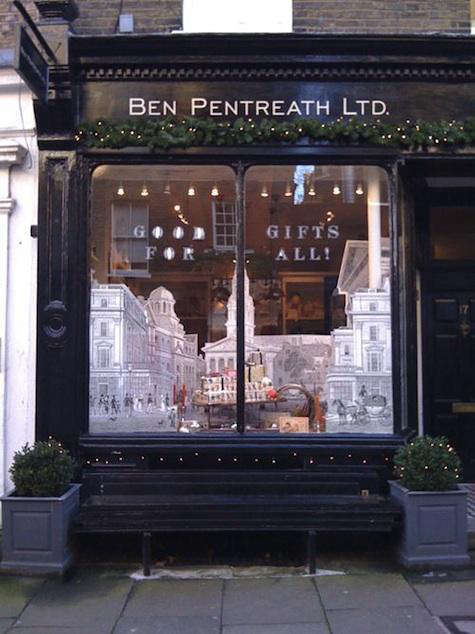
Some London shops shout. Others wink. Ben Pentreath Ltd.now better known as Pentreath & Hallis the sort of place that gives a tiny, knowing wave from a quiet Bloomsbury street and then, once you step inside, makes your suitcase feel deeply inadequate. Located at 17 Rugby Street, this compact interiors destination has become a cult favorite for shoppers who like their homeware with history, wit, color, craft, and just enough eccentricity to make a dinner guest say, “Where on earth did you find that?”
The short answer: in London, in a little shop that understands the difference between decoration and personality. The longer answer is this shopper’s diarya guide to the charm, design philosophy, product mix, and practical joy of visiting Ben Pentreath’s world in Bloomsbury.
Why Ben Pentreath Ltd. Still Matters
The original name, Ben Pentreath Ltd., belongs to the shop’s early chapter. Since 2013, the retail side has operated as Pentreath & Hall, the creative partnership between architectural and interior designer Ben Pentreath and decorative artist Bridie Hall. But the spirit that made the original shop famous remains beautifully intact: classical bones, modern mischief, and a refusal to treat “traditional” as a synonym for “sleepy.”
Ben Pentreath is known for architectural design, interiors, masterplanning, and a very English ability to make rooms feel collected rather than assembled. His work often blends Georgian order, country-house ease, strong color, antique references, and unexpected modern pieces. Bridie Hall brings a maker’s imagination: typography, faux finishes, trays, intaglios, papers, candles, lamps, decorative objects, and a sense that even a wastepaper basket deserves a dramatic inner life.
Together, they created a shop that feels less like a retail formula and more like the contents of a brilliant person’s cabinet of curiositiesif that brilliant person had excellent taste, a dangerous relationship with pattern, and no fear of yellow.
The Location: Rugby Street, Bloomsbury
Rugby Street is not the London of giant glass storefronts and shopping bags swinging like battle flags. It is quieter, more literary, more “I accidentally found my new favorite place while looking for coffee.” Bloomsbury has long been associated with books, ideas, garden squares, Georgian houses, and a certain civilized eccentricity. Pentreath & Hall fits that mood perfectly.
The shop’s showroom sits at 17 Rugby Street, London WC1N 3QT. Current official information lists showroom hours on Wednesday, Thursday, and Friday from 2 p.m. to 6 p.m. The business also lists a Dry Goods and Stationery location at 57 Lambs Conduit Street, open Tuesday through Friday from 11 a.m. to 6 p.m. and Saturday from 11 a.m. to 5 p.m. Sensible shoppers should always check before visiting, because London retail hours can be as changeable as London weatherwhich is to say, bring an umbrella and a flexible attitude.
A Shop That Started Almost by Accident
One of the most charming facts about Ben Pentreath Ltd. is that it did not begin as a grand retail empire with mood boards, market segmentation, and someone named Oliver saying “brand story” too often. It began almost accidentally. Ben Pentreath took on the building at 17 Rugby Street to expand his office. A small shop opened at the front of the room. The office quickly outgrew the space, but the shop proved unexpectedly successful.
That origin story matters because the shop still feels personal. It does not behave like a showroom designed by committee. It behaves like a place where someone genuinely loves objects: old and new, handmade and humorous, useful and slightly theatrical. The result is a rare shopping experience where you can browse a candlestick, a cushion, a hand-painted lampshade, a patterned paper, a small antique, or a gift card and feel that each object has been invited to the party for a reason.
What You’ll Find Inside
The stock changes, which is part of the appeal. Pentreath & Hall describes its offering as an ever-changing range of antique furniture and objects, its own homeware, paper goods, decorative items, and curated collaborations. In plain shopper language: expect temptation in many sizes.
Antiques and Decorative Objects
The antique selection is not about dusty seriousness. It is about atmosphere. Think small furniture, curious objects, classical references, ceramics, framed pieces, Staffordshire-style charm, and accessories that make a shelf look as if it has lived a more interesting life than most people’s coffee tables.
This is the sort of shop where an object does not need to be expensive or enormous to change a room. A single vase, box, tray, print, or lamp can give a bland corner a pulse. That is the Pentreath lesson in miniature: a home becomes memorable through detail.
Paper Goods and Stationery
For shoppers who believe stationery is not a category but a moral position, the Pentreath & Hall universe is especially dangerous. Patterned papers, desk accessories, cards, and printed pieces connect the shop to a long tradition of English decorating, where a bookplate, a calling card, or a sheet of marbled paper can carry as much style as a sofa.
These are also excellent travel purchases. A cushion may require luggage negotiation. Stationery slips into a bag quietly, like a well-behaved accomplice.
Cushions, Lamps, and Soft Furnishings
The shop has long been associated with strong cushions, lamps, lampshades, and textile-driven details. Ben Pentreath’s interiors often show how pattern can loosen a formal room and how color can make old architecture feel alive. That same instinct appears in the shop’s goods.
Fine Cell Work, the British social enterprise known for hand-stitched products made in prisons, has collaborated with Pentreath & Hall on cushions, including geometric and Regency caning designs. These pieces bring together design, craft, and social purpose without turning the object into a lecture. They are handsome firstand meaningful too.
Creamware, Candlesticks, and Classical Shapes
Classical design appears throughout the shop, but with freshness rather than stiffness. Creamware candlesticks, column forms, urns, obelisks, and intaglio-inspired pieces create that satisfying “small museum in a sitting room” effect. The trick is that they are not presented as untouchable antiques. They are things to use, mix, arrange, and enjoy.
A pair of candlesticks on a mantel, a column vase with tulips, or a tray on a side table can bring architectural rhythm into everyday life. No toga required.
The Design Philosophy: Classic, But Never Cranky
The phrase “classic English style” can sometimes sound like a room where fun has been asked to wait outside. Ben Pentreath’s version is different. It is informed by history, proportion, and craft, but it welcomes color, humor, oddity, and comfort. That is why American design lovers have taken such interest in his work. It offers a way to enjoy traditional interiors without turning your living room into a museum that silently judges your sneakers.
At its best, the Ben Pentreath look combines structure and surprise. A room may have Georgian symmetry, but the colors may be bold. A table may be antique, but the lampshade may be playful. A pattern may be drawn from an eighteenth-century pavement, then reimagined for paper, carpet, or stationery. This is not nostalgia. It is design with memory.
How to Shop the Store Like a Design Insider
First, do not rush. A small shop can contain more visual information than a department store floor. Look high, low, under, behind, and sideways. The best item may be on a shelf, in a corner, or behaving modestly near the till.
Second, think in layers. Pentreath & Hall is especially good for pieces that add depth: a lampshade that warms a room, a cushion that breaks up a plain sofa, a tray that organizes clutter into “composition,” or a paper good that makes a desk feel less like a tax-preparation zone.
Third, buy what makes you smile. This sounds obvious until you are standing in a shop trying to become a more serious adult. The charm of this place is that it gives permission to enjoy decoration. A home should not look as if it was optimized by a spreadsheet. It should reveal that a person lives there, reads there, spills tea there, and occasionally buys a small object because life is short and the object was excellent.
Best Things to Look For
If you are visiting Ben Pentreath Ltd. or Pentreath & Hall for the first time, keep an eye out for these categories:
- Small antiques: Ideal for shelves, mantels, bedside tables, and gifts with a story.
- Stationery and paper goods: Easy to pack, visually rich, and perfect for design lovers.
- Candlesticks and ceramics: Useful pieces that add height, texture, and classical charm.
- Cushions: A fast way to introduce pattern without repainting your entire life.
- Lampshades and lighting: Small lighting changes can make a room feel instantly more finished.
- Collaborative pieces: Look for objects made with artists, craftspeople, and specialist makers.
Why American Shoppers Love It
For American travelers, the shop offers something increasingly rare: a clear sense of place. You could not easily mistake it for a lifestyle store in Los Angeles, Chicago, or New York. It belongs to London, specifically to Bloomsbury, and even more specifically to a decorative tradition that values wit, references, books, gardens, old buildings, and rooms that improve when a dog enters them.
At the same time, its lessons translate beautifully to American homes. You do not need a Georgian townhouse to use a patterned cushion. You do not need a country house to place a ceramic candlestick on a dining table. You do not need a library ladder to enjoy good stationery. The broader message is democratic: buy fewer, better, stranger, more personal things.
Shopper’s Diary Experience: A Visit to Ben Pentreath Ltd. in London
Here is the experience I would recommend. Begin in Bloomsbury with no urgent schedule. This is important. A shop like Pentreath & Hall should not be squeezed between “quick lunch” and “run for the Tube while holding a collapsing pastry.” Walk the surrounding streets first. Notice the early Georgian facades, the quiet rhythm of windows, the garden-square atmosphere, and the way Bloomsbury makes London feel human-scaled.
When you reach Rugby Street, the shop does not perform a drumroll. That is part of the pleasure. Its scale is intimate, almost secretive. You step inside and the eye immediately begins negotiating with the brain: lamps, papers, cushions, ceramics, trays, small furniture, antiques, color, pattern, texture. It is not clutter in the careless sense. It is abundance with editing.
The best strategy is to make one slow circuit without touching anything. Let the room introduce itself. Then make a second circuit and pay attention to what you remember. Was it the candlestick? The striped shade? The little framed piece? The cushion with the pattern that seemed slightly too brave until you realized your sofa has been begging for drama since 2017?
One of the joys of the shop is that it makes you reconsider scale. In ordinary retail, people often hunt for the big statement. Here, the small statement may win. A paper-covered box can tidy a desk. A pair of candlesticks can make Tuesday dinner feel intentional. A lampshade can rescue a boring lamp base from witness protection. A postcard can become a bookmark, a framed accent, or a reminder that good design does not always require a mortgage.
Conversation is part of the experience, too. Independent shops often carry knowledge as part of the inventory. Ask what is new, what is made in-house, what has just arrived, and what might not be there next week. The changing stock is not a gimmick; it is the heartbeat of the place. You are not shopping a fixed catalog. You are joining a moving story.
After the showroom, wander to Lambs Conduit Street if time allows. The Dry Goods and Stationery address extends the pleasure into papers, cards, desk pieces, and lighter items that travel well. This is where gift shopping becomes dangerously easy. You may enter thinking, “I will buy one tasteful card.” You may leave with enough patterned paper to suggest you are starting a very stylish correspondence school.
The final test of a shop is not whether everything is beautiful in the shop. Most things look good when surrounded by other good things. The real test is whether you can imagine an item living at home. Pentreath & Hall passes because its objects are decorative but not precious. They invite use. They want to sit on a mantel, hold flowers, brighten a hallway, soften a chair, or make a desk feel less grim. That is the secret: it sells atmosphere in portable form.
Final Thoughts
Ben Pentreath Ltd. in London, now Pentreath & Hall, is more than a design shop. It is a pocket-sized argument for homes with character. It shows that tradition can be playful, that small objects can transform rooms, and that shopping can still feel like discovery rather than algorithmic suggestion.
Visit for the antiques, stationery, cushions, lamps, ceramics, and decorative surprises. Stay for the mood: clever, warm, colorful, and deeply English without being stiff. Whether you are decorating a full house or simply trying to make your coffee table look as if it has read a book, this Bloomsbury shop is worth the diary entry.