

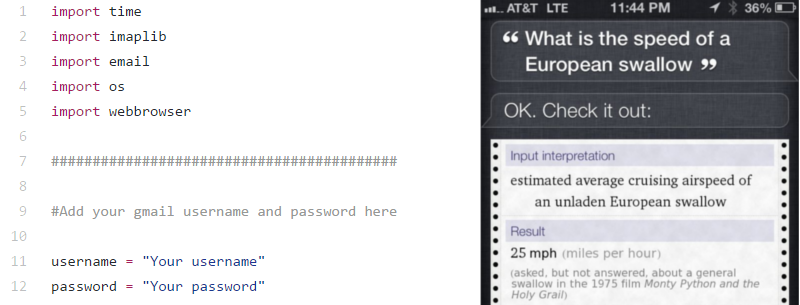
Imagine saying, “Hey Siri, shut down my PC,” and watching your Windows machine obey like a well-trained digital butler. No fancy smart-home hub. No corporate-grade device management platform. No glowing sci-fi command center with a suspicious number of blue LEDs. Just Siri, Python, Gmail, and a computer that listens for the right message at the right time.
The idea behind Siri controls your PC through Python and Gmail is wonderfully hacky in the best possible way. It takes tools millions of people already usean iPhone, Gmail, a Windows PC, and Pythonand connects them into a simple voice-controlled automation system. Siri becomes the microphone. Gmail becomes the message tunnel. Python becomes the little robot sitting on your PC, checking for instructions and carrying them out.
At first glance, this sounds like a party trick. In reality, it is a clever demonstration of how voice assistants, email protocols, scripting languages, and desktop automation can work together. It also teaches several useful concepts: remote PC control, command parsing, automation safety, API access, and the eternal lesson that computers will do exactly what you tell themso please do not tell them anything ridiculous.
What Does “Siri Controls Your PC Through Python And Gmail” Mean?
The basic setup works like this: you speak a command to Siri, Siri creates or sends a message through Gmail, and a Python script running on your PC checks that Gmail account for new commands. When the script finds a recognized instruction, it performs an action on the computer.
For example, you might say something like, “Hey Siri, note PC shutdown,” or trigger a Shortcut that sends an email with the subject line “shutdown.” Your PC-side Python script logs in to the Gmail inbox, sees the new message, confirms that the command is allowed, and runs a safe predefined action such as shutting down the computer, opening a program, muting audio, launching a website, or locking the screen.
That is the magic: Siri does not directly control Windows. Gmail acts as a bridge. Python watches the bridge. Your PC responds only when the message matches rules you created.
Why Use Gmail As The Middleman?
Using Gmail as the command channel may sound strange until you think about the problem it solves. Your iPhone and PC may not be on the same network. Your router may not allow inbound connections. You may not want to expose a web server to the internet just so you can tell your computer to open Spotify. Gmail avoids many of those networking headaches.
Email is cloud-based, widely supported, and accessible from almost anywhere. Python can read email through IMAP or the Gmail API. Siri can trigger messages through Notes, Mail, Shortcuts, or app actions. That makes Gmail a convenient mailbox-shaped command queue.
In simple terms, Gmail becomes a tiny remote-control inbox. Your phone drops commands into it. Your PC picks them up. It is not the fastest possible method, but it is surprisingly practical for basic tasks where a few seconds of delay does not matter.
The Core Architecture
A typical Siri-Python-Gmail PC control system has four parts:
1. Siri Or Apple Shortcuts
Siri is the voice layer. You can use Siri to create a note, send an email, or run an Apple Shortcut. Shortcuts is usually the cleaner modern option because it lets you define specific actions, text, recipients, and phrases. Instead of depending on a vague note title, you can build a Shortcut named “PC Sleep” or “Open Work Mode” and ask Siri to run it.
2. Gmail
Gmail acts as the delivery system. The iPhone sends a command to a dedicated Gmail account or a specific inbox label. The PC-side script checks that account for unread messages, messages with a special subject line, or messages from an approved sender. Once processed, the script can mark the email as read, archive it, delete it, or move it to a “processed” label.
3. Python
Python is the automation brain. It can connect to Gmail using IMAP, OAuth, or the Gmail API. It can parse message subjects and bodies. It can compare commands against a whitelist. Then it can run approved local actions using modules such as subprocess, os, or desktop automation libraries.
4. The PC Action Layer
This is where commands become visible. The script may run a Windows command, launch a program, control media playback, open a folder, start a backup script, dim the screen, or type something into an app. For mouse and keyboard automation, tools like PyAutoGUI can simulate clicks and keystrokes. For system commands, Windows utilities can handle shutdown, restart, lock, and other local operations.
Example Commands You Could Build
The safest version of this project uses fixed commands, not open-ended instructions. In other words, do not let an email say, “Run whatever code appears in this message.” That is not automation. That is inviting chaos to dinner and giving it admin rights.
Good command examples include:
- shutdown shuts down the PC after a short delay.
- restart restarts the PC.
- lock locks the Windows session.
- open browser launches your default browser.
- work mode opens your calendar, email, notes app, and project folder.
- music launches a music app or playlist.
- sleep puts the computer into sleep mode.
- backup starts a predefined backup script.
The best approach is to map each email command to a function. For example, the command “work mode” should call a function that opens a known set of trusted apps. The email should never contain raw shell commands. Your future self will thank you, probably while not cleaning malware off your machine at 2 a.m.
How Python Reads Gmail Commands
There are two common ways for Python to read Gmail messages: IMAP and the Gmail API.
Using IMAP
IMAP is the older and simpler approach. Python’s built-in imaplib module can connect to an IMAP server, authenticate, select the inbox, search for unread messages, and fetch message content. For a small personal project, this can be enough.
However, Gmail security has changed over the years. Basic username-and-password login is not the recommended path. A better setup uses two-step verification and an app password where available, or OAuth-based access. App passwords are especially useful for scripts that need to sign in without storing your main Google password.
Using The Gmail API
The Gmail API is more modern and flexible. It uses OAuth authorization and lets your Python application request specific scopes, such as read-only Gmail access. That is helpful because a command-reading script usually does not need full mailbox control. It only needs to read certain messages and possibly mark them as processed.
The API setup takes more effort at first because you must create credentials, authorize the app, and store a token. But for long-term use, it is cleaner, more secure, and better aligned with how Google expects apps to access Gmail.
Why A Dedicated Gmail Account Is Smart
One of the most important safety tips is to create a dedicated Gmail account just for PC commands. Do not connect your main inbox full of bank alerts, family messages, invoices, newsletters, password resets, and that one coupon email you swear you will use someday.
A dedicated account limits exposure. If something goes wrong, only the automation inbox is affected. It also makes filtering easier. Your Python script can check a small inbox with only command messages. You can restrict accepted messages to one sender. You can use unusual subject prefixes like [PC-CMD] to avoid accidental triggers.
For example, a safe email subject might look like:
[PC-CMD] lock
The script can ignore anything that does not start with that prefix. That one small rule can prevent a surprising amount of nonsense.
Security: The Part Where We Stop The Robot From Becoming Weird
Voice-controlled PC automation is fun, but it must be designed carefully. Any system that lets a remote message trigger a local computer action deserves respect. You are not just building a convenience tool. You are creating a command path into your machine.
Use A Whitelist
A whitelist means only approved commands can run. If the email says “shutdown,” and shutdown is on the list, the script may proceed. If the email says “format drive,” the script should respond with the digital equivalent of a raised eyebrow and do nothing.
Verify The Sender
The script should check that the command came from your approved email address. This is not perfect security by itself, but it is a useful layer. Combine it with OAuth, two-step verification, a private Gmail account, and unique command formatting.
Do Not Execute Raw Email Text
This is the golden rule. Never pass the body of an email directly into a shell command. A message is not code. Treat it as untrusted input. Parse it, clean it, compare it to known commands, and reject anything unexpected.
Log Every Action
Your script should record what command ran and when. A simple log file can help you debug delays, failed actions, repeated commands, or mysterious “Why did my PC restart during dinner?” moments.
Add A Cooldown
If Siri mishears you or Gmail syncs duplicate messages, you do not want the same command firing ten times. Add a cooldown window or mark each processed email immediately. For critical actions like shutdown, consider requiring a special phrase such as “confirm shutdown.”
What Makes This Project So Appealing?
The charm of this setup is that it uses everyday technology in an unexpected way. Siri was not built specifically to control your Windows PC through Gmail. Gmail was not designed as a remote command bus. Python was not invented so you could tell your computer to open YouTube from across the room. Yet together, they form a surprisingly capable automation chain.
This is the spirit of practical hacking: not breaking things, but bending tools into new shapes. You learn how services communicate. You learn how automation can move across devices. You learn why authentication matters. And yes, you also get the joy of telling Siri to do something that Apple and Microsoft did not exactly discuss over brunch.
Modern Improvements To The Original Idea
Older versions of this project often used Siri-created notes synced through Gmail. That still illustrates the concept, but Apple Shortcuts gives modern users a cleaner path. With Shortcuts, you can create named actions, send structured email, reduce transcription errors, and trigger commands with specific Siri phrases.
A modern version might work like this:
- Create a dedicated Gmail account for PC commands.
- Create an Apple Shortcut called “Lock My PC.”
- Configure the Shortcut to send an email to the command Gmail account.
- Use a subject like
[PC-CMD] lock. - Run a Python script on the PC that checks the inbox every few seconds.
- Validate the sender, subject prefix, and command.
- Run only the matching predefined function.
- Mark the message as processed.
This version is more reliable than relying on free-form notes. It also makes it easier to build multiple commands without confusing Siri. The less Siri has to interpret, the better. Siri is useful, but anyone who has watched it turn “open Chrome” into “order foam” knows that precision matters.
Practical Use Cases
Remote Shutdown
You leave your PC running at home and remember it while already in bed. Instead of performing the ancient ritual of getting up, stepping on a charger cable, and muttering at technology, you say, “Hey Siri, shut down my PC.” The command lands in Gmail. Python sees it. The PC shuts down after a delay.
Work Mode
A single Siri phrase can prepare your desktop. Python can open your browser, launch your notes app, start your music, open a project folder, and display your calendar. It is not artificial intelligence. It is better: predictable automation that does not decide to become a poet halfway through the task.
Media Control
You can build commands for play, pause, mute, or volume changes. Depending on your setup, Python can send media key presses or interact with specific apps. This is useful if your PC is connected to a TV or speakers across the room.
Simple Home-Lab Management
If you run scripts for backups, file organization, media servers, or development tasks, Siri can trigger those scripts through the same email-command system. Just make sure the commands are narrow and safe. “Start backup” is reasonable. “Run whatever attachment I send” is how horror movies for sysadmins begin.
Limitations You Should Expect
This setup is clever, but it is not perfect. Gmail delivery can take a few seconds. IMAP polling too often can be inefficient. Network failures can delay commands. Siri may misunderstand phrases. Python scripts can crash if not handled properly. Windows permissions may block certain actions unless the script runs with the correct user privileges.
There is also a difference between fun automation and dependable infrastructure. If you need mission-critical remote access, use professional remote management tools, secure VPNs, or established device-management systems. The Siri-Gmail-Python method is best for personal automation, learning, experiments, and low-risk convenience tasks.
Best Practices For A Reliable Setup
To make the project smoother, keep your commands short, unique, and structured. Use subject prefixes. Mark processed messages. Add error handling. Store credentials securely. Prefer OAuth or app passwords over saving your main password. Run the Python script at startup using Task Scheduler so it is always listening when the PC is on.
You should also build a manual override. If the script starts behaving strangely, you need an easy way to stop it. Keep it visible during testing. Print logs to the console. Once it is stable, you can run it quietly in the background.
Another smart improvement is to separate command reading from command execution. One function should fetch and validate Gmail messages. Another should interpret commands. A third should run actions. This makes the script easier to maintain and safer to expand.
Experience: What It Feels Like To Build And Use Siri-PC Automation
The first time you get this working, it feels mildly illegal even when it is completely harmless. You say a phrase to your iPhone, wait a moment, and your PC reacts. The computer suddenly feels less like a box on a desk and more like a cooperative machine in your personal ecosystem. It is the same feeling people had the first time they made a lamp turn on with a smart plugexcept now the lamp is Windows, and Windows has opinions.
The setup process is also a useful reality check. The concept sounds simple: Siri sends email, Python reads email, PC does thing. The details are where the learning happens. You discover that authentication matters. You learn that email subjects need consistent formatting. You realize that a script polling every second may be overkill. You find out that Siri is great with simple commands but can get creative with phrasing when you least want creativity.
During testing, it helps to start with harmless commands. Do not begin with shutdown. Begin with something like writing a line to a log file or opening Notepad. Once the script reliably detects only the right messages, move to actions like opening a browser. After that, try locking the PC. Save shutdown and restart for later, after you trust your filters and validation.
One of the best experiences is building a “work mode” command. It is more satisfying than a basic shutdown command because it saves a real sequence of steps. You say, “Hey Siri, start work mode,” and your PC opens the browser, launches your task manager, opens the right folder, and starts your preferred playlist. Suddenly, a scattered morning routine becomes one spoken phrase. You still have to do the actual work, unfortunately. Python is powerful, not merciful.
The biggest lesson is that automation should reduce friction, not create a new hobby of babysitting scripts. If you find yourself constantly fixing the system, simplify it. Use fewer commands. Make the subject format stricter. Add better logs. Increase the polling interval. Move from IMAP to the Gmail API if authentication becomes annoying. A reliable three-command system is better than a twenty-command monster that occasionally restarts your PC because Siri misheard “lock screen” as “launch dream.”
Security also feels more real once the project works. Before success, warnings about whitelists and credentials may sound like boring adult supervision. After success, you realize your inbox can trigger your machine, and suddenly adult supervision looks pretty stylish. A dedicated Gmail account, two-step verification, limited permissions, and command validation are not optional decorations. They are the seatbelts.
The most enjoyable part is how expandable the idea becomes. Once Gmail can carry a command and Python can act on it, you start seeing automation opportunities everywhere. You can trigger scripts, organize files, open dashboards, start recordings, or prepare your PC for gaming, writing, studying, or streaming. The project becomes a small personal automation platform, built from tools you already understand.
That is why “Siri controls your PC through Python and Gmail” remains such a fun idea. It is not just about making a computer obey your voice. It is about learning how systems can talk to each other with a little creativity and a healthy respect for security. It is simple enough for a motivated beginner, useful enough for daily routines, and weird enough to make you smile every time it works.
Conclusion
Siri Controls Your PC Through Python And Gmail is a clever automation project that turns familiar tools into a voice-powered remote-control system. Siri captures the command, Gmail transports it, and Python interprets it on the PC. The result can be as simple as locking your screen or as useful as launching an entire work setup with one phrase.
The best version of this project is not the wildest version. It is the safest, cleanest, and most predictable version. Use a dedicated Gmail account, secure authentication, strict command whitelisting, sender checks, logs, and processed-message handling. Keep commands simple. Avoid raw shell execution. Treat every email as untrusted until your script proves otherwise.
Done right, this project is more than a neat trick. It is a hands-on lesson in automation, APIs, security, and cross-platform creativity. It shows that powerful ideas do not always require expensive hardware or complicated infrastructure. Sometimes, all you need is an iPhone, a Gmail account, a Python script, and the courage to tell Siri your PC has chores.
Note: This kind of automation should only be used on computers and accounts you own or have clear permission to control. Keep commands limited, secure your credentials, and test with harmless actions before enabling system-level commands like shutdown or restart.