

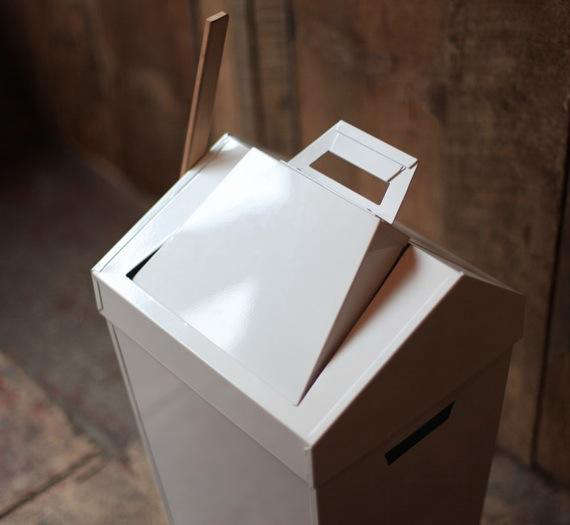
Some household objects live glamorous lives. The sofa gets throw pillows. The coffee table gets art books. The pendant light gets compliments from guests who suddenly become experts in “warm diffusion.” And then there is the trash can, quietly holding banana peels, receipt confetti, coffee grounds, and the emotional remains of last night’s takeout. Most bins are treated like necessary embarrassments. Brendan Ravenhill’s Dustbin politely refuses that job description.
The Dustbin from Brendan Ravenhill is a smart, sculptural, multi-functional waste bin that combines three everyday cleaning tools into one tidy object: a trash can, a detachable dustpan lid, and a magnetically attached brush. It is the kind of design that makes people say, “Wait, why didn’t every trash can already work this way?” That question is exactly why the product matters. It takes a boring domestic routine and turns it into a study in function, material honesty, and quietly clever American design.
This is domestic science in the most practical sense: looking at the small rituals of home life, noticing the friction, and designing away the annoyance. A dustpan is always missing when crumbs appear. A brush is usually hiding behind a laundry basket like it owes someone money. A trash can sits nearby, but not near enough. Ravenhill’s Dustbin brings the whole cleaning cast together, like a very tidy sitcom reunion.
What Is the Brendan Ravenhill Dustbin?
The Brendan Ravenhill Dustbin is a designer waste bin built around one beautifully simple idea: the top of the bin doubles as a dustpan. Instead of storing a separate dustpan under the sink or wedged next to the refrigerator, the dustpan becomes the lid. When crumbs, sawdust, pencil shavings, pet hair, or the mysterious grit of daily life appear, the user removes the lid, sweeps debris into it, and empties it directly into the bin below.
A companion brush attaches magnetically to the side of the bin, keeping the full cleaning kit together. This is not merely a novelty feature. It solves a real household problem: cleaning tools are useful only when they are close at hand. By integrating the bin, dustpan, and brush, Ravenhill turns a waste container into a complete micro-cleaning station.
A Trash Can, Dustpan, and Brush in One
The brilliance of the Dustbin is not that it tries to reinvent waste disposal with an app, a sensor, or a chirpy voice assistant. It simply observes that sweeping and throwing things away are connected actions. A person sweeps crumbs into a dustpan, carries the dustpan to a bin, dumps it, then returns the dustpan and brush somewhere else. Ravenhill compresses that routine into a single object.
The result is a multi-functional dustbin that feels especially useful in kitchens, studios, workshops, mudrooms, craft areas, offices, and anywhere else tiny debris appears with suspicious confidence. It is practical, but it also carries the visual calm of a well-resolved design object.
The Design Philosophy Behind the Dustbin
Brendan Ravenhill is known for work that pays close attention to material, manufacturing, and function. His studio, based in Los Angeles, has built a reputation around products that feel direct rather than decorative. The Dustbin fits that philosophy neatly. It does not hide how it works. It celebrates how it works.
The Dustbin is an example of industrial design that begins with behavior. Instead of asking, “How can a trash can look more fashionable?” it asks, “What does a person actually need when using a trash can?” The answer is not just a container. The answer is a system: a place to sweep debris, a way to collect it, and a simple path to dispose of it.
Design That Respects Everyday Chores
Good domestic design does not always need to be dramatic. Sometimes it should simply make a dull task less annoying. The Dustbin respects the act of cleaning by giving it proper tools, proper storage, and proper form. There is no desperate attempt to disguise the object as something else. It is still a bin. It just happens to be a bin with manners.
This is where the “domestic science” idea becomes interesting. The Dustbin studies the home like a small laboratory. Where do tools get lost? Which motions are repeated? Which object is always needed next? The answer is built into the object itself.
Materials: Powder-Coated Metal, Wood, Bristles, and Magnets
The Dustbin’s appeal comes partly from its material clarity. Reports and product descriptions have described the bin as made from durable powder-coated metal, with a detachable dustpan lid and a wooden brush fitted with natural-fiber bristles and embedded rare earth magnets. These materials matter because they give the object its durability, tactility, and visual weight.
Powder-Coated Metal for Durability
Powder coating is commonly used on metal products because it creates a tough, even finish that can resist everyday scuffs better than many ordinary paint finishes. For a trash can, this makes sense. A bin lives a physically rude life. It gets nudged by shoes, bumped by chair legs, tapped by broom handles, and occasionally attacked by a falling cereal box. A powder-coated surface helps the Dustbin feel more like a long-term household tool than a disposable plastic afterthought.
A Detachable Dustpan Lid
The most memorable feature is the lid. It rests on the bin as a cover, but it can be removed and used as a dustpan. This dual-purpose design gives the Dustbin its signature personality. The lid is not ornamental; it earns its keep. It also makes the object feel complete. Nothing is dangling, clipped on awkwardly, or added as a gimmick. The dustpan is structurally and visually part of the bin.
A Magnetic Brush That Stays Put
The brush attaches to the side of the Dustbin with magnets, which is a small detail with a large impact. Anyone who has ever searched for a hand broom knows the tragedy of separated cleaning tools. The magnetic connection keeps the brush visible and ready. It also adds a satisfying sense of ritual: sweep, attach, done. Domestic life rarely offers applause, so a neat magnetic click will have to do.
Why the Dustbin Still Feels Relevant
The Dustbin first attracted attention more than a decade ago, yet the idea still feels current because it aligns with several lasting design trends: fewer but better objects, local manufacturing, durable materials, and multi-purpose home goods. In an era full of cheap plastic bins that crack, stain, or wobble into retirement, the Brendan Ravenhill Dustbin represents the opposite approach.
It is not about buying more storage accessories to organize cleaning accessories that organize other accessories. It is about reducing the number of objects needed for a simple job. The Dustbin makes the cleaning zone more efficient by collapsing three tools into one handsome system.
Small-Space Living Loves Multi-Functional Design
In apartments, tiny homes, studios, and compact kitchens, every object must justify its footprint. A conventional trash can takes up floor space. A separate broom and dustpan take up more. The Dustbin combines functions without adding clutter, making it especially appealing for people who want practical tools that still look considered.
That does not mean the Dustbin is only for minimalists who own exactly one ceramic bowl and whisper to linen. It is also useful for messy realists: parents, pet owners, artists, cooks, gardeners, and anyone who has ever dropped a bag of rice and briefly considered moving.
Where the Dustbin Works Best in the Home
The Dustbin is versatile, but certain rooms bring out its strengths more clearly. Its best setting is any place where small messes happen often and immediate cleanup matters.
Kitchen
The kitchen is the obvious home for a dustbin with a built-in dustpan. Coffee grounds, flour, onion skins, crumbs, and cereal dust all seem to obey their own laws of gravity. Having a brush and dustpan attached to the bin keeps cleanup quick. Instead of opening three cabinets to find the right tool, the tool is already waiting.
Entryway or Mudroom
Entryways collect dirt, leaves, sand, and the occasional pebble that hitchhikes in on shoes. A Dustbin near the door makes quick sweeping more likely. And in household management, “more likely” is a major victory. The easier the tool is to use, the less likely dirt becomes a permanent roommate.
Home Office or Studio
Creative spaces generate paper scraps, pencil shavings, thread clippings, packaging bits, and other tiny evidence of productivity. The Dustbin’s integrated brush makes it useful for designers, crafters, architects, and hobbyists. It fits the studio mindset: tools should be close, visible, and satisfying to use.
Workshop or Garage
For light workshop debris, the Dustbin offers a compact cleaning station. It is not meant to replace a heavy-duty shop vacuum, but it can handle small daily messes. Sawdust, dry soil, small hardware packaging, and general bench debris are easier to manage when the dustpan is already part of the bin.
Form Meets Function: Why It Looks So Good
The Dustbin looks appealing because it avoids fussiness. Its form is direct, with clean surfaces, straightforward geometry, and visible utility. Nothing about it screams for attention, but it rewards attention. The angled dustpan lid, the upright container, and the attached brush create a composition that feels almost architectural.
This is an important lesson in product design: an object does not need decoration when its function creates visual interest. The Dustbin’s shape comes from what it does. That is why it avoids looking like a novelty item. It is clever, but not cute. Practical, but not boring. It is the rare trash can that can stand in a room without looking like it was invited by mistake.
How the Dustbin Compares With Ordinary Trash Cans
An ordinary trash can stores waste. That is its entire résumé. The Brendan Ravenhill Dustbin stores waste, supplies a dustpan, stores a brush, and encourages faster cleanup. The difference is not just aesthetic; it changes behavior.
With a standard bin, sweeping requires a separate tool hunt. With the Dustbin, the tool is present. This reduces friction, and reduced friction changes habits. People are more likely to clean small messes immediately when the right tool is within arm’s reach. That makes the Dustbin less like a decorative container and more like a behavioral design solution.
Plastic Bin vs. Designer Dustbin
Plastic bins are inexpensive and lightweight, but they can stain, absorb odors, crack, or look tired after heavy use. A metal dustbin with a durable finish has a different character. It feels more permanent, more repairable in spirit, and more appropriate for visible placement. The Dustbin is not designed to be hidden in shame beneath a sink. It is designed to be part of the room.
Is the Brendan Ravenhill Dustbin Worth It?
The answer depends on how a person values design. If a trash can is merely a thing to hold trash until it is replaced, the Dustbin may feel extravagant. If a trash can is part of the daily choreography of the home, then the Dustbin starts to make sense. It is a tool, a storage solution, and a design object in one.
The value lies in durability, convenience, and pleasure of use. That last point matters more than people admit. We use household objects every day. When those objects are clumsy, ugly, or irritating, the home feels a little less graceful. When they work well, the home feels calmer. The Dustbin brings a tiny moment of satisfaction to a chore nobody celebrates.
Buying Considerations and Practical Tips
Because the Dustbin has been listed as out of stock at times, shoppers interested in the original Brendan Ravenhill design may need to check availability through Ravenhill Studio, design retailers, resale platforms, or archived product listings. When evaluating any similar multi-functional dustbin, consider the following details:
- Material: Look for sturdy metal construction rather than thin, easily dented material.
- Finish: A durable powder-coated finish can help with everyday wear.
- Dustpan fit: The lid should remove easily and sit securely when used as a cover.
- Brush storage: Magnetic attachment or a dedicated holder keeps the brush from wandering away.
- Size: Choose a bin that fits the room’s waste volume, not just the room’s style.
- Cleanability: Smooth surfaces and simple geometry make any bin easier to maintain.
Design Lessons from the Dustbin
The Dustbin teaches a useful lesson: innovation does not always require complexity. Sometimes it requires paying attention. Ravenhill noticed that a trash can is part of a larger cleaning routine and designed the missing relationships back into the object.
This is the type of product that makes domestic life feel more intentional. It does not ask users to learn a new system. It improves a system they already use. That is why the Dustbin remains memorable. It gives dignity to a humble object and proves that even a trash can can have a design philosophy.
Experience Notes: Living With the Idea of the Dustbin
Using an object like the Brendan Ravenhill Dustbin changes the way one notices mess. In a typical kitchen, a small spill often becomes a negotiation. Is it worth getting the broom? Where is the dustpan? Why is the brush in the laundry room? Who moved it? Was it the dog? These questions are not philosophical, but they do waste time. The Dustbin removes the drama. The brush is attached. The dustpan is the lid. The bin is right there, waiting with the quiet confidence of a butler who has seen everything.
The first experience-related benefit is speed. Tiny messes are easiest to clean when they are fresh. Flour on the floor, dry coffee grounds, crumbs under the toaster, and soil from a houseplant all become less annoying when the cleanup tool is visible. The Dustbin encourages immediate action because it eliminates the tool search. That may sound minor, but most household order depends on small tasks being easy enough to do right away.
The second benefit is visual discipline. A normal cleaning corner can look messy even when it is technically organized. A broom leans. A dustpan tilts. A brush disappears. The Dustbin gathers those functions into one vertical object, which makes a room feel more composed. This is especially valuable in open kitchens, small apartments, and design-conscious spaces where utility items cannot always be hidden behind cabinet doors.
The third benefit is emotional, and yes, we are still talking about a trash can. Well-designed tools reduce irritation. There is pleasure in a lid that has a second purpose, a brush that clicks back into place, and a bin that feels stable rather than flimsy. These moments are small, but homes are made of small moments. A beautiful dining table may host dinner once a day; a trash can may be used twenty times before lunch. If one of them deserves thoughtful design, perhaps it is the object doing the unglamorous overtime.
In a studio or craft room, the Dustbin concept becomes even more useful. Creative work produces fragments: thread, paper, clay dust, pencil shavings, packaging scraps, dried leaves from styling projects, and tiny bits of unknown origin that appear after every productive afternoon. A combined bin, brush, and dustpan supports the rhythm of making. It lets the workspace reset quickly without interrupting the flow. That is where Ravenhill’s design feels especially intelligent. It does not merely store waste; it supports the transition from mess back to work.
The Dustbin also encourages a more sustainable attitude toward household objects. Rather than buying cheap bins repeatedly, the idea is to own a durable tool that earns long-term use. This does not mean every object in the home must be designer-made or expensive. It means the best objects should solve problems clearly, age gracefully, and avoid becoming disposable clutter. The Dustbin makes a persuasive argument for buying fewer, better thingseven when the thing in question is responsible for yesterday’s coffee filter.
Ultimately, the lived experience of the Dustbin is about convenience with dignity. It makes cleaning feel less like a punishment and more like a simple, well-supported action. That is the charm of domestic science: it takes the ordinary seriously. Brendan Ravenhill’s Dustbin reminds us that the home improves not only through grand renovations, but through humble objects that do their jobs beautifully.
Conclusion
The Domestic Science: Dustbin from Brendan Ravenhill story is really a story about paying attention. A trash can, dustpan, and brush are among the least glamorous objects in the home, yet Ravenhill transforms them into a thoughtful, integrated system. The Dustbin is durable, clever, visually calm, and deeply practical. It proves that good design does not need to shout. Sometimes it just needs to keep the brush from getting lost.
For homeowners, renters, designers, makers, and neat freaks with taste, the Dustbin offers a useful reminder: every object in the home participates in daily life. Even the humble waste bin can make a room work better, feel better, and look better. That is not just product design. That is domestic science with a broom attached.