

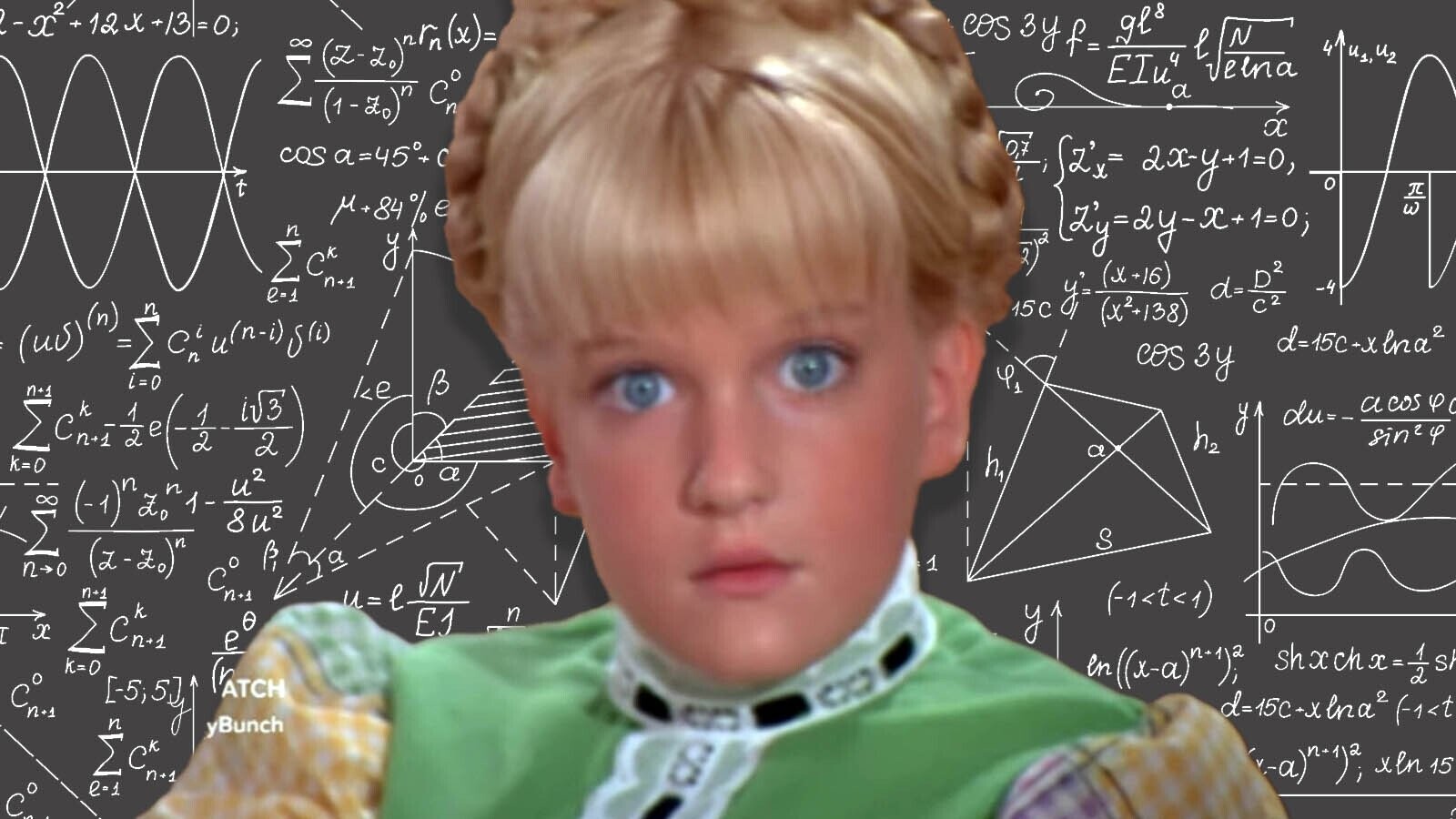
Cindy Brady has always been the Brady kid most likely to stare at a problem, blink twice, and accidentally solve it by being adorable. So when Susan Olsenthe actress who played Cindy on The Brady Bunchjoked that “stupid Cindy” was missing a “functioning brain,” the internet didn’t gasp so much as nod vigorously while clutching a nostalgic TV guide.
But here’s the twist: Olsen’s comment isn’t just a punchline aimed at a fictional nine-year-old with pigtails. It’s also a sharp little commentary on how classic sitcoms wrote kids, how audiences rewarded “cute confusion,” and how a character trait can follow a child actor off the set and into real lifewhere classmates do not laugh politely and cut to commercial.
The Quote That Made Brady Fans Spit Out Their Coffee
Olsen’s “functioning brain” crack landed like the kind of joke you hear at a family reunionslightly mean, undeniably funny, and delivered by the one person who’s allowed to say it. In the context of recent conversations with fellow cast members, the humor came packaged with honesty: Cindy was written as the “cute one,” and “cute” often meant “clueless.”
“She doesn’t have a functioning brain, but she’s cute.”
That single line does a lot of work. It’s a roast. It’s a coping mechanism. And it’s a mini-masterclass in how nostalgia can feel warm and complicated at the exact same time.
The Real Brady Bros Podcast: Where Nostalgia Meets Reality
A big part of why the quote traveled so far is that it didn’t come from a stiff, promotional interview. It came out of the kind of relaxed, behind-the-scenes conversation where actors say what they used to think as kidsbut weren’t allowed to say in 1970.
Olsen has described recognizing Cindy’s “not-the-sharpest-tool” vibe early. Imagine being seven years old, reading a script, and realizing your character’s primary hobby is misunderstanding basic words. That’s not acting; that’s emotional cardio.
The “Butterflies” Moment That Says Everything
One early example that gets cited often is the pilot-era style of joke where an adult says something idiomatic and Cindy treats it like a science experiment. Adults chuckle, the studio audience laughs, and Cindy looks pleasantly confusedlike a golden retriever asked to do taxes.
The show wasn’t trying to be cruel. It was trying to be broadly funny. The trouble is: broad comedy has a habit of flattening characters, especially kids. And Cindy got flattened into a single note: sweet, tiny, and… not exactly burdened by information.
Why Cindy Brady Was Written as the “Cute Clueless Kid”
In many classic sitcoms, children weren’t written as full people so much as reliable comedy levers. You had the wisecracker, the schemer, the earnest kid, and the adorable little one who says something that makes adults exchange amused looks.
Cindy was built to trigger a specific audience reaction: “Awww.” That reaction can be powerfulso powerful that writers keep chasing it. When a formula works, television repeats it like it’s afraid of silence.
Comedy Math: Cute + Confused = Laugh Track
If you want a quick snapshot of sitcom logic, it’s this: the smaller the character, the bigger the misunderstanding. Cindy didn’t just mishear thingsshe misread reality. And the show often played her confusion as the joke itself.
Olsen’s later perspective makes sense: when you’re the kid saying the “dumb” line, you’re the one who has to wear it. Viewers laugh for five seconds. Child actors live with it for years.
When “Stupid Cindy” Followed Susan Olsen to School
Olsen has talked about the unpleasant side of being associated with a “stupid child” character: classmates treated her as if Cindy’s brain lived inside her backpack. It didn’t matter that she was smart, observant, and aware of the joke. Television had already introduced her as the kid who didn’t understand things. Kids at school didn’t need nuance; they needed ammunition.
And because The Brady Bunch aired during the era when everyone watched the same handful of shows, the teasing could feel unavoidable. There wasn’t an algorithm to hide it. There was just Friday night television and Monday morning consequences.
The Lisp Storyline: A Plot Point That Hit Too Close to Home
Olsen later confirmed that Cindy’s lisp wasn’t a cute character choiceit was real. When the show spotlighted it in a storyline, it gave bullies exactly what bullies love: a catchy, repeatable thing they could imitate. For a sitcom, it was “relatable.” For a child, it was exhausting.
That’s the hard truth about kid-focused comedy: it’s easy to write a “funny” trait. It’s much harder to carry that trait at recess.
The Physical Cost of Being America’s Cutest Punchline
Olsen’s experience wasn’t only socially complicatedit was physically intense. She has described a frightening accident during early filming where something fell from above and hit her in the face, leaving bruising and swelling that production tried to work around.
It’s a reminder that child acting in earlier decades often came with an unsettling mix of glamour and “Well… walk it off.” The show looks sunny on screen. Behind the scenes, it could be rougher than the pastel set design suggested.
Hair, Bleach, and the Not-So-Funny Side of “The Look”
Cindy’s signature appearancethe bright blonde, the curls, the storybook doll vibewasn’t effortless. Olsen has described the recurring hair treatments needed to keep Cindy “Brady-blonde,” including frequent dye jobs that caused serious damage. It’s one of those details that feels almost unbelievable now, because modern audiences are used to stronger protections for child performers (and, frankly, better hair science).
Put simply: Cindy’s cuteness wasn’t free. It cost time, comfort, and sometimes painpaid by an actual child, not a fictional one.
What Co-Stars Got Right: It Takes Brains to Play “Brainless”
One of the more satisfying counters to “stupid Cindy” is the point Olsen’s castmates have made repeatedly: delivering comedy takes skill. Timing, rhythm, facial control, reacting naturally while hitting a markthose aren’t “dumb kid” abilities. They’re professional abilities.
In other words, Cindy’s “no thoughts, just vibes” moments worked because Susan Olsen had plenty of thoughtsand knew exactly which ones to hide for the laugh.
The Acting Trick: Make It Innocent, Not Idiotic
There’s a difference between innocence and stupidity, and great child actors often thread that needle. Cindy frequently hovered in that sitcom gray zone where the script leaned “stupid,” but the performance leaned “pure.” That’s why people still find her endearing instead of unbearable.
Watching Cindy Brady in 2026: A Different Lens
Today, rewatches are less about “Wasn’t this wholesome?” and more about “Wait… why did they keep writing the little girl like that?” Modern audiences are sensitive to labels, especially when those labels are attached to kids.
Cindy’s early misunderstandings can still be funny, but repeated over seasons, they become a pattern: she rarely grows. Viewers can feel the creative decision behind the scenes. And once you see it, you can’t unsee itlike noticing a boom mic, except it’s a personality trait.
Why Character Growth Matters (Even in a 30-Minute Sitcom)
The most dated part of the “stupid Cindy” approach isn’t the joke itselfit’s the lack of evolution. Kids grow fast. Television characters should too. When the writing keeps a character frozen in “cute confusion,” it can feel less like comedy and more like a limitation imposed for convenience.
What Susan Olsen’s Joke Really Says About Nostalgia Culture
Olsen’s line hits because it’s both affectionate and rebellious. Nostalgia culture tends to demand gratitude: “You were in something beloved, so smile!” But adults who were child stars often carry a more complicated storyone that includes awkwardness, pressure, and being turned into a public “type” before they could even choose a favorite subject in school.
When Olsen jokes about Cindy’s missing “functioning brain,” she’s also reclaiming the narrative. She’s saying: I played it. I lived it. I get to name it now.
The Fairer Take: Cindy Was a Product of Her Era
To be fair, The Brady Bunch wasn’t alone. The “dumb kid” trope is ancient in TV years. Cindy’s job was to puncture adult seriousness and keep the show light. The writers aimed for accessible laughs, not deep child psychology.
But “era” doesn’t erase impact. It just explains how a well-meaning show could accidentally turn a real kid into a walking punchline at her own school.
Lessons for TV Writers: Make the Kid Funny Without Making Her the Joke
If you’re writing comedy today, Olsen’s story is a useful warning label. It’s easy to get laughs by making the youngest character “the dumb one.” It’s also lazyand it can echo beyond the episode.
Better Alternatives to the “Stupid Child” Shortcut
- Let the kid be literal, not clueless: Kids can interpret language literally without seeming unintelligent.
- Give them wins: A misunderstanding is funnier when the kid occasionally outsmarts the adults.
- Build growth: Even small changesnew interests, sharper observationsmake a character feel human.
- Spread the foolishness: Adults can be wrong too. Comedy is healthier when everyone gets a turn being ridiculous.
Cindy could have kept her sweetness and still had moments of insight. That blendcute and cleverisn’t unrealistic. It’s real life.
Extra Experiences: Living in the Shadow of “Stupid Cindy”
Even if you’ve never worn blonde ringlets or accidentally misunderstood an idiom on national television, there’s something oddly relatable about the “Cindy problem”: being labeled early, then spending years trying to prove you’re not the label.
Many fans describe the experience of rewatching The Brady Bunch with a second generationkids, nieces, nephews, younger cousinsand noticing how the laughter lands differently. As a child viewer, you tend to accept the show’s internal logic: Greg is dreamy, Marcia is perfect, Jan is simmering, and Cindy is… well… Cindy. But adult viewers often find themselves flinching when the script repeatedly positions one kid as the “slow” one. You can practically hear the writer’s room thinking, “We need a quick laughhand it to the little one.”
There’s also a specific kind of “rewatch embarrassment” people talk about: realizing you once laughed at a joke that would’ve made you cry if you were the kid on the receiving end. Olsen’s stories about school teasing sharpen that discomfort. Suddenly, a throwaway gag isn’t a throwaway gag. It’s a Monday morning reenactment in a hallway.
Fans who attend TV nostalgia conventions often mention how warmly Olsen is receivedbecause Cindy is iconic, and because Olsen’s candor is refreshing. It’s one thing to celebrate a classic sitcom; it’s another to hear, directly from the actor, what it cost to keep the tone “light.” When Olsen jokes, she’s not just entertaining the roomshe’s giving people permission to enjoy the show without pretending it was perfect.
And then there’s the experience of being “typecast” in everyday lifesomething Olsen has pointed out through the lens of her own roles. Plenty of people know the feeling in smaller forms: you’re the “quiet one,” the “clumsy one,” the “funny one,” the “smart one,” the “hot mess,” the “responsible one,” assigned by friends or family like a permanent name tag. The label becomes the script everyone expects you to follow, even when you’ve changed.
In that sense, Olsen’s “functioning brain” quip is funny because it’s bluntbut it’s also a tiny act of rebellion against a story that’s been told about her for decades. It’s the grown-up version of raising your hand and saying, “Actually, I’m not the character.” That resonates with anyone who’s ever wanted to rewrite how people see them.
The best part is that the Brady universe has room for this kind of honesty. The show itself became a comfort fantasy for many viewersan idealized blended family where problems are solved in 22 minutes and nobody stays mad through the closing theme. Olsen’s reflections don’t destroy that comfort; they add depth to it. You can still love the sunshineand also acknowledge the shadows behind the studio lights.
Conclusion: Cindy Was Cute, the Comedy Was Real, and the Cost Was Too
Susan Olsen calling Cindy Brady “stupid” and joking about her missing a “functioning brain” isn’t a takedown of The Brady Bunch. It’s a reality check delivered with a wink. Cindy was written as a tiny comedy device, and Olsen made it workoften brilliantlydespite the social and physical baggage that came with it.
The lasting takeaway isn’t “Cindy was dumb.” It’s that sitcom shortcuts can shape real lives, especially when the performer is a kid. Olsen’s humor helps us revisit a beloved show with clearer eyes: appreciate the charm, laugh at the absurdity, and maybe retire the idea that “cute” has to mean “clueless.”