

Once upon a time, extinction sounded permanent. A species vanished, museum drawers swallowed the bones, and humanity wrote a sad little label under glass: “Gone forever.” Then geneticists entered the room with sequencers, frozen cells, CRISPR, artificial eggs, and the kind of confidence usually seen in movie villains with underground laboratories.
Today, de-extinction is no longer just a science-fiction daydream involving dinosaurs, questionable theme parks, and lawyers running from raptors. Scientists and conservation groups are trying to bring back lost animalsor at least create living proxies that look, behave, or function like them. These efforts range from cloning a vanished mountain goat to editing wolf DNA, breeding zebra-like quaggas, and building artificial eggs for birds that have been missing from Earth for centuries.
But here is the important catch: bringing a species back from extinction rarely means producing a perfect copy. DNA breaks down. Habitats change. Behaviors are not always stored neatly in genes like files in a folder. In many cases, scientists are really trying to create functional replacements: animals that can restore missing ecological roles, strengthen conservation technology, or remind humans that “oops, we erased that species” is not a great long-term environmental strategy.
Below are ten of the most surreal, ambitious, and ethically complicated attempts to bring species back from extinction.
What Does “Bringing a Species Back” Actually Mean?
Before we meet the woolly mammoth’s future publicist, we need a quick reality check. De-extinction usually follows one of three paths: cloning, genome editing, or back-breeding. Cloning requires preserved living cells or intact nuclei, which is why it works better for recently extinct animals than ancient ones. Genome editing uses DNA from extinct species as a guide, then modifies the genome of a close living relative. Back-breeding selects modern animals that still carry ancestral traits and breeds them over generations to resemble the extinct form.
None of these methods is a magic wand. A recreated animal may be genetically close, visually similar, or ecologically useful, but it may not be the original species in the philosophical sense. That is why de-extinction is both thrilling and uncomfortable. It asks whether humans should fix past damage with future technologyor whether we should focus on protecting the species still standing in front of us, waving tiny endangered flags.
1. The Woolly Mammoth: The Celebrity of De-Extinction
A cold-weather comeback with elephant-sized ambition
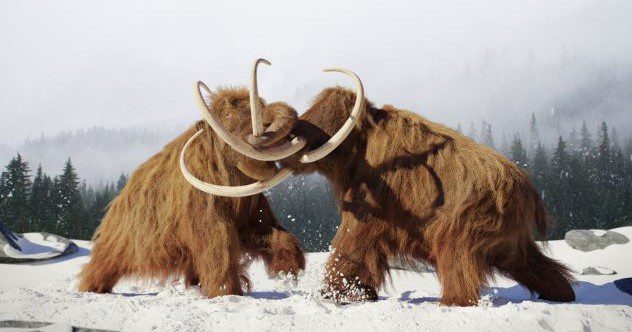
The woolly mammoth is the superstar of de-extinction. It has the hair, the tusks, the Ice Age brand recognition, and the kind of public appeal most conservation campaigns would trade a grant proposal for. The last woolly mammoths survived on Wrangel Island until roughly 4,000 years ago, which is ancient by human standards but practically yesterday in paleontology time.
The modern mammoth revival effort does not aim to clone a pure mammoth. Instead, researchers are working toward a cold-adapted Asian elephant with mammoth-like traits: thick hair, fat storage, cold tolerance, smaller ears, and other features suited to Arctic or sub-Arctic environments. The hope is that a mammoth-like elephant could one day help restore grassland ecosystems by trampling snow, knocking down shrubs, and encouraging carbon-storing steppe landscapes.
That sounds heroic. It also sounds like a very large, hairy landscaping crew with tusks.
The scientific challenge is enormous. Asian elephants are endangered, reproduce slowly, and have long pregnancies. Editing enough genes to recreate complex mammoth traits is difficult, and raising socially healthy elephant-like animals requires more than DNA. Mammoths were herd animals with learned behaviors. A genome can code for hair; it cannot easily code for “how Grandma Mammoth taught me to survive a blizzard.”
2. The Thylacine: The Tasmanian Tiger That Refuses to Leave Our Imagination
A marsupial ghost with stripes and a tragic human story
The thylacine, often called the Tasmanian tiger, looked like nature assembled a dog, a kangaroo, and a striped pajama pattern into one animal. The last known thylacine died in captivity in 1936, after decades of hunting, habitat disruption, and government bounties.
Because the species disappeared relatively recently, museums hold preserved thylacine specimens, and scientists have been able to study its DNA. Current revival efforts focus on using the fat-tailed dunnart, a small living marsupial, as a genetic and reproductive starting point. The goal is to edit cells toward thylacine-like traits and eventually develop reproductive technologies suitable for marsupials.
This attempt is surreal because the thylacine still feels culturally alive. Grainy footage of the last captive animal pacing in a zoo enclosure has become one of extinction’s most haunting videos. Bringing the thylacine back would not just be a biological event; it would feel like a national apology wearing stripes.
The hard part is that a thylacine was not simply a set of stripes and jaws. It was a predator with a place in Tasmania’s ecosystem. Any future reintroduction would require habitat protection, disease planning, public support, and a serious answer to the question: are we prepared to protect the animal this time?
3. The Dodo: The Bird That Became a Punchline
From symbol of foolish extinction to biotech challenge
The dodo has spent centuries as the mascot of being too trusting around humans. Native to Mauritius, this flightless bird went extinct in the late 1600s after sailors, invasive animals, and habitat disruption arrived with all the subtlety of a dropped piano.
Modern dodo de-extinction work relies on the bird’s closest living relatives, especially pigeons. Scientists have sequenced dodo DNA and are exploring ways to edit the genomes of related birds. But avian de-extinction is especially tricky. Mammals can use surrogate mothers; birds develop inside eggs. That means researchers must solve problems involving primordial germ cells, embryo development, and potentially surrogate bird species.
The dodo project is fascinating because it is not just about reviving a bird. It is about restoring island ecology. Mauritius lost a large seed-dispersing animal when the dodo vanished. If a dodo-like bird ever returns, it would need a habitat that can support it and a conservation plan that protects it from the same forces that erased it.
Also, let’s be fair to the dodo: it was not stupid. It evolved without major mammalian predators and had no reason to fear sailors. Calling the dodo dumb is like blaming someone for not bringing an umbrella to a meteor shower.
4. The Passenger Pigeon: Billions Gone to Zero
America’s lost sky-darkening bird
The passenger pigeon may be the most staggering extinction story in North America. Once, these birds moved in flocks so large they could darken the sky for hours. By 1914, the last known passenger pigeon, Martha, died at the Cincinnati Zoo. Billions had become none.
Revival efforts focus on the band-tailed pigeon, a living relative. The idea is to edit genes associated with passenger pigeon traits into band-tailed pigeon cells and eventually produce birds that could fill a similar ecological role. Passenger pigeons were not merely abundant; they shaped forests by consuming mast crops such as acorns and beechnuts, disturbing branches, spreading nutrients, and influencing woodland cycles.
This project raises one of de-extinction’s biggest questions: if a species’ ecological power came from overwhelming numbers, what does “bringing it back” mean? Ten passenger pigeon-like birds would be charming. Ten million would be ecology. Ten billion would be a Hitchcock movie with feathers and paperwork.
The passenger pigeon effort is important because it reframes de-extinction as ecosystem repair, not just biological nostalgia. The goal is not to make a museum exhibit breathe. The goal is to consider whether lost animal functions can be restored in landscapes that still remember them.
5. The Bucardo: The Species That Went Extinct Twice
A cloned mountain goat and a heartbreaking first
The bucardo, or Pyrenean ibex, holds one of the strangest records in conservation history. It became extinct in 2000 when the last known individual, a female named Celia, died in Spain. Before her death, scientists preserved tissue samples. In 2003, researchers used cloning techniques to create a bucardo clone, making it the first extinct animal brought back to life after extinction.
The victory lasted only minutes. The cloned newborn died shortly after birth due to lung defects. In one sense, the bucardo was brought back. In another, it became extinct again almost immediately, which is the kind of plot twist even nature probably found a little dramatic.
The bucardo case matters because it proved that extinction might not always be biologically final if preserved cells exist. It also showed how fragile cloning can be. Cloned animals can suffer developmental problems, and one individual cannot restore a population. Even if the bucardo clone had survived, scientists would have faced the challenge of genetic diversity, reproduction, habitat, and long-term management.
The bucardo remains a landmark because it was not theoretical. It breathed. Briefly, yesbut enough to change the conversation forever.
6. The Quagga: A Zebra Rebuilt by Selective Breeding
Back-breeding stripes into history
The quagga was a South African zebra with a striking appearance: striped in front, more horse-like toward the rear. It was hunted to extinction in the 19th century, with the last known quagga dying in an Amsterdam zoo in 1883.
The Quagga Project, started in 1987, takes a back-breeding approach. Because genetic research showed the quagga was closely related to the plains zebra, breeders select plains zebras with reduced striping and quagga-like coloration. Over generations, the goal is to produce animals that resemble the extinct quagga and can live in former habitats.
This is de-extinction without the futuristic lab aesthetic. No glowing tanks. No ancient DNA wizardry. Just selective breeding, patience, and zebras standing around looking mildly suspicious.
The debate is whether these animals are true quaggas or quagga-like zebras. Genetically, they are not exact replicas of the extinct population. But if they restore a similar ecological presence and appearance, supporters argue they still have conservation value. Critics respond that appearance is not identity. A striped costume does not make a zebra a time traveler.
7. The Aurochs: Europe’s Wild Cattle Reimagined
Back-breeding the ancestor of domestic cows
The aurochs was the wild ancestor of domestic cattle, a massive animal that once roamed Europe, Asia, and North Africa. The last known aurochs died in Poland in 1627. Although the animal is extinct, pieces of its genetic legacy survive in domestic cattle breeds.
Several projects, including the Tauros Programme, aim to recreate aurochs-like cattle through back-breeding. By selecting primitive cattle breeds with traits similar to the original aurochslarge bodies, long legs, athletic builds, forward-curving horns, and hardy behaviorbreeders hope to produce animals that can function as wild grazers in European rewilding landscapes.
The aurochs effort is less about producing a perfect prehistoric cow and more about restoring grazing dynamics. Large herbivores can shape vegetation, create open habitats, disperse seeds, and support biodiversity. In that sense, an aurochs-like animal may be useful even if it is not a genetic photocopy of the original.
It also creates the odd experience of looking at a cow and thinking, “You may be the future of wild Europe.” The cow, chewing calmly, offers no comment.
8. The Dire Wolf: The Comeback That Sparked a Scientific Argument
Genome editing, ancient DNA, and a very big definition problem
The dire wolf, made famous by fossils and popular culture, disappeared thousands of years ago. Recent efforts have used ancient DNA data and gene editing to create gray wolves with traits associated with dire wolves, including changes related to size, coat color, skull shape, and build.
This project became one of the most controversial examples of modern de-extinction because it forces the question: when does a genetically edited living relative become the extinct species? Many scientists argue that edited gray wolves are not true dire wolves. They may be impressive engineered animals, but they do not carry the full evolutionary history, behavior, microbiome, or ecological context of the vanished species.
Still, the dire wolf effort is technically significant. It demonstrates that ancient genomes can guide edits in living animals and that complex visible traits can be targeted. It also shows how quickly public excitement can outrun scientific caution. The phrase “dire wolf is back” is irresistible headline candy. The more accurate phrase“gray wolves with selected dire-wolf-like edits have been produced”is scientifically better and significantly worse on a T-shirt.
The dire wolf case may become a defining lesson in de-extinction marketing: words matter. So does humility.
9. The Heath Hen: Martha’s Vineyard’s Lost Bird
A local extinction story with national implications
The heath hen was a grouse-like bird once found along the eastern United States. By the late 19th century, it had vanished from the mainland, surviving only on Martha’s Vineyard. Conservationists tried to protect it, but fires, predation, disease, harsh winters, and low genetic diversity overwhelmed the population. The last known heath hen, nicknamed Booming Ben, died in 1932.
Modern revival efforts examine whether the heath hen can be brought back using its closest living relatives, especially prairie chickens. Scientists have studied whether the heath hen was genetically distinct enough to justify revival and whether emerging avian reproductive technologies could eventually produce heath hen-like birds.
This project is surreal because it combines frontier biotechnology with very local memory. The heath hen is not a global celebrity like the mammoth. It is a regional ghost, tied to sandplain grasslands, community identity, and the early history of American conservation failure.
If revived, the heath hen could serve as an indicator species for rare grassland ecosystems. But as with other bird projects, the technology is difficult. Birds do not make cloning convenient. Apparently, evolution did not design eggs with biotech startups in mind.
10. The Southern Gastric-Brooding Frog: The Amphibian That Used Its Stomach as a Nursery
A vanished frog with a biology so strange it sounds invented
The southern gastric-brooding frog of Australia had one of the most bizarre reproductive strategies ever recorded. The female swallowed fertilized eggs, shut down stomach acid production, brooded the young inside her stomach, and eventually gave birth through her mouth. Yes, nature read the instruction manual and then folded it into a paper airplane.
The species disappeared in the 1980s, likely due to disease, habitat disruption, and other environmental pressures. The Lazarus Project attempted to revive it using cloning methods. Scientists transferred nuclei from preserved gastric-brooding frog tissue into eggs from a related living frog. The embryos began early development but did not survive to become tadpoles or adults.
Even without producing a living frog, the project remains important. It showed that preserved tissue from extinct amphibians could trigger early embryonic development. It also highlighted how much knowledge was lost when the species vanished. The frog’s ability to suppress stomach acid could have inspired medical research. Extinction does not just remove animals; it removes biological ideas.
Why These Attempts Feel So Surreal
These projects feel surreal because they blur categories humans used to trust. Alive and extinct. Natural and engineered. Conservation and invention. A mammoth-like elephant is not a mammoth, but it may one day behave like one in a cold landscape. A quagga-like zebra is not the original quagga, but it may restore part of the visual and ecological presence humans erased. A cloned bucardo lived only minutes, yet it proved that extinction can be challenged under certain conditions.
The deeper lesson is not that humans are becoming gods. If anything, de-extinction proves we are still very clumsy apprentices. We can sequence genomes, edit cells, and build artificial incubation systems, but we cannot easily rebuild relationships: predator and prey, animal and habitat, migration and memory, culture and ecology.
De-extinction is most promising when it supports conservation rather than replacing it. The same tools used to chase mammoths can help endangered species today by improving genetic rescue, assisted reproduction, disease resistance, and biobanking. Saving a living species is almost always easier, cheaper, and kinder than resurrecting a vanished one. In conservation, prevention remains the luxury option. De-extinction is the emergency repair bill with extra paperwork.
Personal and Practical Experiences Related to De-Extinction
Thinking about de-extinction changes the way people experience museums, zoos, documentaries, and even ordinary walks in nature. A skeleton in a museum no longer feels like a silent ending; it feels like a question. Could this animal return? Should it return? Would the world welcome it, or would we simply repeat the same mistakes with better equipment?
One useful experience is visiting natural history museums with a new mindset. Instead of seeing extinct animals as dusty exhibits, imagine them as ecological workers whose jobs were abruptly terminated. The passenger pigeon was not just a bird; it was a force that moved nutrients, shaped forests, and fed predators. The mammoth was not just a shaggy elephant; it was part of a cold grassland machine. The thylacine was not just a tragic zoo video; it was a predator that belonged to a living system. This perspective makes extinction feel less like losing a collectible and more like removing a load-bearing wall from a house.
Another experience comes from watching modern conservation struggles. When people see endangered rhinos guarded around the clock, frogs disappearing from chytrid fungus, or birds losing nesting habitat, de-extinction starts to feel both inspiring and slightly absurd. It is wonderful that science may help repair damage. It is also strange that humans can spend millions trying to recreate animals while still destroying habitats that living species need right now. It is like buying an expensive time machine while refusing to fix the leaking roof.
For writers, educators, and nature lovers, de-extinction offers a powerful storytelling tool. It captures attention instantly because it combines grief, hope, technology, and moral tension. The topic makes readers ask big questions without feeling like they are being assigned homework. Would you bring back the mammoth? What about the dodo? What if the revived animal suffers? What if the ecosystem has moved on? What if the technology used for extinct animals saves endangered ones first?
The most meaningful experience, however, is emotional humility. De-extinction reminds us that every species is a library of solutions written by evolution. Some animals store knowledge about surviving cold, digesting plants, resisting disease, dispersing seeds, or shaping landscapes. When a species disappears, that library burns. Science may recover a few pages from the ashes, but it cannot always restore the whole book.
That is why the best takeaway is not “great, we can bring everything back.” The better takeaway is “we should stop making resurrection necessary.” De-extinction may become one of the most astonishing tools in conservation, but the most successful extinction reversal is still the one we never have to attempt.
Conclusion: Resurrection Is Not a Reset Button
The ten surreal attempts to bring species back from extinction show how far science has comeand how complicated the future will be. From the briefly cloned bucardo to mammoth-like elephants, dodo research, thylacine ambitions, quagga back-breeding, and artificial eggs for vanished birds, de-extinction is reshaping the conversation around biodiversity.
Yet the central truth remains simple: extinction is easier to prevent than reverse. A revived species needs more than DNA. It needs habitat, genetic diversity, social learning, disease protection, public support, and a reason to belong in the modern world. Without those, de-extinction risks becoming a spectacular magic trick performed on a burning stage.
Still, these efforts are not pointless. They push forward technologies that may help endangered animals today. They force society to confront past environmental damage. And they remind us that every living species is irreplaceable in ways we often understand only after it is gone.
Note: This article is based on real de-extinction research, conservation projects, and publicly reported scientific developments. It intentionally avoids source-link clutter in the body so the content can be published cleanly on the web.