

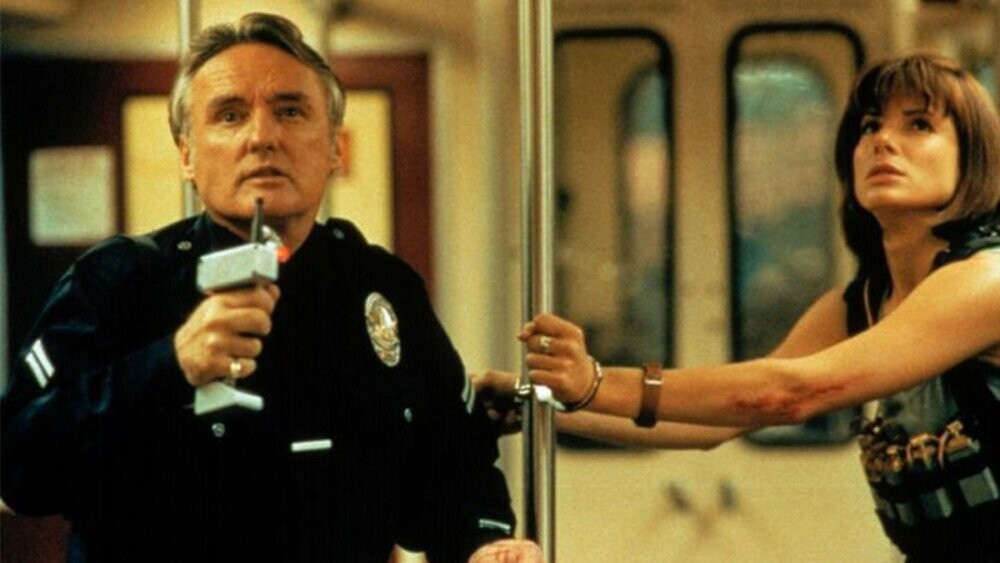
The 1990s produced some of the most rewatchable action movies ever made. This was the decade of hurtling buses, exploding helicopters, impossible stunts, and heroes who looked like they’d slept in their clothes but could still save the world before lunch. It was also, for reasons that only make complete sense in the chaotic little goblin brain of Hollywood, a decade oddly obsessed with younger or younger-coded action stars brutally finishing off older male villains.
Not every one of these bad guys was literally ancient. Some were just styled as weary patriarchs, establishment fossils, graying mentors, or upper-management wolves in expensive coats. But the vibe is unmistakable. Again and again, a sleek, marketable hero was matched against a villain who felt like yesterday’s power structure in human form. Then the movie would say, “Great, now throw him into a propeller.”
That is what makes the ’90s weird trend of action stars murdering old men so funny, so specific, and so revealing. On the surface, it plays like a darkly hilarious coincidence. Look a little closer, though, and it starts to look like a genre-wide habit. These movies weren’t just selling thrills. They were staging a form of cinematic generational combat, with the new star flattening the old order and collecting box-office receipts on the way out.
The Movies That Make the Case
Cliffhanger: Sylvester Stallone vs. the Elegant Dinosaur
Let’s start in the mountains, where Cliffhanger gives Sylvester Stallone a villain played by John Lithgow. This is already a delicious mismatch. Stallone is all bruised biceps, survival grit, and alpine suffering. Lithgow, meanwhile, projects the energy of a man who could insult your tie, bankrupt your company, and then ask for better mineral water. He is not presented as a hulking super-beast. He is presented as a colder, older kind of threat: educated, superior, clinical, and just fussy enough to make you want to cheer when the hero eventually rearranges his entire day planner with his fists.
What matters here is not simply that the villain dies. Villains die in action movies the way folding chairs disappear at wrestling matches. What matters is the texture of the showdown. The finale does not feel like two equally matched meatheads trading punches. It feels like a younger physical force demolishing a more brittle, more aristocratic model of masculine power. Lithgow’s character is the kind of bad guy who seems as if he should lose in a boardroom or a betrayal. Instead, the movie grants him the honor of being physically mauled like he wandered into the wrong decade.
Speed: Keanu Reeves and the Death of the Smirking Boomer Menace
Then there’s Speed, which may be the cleanest example of the trend because the whole movie is already a pressure cooker. Keanu Reeves plays Jack Traven as a fast-thinking action hero with a baby face, a hard stare, and just enough charisma to keep the whole thing from turning into a traffic report with explosives. Dennis Hopper’s bomber is the opposite kind of screen presence: twitchy, taunting, theatrical, and soaked in old-pro cynicism.
Hopper’s villain is an ex-cop, which is important. He isn’t some random cartoon evildoer from nowhere. He is a piece of the system that curdled. He knows the rules because he used to work inside them. That gives the movie one of the most distinctly ’90s action setups imaginable: the hero is not only fighting a criminal, he is fighting a resentful relic who believes his experience and bitterness entitle him to control everyone else’s fate.
And then the ending goes gloriously, outrageously overboard. The old menace does not merely lose. He gets obliterated in a way that is so sudden and so vicious that it almost feels like the movie itself got impatient and slammed the door. That’s the ’90s touch right there. The younger hero doesn’t just outsmart the older villain. He survives long enough for the film to turn the villain into punctuation.
Mission: Impossible: Tom Cruise Kills the Father Figure
If Speed is the most thrilling example, Mission: Impossible might be the most revealing. Tom Cruise’s Ethan Hunt is the future: agile, photogenic, suspicious, mobile, and built for a franchise that wants to look slick instead of bulky. Jon Voight’s Jim Phelps is the past, and the movie knows it from the second he enters the frame. He isn’t just older. He feels obsolete. He feels like a veteran of an earlier espionage grammar.
That is the genius of making Phelps the traitor. The movie turns an elder statesman, a mentor figure, and a symbol of an earlier era into the obstacle that the younger star must eliminate. The violence at the end is spectacular because the symbolism is spectacular. This is not simply Ethan Hunt defeating a bad guy. It is a blockbuster franchise announcing that the old guard is done, thank you, please step away from the train.
In that sense, Mission: Impossible is the purest form of the trend. It literalizes a changing entertainment economy. The TV-era patriarch becomes a monetizable corpse. The younger hero does not inherit quietly; he inherits in a blast furnace.
Under Siege: Steven Seagal, Tommy Lee Jones, and the Last Roar of Cold War Machismo
Under Siege adds another flavor to the pattern. Steven Seagal’s Casey Ryback is a fantasy of silent competence: part cook, part commando, all eyebrow-based intimidation. Opposing him is Tommy Lee Jones as William Strannix, flanked by Gary Busey, turning villainy into a sweaty vaudeville act aboard a battleship. The movie has often been described as “Die Hard on a battleship,” but that undersells how weirdly political its setup is.
This is a movie about a decommissioned war machine being hijacked by men who cannot emotionally process the end of an older military mood. The villains are not fresh-faced punks. They are hawks, leftovers, professionals gone sour. The entire film crackles with a sense that someone is mad the old rules are slipping away. That makes the final defeat feel less like a routine hero win and more like a ritual cleansing of macho resentment.
Also, let’s be honest, Tommy Lee Jones was simply too much fun to be given a dignified exit. The ’90s loved a villain who acted like he had tenure. The ’90s loved even more taking that man apart in the final reel.
Why Were So Many Villains Older Men?
The ’80s Action Titan Was Being Rewritten
One reason this pattern emerged is that the action hero was changing. The 1980s had been defined by near-mythic slabs of muscle, the kind of men who looked as if they had been carved out of military surplus equipment. By the 1990s, the genre still loved toughness, but it increasingly preferred heroes who were faster, prettier, more ironic, and a little more human. Keanu Reeves looked nothing like a walking tank. Tom Cruise looked like he could outrun danger rather than body-slam it into a Jeep.
Once the hero changed, the villain changed too. Instead of matching the star with another giant pile of protein powder, movies often gave him an older authority figure, a seasoned traitor, or a deranged professional. That created a more visually and psychologically satisfying contrast. The hero represented motion. The villain represented calcified power.
The Cold War Ended, but Paranoia Needed a New Day Job
The end of the Cold War also scrambled the villain supply chain. It became harder to rely on the same stock enemy templates without looking stale. Hollywood still wanted danger, but it also wanted villains who felt more intimate, more treacherous, and more connected to institutions audiences recognized. Enter the rogue officer, the corrupt veteran, the burned-out spy chief, the ex-cop bomber, the man who thinks the world used to make sense when he was in charge.
This is why so many of these antagonists feel like human resignation letters. They’re not just evil. They are offended by modernity. They are insulted by irrelevance. They are furious that the younger, leaner hero gets to define the new rules. Once you notice that, the strange body count starts to look less random. These films are dramatizing a cultural handoff. The old order isn’t retiring. It’s being shoved into a spinning piece of industrial equipment.
Die Hard Taught the Genre New Geometry
Another key factor is structure. A lot of 1990s action ran on the “contained scenario” model that Die Hard helped popularize: one location, one crisis, one hero under pressure, one villain with enough intelligence and personality to keep the machinery humming. That kind of movie benefits from a villain who can talk, taunt, manipulate systems, and dominate a room before the hero throws him through one.
Older character actors were ideal for this. They could make exposition sound like a threat. They could turn arrogance into a performance style. They could make even a ridiculous plan feel weirdly plausible because their faces already suggested years of unethical committee meetings.
Character Actors Ate Better Than Henchmen
The ’90s also adored flamboyant villain performances. John Lithgow, Dennis Hopper, Jon Voight, and Tommy Lee Jones were not interchangeable bad guys in leather pants. They were expert scene thieves. Their age, or at least their older-coded screen presence, was part of the appeal. These men looked like they had histories. They looked like they had ruined careers, marriages, governments, or at minimum a lovely Christmas party.
That made their defeats feel larger than life. When the hero killed one of these men, it did not feel like he had cleared a level in a video game. It felt like he had toppled an institution wearing cuff links.
What These Deaths Were Really About
The phrase “action stars murdering old men” is funny because it sounds absurdly specific, but the deeper truth is that these movies were obsessed with a kind of symbolic patricide. Over and over, the young or newly ascendant star had to defeat an older masculine figure who represented command, experience, legacy, or the right to tell other people what the world means.
Sometimes that figure was a mentor gone rotten, like Jim Phelps. Sometimes he was a system insider who had turned bitterness into ideology, like Howard Payne in Speed. Sometimes he was a refined criminal mastermind or a military throwback who seemed imported from an older model of villainy. But the pattern remained: the hero becomes fully modern only after physically erasing the older man.
That’s why the trend feels so much weirder in hindsight than it did at the time. Back then, it registered as exciting, stylish, and maybe a little mean. Now it reads like a genre repeatedly acting out the same anxiety dream: What if Dad, the boss, the commander, the spymaster, and the old movie star all rolled into one person, and what if the only way to move on was to drop him off a mountain?
Why It Feels Darker Now
Modern franchise filmmaking tends to be more protective of legacy. Old characters come back for applause, callbacks, soft lighting, and the occasional respectful death speech. The 1990s could be much nastier. It was less interested in preserving icons than in replacing them. A legacy figure might not get a warm handoff. He might get exposed as a traitor and blown up in a tunnel.
That harshness is part of what makes these movies so entertaining. They are not polite about succession. They are not sentimental about authority. Even when they worship heroism, they are suspicious of older men who claim ownership over systems, expertise, or national destiny. The result is a run of action movies that feel both cartoonishly violent and weirdly honest about how pop culture renews itself: by making yesterday’s power look pathetic, then profitable, then dead.
The Experience of Rewatching These Movies Today
Rewatching these films now is a genuinely strange experience, and that strangeness is half the fun. At first, you notice the obvious pleasures: the analog stunts, the tighter runtimes, the complete refusal to apologize for silliness, the glorious confidence of movies that know exactly what kind of popcorn they want to be. Then, somewhere around the third or fourth villain monologue, another thought creeps in: wow, this decade really did keep serving up older male antagonists just so a younger star could turn them into modern art.
What makes the experience especially interesting is that these movies don’t present the pattern as a joke. Nobody in Speed stops to say, “Hey, isn’t it odd that our villain is basically a furious uncle with explosives?” Nobody in Mission: Impossible winks at the audience and says, “This franchise transition is more violent than most corporate reorganizations.” The films play it straight, which only makes the pattern more visible in hindsight.
There’s also a tonal difference that stands out now. A lot of current action cinema is either drenched in mythology or sanded smooth by franchise management. These ’90s movies are far more willing to be rude. They let their villains be vain, bitter, chatty, theatrical, and unmistakably from another era. They also let their heroes respond with a kind of impatient brutality that can feel shocking if you’re used to more carefully massaged modern blockbuster morality.
Watching these movies today, you can feel the exact point where the industry was renegotiating masculinity. The old bodybuilder model was still around, but it was sharing space with newer kinds of stars: cooler, faster, less monumentally built, more ironic, sometimes more vulnerable. And what better way for Hollywood to dramatize that transition than to put those stars opposite older-coded men who embodied cranky authority? The final fight becomes a referendum. The explosion becomes a thesis statement.
The audience experience changes too. As a kid, you might have watched these endings and simply thought, “Awesome, the bad guy got wrecked.” As an adult, you start noticing how many of these antagonists are not random monsters but men who are upset that history moved on without them. They are ex-cops, ex-operatives, elite holdovers, military hawks, masterminds with injured pride. Their evil is often tangled up with obsolescence. That gives the violence a sharper edge. These aren’t just victories over danger; they’re victories over resentment.
And yet, because these are still ’90s action movies, the whole thing remains delightfully excessive. There is no modest symbolic gesture. No tasteful retirement package. No carefully moderated intergenerational dialogue. The old guard does not get a panel discussion. It gets a bus, a train, a mountain, a knife, a propeller, or some other loudly available piece of doom.
That is why revisiting this trend can feel both hilarious and revealing. You laugh because the pattern sounds too specific to be real. Then you watch the movies and realize it’s right there, over and over, hiding in plain sight beneath the one-liners and pyrotechnics. The ’90s action machine was not just manufacturing thrills. It was staging a repeated fantasy of renewal, where the future announces itself by knocking the past through a window and not calling for help.
Final Thoughts
So yes, the ’90s weird trend of action stars murdering old men was real enough to be worth talking about, even if the title exaggerates the joke in the best possible way. The pattern wasn’t universal, but it was visible, memorable, and deeply tied to how the decade imagined heroism, authority, and change.
These movies were hits because they moved fast, cast brilliantly, and knew how to build a climax. But they also captured something sneakier. In a post-Cold War, post-’80s-action landscape, the genre kept imagining the future as a younger star physically defeating an older man who represented used-up systems, stale power, and institutional rot. The result was a whole run of blockbusters where victory did not feel complete until some silver-haired embodiment of the past got catastrophically removed from the premises.
In other words, the ’90s were not content to hand the baton to the next action hero. They wanted him to grab it out of an older villain’s hand, crack a one-liner, and leave the previous era in flaming pieces.