

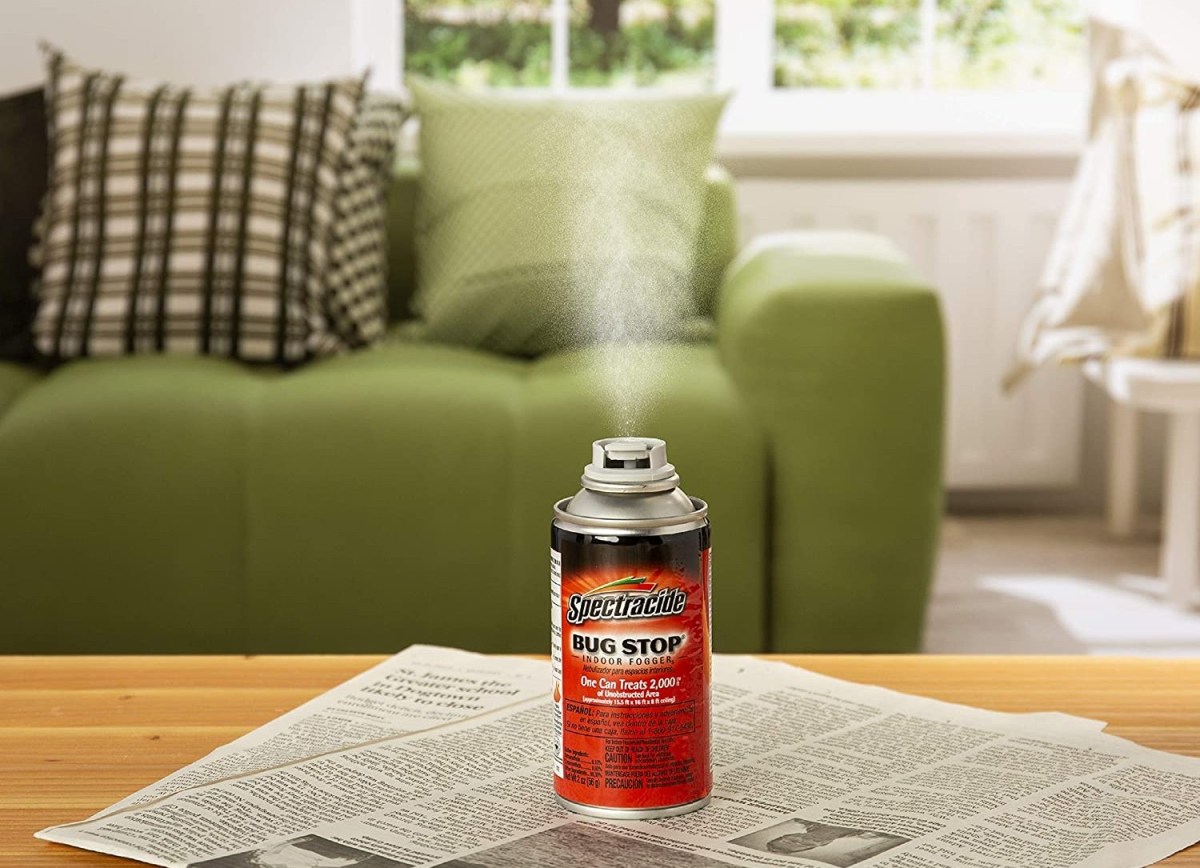
This independent research guide reviews products featured in the Bob Vila roundup while incorporating current pesticide labels, government safety guidance, university research, and integrated pest management recommendations.
Discovering fleas in the carpet, roaches near the refrigerator, or a spider apparently paying rent in the basement can make an insect fogger look like the fastest route back to civilization. Activate a can, leave the house, and return after the tiny invaders have received their eviction notices. At least, that is the sales pitch.
Insect foggersalso called total release foggers or bug bombscan knock down certain exposed pests over a large area. However, they are not magical cans of pest-control weather. The mist settles mainly on exposed surfaces, while many insects spend their time tucked into cracks, wall voids, cabinets, furniture joints, and other places the fog may not reach.
Our research compared the current Bob Vila selections with information from the U.S. Environmental Protection Agency, Centers for Disease Control and Prevention, National Pesticide Information Center, state health agencies, university extension programs, peer-reviewed cockroach research, Poison Control, product manufacturers, and pesticide registration records.
The result is a more practical list of the best insect foggers, along with an honest explanation of what each product canand cannotreasonably accomplish.
The Best Insect Foggers at a Glance
| Product | Best Use | Coverage Per Can | Notable Feature | Major Limitation |
|---|---|---|---|---|
| Hot Shot Bed Bug & Flea Fogger | Fleas and other listed pests | Up to 2,000 cubic feet | Contains an insect growth regulator | Should not be the only bed bug treatment |
| Hot Shot No-Mess Fogger With Odor Neutralizer | Broad household pest control | Up to 2,000 cubic feet | Dry, nonstaining formula | Does not control bed bugs |
| Raid Concentrated Deep Reach Fogger | Large rooms and open areas | Up to 5,000 cubic feet | Large coverage area and residual action | Does not control bed bugs |
| Hot Shot Fogger6 With Odor Neutralizer | Broad exposed-pest knockdown | Up to 2,000 cubic feet | Controls many listed household insects | Fog may not reach hidden populations |
Important: Product registrations, formulas, labels, and availability can change. Read the label on the actual container before purchasing or using any pesticide. The labelnot an online article, advertisement, or adventurous neighboris the legal authority for how the product may be used.
Our Top Insect Fogger Picks
1. Best Value for Fleas: Hot Shot Bed Bug & Flea Fogger
Hot Shot Bed Bug & Flea Fogger stands out for households dealing primarily with fleas. Each can is labeled to treat up to 2,000 cubic feet of unobstructed space, roughly equivalent to a 15.5-foot-by-16-foot room with an 8-foot ceiling.
Its most useful feature is Nylar, an insect growth regulator designed to interrupt flea development. Adult-killing ingredients can reduce the insects currently hopping around, while the growth regulator helps prevent immature fleas from reaching the biting adult stage. The manufacturer states that it inhibits flea reinfestation for up to seven months when used as directed.
The label also lists bed bugs and several other pests. Nevertheless, the presence of “bed bug” on the package should not be mistaken for a complete bed bug solution. Bed bugs hide in mattress seams, furniture joints, baseboards, electrical openings, and wall voids. The EPA warns that foggers should not be the sole method of bed bug control because the pesticide must reach the hiding insect to kill it.
Best for: Flea problems treated as part of a broader plan that includes vacuuming, laundering pet bedding, treating pets with veterinarian-approved products, and addressing flea development throughout the home.
Not ideal for: Relying on one fogging session to eliminate an established bed bug infestation.
2. Best Low-Mess Formula: Hot Shot No-Mess Fogger With Odor Neutralizer
Fogging a room is inconvenient enough without returning to surfaces that feel as though someone misted the house with cooking oil. Hot Shot No-Mess Fogger uses a dry-fog formula designed to avoid wet, oily residue and lingering odor when applied according to its label.
One can treats up to 2,000 cubic feet of unobstructed space. The product is labeled for a broad range of pests, including fleas, ticks, carpenter ants, carpet beetles, crickets, houseflies, mosquitoes, roaches, silverfish, spiders, and waterbugs.
There is an important distinction between “no wet residue” and “no pesticide deposited.” A fogger works by releasing pesticide droplets that eventually settle. Even when a surface does not look or feel wet, cleaning food-contact areas and surfaces frequently touched by children may still be required by the label or advisable under public-health guidance.
This formula is not labeled for bed bugs. That limitation deserves a large mental sticky note, preferably one that does not scuttle under the refrigerator when the lights turn on.
Best for: Open rooms where listed insects are active and avoiding a wet, messy finish is a priority.
Not ideal for: Bed bugs or pests concentrated deep inside inaccessible harborages.
3. Best for Large Rooms: Raid Concentrated Deep Reach Fogger
Raid Concentrated Deep Reach Fogger offers the largest coverage among the principal Bob Vila selections. One 1.5-ounce can is designed to treat as much as 5,000 cubic feet, equivalent to a room measuring approximately 25 feet by 25 feet with an 8-foot ceiling.
The manufacturer lists ants, fleas, roaches, spiders, ticks, mosquitoes, carpet beetles, crickets, earwigs, houseflies, pantry beetles, moths, and several other pests. It also advertises residual killing action lasting up to two months.
This fogger makes the most sense in a properly sized, relatively open room. A 5,000-cubic-foot rating is not permission to use the can in a tiny bathroom, closet, cabinet, vehicle, or storage cubby. Oversizing a fogger does not create “extra strength”; it can create excessive pesticide vapor and increase fire, explosion, and exposure risks.
The current Raid product information specifically states that it does not control bed bugs.
Best for: Larger open rooms where the target insect appears on the current label.
Not ideal for: Small spaces, bed bug infestations, or German cockroaches hidden deeply inside cabinets and appliances.
4. Best Broad-Spectrum Option: Hot Shot Fogger6 With Odor Neutralizer
Hot Shot Fogger6 is designed to kill a wide range of common household insects on contact and provide residual control for up to two months. Its label includes ants, brown dog ticks, crickets, fleas, gnats, houseflies, mosquitoes, roaches, silverfish, spiders, and waterbugs, among other listed pests.
Each can covers up to 2,000 cubic feet of unobstructed space. The odor-neutralizing formula is intended to reduce lingering pesticide smell, and the product is marketed as nonstaining when used correctly.
Although this model has often been positioned as a choice for heavy infestations, our research supports a narrower description: it is better suited to broad knockdown of exposed, susceptible insects. A serious infestation usually involves eggs, hidden insects, food sources, moisture, shelter, and entry points. Fog alone does not repair a leaking pipe, seal a baseboard gap, or persuade a cockroach to surrender its apartment behind the dishwasher.
The manufacturer states that Fogger6 does not control bed bugs.
Best for: Multiple listed pests moving through an open, correctly measured area.
Not ideal for: Hidden colonies that require baits, crack-and-crevice treatment, sanitation, exclusion, or professional service.
How to Choose the Best Insect Fogger
Identify the Pest Before Buying Anything
A fogger labeled for fleas may not be appropriate for fire ants, bed bugs, pantry moths, or a particular cockroach species. Confirm what you are dealing with before applying pesticides. Sticky monitoring traps, photographs, shed skins, droppings, bite patterns, and the location of activity can help with identification.
When identification is uncertain, contact a university extension office or licensed pest professional. Treating the wrong insect is an excellent way to spend money while the actual pest watches from a safe distance.
Calculate Cubic Feet, Not Just Square Feet
Fogger coverage is measured in cubic feet because ceiling height matters. Calculate room volume with this formula:
Room length × room width × ceiling height = cubic feet
For example, a 12-foot-by-15-foot room with an 8-foot ceiling contains 1,440 cubic feet. A product labeled for 2,000 cubic feet may cover that room, provided the label permits its use there. Never add extra cans “for luck.” In pesticide applications, luck is not a recognized unit of measurement.
Match the Product to the Room Layout
Fog settles on exposed surfaces. Cluttered rooms, closed cabinets, thick furniture, wall voids, and crowded storage areas reduce the number of pests directly reached. A fogger may perform better against exposed flies or fleas than insects living behind trim, inside appliances, or beneath cabinet hardware.
Review Reentry and Ventilation Requirements
Required vacancy periods vary by product. Some labels require occupants to remain away for several hours, followed by additional ventilation before reentry. Everyoneincluding children, visitors, workers, pets, and birdsmust remain outside for the full period stated on the label.
Fish tanks may need to be covered and filtration or aeration systems switched off according to label instructions. Food, dishes, utensils, toys, pet supplies, and other exposed belongings may also need to be removed or protected.
Consider Whether a Targeted Treatment Is Better
Baits, traps, vacuuming, sealing, moisture control, steam, laundering, sanitation, and professional crack-and-crevice applications often reach the actual source of an infestation more effectively than broadcasting pesticide across a room.
When an Insect Fogger Is the Wrong Tool
German Cockroaches
Researchers from North Carolina State University tested total release foggers in cockroach-infested apartments and found no meaningful reduction in German cockroach populations. Gel baits used in comparison homes produced significant declines. The study also found sharply increased pesticide residue on horizontal household surfaces after fogging.
German cockroaches spend much of their time in narrow harborages, including cabinet joints and spaces around appliances. Fog may settle on the middle of a countertop while missing the insects gathered underneath it. For this pest, gel bait, monitoring, sanitation, moisture reduction, and professional integrated pest management are generally better choices.
Established Bed Bug Infestations
Foggers may kill bed bugs that receive sufficient direct exposure, but hidden bugs and eggs can survive. Some products can also cause pests to retreat farther into inaccessible areas. Bed bug management typically requires inspection, vacuuming, heat or steam where appropriate, mattress encasements, laundering, targeted EPA-registered products, and repeated monitoring.
Ant Colonies
Killing visible worker ants does not necessarily eliminate the colony. Properly selected baits are carried back to the nest, making them more useful for many indoor ant problems. Penn State Extension recommends avoiding bombs and foggers for routine ant management in favor of sanitation, exclusion, and suitable baits.
Silverfish and Other Moisture-Related Pests
Silverfish often indicate persistent humidity, plumbing leaks, damp storage, or moisture trapped around building materials. UC Integrated Pest Management does not recommend foggers for silverfish infestations. Fixing the moisture source and treating harborages is more important than producing an impressive cloud in the middle of the room.
Essential Insect Fogger Safety
The EPA and NPIC warn that total release foggers can cause fires, explosions, and illness when misused. Aerosol propellants may be flammable, and pesticide exposure can occur when people remain inside, return too early, use too many cans, or fail to ventilate properly.
- Read the complete label before purchasing and again before application.
- Use only the number of cans specified for the measured cubic footage.
- Never use a fogger in a closet, cabinet, vehicle, under a counter, or another small enclosed space unless the label explicitly permits it.
- Follow all label instructions concerning flames, pilot lights, sparks, and appliances that may cycle on automatically.
- Remove people, pets, birds, food, dishes, plants, toys, and other listed items before treatment.
- Warn neighbors, family members, maintenance workers, and anyone who might enter unexpectedly.
- Leave immediately after activation and remain outside for the full labeled period.
- Ventilate exactly as directed before reoccupying the space.
- Clean food-contact and frequently touched surfaces when required by the label.
- Do not use an indoor product outdoors or an outdoor fogging product indoors.
CDC surveillance identified 3,222 fogger-related acute illness and injury cases across participating states and data systems from 2007 through 2015. Failure to leave during application and returning too early were the most commonly reported causes.
More recently, the California Department of Pesticide Regulation began reevaluating indoor consumer foggers in June 2026 after reviewing 391 reported injuries or illnesses associated with total release foggers from 2018 through 2024. The action is a reevaluationnot an automatic nationwide banbut it reinforces the need to check current state registration and follow product labels precisely.
Anyone who experiences coughing, breathing difficulty, dizziness, nausea, eye irritation, or other symptoms after pesticide exposure should move to fresh air and seek guidance promptly. In the United States, Poison Control can be reached at 1-800-222-1222. Call emergency services for severe symptoms such as major breathing difficulty, collapse, or seizures.
Frequently Asked Questions
Do insect foggers kill every bug in a room?
No. They are most likely to affect insects that are exposed to the released mist or treated residue. Bugs concealed in cracks, walls, cabinets, furniture, appliances, and clutter may receive little or no effective exposure.
Can I use two foggers in one room?
Only when the product label specifically calculates that number for the room’s cubic footage. Many labels prohibit using more than one can per room. Excess product can raise exposure and fire risks without improving pest control.
Do foggers leave pesticide on furniture and floors?
Yes. Even products advertised as dry or nonmessy work by dispersing droplets that settle on exposed areas. Follow label instructions concerning covered belongings, ventilation, and post-treatment cleaning.
Are bug bombs good for roaches?
They may kill exposed, susceptible roaches, but independent research found total release foggers ineffective against established German cockroach populations. Properly placed gel baits and integrated pest management usually provide better control.
Will a fogger eliminate fleas permanently?
Not by itself. Successful flea management may also require vacuuming, laundering, pet treatment, follow-up monitoring, and attention to immature flea stages. A fogger containing an insect growth regulator can support that process but does not replace it.
How long should I stay out after using a fogger?
Follow the exact time printed on the product label. Different products have different vacancy and ventilation periods. Do not rely on smell to decide that a room is safe; some pesticide vapors may be present even when no strong odor is noticeable.
Experience-Based Lessons: What Using an Insect Fogger Really Involves
Reviews and homeowner accounts often describe the moment of activating a fogger as the easiest part of the entire process. Pressing a tab takes seconds. Preparing the house correctly can take hours. Food has to be protected, dishes moved, pet supplies removed, aquariums addressed, rooms measured, ignition sources checked, and everyone’s schedule coordinated. The household then needs somewhere to go during treatment and ventilation. The phrase “quick pest solution” begins looking slightly optimistic when the family, dog, bird, and two unimpressed cats are waiting in the car.
The first practical lesson is that preparation determines whether fogging can be performed safely. Homeowners who begin by reading the label are less likely to discover an important restriction after the room has already been dismantled. Measuring cubic footage before buying the product also prevents the common mistake of treating square footage and cubic footage as interchangeable. They are not. A room with a vaulted ceiling can contain far more air than a similarly sized room with a standard ceiling.
The second lesson is that a dramatic treatment does not always produce dramatic control. Users may return to find dead flies, fleas, or other exposed insects, creating an immediate impression that the fogger solved everything. Several days later, new insects can appear because hidden adults survived, eggs hatched, or the original food, water, and shelter conditions remained unchanged.
Flea problems illustrate this pattern well. A fogger may reduce exposed adults, but fleas can continue developing in carpets, furniture, floor gaps, and pet resting areas. Homeowners tend to get better results when fogging is combined with frequent vacuuming, washing pet bedding, veterinarian-approved pet treatment, and follow-up inspections. The can is one supporting actor, not the entire cast.
The third lesson involves cleanup expectations. A “no-mess” product may not produce visible oily droplets, but users should not interpret that claim as permission to ignore food-preparation surfaces, children’s play areas, or exposed pet items. Experienced users plan the cleanup before treatment rather than standing in the kitchen afterward, reading a label with the expression of someone who has just discovered an unexpected final exam.
The fourth lesson is that pest behavior matters more than marketing volume. Roaches and bed bugs are difficult because they hide exceptionally well. Broadcasting pesticide through open air may be less effective than placing bait or treatment directly beside a harborage. When fogging repeatedly produces only temporary improvement, using additional cans is not the answer. It is a sign to change methods.
Finally, experienced homeowners learn to establish a stopping point for do-it-yourself treatment. A licensed pest professional becomes the more sensible choice when insects are spreading between apartments, bed bugs persist after careful intervention, roaches remain active during daylight, structural voids cannot be accessed, or household members have asthma or other exposure concerns.
The most useful experience is not learning how to release more pesticide. It is learning when a fogger fits the pest, room, label, and larger control planand when it does not. Used selectively and exactly as directed, an insect fogger can reduce certain exposed pests. Used as a substitute for identification, sanitation, exclusion, and targeted treatment, it may simply give the bugs a weather event to discuss.
Final Verdict
The best insect fogger depends on the pest, room volume, treatment goals, and current product label. Hot Shot Bed Bug & Flea Fogger is the strongest fit for flea-focused treatment because it includes an insect growth regulator. Hot Shot No-Mess Fogger is appealing when broad pest coverage and a dry finish matter. Raid Concentrated Deep Reach Fogger offers useful coverage for large open rooms, while Hot Shot Fogger6 addresses a wide range of exposed household pests.
None of these products should be treated as an automatic solution for every infestation. Foggers have significant limitations against hidden German cockroaches, bed bugs, ant colonies, and moisture-related pests. Start with accurate identification, prevention, and targeted control. When a fogger is appropriate, measure carefully, use no more than the label permits, remove occupants and pets, eliminate specified ignition hazards, and complete the required ventilation process.
In pest control, the smartest product is not always the one that fills the entire room. Sometimes the better answer is a tiny dab of bait placed exactly where the pests live. Bugs, annoyingly, are very particular about real estate.