

Poor posture has a sneaky way of becoming your body’s default setting. One minute you are answering emails like a responsible adult, and the next you look like a shrimp trying to operate a laptop. Rounded shoulders, forward head posture, tight hips, and an achy lower back are common side effects of modern life, especially if your day includes long hours of sitting, scrolling, driving, or working at a desk.
The good news? You do not need a medieval torture device, a $900 ergonomic chair, or a personal trainer named Chad yelling “engage your core” from across the room. The best moves to fix poor posture are simple, practical, and surprisingly doable at home. The key is to combine stretching, strengthening, mobility work, and better daily habits. Posture is not about standing stiff like a statue. It is about helping your muscles and joints work together so your body feels balanced, strong, and comfortable.
This guide breaks down the most effective posture exercises, why they work, how to do them safely, and how to build them into a realistic routine. Whether you are fighting desk posture, tech neck, rounded shoulders, or lower back stiffness, these moves can help you stand taller, move better, and look less like your spine has given up on the group project.
Why Poor Posture Happens in the First Place
Poor posture usually develops slowly. It is often the result of repeated positions, weak muscles, tight muscles, and movement habits that your body accepts as “normal” over time. Sitting for hours can shorten the hip flexors, weaken the glutes, and encourage the pelvis to tilt forward or backward. Looking down at a phone can pull the head forward and overload the neck. Working at a computer can round the shoulders and make the chest feel tight.
In many cases, poor posture is not caused by laziness. Your body is simply adapting to what you ask it to do most often. If you spend eight hours folded over a screen, your muscles become very good at holding that folded position. Congratulations: your body is efficient. Unfortunately, it may also be uncomfortable.
Common signs of poor posture
- Forward head position, often called “tech neck”
- Rounded shoulders
- Upper back stiffness
- Lower back discomfort after sitting
- Tight chest muscles
- Weak core or glutes
- Neck tension and frequent shoulder tightness
- Feeling tired when trying to sit or stand upright
If you have sharp pain, numbness, tingling, weakness, dizziness, pain after an injury, or symptoms that keep getting worse, it is smart to check with a qualified healthcare professional before beginning a new exercise routine. Posture exercises should feel like gentle work, not a dramatic negotiation with your nervous system.
The Best Moves to Fix Poor Posture
The best posture correction exercises usually fall into four categories: neck alignment, upper back strengthening, chest and shoulder mobility, and core-and-hip stability. Think of them as a team. Stretching alone may feel nice, but if you do not strengthen the muscles that hold better alignment, your body may drift right back into old habits. Strength alone is helpful, but without mobility, you may feel stiff and restricted. The magic is in the mix.
1. Chin Tucks for Tech Neck
The chin tuck is one of the most useful moves for forward head posture. It strengthens the deep neck flexor muscles and teaches your head to sit more directly over your shoulders instead of drifting forward like it is trying to read your phone before your eyes do.
How to do it:
- Sit or stand tall with your shoulders relaxed.
- Look straight ahead.
- Gently draw your chin straight backward, as if making a small double chin.
- Keep your head level. Do not tilt your chin up or down.
- Hold for 2 to 5 seconds, then relax.
- Repeat 8 to 12 times.
Posture tip: This should feel subtle. If you are aggressively jamming your head backward, dial it down. Good posture is not a wrestling match.
2. Shoulder Blade Squeezes
Shoulder blade squeezes help wake up the muscles between your shoulder blades. These muscles often become weak or underused when your shoulders stay rounded forward for long periods.
How to do it:
- Sit or stand tall.
- Relax your shoulders away from your ears.
- Gently squeeze your shoulder blades together, as if trying to hold a pencil between them.
- Hold for 5 seconds.
- Release slowly.
- Repeat 10 times.
Common mistake: Do not shrug. Your shoulders should move slightly back, not up toward your ears like you just opened a scary electric bill.
3. Wall Angels
Wall angels are excellent for rounded shoulders, upper back mobility, and shoulder control. They also provide instant feedback because the wall tells you when your body is cheating. Rude? Maybe. Effective? Definitely.
How to do it:
- Stand with your back against a wall.
- Try to keep your head, upper back, and hips gently touching the wall.
- Bring your arms up into a goalpost position with elbows bent.
- Slowly slide your arms upward as far as comfortable.
- Lower them back down with control.
- Repeat 6 to 10 times.
Modification: If the wall version is too difficult, lie on the floor and perform the same motion. Keep the movement slow and pain-free.
4. Doorway Chest Stretch
A tight chest can pull the shoulders forward and make upright posture feel awkward. The doorway chest stretch targets the pectoral muscles, which often become shortened from sitting, typing, driving, and general “life in front of a rectangle.”
How to do it:
- Stand in a doorway.
- Place your forearms on the door frame with elbows around shoulder height.
- Step one foot forward.
- Gently lean forward until you feel a stretch across your chest.
- Hold for 20 to 30 seconds.
- Repeat 2 times.
Posture tip: Keep your ribs down and avoid arching your lower back. The stretch should be in your chest, not your spine.
5. Thoracic Extensions
The thoracic spine is the upper and mid-back area. When it gets stiff, the neck and lower back often try to compensate. Thoracic extensions improve upper back mobility and can make upright posture feel more natural.
How to do it with a foam roller or rolled towel:
- Place a foam roller or rolled towel horizontally under your upper back.
- Support your head with your hands.
- Keep your hips on the floor.
- Gently extend your upper back over the roller or towel.
- Pause for a breath, then return to neutral.
- Repeat 6 to 8 times.
Safety note: Avoid rolling directly on your neck or lower back. Keep the movement controlled and comfortable.
6. Cat-Cow Stretch
Cat-cow is a classic mobility move that helps the spine move through flexion and extension. It is especially useful as a warm-up before posture exercises because it encourages awareness of spinal position.
How to do it:
- Start on your hands and knees.
- Inhale as you gently drop your belly and lift your chest.
- Exhale as you round your back toward the ceiling.
- Move slowly with your breath.
- Repeat for 8 to 12 rounds.
Posture tip: Do not force the range of motion. This move should feel smooth, not crunchy.
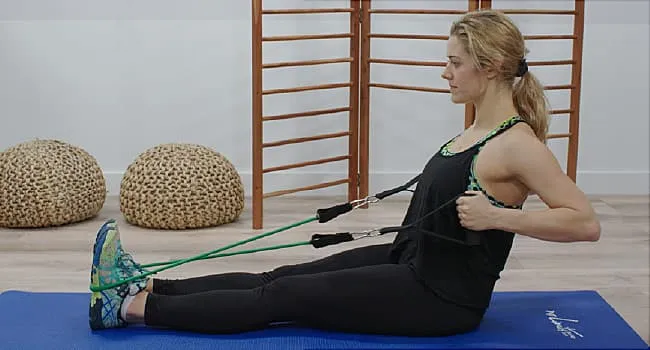
7. Resistance Band Rows
Rows are one of the best strengthening exercises for posture because they target the upper back, rear shoulders, and muscles around the shoulder blades. If your shoulders live in a rounded-forward position, rows help remind them that backward is also an option.
How to do it:
- Anchor a resistance band at chest height or hold it securely in both hands.
- Stand tall with your ribs stacked over your hips.
- Pull your elbows back, keeping them close to your sides.
- Squeeze your shoulder blades gently at the end of the movement.
- Return slowly.
- Do 2 to 3 sets of 10 to 15 reps.
Common mistake: Do not lean back to move the band. Your back muscles should do the work, not your entire body launching into a dramatic rowing performance.
8. Band Pull-Aparts
Band pull-aparts strengthen the rear shoulders and upper back. They are simple, portable, and effective for people who spend a lot of time sitting at a desk.
How to do it:
- Hold a light resistance band with both hands at chest height.
- Keep your arms straight but not locked.
- Pull the band apart until your hands move out to the sides.
- Pause briefly.
- Return with control.
- Repeat 10 to 15 times.
Form cue: Keep your neck relaxed. If your jaw tightens, your body is trying to recruit your face. Politely decline.
9. Dead Bug for Core Stability
A strong core helps support your spine and pelvis. The dead bug is a beginner-friendly core move that teaches stability without the strain that some crunches can create.
How to do it:
- Lie on your back with your arms reaching toward the ceiling.
- Lift your knees over your hips, bent at 90 degrees.
- Gently press your lower back toward the floor.
- Slowly lower your right arm and left leg away from each other.
- Return to start and switch sides.
- Do 8 to 10 reps per side.
Posture tip: Move slowly. The goal is control, not speed. You are training your body to stay steady while your limbs move.
10. Glute Bridges
Your glutes help stabilize your pelvis and support better alignment through the hips and lower back. When the glutes are weak, the lower back may take over work it did not sign up for.
How to do it:
- Lie on your back with knees bent and feet flat on the floor.
- Keep your feet about hip-width apart.
- Engage your core gently.
- Squeeze your glutes and lift your hips until your body forms a line from shoulders to knees.
- Pause for 1 to 2 seconds.
- Lower slowly.
- Do 2 to 3 sets of 10 to 15 reps.
Common mistake: Avoid over-arching your lower back at the top. Think “squeeze the glutes,” not “launch the ribs into orbit.”
11. Hip Flexor Stretch
Tight hip flexors can affect pelvic position and contribute to lower back tension. This stretch is especially helpful if you sit for long periods.
How to do it:
- Start in a half-kneeling position with one knee on the floor and the other foot in front.
- Gently tuck your pelvis under, as if zipping up tight jeans.
- Shift your weight slightly forward until you feel a stretch in the front of the hip on the kneeling side.
- Hold for 20 to 30 seconds.
- Switch sides.
Posture tip: Keep your torso upright. More lean is not always better. A small shift with good alignment works beautifully.
12. Plank Variations
Planks build strength in the core, shoulders, and hips. They can support better posture when performed correctly. However, a plank with poor form is just a fancy way to practice bad alignment on the floor.
How to do a basic forearm plank:
- Place your forearms on the floor with elbows under shoulders.
- Step your feet back.
- Keep your body in a straight line from head to heels.
- Engage your core and glutes.
- Hold for 10 to 30 seconds.
- Rest and repeat 2 to 3 times.
Modification: Drop your knees to the floor if needed. A short, well-aligned plank beats a long, saggy one every time.
A Simple 10-Minute Poor Posture Routine
You do not need to perform every exercise every day. Consistency matters more than doing a heroic one-hour session and then ignoring your posture until next winter. Start with this simple routine three to five days per week.
Daily posture reset routine
- Cat-cow stretch: 8 rounds
- Chin tucks: 10 reps
- Doorway chest stretch: 30 seconds per side
- Wall angels: 8 reps
- Resistance band rows: 12 reps
- Dead bug: 8 reps per side
- Glute bridges: 12 reps
- Hip flexor stretch: 30 seconds per side
If you are short on time, choose one mobility move, one upper back strength move, and one core or glute move. That small combination can still make a difference when practiced regularly.
How to Fix Desk Posture Without Quitting Your Job
Exercise helps, but your daily setup matters too. If you do posture exercises for 10 minutes and then spend eight hours curled over a laptop like a question mark, your body receives mixed messages. You do not need a perfect workstation, but a few changes can reduce strain.
Desk posture tips that actually help
- Keep your screen near eye level so your head does not drop forward.
- Place your feet flat on the floor or on a footrest.
- Sit with your hips and knees around 90 degrees when possible.
- Keep your keyboard and mouse close enough that your shoulders stay relaxed.
- Use a small pillow or lumbar support if your lower back needs help.
- Stand, stretch, or walk for a minute or two every 30 to 60 minutes.
The best posture is often your next posture. In other words, move frequently. Your body likes variety. Sitting perfectly still in “good posture” for hours can still create stiffness. Change positions, breathe deeply, and take movement breaks before your body starts sending complaint emails.
Breathing and Posture: The Overlooked Connection
Breathing can affect posture more than many people realize. Shallow chest breathing may encourage neck and shoulder tension, while better rib and diaphragm movement can help your torso feel more stable. A simple breathing reset can help you stack your ribs over your pelvis and reduce unnecessary upper-body tension.
Try this 60-second posture breathing reset
- Sit or stand tall with your feet grounded.
- Place one hand on your lower ribs.
- Inhale through your nose and feel your ribs expand gently.
- Exhale slowly through your mouth.
- Let your shoulders relax downward.
- Repeat for 5 slow breaths.
This is not magic, but it is useful. It reminds your body that your shoulders do not need to live next to your ears.
How Long Does It Take to Improve Poor Posture?
Posture improvement is gradual. Some people feel better after a few days of stretching and movement breaks, while visible changes may take several weeks or months. The timeline depends on your habits, muscle strength, flexibility, work setup, consistency, and whether pain or injury is involved.
Instead of chasing perfect posture, aim for better awareness and less discomfort. Notice whether you can sit longer without slumping, stand with less effort, turn your head more comfortably, or finish the workday with fewer aches. Those are meaningful wins.
Common Mistakes When Trying to Fix Poor Posture
Trying to force perfect posture all day
Holding yourself rigidly upright can create more tension. Better posture should feel supported, not stiff. Think tall and relaxed, not military statue.
Only stretching tight areas
Stretching the chest, hips, and neck can help, but strengthening the upper back, core, and glutes is just as important. Flexibility without strength may not hold for long.
Ignoring pain signals
Mild muscle effort is normal. Sharp pain, tingling, numbness, or symptoms that travel down the arm or leg are not signs to “push through.” Stop and seek professional guidance if symptoms are concerning.
Doing too much too soon
Your body adapts best to steady progress. Start small, use good form, and add more reps or resistance gradually.
Real-Life Experiences: What Fixing Poor Posture Actually Feels Like
Improving posture often sounds simple on paper: stretch this, strengthen that, stop sitting like a tired croissant. In real life, it is more of a daily negotiation. Many people begin posture work because they notice small annoyances first. Their neck feels stiff after work. Their shoulders ache during long drives. Their lower back complains after a movie, which is deeply unfair because movie snacks should be the only drama in that situation.
One common experience is realizing that poor posture is not just a “back problem.” For example, someone with rounded shoulders may start with shoulder blade squeezes and doorway stretches, then discover that their hips and core also need attention. After adding glute bridges and dead bugs, sitting upright may begin to feel easier. That is because posture is a full-body project. The neck, shoulders, spine, pelvis, and hips are all part of the same chain.
Another experience is the surprise of how difficult “easy” exercises can feel at first. A chin tuck may look like nothing, but it can make deep neck muscles wake up from a long nap. Wall angels may reveal that the shoulders are tighter than expected. A 20-second plank may feel like time has slowed down personally to mock you. This does not mean you are failing. It means your body is learning new patterns.
Many people also notice that posture work improves their awareness during daily activities. After a week or two of practice, they may catch themselves looking down at their phone and raise it closer to eye level. They may adjust their desk chair without thinking. They may take more walking breaks because their body now recognizes stiffness earlier. This awareness is one of the biggest benefits. You are not just exercising; you are retraining your habits.
Progress can be subtle. The first win might be less neck tension at the end of the day. The second might be deeper breathing while sitting. Then maybe the shoulders stop creeping forward during meetings. Eventually, standing tall feels less like a performance and more like your default setting. No dramatic movie montage required, though you are welcome to imagine one.
The most realistic advice from experience is this: keep the routine small enough that you will actually do it. A perfect 45-minute posture workout that happens once is less useful than a 10-minute routine practiced regularly. Place a resistance band near your desk. Stretch your chest after brushing your teeth. Do chin tucks while waiting for coffee. Sneak in glute bridges before bed. Tiny habits compound, and your spine appreciates consistency more than grand speeches.
Also, expect setbacks. Travel, deadlines, stress, and busy schedules can pull you back into old positions. That does not erase your progress. Restart with the basics: breathe, move, stretch the tight spots, strengthen the weak links, and take breaks from long static positions. Posture is not a one-time fix. It is body maintenance, like brushing your teeth, except your toothbrush is a resistance band and your dentist is your upper back.
Conclusion: The Best Move Is the One You Will Repeat
The best moves to fix poor posture are not complicated. Chin tucks help with forward head posture. Wall angels and shoulder blade squeezes support better upper-body alignment. Doorway stretches open the chest. Thoracic extensions improve upper back mobility. Dead bugs, planks, glute bridges, and hip flexor stretches build the foundation your spine needs to feel supported.
The real secret is consistency. Poor posture usually develops from repeated habits, so better posture improves through repeated better habits. Start with a few minutes a day, focus on controlled movement, and make your workspace friendlier to your body. You do not have to become a posture perfectionist. You just need to give your muscles regular reminders that slouching is not the only available lifestyle.
Stand tall, move often, breathe well, and strengthen what supports you. Your future neck, shoulders, and back may send you a thank-you note.