

Note: Tinder is intended for adults 18 and older. If you are not 18, do not create or use a Tinder account. The steps below are written for adult users and may vary slightly depending on your location, app version, device, and account settings.
Introduction: Your Tinder Preferences Should Match Your Real-Life Preferences
Dating apps are supposed to make meeting people easier, not turn your phone into a tiny glowing puzzle box. Yet plenty of Tinder users open the app, start swiping, and suddenly wonder, “Wait… why am I seeing people outside the genders I’m interested in?”
The good news: adjusting which genders you are interested in on Tinder is usually simple. The slightly less glamorous news: Tinder’s wording, buttons, and available options can change by app version, location, and account type. In other words, your friend’s screen may say one thing, your screen may say another, and both of you may briefly consider throwing your phone into a decorative fountain.
This guide explains how to adjust gender preferences on Tinder, how gender identity and sexual orientation settings work, why you might still see unexpected profiles, and how to make your profile settings more accurate, respectful, and comfortable. We will keep things practical, clear, and mildly more entertaining than staring at a settings menu while whispering, “Where is the button?”
What Does “Interested In” Mean on Tinder?
On Tinder, your “interested in” or Discovery preference helps control the kinds of profiles you see while swiping. Depending on your app version, this setting may appear under labels such as Discovery Settings, Show Me, Looking For, Interested In, or similar wording.
The setting is different from your own gender identity. For example, your profile gender describes how you identify. Your Discovery preference tells Tinder which genders you want to see in your swipe stack. Think of it like ordering coffee: your profile is who you are; your preference is what you are asking the app to show you. Ideally, nobody hands you soup.
How to Adjust Which Genders You Are Interested in on Tinder
The exact words may vary, but the general process is similar on iPhone, Android, and Tinder.com.
Step 1: Open Tinder
Open the Tinder app on your phone or go to Tinder.com in a browser. Make sure you are signed into the correct account, especially if you have recently changed phones, reinstalled the app, or used multiple login methods in the past.
Step 2: Tap Your Profile Icon
Look for your profile icon, usually located near the top or bottom of the screen depending on your app layout. Tap it to open your profile area. This is the control room of your Tinder experience, minus the dramatic lighting and villain chair.
Step 3: Go to Settings
Tap Settings. On many versions of Tinder, this appears as a gear icon. Settings is where Tinder keeps your Discovery preferences, notification choices, payment options, safety tools, and other account controls.
Step 4: Scroll to Discovery Settings
Scroll until you find the section related to Discovery. Discovery is the part of Tinder where you see other people’s profiles. In this area, you can usually adjust filters such as distance, age range, and gender-related preferences.
Step 5: Find the Gender Preference Option
Look for wording such as Show Me, Interested In, or I’m Interested In. Depending on your version, you may see options like Women, Men, or Everyone. Some accounts or regions may include different wording or expanded choices.
Step 6: Choose the Option That Matches Your Preference
Select the gender or genders you want to see. For example, choose women if you want Tinder to show you women, men if you want to see men, or everyone if you are open to seeing a broader range of profiles. After changing the setting, back out of the menu and return to Discovery.
Step 7: Refresh the App If Needed
If your swipe stack does not update immediately, close and reopen Tinder. You can also check whether your app is updated. Dating app settings sometimes behave like a sleepy printer: technically working, but only after you give it a moment and question your life choices.
How to Update Your Own Gender on Tinder
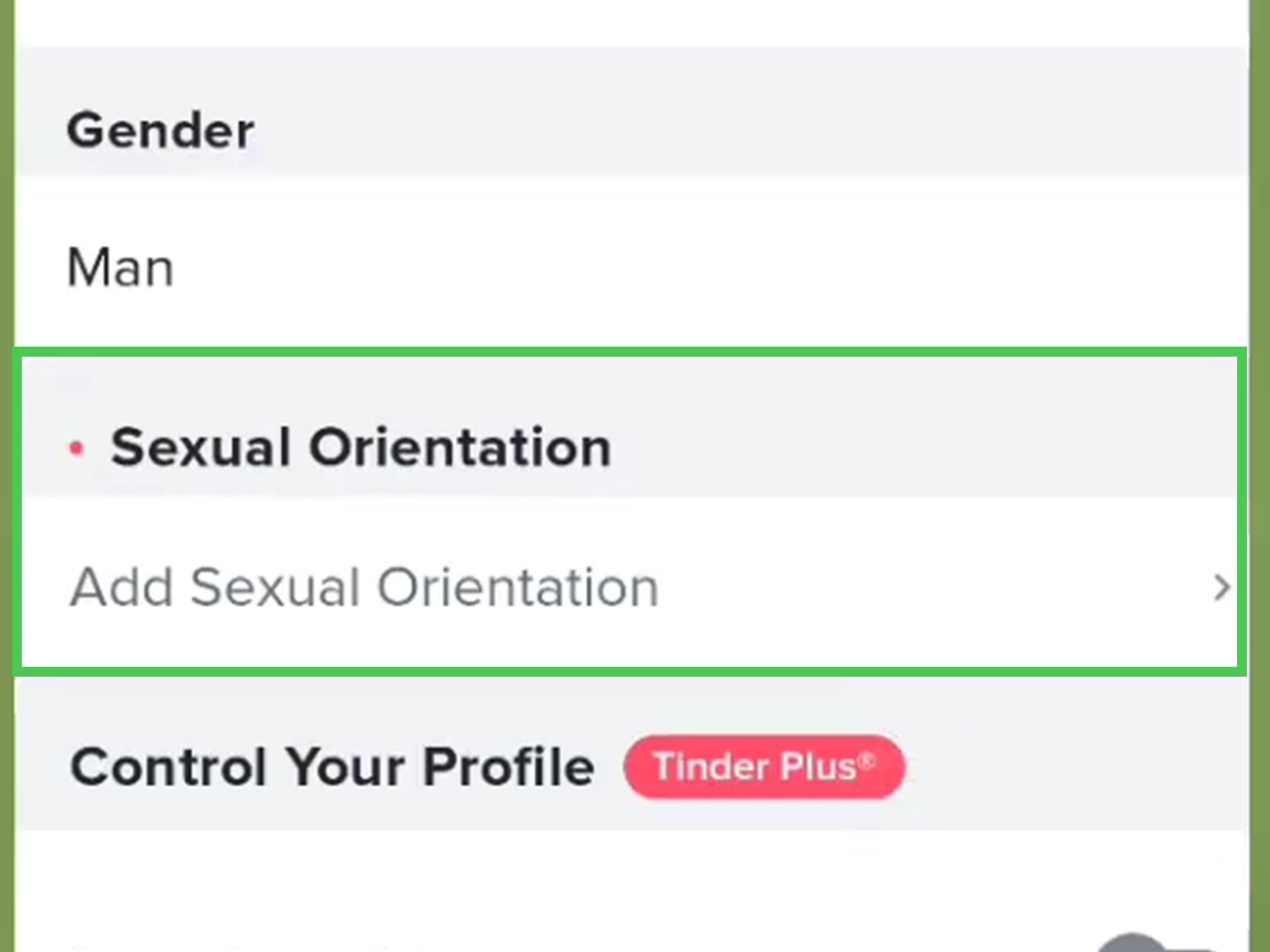
Your own gender setting is managed separately from who you want to see. To update your gender, open Tinder, tap your profile icon, choose the pencil icon or Edit Profile, and scroll to Gender. Tinder generally lets users choose a primary category such as Man, Woman, or Beyond Binary, with additional identity options available in some locations.
This matters because your gender can influence how you appear in other people’s searches. If your profile gender is outdated, incomplete, or not aligned with how you identify, your experience may feel off. Updating it can help Tinder better understand how to show your profile and how to recommend potential matches.
Gender Preference vs. Sexual Orientation: What Is the Difference?
Tinder also allows many users to add sexual orientation to their profile. This may include options such as straight, gay, lesbian, bisexual, asexual, demisexual, pansexual, queer, questioning, or other available choices depending on the current app experience.
Sexual orientation describes attraction or identity. Gender preference in Discovery controls who appears while you swipe. They are related, but they are not the same setting.
For example, a bisexual user may choose to show their orientation on their profile but set Discovery to see everyone. Another user may prefer not to display orientation publicly while still adjusting who appears in their swipe stack. Tinder gives users flexibility here because identity is personal, not a drop-down menu written by a robot with three minutes of training.
Should You Display Your Gender or Sexual Orientation?
Displaying your gender or sexual orientation is optional in many Tinder settings. Some people prefer to show these details because it helps others understand them quickly. Others prefer privacy, especially if they are still exploring, live in a less accepting environment, or simply do not want every profile detail turned into a billboard.
A good rule: share only what you are comfortable sharing. Your profile should help you connect, not make you feel like you are filling out tax forms for your personality.
Why You Might Still See Profiles Outside Your Preferences
Sometimes users change their gender preference and still see profiles that do not seem to match. Annoying? Yes. Unheard of? No. There are several possible reasons.
Your App Has Not Refreshed Yet
After changing Discovery settings, the app may take a little time to update your recommendations. Closing and reopening Tinder can help. If the issue continues, check for app updates.
Your Settings May Not Be Saved
Open Settings again and confirm that your preferred option is still selected. If it reverted, change it again and make sure your internet connection is stable.
Profiles May Use Gender Settings Differently
Users choose their own gender identity and profile details. Because Tinder supports broader gender expression, not every profile will fit neatly into a simple expectation. Someone’s appearance, pronouns, or bio may not match what another person assumes from a category label.
Tinder May Show Slightly Broader Recommendations
Dating apps sometimes widen recommendations when there are fewer profiles available within selected filters. Distance, age range, location density, and other preferences can all affect what appears. If you want a tighter experience, review all Discovery settings, not just gender.
How to Make Tinder Show Better Matches
Changing gender preferences is only one part of improving your Tinder experience. If your matches feel random, confusing, or wildly unrelated to what you want, review your whole profile and Discovery setup.
Check Your Age Range
Make sure your age range reflects who you actually want to meet. A range that is too wide may produce matches that feel irrelevant. A range that is too narrow may reduce your options dramatically, especially outside large cities.
Adjust Your Distance
If you live in a smaller area, a short distance range may limit your swipe stack. If you live in a big city, a huge distance range may show people who are technically nearby but practically located in another universe, also known as “across town during rush hour.”
Review Your Bio
Your bio should clearly signal what kind of connection you want without sounding like a legal contract. Mention a hobby, a conversation starter, or a simple line about what you enjoy. “Ask me anything” is fine, but “Ask me about my dangerously serious opinions on pizza crust” gives people something easier to respond to.
Use Recent Photos
Use clear, current photos that represent you accurately. This is not just about getting more matches; it is about attracting people who are interested in the real version of you, not a blurry museum exhibit from six years ago.
Privacy and Safety When Changing Gender Preferences
Gender identity and dating preferences can be personal. Before updating your Tinder profile, think about what you want visible to others. If you are LGBTQIA+, questioning, or exploring, you do not have to display every detail publicly. You can adjust your profile gradually and choose what feels safe.
Tinder also includes safety tools such as reporting, unmatching, blocking profiles, blocking contacts, and accessing safety resources inside the app. If someone is disrespectful about your gender, orientation, boundaries, or preferences, you do not owe them a debate tournament. Use the safety tools and move on.
Common Mistakes to Avoid
Mistake 1: Confusing Profile Gender With Discovery Preference
Changing your own gender does not always mean you have changed who you want to see. Check both areas: Edit Profile for your identity and Discovery Settings for your preferences.
Mistake 2: Forgetting to Update the App
If your settings look different from online instructions, your app version may be outdated. Update Tinder through the App Store or Google Play, then check again.
Mistake 3: Using “Everyone” When You Want a Narrower Search
Choosing everyone can be helpful if you are open to multiple genders. But if you only want to see specific profiles, everyone may make your swipe stack feel too broad.
Mistake 4: Ignoring Safety Signals
If someone pressures you to move off the app too quickly, asks for money, avoids basic questions, or makes you uncomfortable, slow down. Online dating should not feel like a customer service dispute with flirting attached.
Examples of How Different Users Might Set Their Preferences
A straight woman interested in men may set her profile gender to Woman and her Discovery preference to Men. A gay man interested in men may set his profile gender to Man and his Discovery preference to Men. A bisexual user may choose Everyone if they want to see more than one gender. A nonbinary or Beyond Binary user may select the gender identity options that fit them best and then choose the Discovery preference that matches who they want to meet.
There is no single “correct” setup for every person. The right setup is the one that reflects your identity, your comfort level, and the people you actually want to connect with.
What If You Cannot Find the Gender Preference Setting?
If you cannot find the setting, try these quick fixes. First, update your app. Second, log out and log back in. Third, check Tinder.com to see whether the setting appears differently on desktop. Fourth, review your region and account settings, because some features vary by location.
If the option still does not appear, visit Tinder Help from inside the app. Feature names change, and Tinder occasionally tests different layouts. The setting may not be missing; it may simply be hiding under a new label like it owes you money.
Experiences and Practical Lessons: What Changing Gender Preferences on Tinder Actually Feels Like
Adjusting which genders you are interested in on Tinder sounds like a tiny technical task, but for many adults it can feel surprisingly personal. It is not just a button; it is a reflection of who you want to meet, how you understand your attraction, and how comfortable you feel putting that into an app.
For some users, the experience is simple. They open Settings, choose the gender they are interested in, and continue swiping with a cleaner, more relevant feed. Maybe they had accidentally selected everyone during setup, or maybe they rushed through onboarding while half-watching TV and eating cereal directly from the box. Once they fix the preference, Tinder starts showing profiles that make more sense.
For others, the process brings up bigger questions. Someone who is bisexual, pansexual, queer, or questioning may experiment with different settings to see what feels right. Choosing everyone may feel exciting at first, then overwhelming. Choosing one gender for a while may feel more focused, then too limiting. That is normal. Preferences can be stable, fluid, specific, broad, or still under construction. Tinder settings can be adjusted again later, which is useful because human beings are not software updates with final release notes.
A common experience is realizing that Discovery preferences affect more than match quantity. They affect the emotional tone of the app. If your settings are too broad, swiping can feel noisy. If they are too narrow, the app may feel quiet or repetitive. The best setup often comes from testing: change one setting, use the app for a few days, then adjust again if the results feel off.
Another real-world lesson is that profile clarity matters. If your gender identity, orientation, or dating goals are important to your matches, consider whether to include them in your profile. You do not need to overexplain yourself. A short line can work: “Queer and looking for intentional dating,” “Interested in women,” or “Open to meeting kind, emotionally available people.” The final example is ambitious, yes, but we must remain hopeful as a society.
Users also learn that preference settings are not a substitute for boundaries. Even if Tinder shows the right genders, not every match will be respectful, compatible, or honest. Pay attention to how people communicate. A good match should respect your identity, your pace, and your comfort level. If someone treats your preferences like a debate topic, that is not chemistry; that is homework you did not assign.
Safety is also part of the experience. Many adults prefer to keep conversations inside the app until they feel comfortable. Meeting in public, telling a trusted friend where you are going, avoiding money requests, and using reporting tools when needed are basic online dating habits. They may not sound romantic, but neither does losing your peace to someone with three profile photos and the emotional stability of a folding chair.
The best takeaway is this: adjusting your Tinder gender preferences is not about pleasing the app. It is about making the app work better for you. Your settings should support your comfort, identity, curiosity, and dating goals. Whether you are narrowing your search, expanding it, or simply correcting a setup mistake, the goal is the same: a swipe experience that feels more honest, more respectful, and less like your phone is guessing wildly in the dark.
Conclusion
Learning how to adjust which genders you are interested in on Tinder is a small setting change that can make a big difference in your dating experience. Start by opening Tinder, going to your profile, entering Settings, and reviewing your Discovery preferences. Then check your own gender and sexual orientation settings under Edit Profile to make sure your profile reflects you accurately.
Remember that Tinder’s labels and options may vary, so focus on the purpose of each setting: your profile gender describes you, while your Discovery preference controls who you see. Keep your app updated, review your filters regularly, and use safety tools whenever someone crosses a line.
Most importantly, your preferences are yours. You can be specific, open, private, expressive, certain, or still figuring things out. A dating app setting should never make you feel boxed in. It should help you meet people who better match what you are looking for, ideally with fewer awkward surprises and fewer “why is this happening?” moments before coffee.