

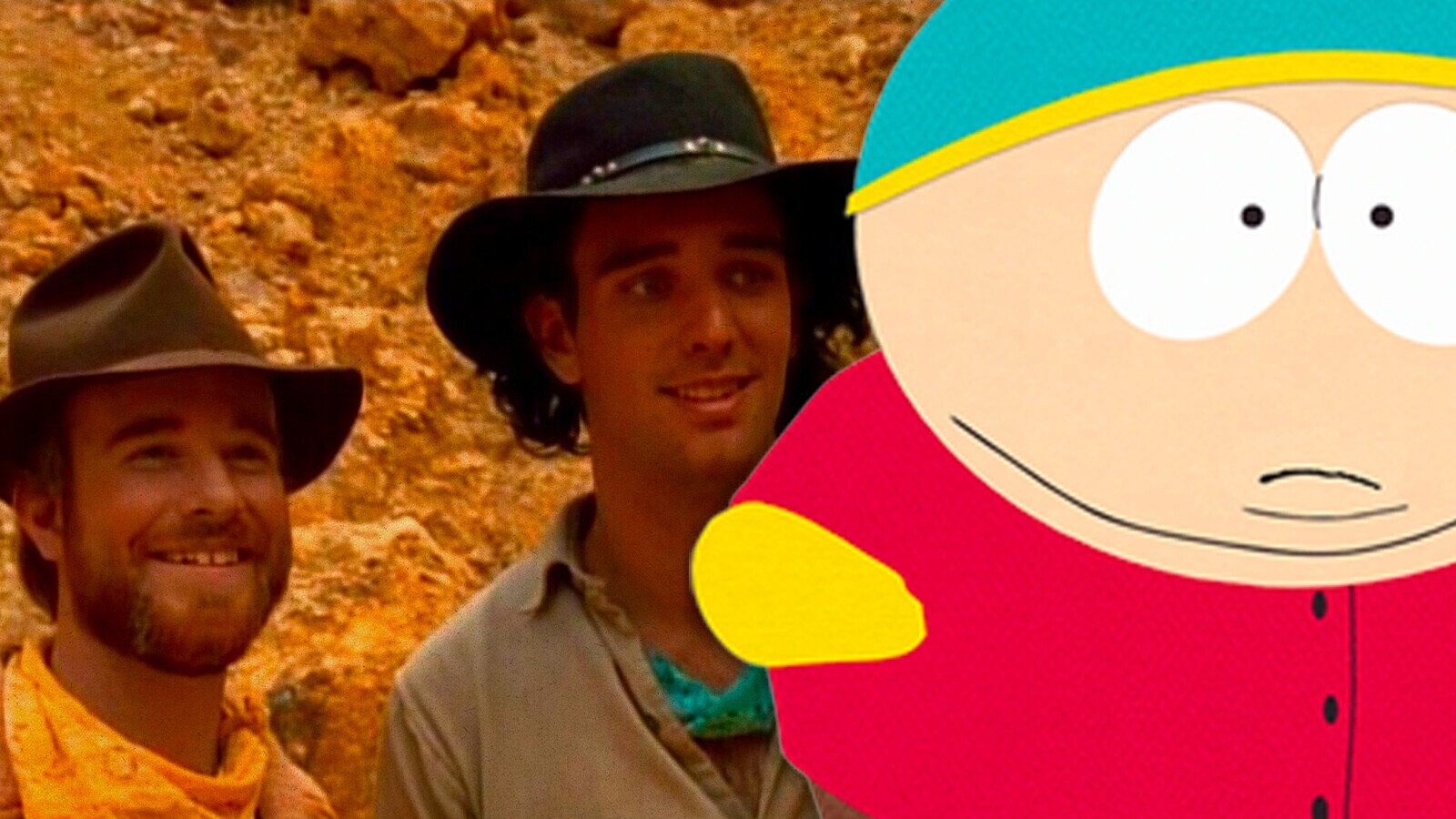
Trey Parker and Matt Stone are so closely tied to South Park that it can feel like the rest of their creative career is hiding in a mountain cabin with a fake mustache. But outside the snowy Colorado town that made them famous, the duo has built a strange, sharp, musical, puppet-filled, Broadway-crashing, deepfake-tinkering body of work. Some of it is famous. Some of it is weirdly hard to explain at parties. All of it helps reveal why Parker and Stone became two of the most fearless comedy creators in American pop culture.
This guide is not a simple Trey Parker and Matt Stone filmography. It is a curated tour of the best non-South Park deep cuts: projects that show their obsession with genre parody, cheerful bad taste, musical structure, fake sincerity, and the oddly disciplined craft hiding under all the chaos. Think of it as a comedy treasure map, except the treasure is sometimes a tap-dancing cannibal, sometimes a puppet action hero, and sometimes a Broadway missionary singing with frightening confidence.
What Counts as a Parker-and-Stone Deep Cut?
A “deep cut” does not always mean obscure. The Book of Mormon, for example, is a Broadway monster hit, not a dusty VHS in someone’s basement. But in a non-South Park context, it belongs here because it shows how Parker and Stone’s comic DNA functions outside animation. The best deep cuts are the works that reveal their recurring tricks: turning wholesome formats into chaos, using songs as jokes with surprisingly good melodies, parodying institutions without sounding like a lecture, and making lowbrow ideas with high-level structure.
The result is a catalog that ranges from student-film scrappiness to Tony-winning polish. If you only know Cartman, Stan, Kyle, and Kenny, these projects are the side quests that explain the main game.
1. Cannibal! The Musical: The College Movie That Already Had the Formula
Before global fame, Parker and Stone were University of Colorado guys with a camera, a taste for absurdity, and apparently no fear of making a musical about one of the strangest chapters in Colorado folklore. Cannibal! The Musical, originally connected to the story of Alferd Packer, is rough around the edges in the best possible way. It has the energy of friends deciding, “What if history class had jokes, snow, and songs that should not be this catchy?”
What makes it a must-watch deep cut is not polish. It is the blueprint. The movie takes a grim historical subject and filters it through bright musical numbers, deadpan stupidity, and cheerful genre abuse. That contrast would later become one of Parker and Stone’s strongest creative weapons: make the form sound wholesome while the subject matter misbehaves like a raccoon in a church kitchen.
Why it matters
Cannibal! The Musical proves that Parker was a musical-comedy craftsman early on. The songs are not random decoration; they shape the joke. The sincerity is fake, but the songwriting effort is real. That tension became essential to later projects, especially The Book of Mormon and Team America: World Police. If you want to see the baby photo of Parker and Stone’s comedic style, this is it, braces and all.
2. Your Studio and You: The Corporate Training Video from an Alternate Universe
Your Studio and You is one of the strangest early Parker-and-Stone artifacts: a short film made for Universal after Seagram acquired the studio. On paper, that sounds like a corporate orientation video. In practice, it is a 1950s-style industrial-film parody that treats Hollywood power players as if they are cheerful employees being introduced to a workplace cafeteria.
The fun of the short comes from the collision between format and reality. A stiff instructional tone meets movie-star cameos, studio politics, and a barely disguised sense that the whole assignment is wonderfully ridiculous. It is a perfect example of the duo’s gift for weaponizing fake politeness. The narrator’s upbeat delivery makes everything feel more absurd, not less.
Why it matters
This short shows Parker and Stone learning how to mock institutions from the inside. They are not standing outside Hollywood yelling, “Hollywood is silly!” They are inside the studio system making a joke for the studio system, using the studio’s own language against it. That skill would later become central to their best satire: understand the machine, imitate the machine, then make the machine trip over its own shoelaces.
3. Orgazmo: The Superhero Satire That Got There Before the Cape Boom
Orgazmo is a tricky title to discuss for a general audience because its setting involves the adult-film business, but the comedy itself is built around innocence, showbiz absurdity, and a superhero premise that now feels oddly ahead of its time. Parker stars as a clean-cut missionary who gets pulled into an outrageous entertainment-world situation and becomes the costumed hero Orgazmo. Matt Stone appears as part of the supporting madness.
The movie arrived before superhero culture became the dominant American screen language. That makes it funnier in hindsight. Parker and Stone were already poking at the gap between moral certainty, celebrity fantasy, low-budget spectacle, and Hollywood hustle. The result is messy, juvenile, and not for everyone, but it has a handmade cult-movie charm that later studio comedies often try and fail to fake.
Why it matters
Under the outrageous packaging, Orgazmo is really about naive outsiders entering a bizarre industry and trying not to lose themselves. That is a classic Parker-and-Stone move: place a weirdly sincere character inside a ridiculous system, then let the system expose itself. The jokes may be blunt, but the structure is smarter than it first appears.
4. BASEketball: The Sports Comedy That Became a Sleepover Classic
Directed by David Zucker, BASEketball is not a Parker-and-Stone creation in the same authorial sense as Cannibal! or Team America, but it is essential viewing for fans who want to see the duo as live-action comic performers. Parker plays Joe Cooper, Stone plays Doug Remer, and together they become slacker inventors of a hybrid backyard sport that accidentally becomes a national obsession.
The film is packed with late-’90s sports-movie parody, dumb friendship drama, celebrity culture jokes, and the kind of competitive nonsense that feels invented by people who spent too much time in a driveway with no adult supervision. That is a compliment. The movie has aged into a comfort-food comedy for viewers who like their satire wearing gym shorts.
Why it matters
BASEketball shows Parker and Stone’s chemistry without animation. Their timing is casual, bratty, and weirdly believable. They do not perform like polished sitcom stars; they perform like two friends who keep daring each other to make the scene stupider. That looseness is exactly the appeal.
5. That’s My Bush!: A Sitcom Parody Disguised as Political Comedy
That’s My Bush! is one of the most fascinating non-South Park Parker-and-Stone projects because many people remember the premise but miss the real joke. Yes, it is a live-action Comedy Central sitcom about a fictionalized George W. Bush White House. But the target is not only politics. The bigger target is the American sitcom itself: laugh tracks, wacky neighbors, catchphrases, stock plots, and the comforting rhythm of television nonsense.
The series ran for only eight episodes in 2001, which practically qualifies it for endangered-species status. Yet that short lifespan adds to its cult appeal. Each episode blends a serious public issue with a familiar sitcom setup, creating a weird double vision. You are watching policy debate squeezed into the shape of a domestic farce, and the shape is the joke.
Why it matters
That’s My Bush! is a master class in format parody. Parker and Stone understood that a genre’s rules can be funnier than its subject. Instead of simply saying, “Politics is ridiculous,” they asked, “What if politics had the emotional logic of a cheesy living-room sitcom?” That is a sharper, stranger question.
6. Team America: World Police: Puppets, Action Movies, and Maximum Commitment
Team America: World Police may be the most ambitious non-South Park film Parker and Stone have made. Directed by Parker and written by Parker, Stone, and Pam Brady, it uses marionettes to parody action blockbusters, American foreign-policy bravado, celebrity activism, and disaster-movie self-importance. It is loud, vulgar, technically exhausting, and somehow more cinematic than many normal action comedies with actual humans.
The genius is in the commitment. The puppets are intentionally awkward, but the filmmaking treats them like stars in a serious thriller. Explosions matter. Dramatic pauses matter. Hero poses matter. Then a puppet face fails to express emotion properly, and the whole thing becomes art.
Why it matters
Team America shows Parker and Stone at their most structurally confident. The songs are memorable, the action parody is precise, and the satire refuses to sit quietly in one ideological corner. It is not subtle, but it is built with the discipline of people who deeply understand the movies they are mocking. The joke works because the action-movie machinery is recreated with absurd care.
7. How’s Your News?: The Most Unexpected Project in the Catalog
How’s Your News? is often overlooked in discussions of Trey Parker and Matt Stone because their role was not the same as writing and starring in a movie. They served as executive producers on a project built around reporters with disabilities conducting interviews and exploring the world through a documentary-comedy lens. The result is unusual, sincere, unpredictable, and very different from the duo’s more aggressive satire.
What makes it stand out is its warmth. The humor is not about mocking the reporters; it comes from real encounters, unexpected questions, and the nervous energy of public conversation. In a career known for provocation, this project reveals another interest: what happens when media performance becomes more honest because it is less slick?
Why it matters
It proves that Parker and Stone’s orbit is wider than shock comedy. They have often been interested in who gets to speak, who gets taken seriously, and how television shapes awkward reality into entertainment. How’s Your News? approaches those questions from a surprisingly human angle.
8. The Book of Mormon: The Broadway Smash That Still Feels Like a Dare
Calling The Book of Mormon a deep cut is a little like calling Times Square “a hidden gem,” but for non-South Park Parker-and-Stone work, it is unavoidable. Created with Robert Lopez, the musical became a major Broadway success and won nine Tony Awards, including Best Musical. More importantly, it proved that Parker and Stone could take their comic style into one of America’s most traditional entertainment forms and not merely survive, but dominate.
The show works because it understands classic musical theater. The characters want things. The songs move the story. The melodies are bright, theatrical, and emotionally legible. Then the jokes detonate inside that structure. Parker, Stone, and Lopez do not parody Broadway from a distance; they use Broadway’s own tools with expert timing.
Why it matters
The Book of Mormon is the clearest proof that Parker and Stone are not just provocateurs. They are formalists. They know that comedy lands harder when the craft is sturdy. A sloppy offensive joke fades. A perfectly staged musical number with a dangerous comic idea can run for years.
9. Sassy Justice and Deep Voodoo: The Deepfake Era Gets a Satirical Warning Label
In 2020, Parker and Stone teamed with Peter Serafinowicz on Sassy Justice, a web-based satire using deepfake technology to create a fictional local-news world. The project later connected to Deep Voodoo, the AI entertainment studio formed by Parker and Stone. It is a fascinating late-career turn because it moves their old obsession with media fakery into a new technological arena.
The premise is funny, but the anxiety underneath is real: if faces, voices, and public images can be remixed with enough confidence, how do audiences know what they are watching? Parker and Stone have spent decades mocking television authority, political messaging, celebrity branding, and moral panic. Deepfake satire gives them a new toy, but also a new ethical puzzle.
Why it matters
Sassy Justice is one of their most modern deep cuts because it sits at the intersection of comedy, technology, and media literacy. It is not just another sketch. It is a sign that Parker and Stone are still interested in where entertainment is going, especially when the future looks both hilarious and mildly terrifying.
What These Deep Cuts Reveal About Parker and Stone
Looking across these projects, a pattern emerges. Parker and Stone love formats: musicals, corporate videos, sitcoms, action movies, sports comedies, news reports, Broadway shows. They rarely start by saying, “Let’s make fun of one topic.” Instead, they ask, “What format has rules everyone recognizes?” Then they follow those rules just long enough to make the audience comfortable before flipping the table.
Their other secret is sincerity. That may sound strange, because their comedy is often rude, loud, and allergic to politeness. But the best Parker-and-Stone work contains a weird pocket of genuine feeling. Cannibal! The Musical loves musicals. Team America loves action spectacle. The Book of Mormon loves Broadway. Even BASEketball loves friendship movies. The mockery works because the affection is real enough to give the parody bones.
That is why their non-South Park deep cuts remain worth revisiting. They are not leftovers. They are alternate routes through the same creative brain: musical, skeptical, impatient with hypocrisy, and always willing to make the dumbest possible joke with the most serious possible craftsmanship.
Best Viewing Path for New Fans
If you are new to Trey Parker and Matt Stone beyond South Park, do not start randomly. Begin with Team America: World Police if you want the most complete movie version of their satirical voice. Then watch The Book of Mormon clips or, ideally, see the stage show to understand their musical-theater craft. After that, go back to Cannibal! The Musical for the origin story.
Once you understand those three points—scrappy student musical, puppet blockbuster parody, and Broadway hit—the rest becomes more interesting. That’s My Bush! will feel less like a political oddity and more like a formal experiment. Your Studio and You becomes a tiny key to their Hollywood satire. Orgazmo reads as an early showbiz outsider comedy. Sassy Justice becomes the next-generation version of the same question they have always asked: who controls the story, and why do we believe the performance?
Experience Section: Watching the Deep Cuts Like a Comedy Archaeologist
The best way to experience Parker and Stone’s non-South Park work is not as a checklist. Treat it like comedy archaeology. Each project is a layer of sediment, and buried inside are the tools they kept sharpening over decades. Watch Cannibal! The Musical and you can almost see the young filmmakers discovering that a cheerful song can make a dark premise funnier without making it softer. The movie has the awkward confidence of a garage band playing its first big set. Not every note is perfect, but the personality is already unmistakable.
Then move to Your Studio and You, and the experience changes. Suddenly, the same comic instincts are inside Hollywood’s walls. It feels like watching two outsiders handed a visitor badge and immediately using it to sneak into the control room. The short is especially enjoyable if you have ever sat through a corporate training video that sounded as if it was written by a committee of smiling robots. Parker and Stone understand that institutional cheerfulness can be hilarious when pushed half an inch too far.
BASEketball is best experienced with the expectations of a late-night cable comedy. It is not trying to be elegant. It is trying to be quotable, dumb, competitive, and oddly sweet about male friendship. Watching Parker and Stone perform in live action is useful because it reminds you that their animated timing comes from real human rhythm: pauses, mutters, fake confidence, and the priceless look of someone realizing the bit has gone too far but continuing anyway.
That’s My Bush! is the one that benefits most from patience. At first glance, it looks like a dated political artifact from 2001. Stay with it, and the real joke appears: it is a sitcom wearing a presidential mask. The laugh track, the wacky entrances, the obvious setups—all of it becomes part of the satire. The experience is like watching a familiar television format melt slowly under studio lights.
Team America is the crowd-pleaser of the deep cuts, but it is also the most impressive technical experience. The longer you watch, the funnier the commitment becomes. A puppet cannot smolder like an action hero, but the movie keeps pretending it can, and that stubborn commitment is the joke. It is big, noisy, and ridiculous, yet the construction is careful. You laugh at the chaos, then realize someone had to plan every tiny piece of it.
Finally, The Book of Mormon and Sassy Justice show the two poles of Parker and Stone’s later career: classic stagecraft and future-facing media experimentation. One uses Broadway tradition; the other uses synthetic video technology. Both ask audiences to think about belief, performance, and the stories people accept because they are packaged convincingly. That is the real experience of exploring these deep cuts: you start by laughing at the outrageousness, then notice the machinery underneath. Parker and Stone are pranksters, yes, but they are also builders. Their best non-South Park work lasts because the joke is never just the joke. The joke is the format, the performance, the system, and the tiny moment when the system realizes it has been pantsed in public.
Conclusion: The Deep Cuts Are the Point
The best non-South Park deep cuts from Trey Parker and Matt Stone are more than side projects. They are proof that their comedy is portable. It can survive as a student musical, a studio short, a live-action sports farce, a sitcom parody, a puppet action movie, a Broadway musical, and a deepfake news satire. The surface changes, but the engine stays the same: imitate the form, respect the craft, expose the absurdity, and never underestimate the power of a catchy song arriving at exactly the wrong moment.
For fans, these works offer a fuller picture of Parker and Stone as creators. They are not simply the guys behind one famous animated series. They are genre mechanics, musical comedians, media skeptics, and professional button-pushers with unusually strong structural instincts. Their deep cuts are where you can see the wires, the gears, and the duct tape. And honestly, the duct tape is part of the charm.