

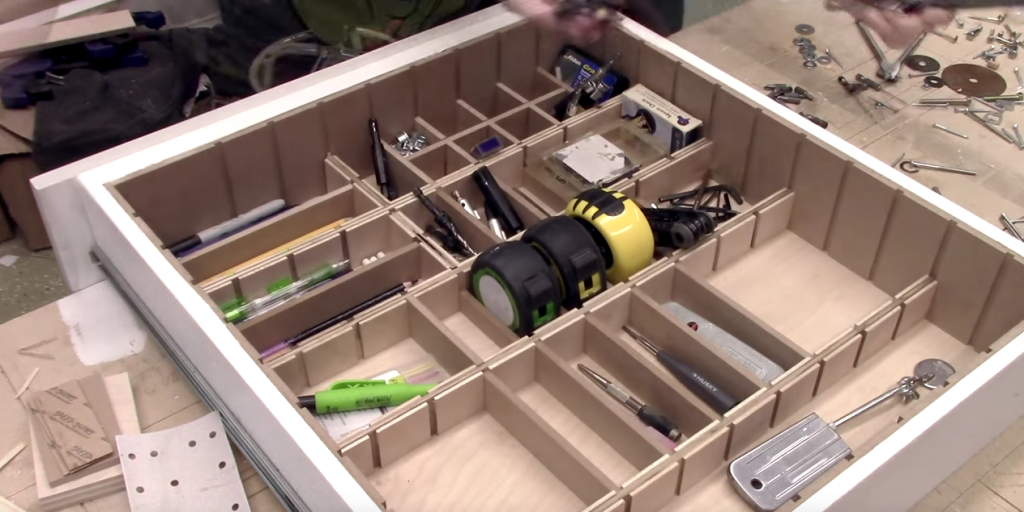
Every home has one: the drawer that sounds like a maraca when you open it. It holds two pens that do not write, a birthday candle shaped like the number seven, three lonely screws, a mystery key, an expired coupon, and the tiny screwdriver you need exactly once every presidential administration. We call it the junk drawer, but here is the uncomfortable truth: it is not supposed to be a black hole with handles.
The better way to organize your junk drawer is to stop treating it like a place for “miscellaneous things” and start treating it like a small household command center. A good junk drawer is not empty, sterile, or joyless. It is useful. It stores the little items you reach for often, the small problem-solvers that save you from walking to the garage, office, bathroom, or basement every time life asks for tape, scissors, a marker, or a rubber band.
In other words, the goal is not to shame your drawer into minimalism. The goal is to make it work harder, stay neater, and stop swallowing your favorite pen like a kitchen-based sea monster.
Why Junk Drawers Get So Messy So Fast
Junk drawers become chaotic because they usually do not have a job description. When a drawer’s purpose is “put random stuff here,” random stuff happily accepts the invitation. Receipts multiply. Batteries roll into corners. Old keys look important enough to keep forever. Chargers lose their identity. A rubber band fuses emotionally with a paper clip. Suddenly, the drawer is not storage; it is a small archaeological site.
The real problem is not that you own too many small things. The real problem is that the drawer has no boundaries. A junk drawer needs categories, limits, and a simple maintenance habit. Without those, it becomes overflow for every room in the house. With them, it becomes one of the most helpful spaces in your home.
The Better Mindset: Build a Utility Drawer, Not a Dumping Ground
Before buying drawer organizers or promising yourself a new life as a person who labels batteries alphabetically, change the name in your head. Do not call it a junk drawer. Call it a utility drawer, grab-and-go drawer, household helper drawer, or “the place where useful little things live.” This tiny mental shift matters because it changes what belongs there.
A utility drawer should hold items that solve small, everyday problems quickly. That means a working pen, a pair of scissors, a roll of tape, a few sticky notes, a compact screwdriver, and maybe a small flashlight. It does not mean unpaid bills, sunscreen, seven charging cables from phones you no longer own, or the user manual for a blender that retired during the Obama years.
Step 1: Empty the Drawer Completely
The first rule of junk drawer organization is simple: do not organize around the chaos. Empty the entire drawer onto a counter or table. Yes, everything. Even the tiny crumbs. Especially the tiny crumbs. You need to see what you actually have before you can decide what deserves to return.
Once the drawer is empty, wipe it out. Use a damp cloth, mild cleaner, or whatever is appropriate for the drawer material. This small cleaning step makes the project feel like a reset instead of a punishment. It also gives you a clear starting point, which is surprisingly motivating. A clean empty drawer whispers, “We could be different now.” Listen to it.
Step 2: Sort Everything Into Clear Categories
Now divide everything into simple piles. Do not overcomplicate this. You are not cataloging a museum collection. Try these categories:
- Keep in this drawer: small items used often and useful in this location.
- Move elsewhere: items that belong in the office, garage, bathroom, entryway, or medicine cabinet.
- Trash or recycle: dried-out pens, broken items, expired coupons, wrappers, and mystery bits.
- Decide later: items you cannot identify immediately, but only if you give them a short deadline.
The “decide later” pile is dangerous. It can become a retirement village for objects with no purpose. Use it sparingly. If you do not know what an item is, what it belongs to, or when you last used it, that is usually your answer.
Step 3: Be Ruthless With the Usual Drawer Invaders
Some items are famous for ruining junk drawer organization. Old receipts are one of the biggest offenders. Important receipts should be filed or stored digitally. Unimportant receipts should be recycled or shredded when appropriate. The junk drawer is not a financial recordkeeping system, even if it has been pretending to be one.
Next, test every pen and marker. If it does not write, it goes. If you have 22 pens, keep two or three that work well and move the extras to a desk or office supply area. Keep one pair of scissors, one roll of tape, and one small notepad. Extras are not “being prepared.” They are clutter wearing a tiny disguise.
Loose hardware also needs a reality check. If you know exactly what the screw, washer, or bracket belongs to, put it in a labeled bag and store it with related tools or parts. If it is just “probably important,” it is probably not important enough to dominate prime drawer real estate.
Step 4: Decide What Actually Belongs in a Junk Drawer
A well-organized junk drawer is not a miniature version of every storage area in your home. It should contain a focused set of frequently used, small household items. Good candidates include:
- Two or three working pens
- A permanent marker
- Sticky notes or a small notepad
- Scissors
- Tape
- A compact screwdriver or mini multi-tool
- Rubber bands or twist ties
- Small labels or tabs
- A measuring tape
- A small flashlight
- Eyeglass repair kit or lens cloth
- A few spare keys, clearly labeled
That list is not law. Your drawer should match your household. If you wrap packages weekly, shipping labels and a tape dispenser might make sense. If your drawer is near the entryway, keys, stamps, and a lint roller may be more useful. If it is in the kitchen, scissors, tape, pens, and a compact tool may be perfect. The best junk drawer organization system is the one that supports how you actually live.
Step 5: Remove What Does Not Belong
Some things simply do not deserve a home in the junk drawer. Medications and supplements should be stored safely and properly, not tossed beside scissors and rubber bands. Important documents belong in a filing system. Large tools belong in a toolbox. Beauty products belong in the bathroom or vanity. Toys belong with toys. Manuals can usually be stored digitally or filed if truly necessary.
Batteries deserve special attention. A few properly stored rechargeable batteries may be useful, but loose batteries rolling around with paper clips, keys, or coins are not a good idea. Store batteries in their original packaging or in a dedicated battery case, ideally in a cool, dry place. Button batteries are especially risky around children and pets, so keep them secured and out of reach. Your drawer should solve problems, not create tiny electrical suspense.
Step 6: Measure Before Buying Drawer Organizers
Drawer dividers are wonderful, but only if they fit. Measure the width, depth, and height of the drawer before shopping. This prevents the classic organizing mistake: buying a beautiful bamboo tray that is one-quarter inch too wide and then staring at it like it personally betrayed you.
Good drawer organizers include adjustable dividers, modular clear bins, bamboo trays, cutlery organizers, small boxes, silicone cups, and shallow containers. Clear organizers make it easy to see what is inside. Bamboo looks warm and polished. Adjustable dividers are great for odd drawer sizes. Small recycled boxes can work just as well if you want a no-cost solution.
Step 7: Create Zones Inside the Drawer
The secret to a tidy junk drawer is not one big organizer. It is zones. Each category needs a specific home. Pens and markers go together. Tape and scissors share a section. Small tools get their own slot. Keys go in a small cup or labeled compartment. Rubber bands should be contained, because otherwise they behave like drawer confetti.
Think of the drawer like a tiny neighborhood. If everything has an address, it is easy to put things back. If everything lives in “the pile district,” chaos wins by Tuesday.
Step 8: Use the One-Second Return Rule
The best organizing system is not the prettiest one. It is the one you can maintain when you are tired, busy, or holding a grocery bag with one hand. Every item should be easy to return in one second. If you have to remove three containers to put away a pen, the system is too fussy. If you need to perfectly coil a charger every time, the system will fail by next week.
Make the drawer simple enough that everyone in the household can use it. Labels help, especially for families, roommates, or anyone who believes “near the organizer” is the same as “inside the organizer.” It is not, Kevin.
Step 9: Prep Items Before Returning Them
Before putting items back, make them ready to use. Fold the end of the tape so it is easy to grab. Sharpen pencils. Label spare keys. Wrap cords with twist ties. Put tiny hardware in small labeled bags. Test the flashlight. Make sure the measuring tape retracts. These finishing touches turn the drawer from neat-looking to genuinely functional.
This is where the better way to organize your junk drawer really shines. You are not just arranging objects. You are removing friction from daily life. The next time you need a marker, it works. The next time you need tape, the end is not lost forever. The next time you need a screwdriver, you are not digging through a drawer with the emotional intensity of a treasure hunter.
Step 10: Set a Drawer Limit and Respect It
A drawer has a built-in organizing advantage: it has walls. Use them. When the drawer starts to overflow, do not add another drawer. Edit the contents. Overflow is a message, not a storage strategy.
A good rule is this: if a category no longer fits in its assigned section, reduce the category. Too many pens? Keep the best ones. Too many rubber bands? Toss the brittle ones. Too many cords? Identify them or move them out. The drawer should close easily without requiring a hip-check, prayer, or engineering degree.
What To Do With Mystery Cords, Keys, and Tiny Parts
Mystery items are the emotional core of every junk drawer. We keep them because they might matter. But “might matter” can fill a house. Create a temporary holding system for mystery items: a small labeled bag or box outside the drawer. Add a date. If no one identifies or uses the item in 30 to 60 days, let it go.
For cords, label the ones you can identify and store them with related electronics. If a cord has no known device, it does not deserve VIP seating in your daily-use drawer. For keys, test them if possible. Label the useful ones. Recycle or discard the rest according to local guidance. A key with no lock is just a tiny metal guilt trip.
Budget-Friendly Junk Drawer Organizer Ideas
You do not need to spend much money to organize a junk drawer. A cutlery tray can instantly divide long items like pens, scissors, and tape. Ice cube trays work for tiny objects such as paper clips, thumb drives, and spare buttons. Cardboard dividers can be cut to size. Small gift boxes, mint tins, checkbook boxes, and clean takeout containers can create compartments for free.
If you want a more polished look, modular drawer bins are worth considering because they can be rearranged as your needs change. Expandable bamboo trays are great for kitchen drawers. Clear acrylic bins are practical for office-style drawers. The right organizer is not the most expensive one; it is the one that fits your drawer, your categories, and your habits.
How Often Should You Reset a Junk Drawer?
Plan a quick reset every three to six months. If your home is busy, monthly may be better. The reset should take only five to ten minutes if the drawer has categories and dividers. Toss trash, test pens, remove duplicates, relocate strays, and wipe crumbs. That is it.
Another useful test: if you cannot find what you need in about five seconds, the drawer needs editing. A useful drawer should speed up your day, not become a tiny escape room.
A Simple Junk Drawer Layout That Works
Here is a practical layout for a standard kitchen or entryway junk drawer:
- Front left: pens, marker, pencil, sticky notes
- Front right: scissors, tape, small labels
- Middle left: rubber bands, clips, twist ties
- Middle right: compact screwdriver, measuring tape, mini flashlight
- Back left: labeled spare keys
- Back right: small household extras, such as felt pads or an eyeglass repair kit
Place the most-used items toward the front. Put rarely used but still useful items toward the back. Avoid stacking items unless the container is shallow and easy to access. A junk drawer should be glanceable. You should be able to open it and understand the layout immediately.
Common Junk Drawer Organization Mistakes
Mistake 1: Buying Organizers Before Decluttering
Organizers do not fix clutter; they contain it. Declutter first, measure second, buy third. Otherwise, you may end up organizing things you should have thrown away.
Mistake 2: Keeping Too Many “Just in Case” Items
One spare key is useful. Nine mystery keys are a tiny medieval weapon collection. Keep what has a clear purpose.
Mistake 3: Letting Paper Take Over
Receipts, coupons, notes, mail, and manuals can bury useful items fast. Give paper a separate system. The junk drawer should not be your filing cabinet’s chaotic cousin.
Mistake 4: Using Containers That Are Too Deep
Deep bins hide small items. Use shallow containers so you can see everything. If you need to dig, the organizer is not helping.
Mistake 5: Ignoring Household Habits
If your family always drops keys near the door, create a key section there. If everyone looks for scissors in the kitchen, keep scissors in the kitchen. Organization works best when it follows real behavior, not fantasy behavior.
The Experience: What Happens When You Finally Organize the Drawer
The first time I organized a truly chaotic junk drawer, I expected a quick tidy-up. I did not expect a full personality study of the household. There were five tape measures, which suggested either a deep commitment to accuracy or a complete inability to return things to the garage. There were twelve pens, only two of which worked. There were batteries of every size except the one anyone actually needed. There was a restaurant coupon so old the restaurant had changed names twice. The drawer was less of a storage space and more of a documentary.
The turning point came when everything was spread across the counter. Once the contents were visible, the decisions became easier. Trash was obvious. Duplicates were obvious. Items that belonged elsewhere practically raised their hands. The screwdriver went back to the toolbox. The medicine went to a safer cabinet. The old receipts were shredded or recycled. The surviving pens were tested and placed together. The mystery keys went into a labeled bag with a deadline.
Then came the satisfying part: creating compartments. A simple tray handled pens, scissors, and tape. A small box held rubber bands and clips. A narrow bin kept the flashlight and measuring tape from rolling around. Another small cup held labeled keys. Nothing fancy. No dramatic makeover music required. But when the drawer closed smoothly and opened without rattling like a hardware store in an earthquake, it felt oddly luxurious.
The best part was not how the drawer looked. It was how it behaved afterward. Need tape? There it was. Need a marker? It worked. Need scissors? They were not hiding under expired coupons. The drawer became a daily convenience instead of a daily annoyance. That is the real reward of junk drawer organization: not perfection, but relief.
Another useful lesson came a few weeks later. A few random items had started creeping back in: a receipt, a loose screw, a hair tie, and a phone charger nobody claimed. Instead of letting them settle in permanently, the categories made the problem visible. The receipt had no section, so it had to leave. The screw went into a labeled hardware bag. The hair tie moved to the bathroom. The charger went into the electronics box. A good system makes clutter look out of place quickly, which is exactly what you want.
Organizing a junk drawer also teaches a bigger home lesson: small spaces matter. You may not have time to reorganize the entire kitchen, garage, or office in one afternoon. But one drawer? That is manageable. It gives you a quick win. It proves that order does not have to be complicated. And because the drawer is used often, the payoff shows up immediately in everyday life.
If you are starting today, do not aim for a magazine-perfect drawer. Aim for a drawer that helps you. Keep the items you use. Remove what belongs elsewhere. Give every category a boundary. Make it easy to maintain. And when you find the mystery key, the broken pen, or the tiny plastic part that “must go to something,” smile politely, thank it for its service, and make a decision like the confident drawer boss you are.
Conclusion: The Better Junk Drawer Is Useful, Not Empty
The better way to organize your junk drawer is not to eliminate it. It is to give it purpose. Empty it, sort it, remove clutter, choose useful categories, add dividers, and reset it regularly. Keep small household problem-solvers close at hand, but do not let the drawer become a hiding place for every object you do not feel like dealing with.
A well-organized junk drawer is one of those humble home upgrades that makes daily life smoother. It will not change your personality, fix your inbox, or make dinner cook itself. But it will help you find the scissors in three seconds, and honestly, some days that feels like winning the lottery.
Note: This article is original, web-ready content based on synthesized home organization best practices, professional organizing principles, and common household safety guidance. No source links or unnecessary reference markers are included.