

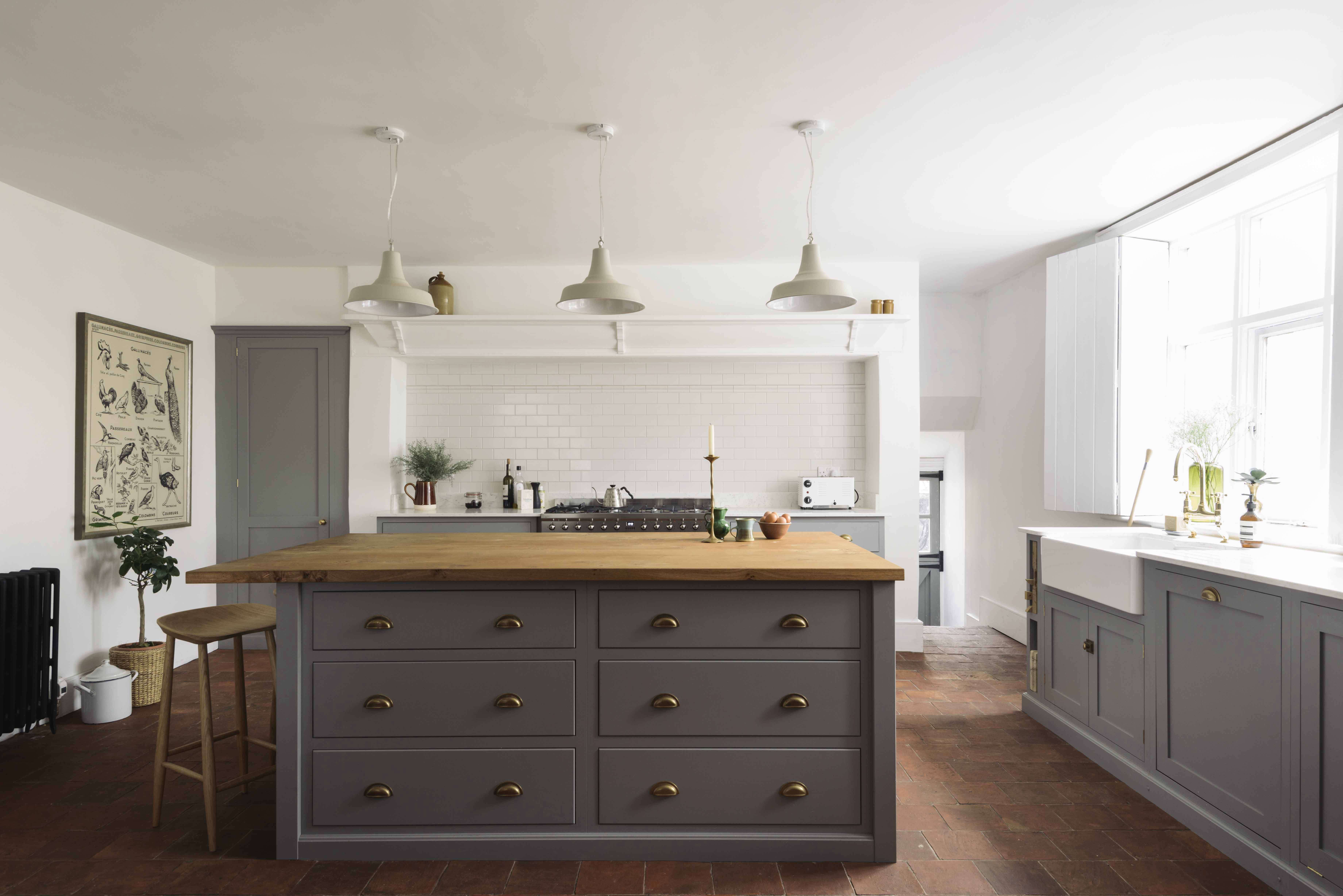
If kitchens had résumés, The Cheshire Townhouse Kitchen by deVOL would arrive wearing well-cut tailoring, carrying a brass-handled notebook, and somehow smelling faintly of fresh bread and old books. It is the kind of space that doesn’t beg for applause, yet still gets it. Quietly. Repeatedly. Usually from people who walk in and say, “Oh wow,” before pretending they meant to sound more sophisticated.
This kitchen matters because it captures something many modern renovations miss: the difference between a room that is merely expensive and a room that feels deeply right. deVOL’s Cheshire Townhouse project is not flashy, not over-engineered, and definitely not trying to cosplay as a futuristic lab where one prepares a single cherry tomato with tweezers. Instead, it leans into proportion, restraint, natural materials, useful beauty, and the kind of confidence that comes from knowing when to stop.
At its core, this is a deVOL Shaker kitchen set inside a grand old townhouse in Cheshire. The room is large, the ceilings are high, the scale is generous, and yet the whole thing stays grounded. That balance is the magic trick. The kitchen feels impressive without getting bossy about it. It is elegant without becoming delicate. It is practical without looking like it bought its shoes at a restaurant supply warehouse.
Why This Kitchen Has Such a Strong Presence
The first reason The Cheshire Townhouse Kitchen by deVOL lands so well is simple: proportion. Big rooms can be awkward. They can swallow furniture whole, make cabinetry look timid, and turn even lovely details into visual confetti. But here, deVOL uses scale intelligently. The cabinetry does not fight the architecture. It belongs to it. The result is a kitchen that feels settled, like it grew up in the house rather than moved in last Tuesday.
That sense of belonging is central to great English kitchen design. Across American design media, English-inspired kitchens are gaining traction because they reject the sterile, over-fitted showroom look and favor warmth, evolution, natural materials, and a collected feel instead. That broader trend helps explain why the Cheshire Townhouse kitchen feels so relevant right now. It offers something people increasingly want: soul without clutter, character without chaos, and beauty that still lets you butter toast like a normal person.
deVOL has built much of its reputation on this exact tension between old and new. The company’s philosophy, echoed across its own design writing and in U.S. interiors coverage, values kitchens that are central to daily life, shaped by light, orientation, flow, and the surrounding architecture. In other words, the kitchen is not a showroom object. It is a lived-in room with a job to do. That mindset shows up all over the Cheshire Townhouse project.
The Shaker Foundation: Simple, Honest, and Surprisingly Luxurious
The kitchen is rooted in Shaker cabinetry, and that choice does much of the heavy lifting. Shaker design has staying power because it is disciplined. Flat panels, clean frames, and modest detailing create a calm backdrop that can support age, patina, hardware, art, crockery, and real life. In a big townhouse kitchen, that simplicity is a blessing. Anything fussier could have tipped the room from graceful to exhausting.
But simple does not mean boring. This is where deVOL is especially sharp. The cabinetry in the Cheshire Townhouse kitchen proves that restraint can feel luxurious when the proportions are right and the materials are honest. The cupboards are painted in Lead, a color that gives the room depth without heaviness. It is moody, but not melodramatic. Sophisticated, but not trying to recite poetry at dinner. In a market flooded with bright white kitchens and trend-chasing shades, this darker painted finish feels steady and grown-up.
American design publications have repeatedly reinforced why this combination works. Shaker forms remain a reliable anchor, while brass hardware brings warmth and relief, especially against darker cabinetry. That is exactly the move here. The brass accents keep the room from going flat and give it a subtle glow, the visual equivalent of candlelight being unexpectedly good at its job.
Less Clutter, More Character
One of the most compelling details in this project is how intentionally uncluttered it feels. deVOL describes the owners as people who filled their home with useful but beautiful things, and that philosophy is visible everywhere. Nothing looks random. Nothing looks performatively “styled.” This is not the kind of kitchen where three ceramic pears are arranged near the sink because an algorithm said that feels authentic.
Instead, the room has breathing space. That matters. Open visual space is not empty space; it is what allows craftsmanship and architecture to register. It is also why concealed practical elements work so well here. The integrated refrigerator, for example, is designed to be nearly undetectable, helping the room remain spacious and composed rather than chopped up by appliance bulk.
The Floor, the Mantel, and the Beauty of Architectural Honesty
One of the loveliest things about The Cheshire Townhouse Kitchen by deVOL is that it is not all cabinetry. The room’s success depends just as much on the architectural pieces around it. The quarry tiled floor is especially important. deVOL notes that the kitchen and floor were completed early in the renovation because a working family kitchen was essential. That decision says a lot. This was not a decorative afterthought; it was a foundational room made to support daily life.
The quarry tile also gives the kitchen weight. It adds age, texture, and quiet ruggedness underfoot. In design terms, it keeps the room honest. In practical terms, it is the kind of flooring that can handle muddy shoes, dropped spoons, children stampeding through at snack o’clock, and the general chaos of being in an actual house. A pretty kitchen that fears a breadcrumb is not a kitchen. It is a museum exhibit with a kettle.
Then there is the original mantel above the cooker, a detail that anchors the room emotionally as much as visually. This is exactly the kind of feature that gives a kitchen its memory. Instead of stripping away every trace of the building’s past, the design keeps what matters and lets it lead. The same goes for the quirky pantry with sliding doors. These are not just charming leftovers. They are part of the room’s intelligence. They remind you that good renovation is often less about invention and more about respectful editing.
Why the Kitchen Feels So Current in the U.S. Design Conversation
Even though this kitchen sits in an English townhouse, it resonates strongly with American readers and homeowners right now. That is not accidental. U.S. publications have spent the last few years circling many of the same ideas that make this project successful: unfitted or semi-fitted layouts, natural materials, warm metals, rich paint colors, open shelving, fewer upper cabinets, and rooms that feel layered rather than factory-finished.
What people often call the English kitchen look is really a way of making a room feel as though it evolved with the house. Apartment Therapy and Martha Stewart have both described these spaces as collected, practical, and resistant to the hyper-perfect aesthetic that dominated kitchen design for years. The Cheshire Townhouse kitchen embodies that beautifully. It does not try to look brand-new. It tries to look inevitable.
That distinction is huge. A lot of new kitchens aim for impact at first glance. deVOL’s best work, including this one, is more patient. It wins you over in layers. First the scale gets you. Then the cabinetry. Then the floor. Then the hush of the palette. Then the realization that every utilitarian decision is also aesthetically smart. Before long, you are staring at a pantry door like it is a supporting actor who accidentally stole the movie.
The Island Question, and Why This Kitchen Keeps Evolving
Another reason this project feels alive rather than frozen is that it has continued to evolve. deVOL later revisited the house and installed a second kitchen island years after first meeting the owners. That detail is fascinating because it reveals something many glossy home tours hide: truly successful kitchens are not always “finished” in one grand moment. They adapt as families grow, routines shift, and the room teaches you what it wants to be.
This is a refreshing contrast to the all-at-once renovation fantasy. Real homes breathe. The best kitchens allow for that. The Cheshire Townhouse kitchen already had the bones to age well, so adding another island felt like a continuation rather than a correction. That speaks volumes about the original layout. It was strong enough to support change without losing its character.
Form and Function, Without the Lecture
deVOL’s later discussion of the project as island inspiration also reinforces a core truth: this kitchen works because function is never treated as a boring necessity. It is part of the romance. A working kitchen completed early in a family renovation, durable tile flooring, smart storage, a concealed refrigerator, an evolving island setupnone of that is glamorous in the abstract. Yet in the right hands, utility becomes the reason a room feels beautiful.
That is perhaps the biggest lesson here. Beauty in a kitchen does not come from decorative overload. It comes from good choices repeated consistently: better proportions, more honest materials, simpler cabinetry, warmer metals, smarter storage, and a willingness to let architecture speak first.
What Homeowners Can Learn From The Cheshire Townhouse Kitchen by deVOL
You do not need a Georgian mansion, soaring ceilings, or a pantry with the charisma of a minor aristocrat to borrow from this kitchen. What you do need is discipline. If you want to apply this look in your own home, start with a few principles.
1. Let architecture set the tone
Before choosing paint, hardware, or stools that look suspiciously like they cost more than your car insurance, study the room. Where is the light? What original details deserve to stay? What feels structural, and what feels temporary? The best kitchens respond to the house rather than trying to dominate it.
2. Choose cabinetry with longevity
Shaker cabinets endure because they are adaptable. They can look rustic, tailored, modern, country, or quietly formal depending on the finish and setting. If you want a timeless kitchen, simple cabinet forms are your friend.
3. Use warmth strategically
Brass hardware, wood, marble, tile, painted finishes, and soft lighting all work together to take the edge off a kitchen. Warmth does not mean visual chaos. It means balancing crisp lines with touchable materials and tones that get better as they age.
4. Do not overfill the room
One of the smartest things about this deVOL kitchen is what it leaves out. Fewer uppers, fewer visual interruptions, hidden appliances, and carefully chosen objects all help the room feel bigger and calmer. Restraint is not the enemy of personality. It is often what makes personality legible.
5. Design for life, not for one photo
The Cheshire Townhouse kitchen was made for a family and adapted over time. That is why it feels convincing. Aim for a room that supports breakfast, homework, holidays, mess, cleaning, conversation, and the occasional dramatic midnight cheese situation. A kitchen should earn its beauty through use.
Why This Kitchen Endures
Ultimately, The Cheshire Townhouse Kitchen by deVOL is memorable because it understands a truth that many renovations forget: grandeur is not about excess. It is about confidence, scale, and calm. This kitchen has all three. It respects the building, supports the family, uses color with maturity, and proves that understatement can be deeply luxurious.
It also shows why deVOL remains such an influential force in kitchen design. The brand’s best work is not merely stylish. It is persuasive. It makes you believe a kitchen can be practical, patinated, elegant, and warm all at once. No gimmicks required. No sterile minimalism. No trend-chasing acrobatics. Just a room that knows exactly what it is.
And honestly, that may be the most enviable design feature of all.
Extended Experience: Living With the Spirit of The Cheshire Townhouse Kitchen by deVOL
Imagine stepping into a kitchen inspired by The Cheshire Townhouse Kitchen by deVOL first thing in the morning. The room does not scream for attention. It does not blind you with gloss or confront you with seventeen decorative bowls that somehow contain nothing edible. Instead, it meets you gently. The floor has substance underfoot. The cabinetry feels steady. The hardware is cool in the hand before it slowly warms. Light hits the painted surfaces in a soft way that makes even a weekday breakfast feel slightly more civilized.
That is the experience this style creates: not theatrical luxury, but daily pleasure. You notice it while making coffee, while opening a hidden refrigerator door that does not disrupt the room, while setting bread on a countertop that feels integrated into the architecture rather than perched on top of it. The kitchen becomes less of a “design moment” and more of a rhythm. That is a harder thing to achieve, and also a much more satisfying one.
There is also a psychological ease to this kind of space. Because the room is uncluttered but not cold, it invites use. You do not feel nervous carrying in grocery bags or setting down a heavy Dutch oven. You do not feel as if you are one dropped lemon away from ruining the aesthetic forever. Instead, the room seems to expect life. That is a huge part of its charm. It is beautiful, yes, but it is not fragile. It understands kitchens are where toast burns, soup splatters, children negotiate for cookies, and someone always asks where the good scissors went.
Guests respond to that feeling too. In many homes, people gather in the kitchen because there is nowhere else to go. In a room inspired by deVOL’s Cheshire Townhouse project, they gather because they want to. They lean on the island. They notice the pantry. They compliment the floor. They ask about the paint color in a tone usually reserved for engagement rings. And because the room is not visually overpacked, conversations feel easier. There is less noise, even when the room is full.
Perhaps the most appealing part of living with this look is how well it ages. A kitchen like this can absorb a new stool, an old painting, a different lamp, more cookbooks, better knives, a growing family, a changing routine. It develops rather than dates. That may be why so many people are drawn to English-inspired kitchens in the first place: they offer relief from the pressure to finish everything perfectly all at once. They leave room for life to continue shaping the space.
And in the end, that is exactly what makes The Cheshire Townhouse Kitchen by deVOL feel so compelling. It is not just a pretty room. It is a room with manners, memory, utility, and a very good sense of proportion. It knows how to host real life without losing its composure. Frankly, most of us would be lucky to say the same.