

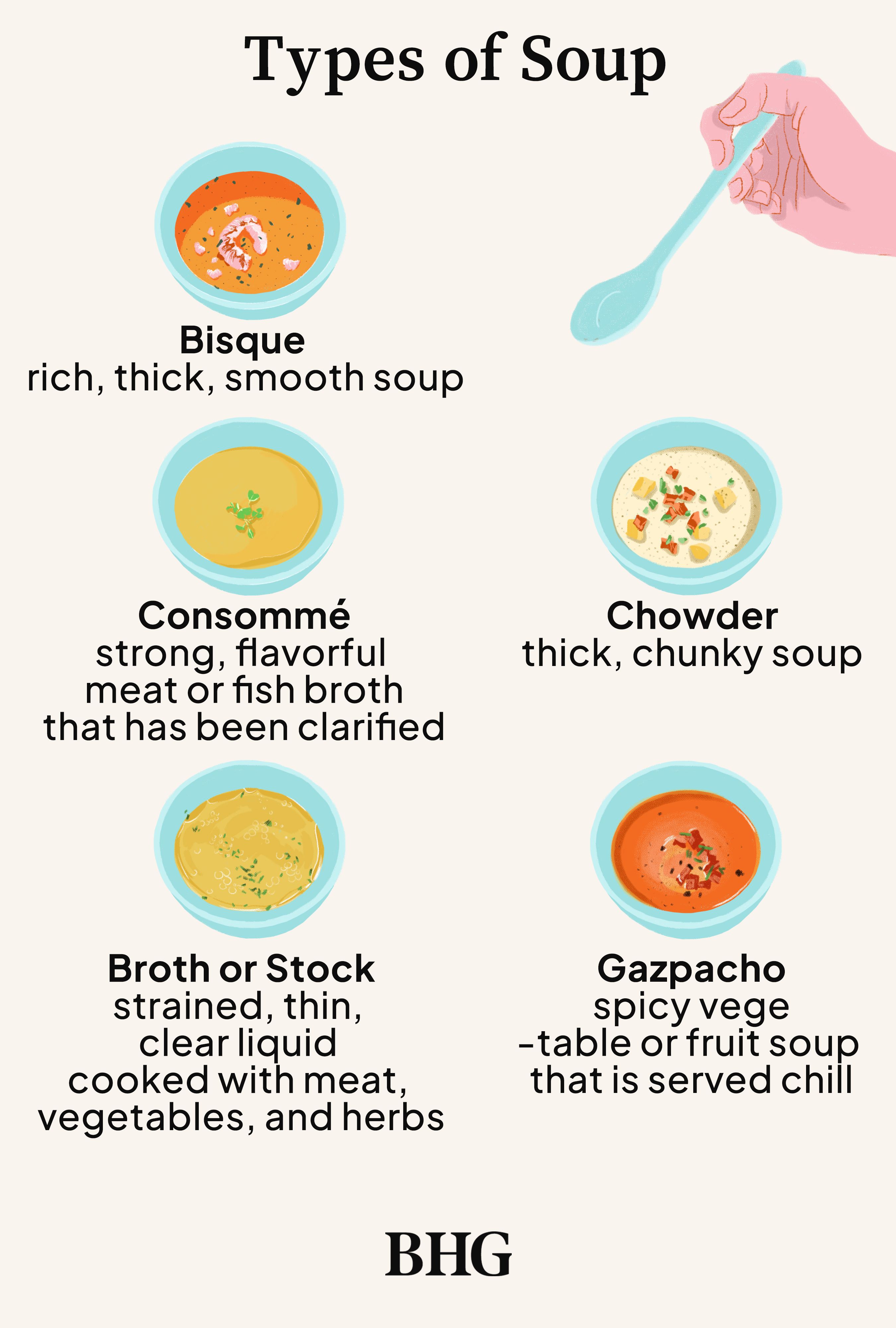
Soup sounds simple until someone in the kitchen says, “Use stock, not broth,” and suddenly the room feels like a culinary courtroom drama. Then a menu throws in bisque, chowder, and consommé, and now everybody is pretending they totally knew the difference all along. The truth is that these terms overlap just enough to confuse home cooks, grocery shoppers, and that one friend who describes canned soup as “artisanal.”
If you have ever wondered about the differences between bisque, broth, stock, and other soup types, this guide breaks it all down in plain English. We will look at how each one is made, how it tastes, how it feels in the mouth, and when you should use it. By the end, you will know why stock is the kitchen workhorse, broth is the easygoing overachiever, bisque is basically wearing a velvet robe, and chowder shows up like it owns the cold-weather season.
Why These Soup Terms Get Mixed Up So Easily
Part of the confusion comes from the fact that soup language is both technical and casual. In professional cooking, broth, stock, bisque, and consommé can have distinct definitions. In real life, labels blur. Grocery stores sell “vegetable stock” and “bone broth.” Recipes use “broth” and “stock” almost interchangeably. Tomato bisque may contain no shellfish at all, while some chowders are surprisingly smooth and some cream soups are thick enough to stand up to a spoon like they are making a point.
So the best way to understand soup types is not to obsess over one rigid rule. Instead, look at four practical clues: ingredients, cooking method, texture, and purpose. Once you know what gives each soup its identity, you can make smarter choices whether you are cooking from scratch, ordering at a restaurant, or staring at a supermarket shelf like it personally offended you.
What Is Broth?
Broth is a flavorful liquid made by simmering meat, poultry, seafood, or vegetables with aromatics such as onion, celery, carrot, herbs, and spices. It is usually lighter in body than stock and is often seasoned enough to drink on its own. In other words, broth is the extrovert of the group. It is ready to mingle.
Key traits of broth
Broth is typically thinner, more delicate, and more immediately sip-worthy than stock. It is often made with meat rather than mostly bones, and because it is usually seasoned, it works well as a finished base for soups like chicken noodle, vegetable soup, egg drop soup, or a simple brothy bowl of beans and greens.
When to use broth
Use broth when you want a soup that feels light, clear, and easy to eat. Chicken broth is a classic choice for chicken noodle soup, rice soup, or a quick weeknight vegetable soup. Vegetable broth works well in minestrone, lentil soup, and meatless recipes where you still want savory depth. If you are making something you might sip from a mug when you are sick, tired, or dramatically overcommitted, broth is your friend.
One more note: store-bought broth often contains more salt than homemade stock, so always taste before seasoning. Nothing ruins soup faster than realizing your “cozy dinner” now tastes like a salt lick with garnish.
What Is Stock?
Stock is the deeper, sturdier foundation of many soups and sauces. It is usually made by simmering bones, sometimes with a little attached meat, along with aromatic vegetables and water. The reason stock feels richer is simple: bones and connective tissue release collagen, which gives the liquid more body. Chill a well-made stock and it may gel in the fridge. That wobble is not weird. That wobble is success.
Key traits of stock
Stock is usually less salty and less finished than broth because it is designed to be a building block. Think of it as the raw material for soups, stews, pan sauces, gravies, risotto, braises, and reductions. It is often simmered longer than broth, especially for beef or veal stock, to extract flavor and gelatin from bones.
When to use stock
Use stock when you want depth, structure, and that slow-cooked restaurant flavor. It is ideal for French onion soup, mushroom soup, gravy, ramen-style broths, and long-simmered soups that need a flavorful backbone. Fish stock is especially useful in seafood soups and sauces because it cooks quickly and gives dishes a clean ocean flavor without becoming too heavy.
So if broth is the charming dinner guest, stock is the load-bearing wall. You may not compliment it every day, but the whole house works better because it is there.
Stock vs. Broth: The Real Difference
This is the comparison most people want. The quick version is this: stock is usually bone-based and richer in body, while broth is usually meat-based and more ready to serve. Stock tends to be unseasoned or lightly seasoned. Broth tends to be more seasoned and lighter. Stock is often used in cooking. Broth is more often consumed as-is, though it can also be used in cooking.
That said, modern recipes and grocery labels do not always follow strict culinary-school definitions. In everyday home cooking, you can often substitute one for the other. If you swap broth for stock, you may get a lighter result. If you swap stock for broth, you may get more richness and a rounder mouthfeel. Most of the time, your soup will survive the substitution just fine.
The safest rule is this: if the liquid is the star, choose the one that tastes best on its own. If the liquid is the base for something bigger, choose the one with the better body. That simple approach clears up a lot of kitchen confusion fast.
What Is Bisque?
Bisque is a rich, smooth, highly textured soup that is traditionally associated with shellfish such as lobster, crab, or shrimp. Classic French-style bisque often uses shells to build flavor, then thickens and enriches the soup with cream, rice, or a roux before puréeing and straining it into a velvety finish. If broth is laid-back and stock is serious, bisque is dressed for a candlelit dinner even when you are eating it in sweatpants.
Key traits of bisque
The signature of bisque is not just cream. It is smoothness. A true bisque is usually silky, puréed, and often strained. That is what separates it from chunkier soups. While seafood bisque is the classic version, modern cooking has expanded the term to include tomato bisque, mushroom bisque, and squash bisque. Purists may grumble, but language evolves and soup does not care.
When to use bisque
Bisque is great when you want elegance, concentrated flavor, and a luxurious texture. Lobster bisque makes sense as a first course for a holiday meal. Tomato bisque works beautifully with grilled cheese because the contrast between crisp and creamy is basically one of civilization’s better ideas. Pumpkin or butternut squash bisque is ideal when you want something smooth and comforting without the heft of a stew.
Bisque vs. Chowder
People confuse these all the time because both can be creamy and both often feature seafood. The biggest difference is texture. Bisque is smooth. Chowder is chunky. That is the headline.
Chowder usually contains visible pieces of ingredients, often potatoes, corn, clams, or fish. It is thicker and heartier, but it is not usually puréed smooth. New England clam chowder, corn chowder, and seafood chowder all lean into that spoonable, substantial texture. You know you are eating chowder when every bite has actual bits to chew. You know you are eating bisque when the spoon glides through like it is skating on silk.
What Is Chowder?
Chowder is a thick, hearty soup commonly made with seafood or vegetables and usually includes chunky ingredients like potatoes, onions, corn, or clams. Many chowders contain milk or cream, though not all of them do. Their defining character is body plus chunks, not just dairy.
Popular chowder types
New England clam chowder is creamy and rich. Manhattan clam chowder swaps the cream for a tomato-based broth. Corn chowder can be creamy, smoky, or both. Seafood chowder often combines fish, shellfish, and potatoes for a full meal in one bowl. Chowder is not subtle, and frankly, that is part of the appeal.
What Is Consommé?
Consommé is one of the most refined clear soups. It starts with broth or stock and is clarified until it becomes clear, concentrated, and polished. In classic cooking, this often involves using egg whites and other ingredients to trap impurities so the liquid can be strained into something almost jewel-like.
Why consommé matters
Consommé is proof that “clear soup” does not mean “boring soup.” It is intensely flavored, but visually delicate. That makes it ideal for formal meals, elegant first courses, or any time a cook wants depth without heaviness. If chowder is wearing boots and bisque is wearing satin, consommé is showing up in a pressed tuxedo and speaking very softly.
Other Soup Types Worth Knowing
Cream soups
Cream soups are thickened with dairy, a roux, or both. Cream of mushroom, cream of broccoli, and cream of onion all fall into this category. They may be smooth or somewhat textured. Not every cream soup is a bisque, because a bisque is a more specific style with a particularly velvety finish.
Puréed soups
Puréed soups get their body from blending ingredients such as squash, carrots, potatoes, beans, or cauliflower. They can be dairy-free or creamy, light or rich. A butternut squash soup, split pea soup, or carrot soup may all be puréed soups. Some overlap with bisques, but not every puréed soup earns that label.
Clear soups
These soups feature transparent liquid and a lighter overall feel. Chicken noodle soup, vegetable broth soups, wonton soup, and consommé fit here. They are often easier to digest and perfect when you want comfort without a food coma.
Stews
Stew is technically its own category, but it often gets dragged into the soup conversation. Stews are thicker, heartier, and usually contain larger pieces of meat and vegetables with less free-flowing liquid. If soup is something you can sip, stew is something you commit to.
Specialty and regional soups
Minestrone, gumbo, ramen, pho, tortilla soup, and French onion soup all bring their own traditions, broths, and textures. These soups remind us that “soup” is not one thing. It is an enormous category shaped by culture, climate, ingredients, and whatever people had in the pot long before culinary labels got fancy.
How to Choose the Right One for Your Recipe
If you are deciding between broth, stock, bisque, or another soup type, ask yourself what experience you want.
- Want something light and soothing? Choose broth.
- Want a strong base for cooking? Choose stock.
- Want something rich, smooth, and elegant? Choose bisque.
- Want thick, chunky comfort in a bowl? Choose chowder.
- Want a clear but concentrated first course? Choose consommé.
- Want vegetable-forward creaminess? Try a puréed or cream soup.
- Want dinner that eats like a blanket? Make stew.
And yes, plenty of recipes blur the lines. That is normal. Food categories are useful, but flavor still gets the final vote.
Common Mistakes Home Cooks Make
One common mistake is assuming all cartons labeled stock or broth behave the same way. They do not. Sodium levels, richness, and flavor vary a lot by brand. Another mistake is calling any creamy soup a bisque. Creaminess alone is not enough; texture and preparation matter. A third mistake is over-thickening chowder until it becomes glue with potatoes. Chowder should be hearty, not a construction material.
The last mistake is forgetting the role of texture. Texture is the whole game in soup. A broth should feel clean. A stock-based soup should feel sturdy. A bisque should feel smooth. A chowder should feel chunky and satisfying. If you get the texture right, the naming gets much easier.
Final Thoughts on the Differences Between Bisque, Broth, Stock, and Other Soup Types
The differences between bisque, broth, stock, and other soup types come down to purpose, ingredients, and texture. Broth is lighter and often ready to sip. Stock is richer and built for cooking. Bisque is smooth, creamy, and luxurious. Chowder is thick and chunky. Consommé is clear and refined. Cream soups and puréed soups fill the space in between, while stews march in with their own hearty agenda.
Once you understand those distinctions, soup stops feeling confusing and starts feeling useful. You know what to buy, what to make, and what to order. You also get to sound impressively informed at dinner, which is always fun as long as you do not become the person giving a lecture over tomato soup. Nobody invited a soup tax auditor.
Kitchen Experiences: What These Soup Types Feel Like in Real Life
The funny thing about learning soup categories is that most people do not really understand them from reading definitions alone. They understand them from a spoon. The first time I noticed the real difference between broth and stock was not in a recipe note or a culinary glossary. It was in a pot of chicken soup that somehow tasted fine but felt thin, like it had all the right ideas and none of the follow-through. The next time, I used homemade stock from roasted bones and vegetables, and suddenly the soup had body. It tasted rounder, warmer, and more complete. It was the difference between hearing a song on phone speakers and hearing it in a room with real sound.
Bisque was another lesson entirely. A lot of people expect bisque to mean “creamy soup,” but the real experience is about smoothness and concentration. The first good tomato bisque I had was almost startling because it was so velvety. It did not just taste like tomatoes with cream tossed in at the last minute. It tasted deliberate. Every spoonful felt polished. Then I had chowder right after that a few days later, and the contrast made perfect sense. Chowder had pieces of potato, corn, and seafood you could actually bite into. It was comforting in a different way, less fancy and more fireside. Bisque whispers. Chowder wears boots and opens the door with its shoulder.
Consommé might be the most surprising experience of all because people see “clear soup” and expect something bland. But a well-made consommé tastes focused, almost precise. It is not trying to bury you under cream, cheese, or chunks. It wants to prove that clarity can still be full of flavor. The first time I had one in a restaurant, I understood why chefs respect it. It looked simple, but it tasted like someone had edited flavor until only the best parts remained.
At home, these differences show up in small decisions. On tired weeknights, broth wins because it is fast, comforting, and forgiving. On weekends, stock feels worth the effort because it transforms everything else you make later. Bisque is what you cook when you want dinner to feel a little dramatic in the best way. Chowder is what you make when the weather is cold and everyone wants something substantial enough to count as emotional support. Once you connect the names to real cooking experiences, the labels stop feeling technical and start feeling practical. That is when soup gets much more fun.