

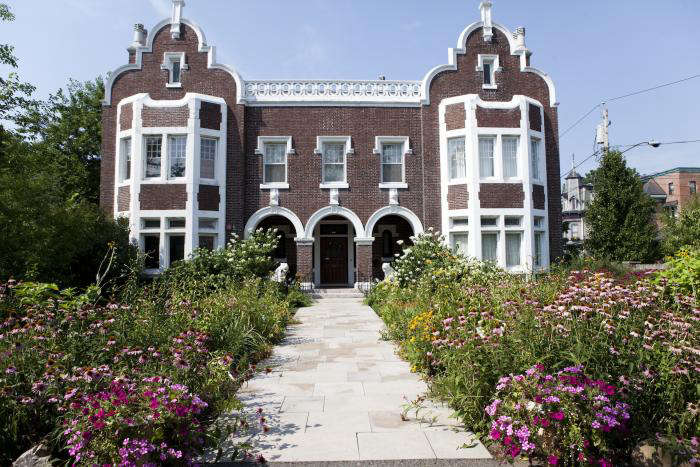
If most boutique hotels try to whisper, The Inn at Hudson has always preferred a raised eyebrow, a dramatic pause, and a room with better wallpaper than your entire apartment. Set at 317 Allen Street in Hudson, New York, this famously character-rich inn has been admired for years not simply because it is beautiful, but because it is gloriously, stubbornly itself. It mixes mansion bones, old-world drama, eccentric collecting, and a flash of post-punk spirit into one unforgettable stay.
That blend is exactly what makes the property so interesting. The Inn at Hudson is not minimalist. It is not “quiet luxury” in the modern algorithmic sense. It does not appear to have been designed by someone afraid of pattern, history, or personality. Instead, it feels like a place where architecture, music, memory, and theatrical taste all sat down at the same table and somehow got along beautifully.
For travelers who love design with a pulse, the inn represents something rare in the Hudson Valley hospitality scene: a historic house that embraces romance without becoming stuffy, style without becoming sterile, and eccentricity without losing comfort. In a region crowded with beautifully restored stays, The Inn at Hudson stands out because it offers not just a bed for the night, but a full-on point of view.
A Grand House with an Unusual Backstory
The building itself already had the makings of a legend. The house was designed in 1906 by Albany architect Marcus Reynolds in a Dutch Jacobean style, and later reporting on the property linked it to Morgan Jones, heir to the Sapolio soap fortune. Long before the place became a design-world favorite, it had accumulated the kind of biography publicists dream about: hunting lodge, mansion, and later a building with enough rumored second and third lives to make most historic properties look painfully well behaved.
Architecturally, the house has the kind of details that make preservation-minded travelers weak in the knees: brick exterior, arches, dramatic woodwork, stained glass, Mercer tiles, and a scale that lets public rooms actually feel public. This is not one of those “historic” inns where you get one creaky staircase and a framed print of a duck. The Inn at Hudson is a house with presence. You notice it before you enter, and once inside, you understand why design media kept returning to it.
One of the property’s great strengths is that it never seems embarrassed by its age. Instead of sanding history down into a neutral blur, the house lets original detail remain visible and meaningful. That decision matters. In an era when too many restorations turn old buildings into polished clones, The Inn at Hudson preserves the friction that makes old places compelling: carved surfaces, layered rooms, decorative surprise, and a sense that someone with actual taste, not spreadsheet taste, made the choices.
How New Wave Energy Entered the Mansion
The inn’s most memorable chapter began when Dini Lamot and Windle Davis, described in design coverage as an ’80s New Wave musician couple, moved from Hollywood to the Hudson Valley around late 2000. They were not exactly the cardigan-and-scone type. Reports described them as flamboyant, occasionally appearing in drag and favoring silver spikes, which is not the usual origin story for a genteel Upstate inn. Naturally, that is part of the magic.
Rather than turning the house into a novelty act, Lamot and Davis restored the mansion to emphasize its old-world, almost palatial qualities. That was the clever move. The New Wave influence did not arrive as neon gimmicks or a wall of ironic cassette tapes. It arrived as attitude, editing, and atmosphere. The result was not a theme hotel. It was a stylish collision between aristocratic interior drama and downtown music-scene confidence.
This is what the phrase “New Wave iconography included” really suggests: not a costume party, but a coded language of glamour, self-invention, theatricality, and refusal to be boring. The house became a setting where Victorian pieces, Mission furniture, 18th-century prints, eclectic lighting, and subtle references to the owners’ former band could coexist without feeling chaotic. In lesser hands, that mix could have gone fully haunted-attic. Here, it became signature.
The inn’s bedrooms were even named by paint color, a detail that sounds simple until you realize how much it tells you about the philosophy of the place. Color was not an accessory. Color was identity. Rooms were not just accommodations; they were moods, characters, and invitations.
Inside the Rooms: Maximalism with Manners
Descriptions of The Inn at Hudson over the years make one thing clear: every room has always aimed to feel distinctive rather than interchangeable. Earlier design coverage spotlighted the White Room and the downstairs sitting room, noting the mix of eclectic furniture and lighting, while later travel listings described multiple guest rooms and suites with names like the White Room, Green Room, Cocoa Room, Blue Room, and Terrace Suite. The details vary slightly across eras, but the larger truth stays consistent: this is a house where rooms have personalities.
The White Room became especially emblematic of the inn’s style. It was described with stained glass windows, ornamental plasterwork, and a black walnut four-poster bed, which is an excellent recipe for making a guest feel either delightfully regal or mildly tempted to speak in a fake transatlantic accent. The Green Room reportedly offered extra space, a large soaking tub, and a gas fireplace, while the Cocoa Room leaned quieter and more cocoon-like with antique furnishings and bay windows. The Terrace Suite added a garden-facing perch that sounds tailor-made for coffee, gossip, and pretending you are about to write your memoirs.
What is striking is how these rooms avoid the two great boutique-hotel sins. First, they do not feel generic. Second, they do not feel exhausting. The Inn at Hudson understands that maximalism works best when comfort remains the anchor. Antique beds, oriental rugs, fireplaces, plasterwork, and original windows are only charming if you can actually rest among them. By all accounts, this place knew how to stage a room dramatically without making guests feel like they were sleeping inside a museum display case.
That balance is one reason the inn earned such affection. It gave travelers the thrill of immersion without the punishment of inconvenience. In design terms, that is harder than it looks.
The Public Spaces Are Half the Story
If you only think about The Inn at Hudson in terms of bedrooms, you miss the point. The common spaces do a huge amount of emotional work. Coverage of the house repeatedly references the sitting room, library, elegant dining room, solarium, private garden, courtyard, and patios. This is a house designed for lingering, not just sleeping.
The downstairs sitting room, in particular, helped define the inn’s public identity. It was described as full of eclectic lighting and furniture, and that one sentence tells you a lot. This is not a sterile lobby with one lonely orchid and a coffee table book nobody opens. It is the kind of room where objects have been chosen because someone loved them, not because they matched a procurement deck.
The library and solarium add another layer to the experience. They suggest a hospitality model built around retreat, reading, conversation, and gentle theatrical loafing. Meanwhile, the courtyard, garden, and private patio spaces create the all-important contrast that makes a historic interior feel even more luxurious. After a day surrounded by carved wood, patterned textiles, and richly dressed rooms, stepping outside into greenery gives the whole property breathing room.
That indoor-outdoor rhythm remains one of the inn’s smartest qualities. It prevents the house from feeling overcomposed. Yes, it is decorative. Yes, it has flair. But it also understands the restorative power of fresh air, morning light, and a quiet garden corner.
Why It Works So Well in Hudson, New York
The Inn at Hudson would not hit the same way in just any town. It belongs in Hudson because Hudson itself rewards curiosity and a strong visual appetite. Official visitor guides and tourism listings consistently frame the city around Warren Street’s dense cluster of antiques shops, art galleries, vintage fashion, home-and-design stores, restaurants, bars, and independent businesses. This is a town where browsing can easily turn into a competitive sport.
That context matters. When you stay at The Inn at Hudson, the design story does not end at the front door. The surrounding city extends it. Spend a few hours on Warren Street and you begin to understand why this inn makes so much sense here. Hudson is a place where people care about provenance, patina, presentation, and the emotional life of objects. A generic chain hotel would feel wildly out of tune.
The same is true of the local cultural landscape. Hudson Hall, at the historic Hudson Opera House, is celebrated as New York State’s oldest surviving theater, giving the town an arts backbone that feels genuinely rooted rather than manufactured. Nearby, Olana brings yet another layer of visual grandeur with Frederic Edwin Church’s 250-acre artist-designed landscape and Persian-inspired house. Suddenly, The Inn at Hudson starts to look less like an outlier and more like part of a regional tradition: places where architecture, aesthetics, and strong personalities are allowed to take up space.
In other words, the inn is not merely located in Hudson. It speaks Hudson fluently.
The Inn at Hudson and the Boutique Hotel Question
There is a larger reason The Inn at Hudson remains so compelling. It solves a problem many boutique hotels still have not figured out. Plenty of properties are stylish. Far fewer are legible. You walk in, admire the pendant lights, notice the custom soap, and then forget the place within a week because the design could have been copied anywhere.
The Inn at Hudson is different because it has narrative density. The architecture is specific. The owners’ sensibility was specific. The decorative choices were specific. The town around it is specific. All of those layers create memorability. Recent travel coverage across the Hudson Valley continues to celebrate hotels housed in restored convents, banks, estates, and historic Warren Street buildings, which tells you something important about what travelers want now. They want places with a sense of place. They want hotels that feel discovered rather than deployed.
Long before “immersive hospitality” became a phrase marketing teams loved to overfeed, The Inn at Hudson was already practicing it. It did not need to invent atmosphere. It inherited a remarkable shell, added personality, and trusted guests to appreciate a property that offered more than convenience.
And perhaps that is its greatest trick. The inn feels deeply designed, but never overexplained. It lets you notice things. It lets you decide what matters. It assumes you have eyes.
What Modern Travelers Can Learn from It
The Inn at Hudson offers a useful lesson for anyone obsessed with interiors, hospitality, or adaptive reuse. Memorable spaces are rarely built from perfection alone. They come from tension: grandeur paired with oddity, refinement paired with mischief, historic architecture paired with personal style. The inn proves that a property can feel luxurious without being slick and expressive without becoming messy.
It also proves that old buildings benefit from caretakers who are willing to be interesting. Lamot and Davis did not treat the house as a blank canvas. They treated it like a collaborator. That approach is far more persuasive than the now-familiar model of gut renovation plus expensive neutrality.
For travelers, the appeal is simple. Staying somewhere like The Inn at Hudson means choosing memory over efficiency. You may forget a thousand perfectly fine hotel rooms. You do not easily forget a Dutch Jacobean mansion with stained glass, a library, a solarium, a garden, color-named rooms, and a whisper of New Wave mythology floating through the halls.
The Experience: What a Stay at The Inn at Hudson Feels Like
Arriving at The Inn at Hudson feels a little like being let in on a private joke between architecture and style. From the street, the house already carries itself with confidence. It does not beg for attention. It simply assumes you have enough taste to notice it. The façade promises formality, but once inside, the mood loosens in the best possible way. You step into a place that understands drama, but also understands that guests still need somewhere to set down a bag, pour a drink, and exhale.
Morning here is likely the most persuasive argument for booking a historic inn over a standard hotel. Light moves differently through old windows, especially when stained glass and layered interiors are involved. Instead of the flat sameness of blackout curtains and synthetic carpeting, you get sunlight that feels filtered through character. You can imagine waking in the White Room, looking at ornamental plasterwork and dark wood, and immediately feeling more cinematic than you did the day before. Even coffee tastes slightly more intelligent in surroundings like these.
Then there is the pleasure of movement through the house. Great inns encourage wandering. You pass through a sitting room and actually want to sit. You see a library and feel morally obligated to pick up a book, even if you normally spend vacations glued to your phone and pretending that counts as “reading articles.” The solarium and garden give the interiors relief, so the whole stay never feels too precious. There is texture, but also ease. Grandeur, but no scolding.
What lingers most is the sense that every room offers a different emotional register. One guest might love the fireplace and soaking-tub coziness of the Green Room. Another might fall for the quieter elegance of the Cocoa Room. Someone else will be fully won over by a terrace overlooking the garden and spend half the trip developing unrealistic fantasies about relocating to Hudson and becoming a better-dressed person who buys flowers on weekdays. This is what good hospitality does. It makes alternate lives feel briefly possible.
Outside the inn, the experience keeps unfolding. You head to Warren Street and the town seems to pick up the same conversation the house started: antiques, art, books, food, visual pleasure, and that distinctly Hudson mix of polish and oddness. After shopping or gallery-hopping, you can return to the inn without emotional whiplash, because the property belongs to the town’s rhythm. That continuity is rare. Too many hotels feel like they were dropped into a destination by helicopter. This one feels rooted.
By evening, The Inn at Hudson makes its strongest case. Historic houses become especially persuasive after dark. Lamps matter more. Corners deepen. Wood glows. Conversations feel richer. A drink in the garden or a quiet hour in a common room suddenly seems more appealing than any overprogrammed nightlife agenda. The house does not entertain you with gimmicks. It slows you down until you notice that being there is the entertainment.
And that, ultimately, is the experience The Inn at Hudson sells so well. It is not just a stay in Hudson. It is a stay inside a particular imagination: one where elegance still has wit, history still has pulse, and design is allowed to be a little mysterious. In a travel era dominated by sameness wearing expensive linen, that feels almost radical.