

Editorial note: This article is written for public education and web publishing. It discusses optogenetics, laser controllers, research ethics, and electronics design at a high level, without providing animal-testing procedures or unsafe laser-use instructions.
Some article titles walk politely into the room. This one kicks the lab door open wearing safety goggles: The Quest For Mice With Frickin’ Laser Beams (Pointed At Their Brains), Building A Laser Controller. It sounds like a rejected line from a supervillain budget meeting, but the real subject is much more seriousand much more interesting. We are talking about optogenetics, a neuroscience technique that uses light to influence specific, genetically prepared cells, often neurons, so researchers can study brain circuits with remarkable timing and precision.
The comedy of the phrase “frickin’ laser beams” hides a practical engineering challenge. In optogenetics, light is not decoration. It is the input signal. If the light pulse is sloppy, the experiment becomes sloppy. If the timing drifts, the data starts doing interpretive dance. A laser controller, therefore, is not merely a box that says “pew pew” in electronic form. It is the timing referee, the safety-conscious gatekeeper, and the tiny electronic librarian that helps make repeatable science possible.
This article explores the story behind building a laser controller for optogenetics, why precise light pulses matter, what makes a controller useful, and why any discussion of lasers and animal research must include safety, ethics, and restraint. Yes, there will be mice. Yes, there will be lasers. No, they are not being trained to demand cheese tribute from humanityat least not in the peer-reviewed literature.
What Optogenetics Actually Means
Optogenetics combines optics and genetics. In plain English, researchers introduce light-sensitive proteins, often called opsins, into selected cells. When those cells are exposed to light of the right wavelength, their activity can change. In neuroscience, that means researchers can investigate how particular groups of neurons contribute to movement, memory, motivation, fear, reward, sensory processing, sleep, pain, or other behaviors.
The reason this technique became such a big deal is specificity. Traditional electrical stimulation can activate many nearby cells at once, like trying to press one piano key with a boxing glove. Optogenetics can be more selective because the light-sensitive machinery is expressed in targeted cell populations. The result is a research tool that can connect cause and effect in neural circuits more clearly than many older methods.
Why Mice End Up In This Story
Mice are widely used in neuroscience because they share many basic biological and neural mechanisms with humans, while also being small, well-studied, and compatible with genetic research tools. In optogenetics experiments, mice may be used to study how specific brain circuits contribute to behavior. That does not mean “shine random light into a brain and see what happens.” Good research is structured, reviewed, and constrained by institutional oversight, animal welfare rules, and scientific necessity.
The phrase “laser beams pointed at their brains” is attention-grabbing, but the real scientific goal is not spectacle. Researchers want controlled light delivery. They want known pulse timing, known intensity ranges, known experimental conditions, and careful interpretation. When the experimental question is about milliseconds of neural activity, a casual light switch is not good enough. A controller becomes essential.
The Laser Controller: The Unsung Hero In The Box
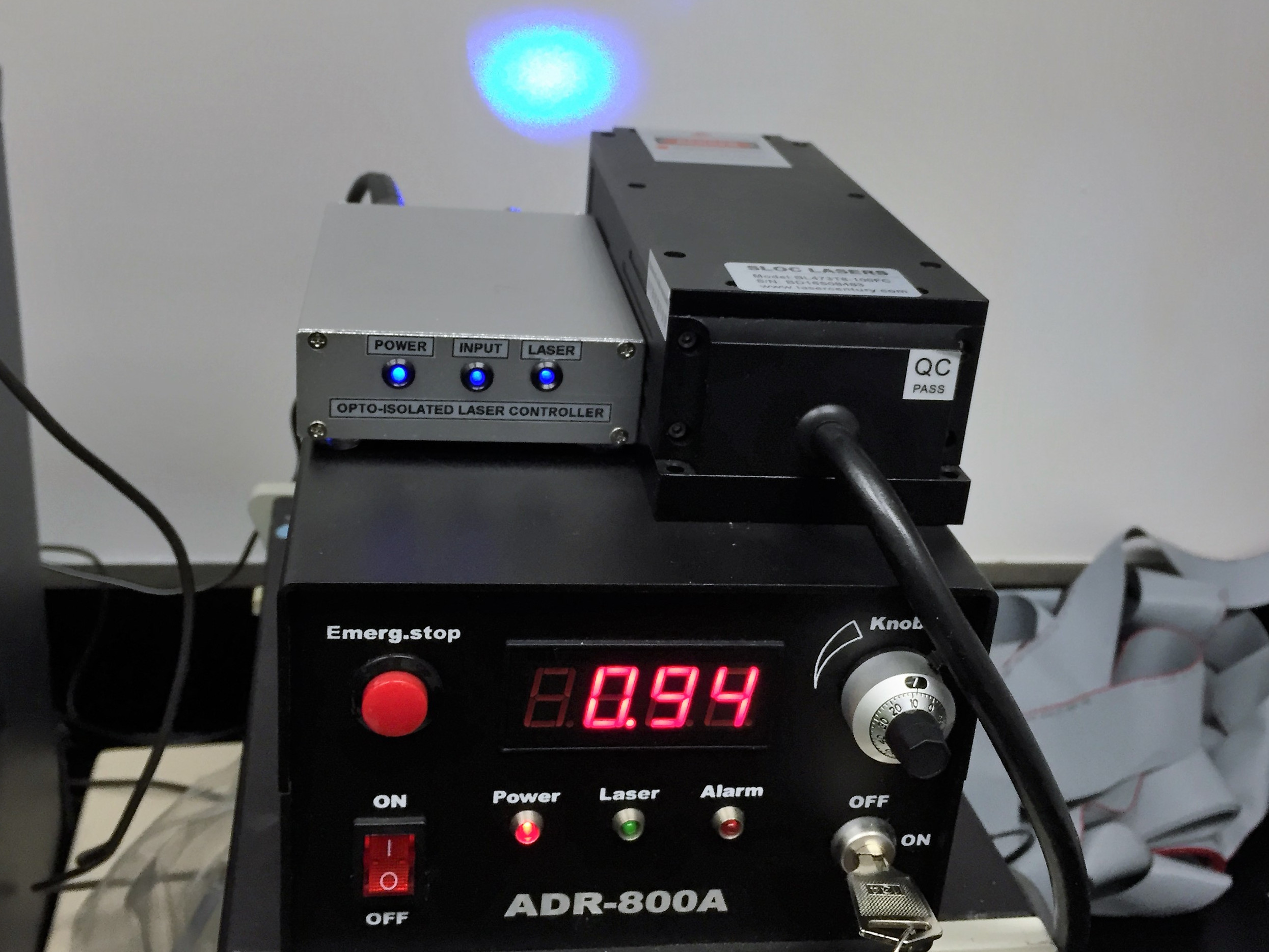
A laser controller in this context is a timing and signaling device. It tells the laser driver when to emit light, how long each pulse should last, and how consistently the pattern should repeat. The original build that inspired this title involved a research project where a laser and driver were available, but the missing piece was a dependable controller to fire precise pulses. The problem was not glamour. The problem was control.
This is where the project becomes a beautiful example of practical engineering. A controller must speak the language of the equipment connected to it. It must protect expensive components from weird signals. It must avoid introducing noise or timing errors. It must be reliable enough that the person running the experiment is not secretly praying to the oscilloscope every five minutes.
Timing Accuracy Matters
In optogenetics, timing is not a luxury feature. Neurons communicate on fast timescales, and experimental results may depend on whether stimulation happens before, during, or after a behavior or signal. A pulse that is too long, too short, late, or inconsistent can change the meaning of the data. A good laser controller helps turn “we flashed some light” into “we delivered a defined stimulus under repeatable conditions.” That distinction is the difference between science and a very expensive blinking contest.
Electrical Isolation Matters
One smart design concept in many scientific electronics projects is isolation. When sensitive control electronics must interact with higher-power or unfamiliar hardware, isolation helps prevent one side from damaging the other. In a laboratory system, that can protect both the controller and the laser driver. It also makes troubleshooting less dramatic, which is always nice when the equipment costs more than your first car.
Repeatability Beats Heroic Guesswork
A classic timer circuit can generate pulses, and in many hobby projects that is perfectly fine. But when experiments require consistent timing and documented settings, a microcontroller-based design often becomes more attractive. It can create defined pulse patterns, use stable timing references, and be programmed to behave the same way every time. Science likes repeatability. Science does not like “I turned the knob until it felt emotionally correct.”
Why A Microcontroller Makes Sense
Microcontrollers are common in lab equipment because they are flexible, compact, and precise enough for many control tasks. In a laser controller, a microcontroller can manage pulse width, frequency, trigger behavior, and user settings. It can also make the design easier to update later. If the research protocol changes, the hardware may not need to be rebuilt from scratch; the logic can often be revised in software.
That flexibility is useful because real labs are not static. Experiments evolve. A researcher may need one pulse pattern today and another next month. A controller that can be adjusted without turning the bench into a spaghetti festival of jumper wires is a gift to everyone within arm’s reach.
The Difference Between A Gadget And Research Equipment
The physical box matters more than beginners expect. A circuit sitting uncovered on a bench may technically function, but it is not friendly to safety, reproducibility, or long-term sanity. A proper enclosure, labeled controls, strain relief for cables, clean connectors, and sensible layout all make the device easier to use and harder to misuse.
In research, the neatness of the box is not just cosmetic. When equipment is shared by multiple people, clarity prevents mistakes. A labeled input reduces confusion. A sturdy connector avoids intermittent faults. A clean front panel tells the next user, “This was built by someone who wants you to succeed,” not “Good luck, future archaeologist.”
Safety: Lasers Are Not Magic Flashlights
Any discussion of laser controllers must include safety. Lasers can pose risks to eyes and skin depending on wavelength, power, exposure time, beam path, and classification. Laboratory laser systems should be handled under proper institutional procedures, with training, protective equipment, signage, beam control, and interlocks where appropriate. The fact that a laser is part of a tiny neuroscience setup does not make it harmless. Small beams can still create big problems.
Responsible laser design is boring in the best possible way. Boring means no surprise reflections, no mystery activation, no unlabeled beams, and no casual pointing. A good controller should support safe behavior: clear states, predictable output, and compatibility with broader safety systems. The best emergency is the one that never gets invited to the party.
Ethics: The Mouse Is Not A Component
Because this topic involves animal research, ethics cannot be treated as a footnote. In the United States, vertebrate animal research is governed by institutional review, animal welfare policies, and professional standards. The guiding principles often include the Three Rs: replacement, reduction, and refinement. In other words, use alternatives when possible, use the fewest animals needed for valid science, and refine procedures to reduce distress and improve welfare.
That ethical framework matters especially in optogenetics, where the technology can sound futuristic enough to distract from the living animals involved. A mouse is not a circuit board with whiskers. Scientific value, humane care, veterinary oversight, and careful experimental design are essential parts of the work.
What Researchers Learn From Controlled Light
Optogenetics has been used to investigate memory, reward, sensory perception, pain pathways, movement, sleep, and disease-related circuits. For example, researchers have used light-based tools to reactivate or silence specific neural ensembles, helping test whether particular neurons are involved in a learned response. Other studies have examined circuits linked to alertness, emotion, feeding, or motor control.
The key advantage is causal testing. Brain imaging can show that a region is active during a task, but optogenetics can help ask a sharper question: what happens if this specific circuit is activated or inhibited at a precise moment? That does not instantly solve the brain, of course. The brain remains the universe’s most overqualified bowl of oatmeal. But optogenetics gives researchers a more precise flashlight for exploring it.
Why The Controller Is Part Of The Science
It is tempting to think of electronics as background infrastructure while the biology gets all the spotlight. In reality, the controller shapes the experiment. If the controller cannot deliver stable timing, the biological interpretation becomes weaker. If it introduces electrical noise, the measurements may suffer. If the interface is confusing, human error becomes part of the protocol.
Good scientific hardware is humble. It does not seek applause. It just does the same thing, the same way, again and again. That is why a small controller box can matter so much. It converts intention into controlled stimulus. It lets the researcher ask, “What did the circuit do when we delivered this exact pattern?” rather than “What happened when the machine did whatever it felt like?”
Practical Design Lessons From A Laser Controller Project
1. Build For The Actual Signal Environment
Lab equipment often comes with unusual voltage levels, unfamiliar driver behavior, or manufacturer-specific control signals. A controller should not assume the world is a friendly five-volt logic playground. Input protection, isolation, and careful interface design help prevent damage and make the system more robust.
2. Make The User Interface Obvious
If a device has one mode, one button, and one indicator, life is simple. If it has multiple pulse settings, trigger modes, or output states, the interface must be crystal clear. Labels, LEDs, switches, and documentation matter. A good research tool should not require the user to decode ancient runes before breakfast.
3. Document The Settings
Reproducibility depends on records. Pulse duration, frequency, trigger source, software version, calibration date, and safety checks should be documented in the lab workflow. The controller itself can support this by having stable settings and clear operating states.
4. Design For The Next Person
The person who builds a device is usually the best at operating it. That is not enough. Research hardware should be understandable to trained colleagues. If the original builder graduates, changes labs, or disappears into the mysterious fog known as “industry,” the device should not become an artifact from a lost civilization.
Experience Notes: What Building A Laser Controller Teaches You
Working on a laser controller project teaches a lesson that applies far beyond optogenetics: precision is not a single feature. It is a culture. You do not get reliable output merely by choosing a good microcontroller or buying an impressive driver. You get reliability by caring about every connection between the idea and the result. The signal path, enclosure, trigger input, output behavior, labels, documentation, testing routine, and safety checklist all contribute to whether the system earns trust.
One of the first experiences many builders have is realizing that the “simple box” is never quite simple. At first, the goal sounds easy: make a pulse, send the pulse, control the laser. Then reality strolls in carrying a clipboard. What voltage does the driver expect? What happens at startup? Is the output off by default? Can the trigger line pick up noise? Can a loose cable create an unintended pulse? Can the user tell whether the system is armed? Each question adds design responsibility. The controller becomes less like a toy and more like a contract: it promises to behave predictably under defined conditions.
Another lesson is that measurement is part of building. A controller that “probably works” is not done. Timing should be verified with appropriate instruments by qualified people. Output states should be checked. Startup and shutdown behavior should be understood. This does not make the project less creative; it makes the creativity useful. In scientific electronics, beauty is not only a clean circuit board. Beauty is a waveform that appears exactly where expected, again and again, without drama.
The enclosure stage also changes how you think. A bare circuit can feel like progress, but an enclosed, labeled, strain-relieved, bench-ready tool feels like equipment. The difference is psychological and practical. People treat clear tools with more respect. They make fewer mistakes. They trust them more. A good front panel is a tiny user manual. A well-placed indicator light can prevent a bad assumption. A sensible connector can save an afternoon of troubleshooting. The humble project box deserves more glory than it gets.
Finally, this kind of project teaches humility. The electronics are exciting, but they serve a larger purpose: better research. In optogenetics, the controller is not the star. The star is the question being asked about brain circuits, behavior, and biology. The controller’s job is to remove ambiguity, not add personality. It should be precise, boring, documented, and safe. That may sound unromantic, but in a lab, “boring and reliable” is basically a love language.
The Big Takeaway
The quest for mice with frickin’ laser beams is really a quest for controlcareful control, ethical control, and reproducible control. Optogenetics gives neuroscience a powerful way to study specific cells and circuits. A laser controller gives the experiment a disciplined input. Safety rules keep the humans protected. Animal welfare rules keep the science morally accountable. And good engineering keeps the whole thing from becoming a blinking mess with a grant number.
Behind the funny title is a serious truth: modern science depends on small tools built with big care. A controller box may not look as glamorous as a glowing brain image or a breakthrough paper, but without precise hardware, the biology can become fuzzy. In that sense, the laser controller is not just an accessory. It is part of the argument the experiment makes.
So yes, “mice with frickin’ laser beams” will always sound like a punchline. But the real story is better: disciplined electronics, targeted neuroscience, careful safety practices, and ethical responsibility all meeting inside one modest box. That is not supervillain technology. That is engineering growing up, putting on goggles, labeling its cables, and helping science ask better questions.