

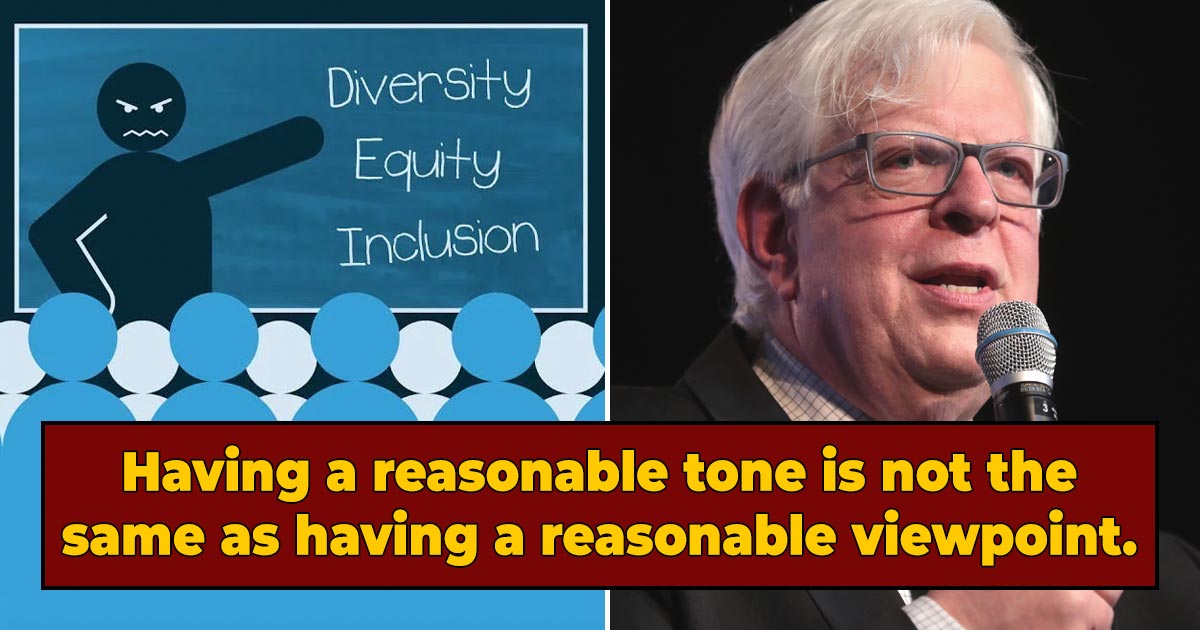
Donald Trump has a rare political talent: he can make a bad idea sound like it arrived at a rally in a gold-plated monster truck, honking the horn and throwing ketchup packets out the window. That is not subtle. It is not elegant. It is also not the only danger. The more durable problem is what happens after the shouting stops, the red hats fade from center stage, and the same hard-edged political ideas return wearing a navy suit, a think-tank badge, and a calm podcast voice.
That is the uncomfortable thesis behind the phrase “After Trump leaves, expect the garbage ideas to get polite.” The next phase of Trumpism may not look like a man yelling at cable news cameras. It may look like a young senator saying “administrative efficiency,” a governor saying “parental rights,” a policy shop saying “constitutional restoration,” or a presidential hopeful promising to “depoliticize government” while quietly making it more political than ever.
In other words, the packaging may improve. The contents may not.
Trump Was The Megaphone, Not The Factory
It is tempting to treat Trump as the source of every modern Republican impulse: the attacks on institutions, the obsession with loyalty, the contempt for expertise, the suspicion of elections, the hard turn against immigration, the war on the administrative state, and the endless appetite for culture-war fireworks. But Trump did not invent all of these ideas. He amplified them, simplified them, and sold them with the confidence of a man marketing steaks, universities, hotels, and political revenge from the same emotional shelf.
The factory existed before him. Conservative legal organizations, anti-regulatory activists, immigration hardliners, anti-woke influencers, Christian nationalist networks, billionaire-backed advocacy groups, and partisan media ecosystems had spent years producing ideas that were often too sharp, too unpopular, or too strange for polite company. Trump’s achievement was not making those ideas respectable. It was making respectability irrelevant.
Once the door was kicked open, the next generation learned a valuable lesson: you do not need to kick the door every time. Sometimes you can walk through it with a binder.
The Rebrand Is Already Underway
One of the clearest examples is the fight over the federal civil service. During Trump’s first term, “Schedule F” became shorthand for a plan to make it easier to remove certain career federal employees in policy-related roles. Critics warned that it could weaken the merit-based civil service and turn expertise into a loyalty test. In Trump’s second term, the idea returned with more formal language under “Schedule Policy/Career,” described by supporters as a way to improve accountability and performance.
Notice the makeover. “Purge the bureaucracy” sounds like something shouted into a microphone. “Restore accountability to policy-influencing positions” sounds like a human resources seminar with better lighting. But the political question remains the same: should a president have far more power to replace career officials who are supposed to serve the law, the public, and multiple administrations?
This is how aggressive ideas survive political backlash. They come back as process. They come back as management reform. They come back as a white paper with footnotes and a title so boring it could anesthetize a raccoon.
From Chaos To “Competence”
The post-Trump political figure to watch is not necessarily the loudest copycat. America has already seen plenty of bargain-bin Trumps, and most of them have the charisma of a wet campaign flyer. The more effective successor may be someone who keeps the substance but changes the tone: less insult-comic authoritarianism, more boardroom nationalism; less “lock them up,” more “restore public order”; less “enemy of the people,” more “rebalance media accountability.”
That style can be more dangerous because it reassures people who dislike Trump’s behavior but are open to his outcomes. Many voters are exhausted by the drama. They do not want another four-year opera in which every aria is a tweet, a lawsuit, or a personnel meltdown. A polished successor can say, “I agree the last guy was messy, but the direction was right.” That sentence is the bridge from Trumpism as spectacle to Trumpism as governing doctrine.
Politeness can function like political air freshener. It does not clean the room. It just makes people less likely to notice what is rotting in the corner.
The Ideas Most Likely To Get A Makeover
1. Expanding Presidential Power
Trump’s governing style has leaned heavily on executive action, personal loyalty, and direct confrontation with institutions that limit presidential power. After Trump leaves, that impulse may be described as “unitary executive theory,” “democratic control,” or “ending bureaucratic resistance.” Those phrases sound academic. The practical effect can be a presidency less constrained by independent expertise, inspectors general, agency norms, or Congress.
The key question is not whether elected leaders should control policy. Of course they should. The key question is whether every legal, scientific, regulatory, investigative, or administrative function should bend toward the personal agenda of one leader. A democracy needs elections, but it also needs rules that survive the winner’s mood.
2. Sanitized Attacks On Voting
Trump made election denial central to modern Republican politics. A smoother successor may avoid the wildest claims and instead speak in the language of “election integrity.” That phrase can be legitimate when it means secure systems, transparent counting, and public confidence. It becomes something else when it is used to justify unnecessary restrictions, intimidation of election workers, or efforts to give partisan actors more power over results.
The polite version will not always say “the election was stolen.” It may say “we need to prevent irregularities.” It may not scream about fraud. It may quietly change who gets to vote, whose ballot counts, and who has the authority to certify the outcome. That is the velvet-glove version of the same problem.
3. Culture War As Administrative Policy
Trump-era politics turned cultural resentment into a governing engine. The post-Trump version may be less theatrical but more bureaucratic. Instead of a rally rant about “wokeness,” expect grant rules, school guidelines, agency memos, procurement restrictions, university investigations, and legal threats. The slogan becomes a spreadsheet.
This matters because bureaucratic culture war is harder to see. A viral speech can be mocked. A quiet change in eligibility language, research funding, curriculum standards, or workplace policy can reshape institutions before most citizens know it happened. The fire alarm is quieter, but the building still fills with smoke.
4. Immigration Hardline Policies With Softer Branding
Trump’s immigration rhetoric was often deliberately inflammatory. A successor may choose calmer language: “border management,” “labor market protection,” “national cohesion,” or “public safety.” Some immigration enforcement is a normal function of government. The danger comes when broad suspicion is aimed at entire communities, due process is treated as an obstacle, and cruelty is repackaged as seriousness.
The polite version will not always sneer. It may talk about systems, numbers, and “order.” But voters should still ask: Who is being targeted? What rights are preserved? Are families and workers being treated as humans or as props in a campaign commercial?
5. Economic Populism That Protects The Powerful
Trumpism often speaks in the language of the forgotten worker while delivering major wins to the already powerful. A post-Trump version may sound more disciplined: pro-worker tariffs here, anti-corporate speeches there, a few symbolic fights with elite universities or tech companies. But the deeper test is whether policy improves wages, health care, housing, competition, and bargaining poweror simply gives voters a villain to boo while donors get the dessert menu.
Populism without material improvement is political junk food. It tastes strong, photographs well, and leaves people hungry again an hour later.
Why Polite Extremism Works
Polite extremism works because many people judge politics by manners before outcomes. A politician who speaks softly, wears a normal tie, and quotes the Constitution can seem moderate even while pushing ideas that radically shift power upward. Tone becomes camouflage.
This is not unique to one party or one era. History is full of bad ideas that entered the room through the side door, introduced themselves as “common sense,” and asked whether anyone had validated parking. The public often recognizes danger when it is crude. It struggles when the same danger arrives with credentials.
Trump’s crudeness made certain ideas easier to identify. When he attacked judges, mocked opponents, pressured officials, or treated public service as personal loyalty, the behavior was obvious. A more polished leader may pursue similar goals while sounding reasonable enough to keep moderate voters, business leaders, and editorial boards from panicking too soon.
The Media’s Coming Test
After Trump, the media will face a trap: mistaking lower volume for lower stakes. Reporters and editors may be relieved to cover a figure who does not generate five scandals before breakfast. That relief is human. It is also risky.
The right question will not be, “Is this politician more normal than Trump?” That bar is so low it is currently being used as a speed bump. The better question is, “What does this politician want government to do, and who gains power if it happens?”
A successor who smiles while weakening oversight deserves more scrutiny, not less. A candidate who avoids conspiracy language while benefiting from conspiracy movements should not be treated as a fresh start. A leader who condemns chaos but preserves the machinery of intimidation has not rejected the model. He has upgraded the user interface.
Voters Should Watch The Verbs, Not The Vibe
The smartest way to evaluate post-Trump politics is to ignore the vibe and watch the verbs. Not what a politician “believes.” What does he plan to cut, fire, ban, investigate, punish, privatize, restrict, defund, centralize, or overrule?
Language is where the laundering begins. “Reform” can mean improvement, or it can mean demolition with nicer stationery. “Accountability” can mean public servants doing their jobs well, or it can mean public servants fearing political punishment. “Freedom” can mean liberty for citizens, or it can mean freedom for powerful actors to operate without consequences. “Security” can mean public safety, or it can mean suspicion aimed at convenient enemies.
Every political movement has slogans. Serious citizens translate slogans into mechanisms.
Specific Examples Of The Polite Pivot
Imagine a future candidate who says, “We need to make agencies responsive to the elected president.” That sounds democratic. But if the plan is to replace independent experts with loyalists, the result may be less democracy, not more. The public voted for a president, not for a permission slip to turn every weather report, labor rule, criminal investigation, and health decision into partisan theater.
Imagine a governor who says, “Parents deserve transparency in schools.” Many parents agree. But if the policy becomes a tool to ban books, intimidate teachers, erase disfavored histories, or make schools afraid of complexity, then transparency has become a costume for control.
Imagine a senator who says, “We must protect elections from manipulation.” Fair enough. But if the proposed solution makes voting harder for students, low-income workers, naturalized citizens, or urban communities, the word “integrity” has been drafted into partisan service.
None of these examples require Trump’s personal style. That is the point. The next phase does not need the circus tent. It needs the zoning permit.
Why Trump’s Departure Will Not End Trumpism
Political movements rarely disappear when their central figure exits. They mutate. Reaganism outlived Reagan. The Tea Party helped reshape the Republican Party long after its first wave of protests faded. Trumpism has built media habits, donor networks, legal arguments, activist groups, primary incentives, and emotional loyalties. That infrastructure will not pack up and go home because one man stops appearing on ballots.
In fact, Trump’s departure may create a competition to define what Trumpism was “really” about. Some will say it was about workers. Some will say it was about borders. Some will say it was about nationalism, Christianity, anti-globalism, anti-wokeness, executive power, or revenge against liberal elites. Each faction will try to inherit the brand while sanding off the embarrassing edges.
The winner may be the person who can make the movement sound less like a grievance binge and more like a governing philosophy. That is why critics should prepare now. The argument cannot be only “Trump is rude.” It must be “these ideas are harmful even when delivered politely.”
Experience-Based Reflections: What The Polite Version Feels Like In Real Life
Anyone who has watched a workplace, school board, church committee, local government meeting, or online community change under pressure will recognize the pattern. The first wave is loud. Someone says the quiet part loudly, breaks a norm, insults the usual referee, and shocks the room. People gasp. Some cheer. Others say, “Surely this will pass.” Then comes the second wave, and it is much smoother.
The second wave does not say, “We want to intimidate people.” It says, “We want a healthier culture.” It does not say, “We want to remove dissenters.” It says, “We need alignment.” It does not say, “We are rewriting the rules to help our side.” It says, “We are restoring balance.” The vocabulary becomes softer as the strategy becomes more experienced.
You can see this in small settings. A manager who wants total loyalty rarely announces, “I dislike independent thought.” Instead, he says the team needs “one voice.” A school activist who wants to narrow what students can learn rarely says, “I am afraid of complexity.” She says children need “age-appropriate materials.” A political operator who wants to weaken oversight rarely says, “Accountability bothers me.” He says watchdogs have become “unaccountable.”
The lesson is not that every pleasant phrase is a scam. Sometimes accountability really is accountability. Sometimes reform really is reform. Sometimes parents really do need better information, agencies really do need improvement, and institutions really have become arrogant. The lesson is that polite language should not end the investigation. It should begin it.
In everyday life, people often learn this the hard way. The rude person is easy to spot. The charming manipulator is harder. The bully who yells across the room gets reported. The bully who smiles in meetings, documents everything selectively, and says “I’m just trying to protect the organization” can last for years. Politics works the same way, except the meeting has 330 million people in it and the minutes are somehow still confusing.
That is why the post-Trump era will require a more mature public radar. Citizens will need to ask better questions than “Does this feel normal?” Normal presentation can carry abnormal plans. A calm voice can argue for reckless power. A polished campaign ad can sell institutional vandalism as renovation. The danger is not only the politician who makes cruelty sound exciting. It is the politician who makes cruelty sound responsible.
The healthiest democratic habit is not panic. Panic burns out quickly and makes terrible coffee. The better habit is disciplined attention: read the policy, follow the incentives, check who benefits, listen for who is being turned into a target, and never confuse manners with moderation. After Trump leaves, the garbage ideas may get polite. The public does not have to get fooled.
Conclusion: The Suit Is Not The Substance
Trump’s exit from center stage, whenever it comes, will not automatically restore American politics to normal. The most important legacy of the Trump era may be that it taught ambitious politicians how much the system could tolerate. Some learned that outrage works. Others learned an even more useful lesson: outrage works better when translated into institutional language.
That is why the next chapter deserves careful attention. The future of Trumpism may not sound like Trump. It may sound calmer, younger, smarter, and more professional. It may come with better polling, cleaner slogans, and fewer late-night eruptions. But if it keeps the same appetite for concentrated power, permanent enemies, weakened oversight, restricted participation, and culture-war governance, then the change is cosmetic.
Democracy is not protected by preferring polite politicians. It is protected by demanding democratic behavior from all politicians. The garbage idea is still garbage, even when it learns to say “please.”