

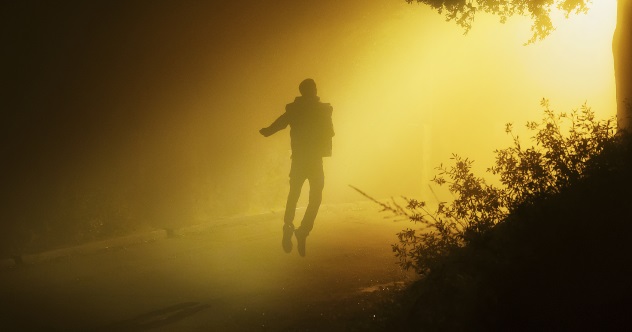
If first-kind encounters are strange lights in the sky and third-kind encounters are the ones Hollywood turns into big-eyed blockbusters, then close encounters of the sixth kind are the stories that make people sleep with the hallway light on. In pop-ufology, the phrase usually points to alleged UFO or alien encounters linked to injury, lasting trauma, or even death. In other words, this is the category where the mystery stops being whimsical and starts acting like it forgot its manners.
Now for the responsible grown-up part: this label is not a formal scientific standard. The original “close encounter” framework coined by astronomer J. Allen Hynek covered the first three kinds, and later writers added extra categories like they were building an expansion pack. Still, the idea of a “sixth kind” has stuck around in UFO culture because it captures something very specific: cases where witnesses didn’t just say, “I saw something weird,” but, “I saw something weird, and afterward my life got a whole lot stranger.”
So this list ranks ten of the most famous, unsettling, and culturally durable cases that fit that broad description. Some involve alleged burns, illness, or panic. Some involve missing time. One involves a death tied directly to a pursuit. And almost all of them come with a healthy side dish of skepticism, conflicting testimony, or official explanations that are much less cinematic than “space visitors.” Which, frankly, is rude to the movies but excellent for critical thinking.
What Does “Close Encounter of the Sixth Kind” Mean?
In everyday UFO conversation, a sixth-kind encounter usually means an alleged contact event associated with harm: physical injury, psychological trauma, or fatal consequences. That definition is messy, but so is the entire UFO glossary. Some writers apply the label only to deaths. Others use it for injuries to people or animals. Others toss it around any time a witness walks away with burns, scars, nausea, or the kind of anxiety that makes every porch light look suspicious.
That fuzziness matters, because it changes how we read these stories. This article does not treat them as proven alien events. Instead, it looks at them as real cultural phenomena built around real reportsreports that were often frightening, occasionally physically consequential, and almost always sticky enough to live on for decades. If nothing else, these cases show how unidentified aerial phenomena sit at the crossroads of folklore, fear, Cold War secrecy, pop culture, and human perception. Basically, it is a haunted house built out of headlines.
Top 10 Close Encounters Of The Sixth Kind
10. The Kelly-Hopkinsville Encounter (1955)
The Kelly-Hopkinsville case in Kentucky is one of the most famous “creature encounter” stories in American UFO lore. Multiple members of the Sutton family claimed that small, eerie beings appeared around their farmhouse, leading to a chaotic night of gunfire, fear, and a panicked dash to the police station. The witnesses were described as genuinely terrified, which is one reason the story has endured long after skeptics labeled it a mix of excitement, darkness, and misidentification.
Does it fit the sixth-kind idea perfectly? Not in the strictest sense. There were no confirmed alien burns, ray beams, or little green malpractice suits. But it absolutely fits the broader “harm and trauma” category. This was not a calm stargazing moment. It was a mass panic event with psychological impact, national attention, and a lasting place in UFO folklore. The case matters because it established a template: close-range encounter, humanoid beings, fear-soaked testimony, and a story weird enough to outlive every reasonable explanation thrown at it.
9. The Flatwoods Monster Encounter (1952)
The Flatwoods Monster incident in West Virginia sounds like a B-movie that accidentally wandered into local history. After a bright object appeared to streak across the sky, a group of boys, one mother, and a dog went to investigate. What they described was a towering, glowing figure with a bizarre shape, an awful atmosphere, and enough menace to send everyone running downhill in terror. The event became national news and quickly joined the American cryptid-and-UFO hall of fame.
Why put it on a sixth-kind list? Because the aftermath was all about distress, fear, and the sense that whatever was encountered wasn’t just oddit was threatening. Even skeptics who argue the witnesses may have seen an owl, mist, and a meteor still acknowledge the emotional punch of the event. Flatwoods is a perfect example of how a frightening encounter can become culturally “harmful” even when the physical evidence is thin. Sometimes the scar is not on the skin. Sometimes it is on a town’s identity, and that scar gets its own museum gift shop.
8. The Sonny DesVergers “Scoutmaster” Incident (1952)
This one is pure Cold War nightmare fuel. Florida scoutmaster D.S. “Sonny” DesVergers reported that he entered a palmetto grove after seeing a strange light, only to emerge burned, disoriented, and nearly blinded. He claimed a UFO discharged a fiery object or red mist that struck him. Investigators found singed vegetation, and the case became one of Project Blue Book’s most memorable attack-style reports.
It is also a great reminder that a sensational story can be both famous and deeply disputed. Air Force investigator Edward J. Ruppelt later called it one of the best hoaxes in UFO history, but the case never fully died because it combined physical effects, a dramatic witness, and just enough ambiguity to keep believers interested. In sixth-kind terms, DesVergers is important because he became a prototype for the “injured witness” narrative: not simply “I saw a craft,” but “something happened to my body when I got too close.” That shift makes the case darker, more memorable, and far harder to shrug off with a casual “probably Venus.”
7. The Betty and Barney Hill Abduction (1961)
If modern alien abduction lore has founding parents, it is Betty and Barney Hill. Their account of a strange light, missing time, and later-recovered memories of invasive medical examinations helped define the alien encounter template for generations. Gray beings, bright lights, clinical procedures, and the uneasy feeling that the universe may have terrible bedside manner? The Hills helped lock all of that into pop culture.
This case belongs on a sixth-kind list because the alleged harm was intimate and lasting. Even though the physical evidence was never conclusive, the emotional and psychological impact was enormouson the witnesses themselves and on the culture around them. After the Hills, abduction stories got darker. Friendly “space brothers” started losing ground to exam rooms and missing memories. Skeptics point to hypnosis, suggestion, and cultural influence as major factors, and those objections matter. But regardless of what “really” happened, the Hills transformed the idea of close encounters from wonder into violation. That is a very sixth-kind pivot.
6. The Pascagoula Incident (1973)
Charles Hickson and Calvin Parker said they were fishing near the Pascagoula River in Mississippi when they encountered a glowing object and were taken aboard by strange beings. Their story became one of the best-known American abduction cases, partly because it was reported immediately and partly because a secretly recorded conversation seemed to capture the men still shaken in the immediate aftermath. That gave the case a rawness many UFO stories lack.
Pascagoula fits the sixth-kind mold because the central claim was not just sighting but examination, terror, and lasting emotional fallout. The details were vivid enough to fascinate believers and strange enough to keep skeptics busy for decades. Some argued it was a hoax, a waking dream, or a story reinforced by stress and suggestion. Others thought the men’s initial distress gave the case unusual credibility. Either way, Pascagoula became one of those encounters that refuses to stay parked in the “local oddity” lane. It is one of the classic examples of an alleged close encounter that felt less like discovery and more like a forced appointment nobody scheduled.
5. The Travis Walton Incident (1975)
Travis Walton’s story has everything a legendary UFO case needs: a crew of witnesses, a beam of light, a sudden disappearance, a five-day gap, and a dramatic return. Walton, an Arizona forestry worker, claimed he approached a glowing object in the woods and was struck by a blue beam before vanishing. His account later inspired the film Fire in the Sky, which helped turn his alleged encounter into permanent late-night-cable folklore.
For a sixth-kind list, Walton matters because the alleged event combines immediate danger, bodily threat, missing time, and long-term personal fallout. It also comes with serious skepticism. Even some UFO enthusiasts have doubted the case, pointing to inconsistencies, failed polygraph claims, and possible financial or professional motives. But the story remains influential because it dramatizes a central fear in close encounter lore: that an ordinary person can walk toward the unknown and come back physically present but existentially scrambled. Walton’s case is not merely “Did he see something?” It is “What happens to a person after a story like this swallows their life whole?”
4. The Roswell Incident (1947)
Roswell is the granddaddy of American UFO mythology, and yes, it is still here because sixth-kind lists are allowed one deeply famous overachiever. Officially, Roswell involved debris from a top-secret military balloon project connected to Project Mogul. In folklore, though, Roswell grew into something much larger: a crashed nonhuman craft, recovered bodies, a military cover-up, and the birth of modern alien paranoia in one dusty New Mexico package.
Why include it under a harm-centered category? Because in public imagination, Roswell is where the idea of fatal extraterrestrial contact really took root. Even if the mainstream historical explanation points firmly to a classified balloon program, Roswell’s cultural afterlife is all about crash death, body recovery, and secrecy wrapped in official contradiction. It is less a clean “case file” than a myth-making machine with infinite batteries. Roswell matters because it taught America how to think about alleged alien catastrophes: not just sightings in the sky, but wreckage on the ground, casualties in the rumor mill, and the suspicion that the truth was immediately put in a locked drawer labeled “absolutely not for you.”
3. The Mantell Incident (1948)
Now we move from alleged harm to documented tragedy. In January 1948, Captain Thomas Mantell died when his fighter plane crashed after he was sent to pursue an unidentified object seen near Fort Knox. Later explanations suggested he had likely climbed too high without proper oxygen while chasing what may have been a secret Skyhook balloon. But at the time, the incident exploded into one of the earliest major UFO headlines in the United States.
This is one of the clearest candidates for a sixth-kind classification if you define the term as a UFO-related event involving death. No alien ray gun is required; the fatal consequence is enough. Mantell’s case also shows why UFO history is so entangled with military secrecy. A pilot died chasing something he could not identify, and the eventual explanation involved classified technology he would not have known about. That combinationgenuine death plus uncertain object plus delayed clarityis exactly why the incident still feels eerie. Even when the explanation is earthly, the emotional residue remains cosmic.
2. The Falcon Lake Incident (1967)
Falcon Lake is one of the strongest “injury case” legends in North American UFO lore. Amateur geologist Stefan Michalak said he encountered a landed craft in Manitoba, approached it, and was blasted in the abdomen by hot gas or exhaust from a grid-like vent. He suffered burns, headaches, vomiting, and weeks of illness. His clothes were damaged, he received medical treatment, and the pattern of the burns became one of the most talked-about physical details in UFO case history.
What makes Falcon Lake so potent is that it feels less like a fantasy screenplay and more like a bizarre accident report. There is no glamorous abduction romance herejust a man who got too close to something he could not explain and paid for it with a very unhappy torso. Skeptics have challenged parts of the case for years, but even critics usually admit it is unusually rich in physical detail. If sixth-kind encounters are supposed to be the cases where mystery leaves a mark, Falcon Lake is basically the cover model. And not a cheerful one.
1. The Cash-Landrum Incident (1980)
If there is a heavyweight champion of alleged sixth-kind encounters, it is the Cash-Landrum incident. Betty Cash, Vickie Landrum, and young Colby Landrum reported seeing a diamond-shaped object hovering over a Texas road, blasting out intense heat and flames. They said the heat was overwhelming, helicopters appeared nearby, and afterward all three developed severe symptoms including nausea, weakness, and burning sensations. Betty Cash’s later medical decline became central to the case’s notoriety, and the witnesses even pursued legal action against the U.S. government.
Cash-Landrum sits at number one because it has nearly every ingredient that makes a harmful encounter story stick: multiple witnesses, close range, immediate physical effects, possible military involvement, long-term health claims, and a legal paper trail. It also has the kind of cinematic intensity that makes people remember it decades later. Yet the case remains unresolved in the most unsatisfying way possible. No official explanation fully satisfies believers, and no extraterrestrial explanation is supported by hard evidence. What remains is a brutal, unforgettable allegation: whatever they saw, they believed it hurt them. In sixth-kind lore, that is as central as it gets.
Why These Stories Still Matter
What makes these cases survive is not just the weirdness. It is the aftermath. Lights in the sky are intriguing; consequences are unforgettable. Once a story includes burns, panic, missing time, bodily examinations, or a death, it stops being campfire material and starts becoming personal. That is why the sixth-kind idea, however unofficial, remains useful. It points us toward the cases where witnesses felt they paid a price.
It also helps explain why these stories remain so stubborn. Harm changes memory. Fear changes storytelling. Public ridicule changes what people say and what they hide. And government secrecyespecially during the Cold Wargave ordinary citizens every reason to suspect that unexplained things in the sky might be either alien, experimental, or both. Not exactly a relaxing set of options.
The Experience of a Sixth-Kind Encounter: What Witnesses Say It Feels Like
Across decades of UFO lore, the reported experience of a so-called sixth-kind encounter tends to follow a strangely familiar script. First comes the visual disruption: a bright light behaving badly, an object hovering where no object should hover, or a shape that seems both mechanical and wrong. Witnesses often describe the moment not as beautiful, but as off. The world suddenly feels misaligned, like reality showed up to work wearing somebody else’s nametag.
Then comes the body. That is what separates these stories from ordinary sighting reports. People describe heat, pressure, nausea, stinging eyes, the smell of sulfur or ozone, a metallic taste, numbness, or an almost cartoonishly strong sense of dread. Some report missing time. Some describe paralysis. Some say they felt watched before they saw anything clearly at all. Whether these sensations come from an external event, a natural phenomenon, stress, misperception, or some combination of all three, the witnesses usually tell the story the same way: the encounter did not stay politely in the sky. It crossed the line and got personal.
Afterward, the social experience can be just as intense as the event itself. Witnesses often become trapped between two terrible options. Tell the story, and risk becoming the local “UFO person” forever. Stay quiet, and keep replaying the event alone at 3 a.m. while the ceiling fan turns into a suspicious silhouette. In many classic cases, witnesses insisted that ridicule hurt almost as much as the encounter. That matters, because it reminds us these stories live not just in mystery magazines but in marriages, jobs, police stations, newsrooms, and family arguments.
There is also a strong pattern of medical language. Even when people claim the event was extraterrestrial, they often describe it in clinical terms: examinations, burns, probes, irritation, weakness, lesions, fatigue. That overlap helps explain why abduction and harmful-encounter stories became so culturally sticky. They mix ancient fear of “the unknown visitor” with modern fear of hospitals, radiation, military technology, and surveillance. It is folklore wearing a lab coat, which is somehow worse.
At the same time, science keeps pulling the conversation back to Earth. Eyewitness memory is fallible. Stress reshapes perception. Classified aircraft, balloons, atmospheric effects, cultural expectations, and media imagery all influence what people think they saw. Modern official reviews have emphasized poor data quality rather than extraterrestrial certainty. That does not erase the witness experience, but it does change how responsibly we should talk about it. The best approach is neither blind belief nor smug dismissal. It is curiosity with a seatbelt on.
That is why sixth-kind stories remain fascinating. They are not only about aliens, or even about UFOs. They are about what happens when human beings believe they crossed paths with something powerful, unknowable, and potentially dangerous. Whether the cause was extraordinary or explainable, the feeling they describe is the same: the universe came a little too close, and it did not bother to apologize.
Final Thoughts
The best sixth-kind encounters are not necessarily the most credible, and the most credible are not always the most dramatic. But the cases on this list endure because they sit in the overlap between mystery and consequence. They are the stories that made people sick, scared, injured, obsessed, or famous for reasons they almost certainly would have preferred to avoid.
Maybe that is the real lesson here. UFO culture survives not because every case proves aliens, but because some stories capture a deeply human fear: that the unknown is not just out there, but close enough to touch us back. And history suggests that when people think it has, the result is never calm, rarely tidy, and almost always unforgettable.