

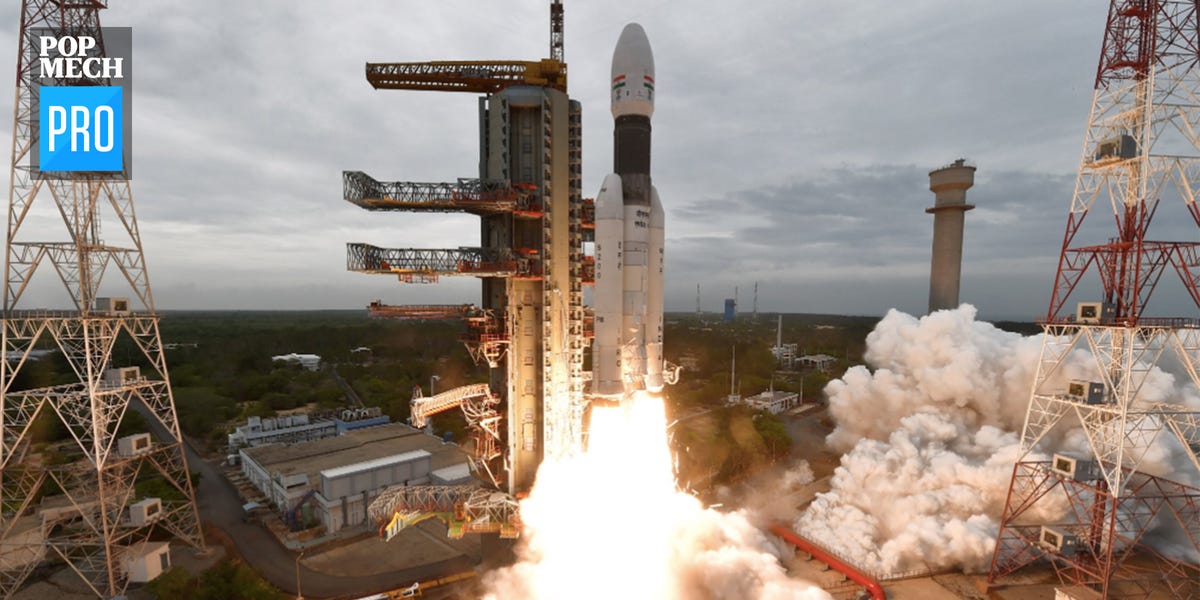
India is not just taking another swing at the Moon. It is building a full-blown lunar story arc: first curiosity, then heartbreak, then a historic landing, and now something even biggeran effort to turn a successful moonshot into a long-term lunar program. That is why the phrase “India is headed to the Moon” feels less like a headline and more like a mission statement with rocket exhaust.
For years, the global Moon conversation was dominated by a short list of familiar players. Then India arrived with a different style. The country’s lunar program has not been about flashy billion-dollar chest-thumping. It has been about smart engineering, practical budgets, stubborn persistence, and the kind of resilience that says, “Yes, that landing attempt hurt. No, we are absolutely not done.” If space exploration had a motto for this chapter, it might be: fall down at 384,400 kilometers, stand up anyway.
India’s lunar journey matters for more than national pride. It matters for science, for the growing competition around the Moon’s south pole, for future exploration infrastructure, and for the idea that a rising space power can make meaningful discoveries without setting money on fire just to prove it owns a wrench. The result is one of the most compelling modern space stories on the planet.
How India’s Moon Story Really Began
To understand where India is going, you have to start with Chandrayaan-1, the mission that opened the country’s lunar chapter in 2008. It was India’s first deep-space mission, and it did more than simply orbit the Moon and wave politely from above. Chandrayaan-1 helped transform lunar science by contributing to the evidence that water molecules exist on the Moon. That was a huge deal. In Moon terms, that is not a small footnoteit is the kind of discovery that changes how scientists think about lunar geology, future habitats, and the possibility of using local resources instead of hauling everything from Earth like cosmic over-packers.
That early success gave India credibility. It also showed that the country was not entering lunar exploration as a tourist with a camera and a souvenir budget. It was arriving as a serious scientific participant. Chandrayaan-1 proved that India could design meaningful planetary missions, collaborate internationally, and produce data that the rest of the space world had to take seriously.
Then came Chandrayaan-2 in 2019, and this is where the story got painfully human. The mission aimed to land near the Moon’s south pole, a region packed with scientific promise and technical difficulty. The orbiter made it, but the Vikram lander lost contact during its final descent. It was a hard public setback, made harder by how close India came. If you watched the coverage at the time, you could practically hear a planet-sized exhale turn into a room full of silence.
But here is the important part: Chandrayaan-2 did not end the program. It toughened it. Space agencies learn from failure the way good chefs learn from a burnt dishnobody enjoys the smoke alarm, but the next attempt usually gets a lot better.
Chandrayaan-3 Changed Everything
That next attempt was Chandrayaan-3, and in August 2023, India delivered one of the most important moments in modern spaceflight. The mission successfully landed near the Moon’s south pole, making India the fourth country to achieve a soft lunar landing and the first to land in that region. That last part matters enormously. The south polar area is not just interesting because it sounds dramatic. It is scientifically valuable because it may contain water ice in permanently shadowed craters, resources that could someday support sustained human and robotic exploration.
The landing itself was a turning point. Suddenly, India was no longer the country that “almost landed” near the south pole. It was the country that actually did it. The Vikram lander touched down, the Pragyan rover rolled out, and India’s lunar program went from hopeful to historic in a matter of hours.
And Chandrayaan-3 was not just a symbolic win. The rover and lander returned useful science. Among the headline-grabbing findings was the detection of sulfur and other elements in the lunar soil near the south pole. That kind of in-situ data matters because it helps scientists understand the Moon’s composition in a region that future missions care about very much. Translation: this was not just a victory selfie with the Moon in the background. It was actual research.
Another reason Chandrayaan-3 mattered is that it showed India could execute a focused, disciplined mission after a visible setback. That is the sort of institutional maturity space agencies are judged on. Plenty of countries can announce bold plans. Fewer can come back after disappointment and stick the landingliterally.
Why the Moon’s South Pole Is Such a Big Deal
If the Moon were a normal real-estate market, the south pole would be the neighborhood everyone suddenly wants to inspect. It has difficult terrain, yes, but it also offers the prospect of water ice, valuable geology, and strategic importance for future missions. Scientists are especially interested in permanently shadowed regions that may preserve frozen volatiles. In plain English: parts of the Moon may be storing ingredients that could be useful for drinking water, breathable oxygen, and rocket fuel.
That is why India’s success near the south pole landed with such force. It was not just about being first to a complicated patch of lunar dirt. It was about proving that India could operate in one of the most scientifically prized and technically tricky places on the Moon. The area also matters for long-term exploration planning, because missions that can work there help prepare the way for future landers, rovers, sample-return systems, and maybe one day human crews.
This is also where India’s lunar story connects to the broader global Moon race. The United States, China, Japan, and others all see the south polar region as central to the next era of exploration. So when India lands there successfully, it is not merely joining the conversation. It is changing the seating chart.
India’s Next Lunar Moves Are Bigger Than a Single Mission
Here is where the headline becomes even more exciting: India is not stopping at Chandrayaan-3. The country’s future lunar plans point toward a more advanced, multi-step strategy. One of the most closely watched next missions is Chandrayaan-4, which has been approved as a sample-return mission designed to demonstrate several complex technologies, including docking-related capabilities and bringing material back from the Moon. That is a serious escalation in difficulty. Landing is hard. Collecting samples, launching them back up, transferring them, and returning them safely to Earth is the sort of challenge that makes engineers earn their coffee.
India is also linked to LUPEX, a joint lunar exploration mission with Japan focused on the Moon’s polar regions. The appeal here is obvious: combine strengths, investigate water-related questions more deeply, and build the operational experience needed for more ambitious exploration later in the decade. In other words, India is not just heading to the Moon again; it is building a ladder instead of throwing another dart.
Then there is the longer-term vision. India has outlined broader human spaceflight ambitions, including plans that connect lunar exploration with future docking capabilities, a national space station, and a goal of sending an Indian astronaut to the Moon in the decades ahead. Whether every milestone lands exactly on schedule is almost beside the point. The strategic direction is clear. India wants to move from visiting the Moon to developing the technologies that make repeated lunar operations possible.
Why India’s Lunar Program Has Captured So Much Attention
Part of the fascination comes from the way India does space. The program often earns attention for delivering meaningful results without the eye-watering price tags that dominate some Western conversations about exploration. That does not mean the missions are cheap in any simplistic sensespace is still space, and rockets remain delightfully committed to the principle of expensive firebut India has built a reputation for disciplined engineering and cost-conscious execution.
There is also a political and cultural layer. Every successful lunar mission becomes part science, part strategy, part national theater. Chandrayaan-3 boosted India’s image as a technology power with global ambitions. It also reinforced the idea that space capability is now one of the clearest markers of national confidence. When a country lands on the Moon, the whole world notices. When it lands near the south pole first, the whole world notices twice.
But the attention is not just about prestige. India’s lunar program matters because it expands the number of countries making serious contributions to planetary science. That is healthy for the field. More missions mean more data, more methods, more partnerships, and more pressure for innovation. The Moon is becoming a busier place, and India has earned a front-row parking spot.
What “India Is Headed to the Moon” Really Means
The title sounds simple, but it carries several meanings at once. Yes, it means India is literally planning more lunar missions. It means the Chandrayaan program is evolving from milestone missions into a sustained architecture. It means the country is pursuing the technical muscleslanding, roving, sample return, docking, collaboration, and eventually human explorationthat define a serious spacefaring power.
It also means something more emotional. India’s Moon program has become a narrative of persistence. Chandrayaan-1 gave the country credibility. Chandrayaan-2 taught painful lessons. Chandrayaan-3 turned those lessons into a historic landing. The next steps aim not just to repeat success but to deepen it.
That arc matters because it is easy to admire only the triumphant moments in space history. Yet the real story is usually messier. It is built from failed descents, redesigns, nervous mission control rooms, budget arguments, coding marathons, and people who decide that one bad day on the Moon is not the end of the road. India’s lunar program reflects that truth beautifully.
Conclusion
India is headed to the Moon, but the bigger story is that India is building a future thereone careful mission at a time. The country’s lunar journey has already moved from first steps to historic breakthroughs, and its next goals suggest an even more ambitious era is coming. From helping reveal water on the Moon to making a successful south polar landing and preparing for sample return and longer-term exploration, India has gone from participant to pacesetter.
The most impressive part is not just that India reached the Moon. It is that the country treated the Moon not as a one-off destination, but as a continuing challenge worth solving. That mindset is what turns a mission into a program and a program into a legacy. If the last few years are any indication, India’s next lunar chapter will be bigger, bolder, and a lot harder to ignore.
Experiences Related to “India Is Headed to the Moon”
One of the most powerful experiences connected to India’s Moon journey is the way it has been watched, felt, and shared by ordinary people. Lunar exploration can sound abstract when discussed in terms of propulsion modules, descent engines, and orbital mechanics. But the public experience is anything but abstract. When India’s missions captured the world’s attention, they turned living rooms, classrooms, office break rooms, and phone screens into little mission-control annexes. Suddenly, people who had not said the words “lunar south pole” in their entire lives were saying them with conviction, snacks in hand, and slightly elevated blood pressure.
For students, especially, India’s Moon program has created a kind of scientific immediacy that textbooks rarely manage on their own. A chapter about planetary science feels different when the mission is unfolding in real time and the country doing it looks determined, inventive, and visibly invested in success. You can almost imagine a teenager watching a landing stream and thinking, “Wait, this is a career? You mean I can study physics and accidentally become the coolest person at family gatherings?” That matters. Space missions do not just collect data; they recruit future engineers, scientists, coders, communicators, and dreamers.
There is also the emotional experience of recovery. Chandrayaan-2’s failed landing attempt was public, painful, and unforgettable. For many observers, the experience of following Chandrayaan-3 carried extra emotional weight precisely because the previous attempt had ended in disappointment. That gave the later success a different texture. It was not a clean, easy victory. It was a comeback. And comebacks are often what people remember most, because they feel earned in a deeper way.
For the Indian diaspora and for global audiences who care about science, the missions have also become moments of connection. People separated by geography still gathered around the same event. Friends messaged one another during landing windows. Parents explained the Moon to their children. Teachers paused lessons. News alerts buzzed like impatient mosquitoes. In a fragmented digital age, that kind of shared attention is rare. A moon landing can still cut through the noise, and India’s success proved it.
Even for people who are not hardcore space fans, the story offers something deeply relatable: persistence. Watching a nation learn, adapt, and try again has its own emotional force. It feels less like distant statecraft and more like a human truth projected onto the sky. We all know what it means to miss, regroup, and return with better preparation. India’s lunar experience works on that level too, which is why the story resonates far beyond aerospace circles.
And then there is wonderthe underrated fuel source of civilization. The Moon still has that effect on people. It is familiar enough to feel personal and distant enough to remain magical. When India heads there, the mission is scientific, strategic, and technological. But it is also emotional. It reminds people that progress is not only built in boardrooms and laboratories. Sometimes it is built in the quiet moment when someone looks up at the Moon and realizes that a machine from Earth, carrying the hopes of millions, made it there.