

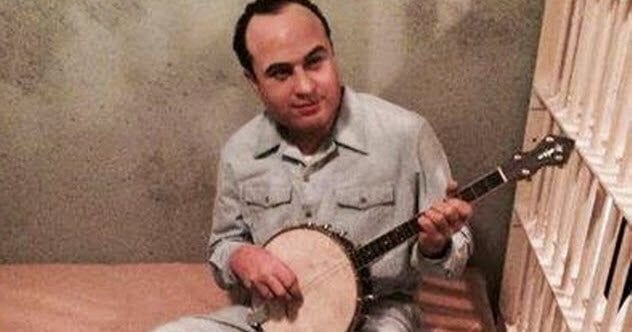
Al Capone is usually remembered as the cigar-chomping king of Prohibition-era Chicagoa man surrounded by tailored suits, armored cars, illegal liquor, and associates whose retirement plans tended to arrive suddenly and involve concrete. Yet the final chapter of his life looked nothing like the swaggering gangster legend preserved by Hollywood.
After years of federal imprisonment, Capone emerged physically weakened and mentally impaired by advanced syphilis. He did not return to Chicago to rebuild his criminal empire. Instead, he received hospital treatment, withdrew to his Palm Island estate in Florida, and spent his remaining years under the care of his family.
These fascinating facts about Al Capone’s final years reveal a striking reversal of fortune. The feared Chicago Outfit boss who once commanded enormous wealth and political influence ended his life in seclusion, increasingly disconnected from the world he had once dominated.
Historical verification: FBI, IRS, and National Archives records confirm Capone’s conviction, sentence, release date, payment obligations, and post-prison decline.
Why Al Capone’s Final Years Still Fascinate America
Capone’s last years matter because they cut through the mythology surrounding organized crime. Popular culture tends to freeze gangsters at the height of their power. They remain permanently young, dangerous, sharply dressed, and suspiciously well lit.
Real life is less cooperative with branding departments.
Capone’s decline demonstrates how quickly criminal authority can disappear. His organization continued without him, his influence faded, and the medical consequences of an untreated infection damaged his ability to communicate, reason, and function independently. His story became less like a gangster thriller and more like a grim medical and family drama.
Top 10 Facts About Al Capone’s Final Years
-
1. Alcatraz Destroyed the Special Treatment He Had Enjoyed Elsewhere
Before arriving at Alcatraz in August 1934, Capone had served part of his federal sentence at the U.S. Penitentiary in Atlanta. Reports and later historical accounts suggest that his money, fame, and connections allowed him to enjoy influence unavailable to ordinary prisoners. He received visitors, maintained outside contacts, and appeared to believe that a prison was simply another organization whose staff required creative financial motivation.
Alcatraz was designed to end that sort of arrangement. Capone became inmate number 85 and was subjected to strict routines, limited communication, prison labor, and close supervision. The authorities intended to show that the country’s most famous gangster could be treated like any other federal prisoner.
When Capone reportedly asked about special privileges, the answer was essentially that Alcatraz had never heard of his customer-loyalty program.
The psychological effect was significant. Capone had spent years controlling politicians, employees, rivals, and entire illegal markets. On the isolated island, he could no longer command an army with a telephone call or an envelope of cash. The loss of control marked the beginning of his transformation from crime boss to dependent patient.
-
2. Tax Evasion, Not Bootlegging or Murder, Put Him Away
Capone’s criminal reputation was built on bootlegging, gambling, prostitution, intimidation, and violence. Nevertheless, federal prosecutors did not secure his defining conviction for ordering a killing or violating Prohibition laws. They convicted him of income tax evasion.
In October 1931, a jury found Capone guilty on five tax-related counts. He received an 11-year federal prison sentence and was ordered to pay fines, court costs, back taxes, and interest. Government investigators had followed evidence of his spending and income, demonstrating that a man living like a millionaire could not convincingly pretend he had no taxable earnings.
This conviction shaped Capone’s final years because the unusually long sentence removed him from Chicago during a period of enormous change. Prohibition ended in 1933, the Chicago Outfit adjusted its business model, and other leaders assumed control. By the time Capone left prison, both the underworld and the country had moved on.
The lesson was brutally simple: federal accountants may not carry machine guns, but ignoring them remains a questionable lifestyle choice.
-
3. Untreated Syphilis Did What Rival Gangsters Could Not
Capone survived gang wars, assassination threats, armed rivals, and the attention of multiple law-enforcement agencies. His most devastating enemy, however, was microscopic.
Capone had contracted syphilis years earlier and apparently failed to receive effective treatment during the infection’s early stages. By the time he entered federal prison, doctors documented serious health problems. The disease eventually affected his nervous system and brain, producing the condition historically called syphilitic paresis or general paresis.
Neurosyphilis can cause confusion, personality changes, memory loss, poor judgment, delusions, and progressive cognitive impairment. During Capone’s later imprisonment, these symptoms became increasingly difficult to conceal. The man once known for managing a vast criminal organization could no longer consistently manage his own thoughts.
This medical reality is essential when discussing Al Capone’s final years. His post-prison behavior was not merely the result of boredom, defeat, or a decision to become a quiet retiree. He was living with severe neurological damage caused by a long-untreated disease.
-
4. He Spent Much of His Last Period at Alcatraz in the Prison Hospital
By the late 1930s, Capone’s health had deteriorated dramatically. He experienced episodes of confusion, disorientation, erratic behavior, and declining mental function. In February 1938, doctors formally diagnosed syphilis of the brain, and he spent much of his remaining time at Alcatraz in the hospital section.
Prison physicians attempted treatments available before modern antibiotics became widely accessible. Historical accounts describe the use of malaria therapy, a once-accepted but dangerous treatment in which physicians deliberately produced high fevers in hopes of damaging the syphilis-causing bacteria. The therapy could be extremely risky, and Capone reportedly reacted poorly.
The contrast was extraordinary. Only a decade earlier, newspapers described him as a powerful underworld executive with bodyguards, expensive jewelry, and control over profitable illegal businesses. Now he was a confused hospital patient inside America’s most secure federal prison.
His medical condition also undermines the romantic image of the invincible mob boss. Crime films often give gangsters dramatic final speeches. Advanced neurological disease is considerably less interested in providing a cinematic ending.
-
5. His Release Came After Exactly Seven Years, Six Months, and 15 Days
Al Capone was released from federal custody on November 16, 1939. According to the FBI, he had served seven years, six months, and 15 days and had paid his fines and back taxes.
His departure from prison did not resemble a triumphant homecoming. Capone was only 40 years old, but his physical and cognitive condition made him appear far removed from the energetic public figure of the 1920s.
After leaving Alcatraz earlier in 1939, he completed the remaining portion of his confinement at other federal facilities, including institutions in California and Pennsylvania. Once fully released, he required medical treatment rather than meetings with mob lieutenants.
The precise length of his imprisonment is fascinating because it highlights how compressed his famous career had been. Capone led the Chicago Outfit for only a relatively brief period, spent more than seven years in federal custody, and then lived approximately seven more years as a severely impaired former gangster.
His legend grew much larger than the actual number of years during which he exercised direct power.
-
6. He Went Straight From Federal Custody to a Baltimore Hospital
Immediately after his release, Capone entered a Baltimore hospital for treatment of the neurological effects of syphilis. He ultimately received care at Union Memorial Hospital, where physicians attempted to stabilize his condition.
The hospital episode illustrates how dependent he had become. This was not a healthy former prisoner choosing where to spend retirement. He required specialized medical attention before he could return to his Florida home.
A particularly unusual detail associated with his Baltimore stay involves two Japanese weeping cherry trees. Historical accounts report that Capone donated the trees to Union Memorial in gratitude for the treatment and compassion he received. One of America’s most notorious gangsters therefore left behind an unexpectedly peaceful botanical thank-you gift.
The story does not erase his crimes, nor should it be used to repaint him as a misunderstood gardening enthusiast. It does, however, show that historical figures rarely fit into one tidy category. A violent criminal could also feel gratitude toward caregivers. Human complexity is inconvenient that way.
-
7. His Palm Island Mansion Became a Comfortable Form of Confinement
Following hospital treatment, Capone returned to the waterfront estate he had purchased on Palm Island in Biscayne Bay in 1928. The property included a large Mediterranean-style villa, a swimming pool, a gatehouse, high walls, waterfront access, and extensive security features.
At first glance, the estate sounds like an ideal retirement destination. For Capone, however, it also functioned as a private enclosure. His family could control visitors, protect his privacy, and care for him away from reporters and curious members of the public.
The mansion’s luxury created one of the most striking contradictions of Al Capone’s final years. He possessed a beautiful home in a tropical setting, yet his ability to enjoy it was increasingly limited by cognitive decline. Wealth could provide privacy, nurses, family assistance, and palm trees. It could not restore damaged brain tissue.
Capone reportedly spent time fishing, playing cards, listening to music, receiving approved visitors, and remaining close to his wife, Mae. These quiet activities were worlds away from the violent competition and constant publicity of his Chicago years.
-
8. There Was No Serious Return to the Chicago Underworld
Rumors naturally followed Capone after his release. Newspapers and law-enforcement agencies wondered whether the former crime boss might attempt to reclaim authority. The FBI continued to pay attention to him, but his condition made a meaningful return to organized crime unrealistic.
He never publicly returned to Chicago after leaving prison. The FBI concluded that he had become mentally incapable of resuming gangland politics. Meanwhile, the Chicago Outfit had developed new leadership, new income streams, and a lower-profile approach to organized crime.
Capone’s fame did not translate into practical power. Former associates might still have treated his name with respect, caution, or sentimental loyalty, but the ability to remember information, evaluate risks, issue coherent instructions, and maintain secrecy is fairly important when managing a criminal syndicate.
By the 1940s, Capone was more symbol than boss. His legend remained active even though the man himself was no longer capable of running the organization associated with his name.
-
9. Penicillin Stopped the Infection Too Late to Repair the Damage
During the 1940s, penicillin transformed the treatment of bacterial infections, including syphilis. Capone became one of the relatively early American patients to receive the drug after production expanded.
The treatment reportedly helped stop the infection from progressing. Unfortunately, antibiotics could not reverse the extensive neurological damage that had already occurred. Killing the bacteria was not the same as rebuilding the brain.
In 1946, Capone’s physician and a Baltimore psychiatrist examined him. According to the FBI’s historical account, both concluded that he had the mental capacity of approximately a 12-year-old child.
Family accounts describe him being cared for by Mae and other relatives, wearing pajamas around the property, and sometimes speaking as though people from his past were present. Such stories should be handled cautiously because colorful details can grow during repeated retellings. The broader medical conclusion, however, is well documented: Capone’s cognitive abilities had severely deteriorated.
The timing remains one of the saddest elements of the story. A treatment capable of controlling the disease arrived during his lifetimebut years too late to return him to the person he had been.
-
10. His Death Certificate Listed His Occupation as “Retired”
On January 21, 1947, Capone suffered a stroke at his Palm Island home. He regained consciousness and initially appeared to improve, but he developed bronchopneumonia and experienced further cardiac complications.
Al Capone died on January 25, 1947, surrounded by family. He was 48 years old and had celebrated his birthday only eight days earlier. Historical accounts identify stroke, pneumonia, and heart failure or cardiac arrest as central elements of his final medical crisis.
One quietly remarkable detail appears on his death certificate: his occupation was recorded as “retired.” Technically, it was accurate. It was also one of history’s more understated job descriptions.
His body was taken to Chicago for a private funeral. He was first buried at Mount Olivet Cemetery, and his remains were later moved to Mount Carmel Cemetery in Hillside, Illinois, along with family members.
Capone’s death was peaceful compared with the violence associated with his career. He did not die in a gangland ambush or in a final shootout with federal agents. He died at home, with his family nearby, after years of physical and mental decline.
Medical context cross-checked with PBS NewsHour, NIH medical literature, CDC materials, and major historical publications covering neurosyphilis and early penicillin treatment.
What Al Capone’s Decline Reveals About Power and Myth
The final years of Al Capone expose the distance between public reputation and private reality. His name continued to represent violence, wealth, and criminal authority long after he had lost the mental capacity to exercise meaningful control.
This distinction matters because celebrity can outlive ability. The public still imagined “Scarface,” while relatives and physicians dealt with a disabled middle-aged man who required supervision. Newspapers could reuse old photographs of the confident gangster, but photographs do not show memory loss, confusion, or dependency.
His story also demonstrates that organized crime is larger than any individual. The Chicago Outfit did not disappear when Capone went to prison. Other figures assumed leadership, adapted to the end of Prohibition, and continued gambling, labor racketeering, and other illegal businesses. The organization evolved while its most famous former leader faded from relevance.
Capone had built a public image designed to communicate strength. His final years dismantled that image piece by piece.
Beyond the Facts: Experiencing the Story of Capone’s Final Years
Begin With the Contrast Between Alcatraz and Palm Island
One of the most effective ways to understand Capone’s final chapter is to picture its two defining environments. Alcatraz was cold, regulated, isolated, and deliberately impersonal. Palm Island was warm, private, luxurious, and surrounded by water. Superficially, they could not have been more different.
Emotionally, however, both places represented confinement.
At Alcatraz, guards controlled Capone’s movements. At Palm Island, illness created the boundaries. He could walk through landscaped grounds, sit beside the pool, or look across Biscayne Bay, but he could not escape the neurological damage reshaping his mind.
That contrast makes the history more memorable than a simple list of dates. It shows that freedom is not merely the absence of prison walls.
Read the Official Records Before Watching the Movies
Experiencing this history through government documents produces a different impression from watching a gangster film. Verdicts, sentence calculations, inmate records, medical references, and FBI summaries remove much of the cinematic fog.
The language is often dry, but dryness has advantages. A statement that Capone served seven years, six months, and 15 days is more useful than a dramatic montage of a calendar losing pages while someone plays a mournful trumpet.
Official documents also reveal the importance of ordinary administrative work. Investigators built the tax case from financial evidence. Jurors considered specific charges. Prison officials documented his conduct. Physicians recorded his deterioration. Capone’s downfall was not created by one heroic confrontation; it resulted from years of methodical institutional pressure.
Separate the Human Tragedy From Moral Rehabilitation
Learning about Capone’s illness can produce sympathy, discomfort, or both. It is possible to recognize the suffering of a disabled person without minimizing the suffering he caused during his criminal career.
His devotion to family does not cancel organized violence. His gratitude toward hospital staff does not transform him into a public benefactor. His cognitive decline was tragic, but tragedy is not the same as innocence.
This balanced perspective creates a richer historical experience. It avoids two easy mistakes: turning Capone into a glamorous rebel or treating him as a fictional monster without human relationships. He was a real person capable of affection, brutality, generosity, deception, loyalty, and exploitation.
History becomes more useful when it allows uncomfortable truths to occupy the same room.
Notice How Quickly the World Moved Beyond Him
Capone entered prison when Prohibition still shaped American politics and criminal markets. By the time of his release in November 1939, Prohibition had been repealed for nearly six years, the Chicago Outfit had new leadership, and Europe had entered World War II.
The public may have remembered him, but society no longer revolved around his particular kind of fame. His empire had been rooted in a temporary legal and economic environment. When that environment changed, organized crime adapted without waiting for its former celebrity executive.
That realization makes his story feel surprisingly modern. Public figures can dominate headlines and appear permanent, yet institutions, industries, and audiences often move on faster than expected.
End With the Ordinary Details
The most powerful details from Capone’s final years are not the sensational ones. They are the ordinary images: a wife caring for her impaired husband, a patient thanking hospital workers, a family controlling visitors, a man playing cards or fishing, and doctors evaluating what remained of his mental abilities.
Those scenes feel almost incompatible with the armored cars and machine-gun mythology. That incompatibility is precisely why they matter.
Experiencing Capone’s final years through these details turns a familiar crime legend into a cautionary story about illness, consequences, family responsibility, and the temporary nature of power. The gangster image was built for headlines. The ending happened mostly behind closed gates.
Conclusion
Al Capone’s final years were defined not by a dramatic criminal comeback but by imprisonment, advanced neurosyphilis, hospital treatment, family care, and increasing isolation. After his release in 1939, the former Chicago crime boss withdrew to his Palm Island home and never publicly returned to the city where his reputation had been made.
Penicillin eventually controlled the infection, but it arrived too late to reverse the neurological damage. By 1946, doctors believed his mental abilities had declined to those of a child. He died the following year at age 48 after a stroke, pneumonia, and heart complications.
The most fascinating fact may be the simplest: Capone’s legend remained powerful even after Capone himself no longer did. The myth kept wearing the expensive suit long after the man behind it had faded.