

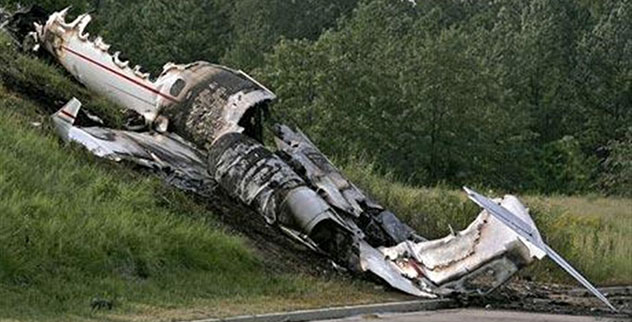
Plane crashes are among the rarest transportation disasters, but when they happen, they imprint themselves on history with terrible force. Even rarer is the story of a sole survivor: one person who lives when every other person aboard is lost. These stories are not simple “miracle” postcards. They are complicated accounts of physics, timing, seat position, weather, rescue response, injuries, grief, and the stubborn human instinct to keep breathing when logic has quietly packed its bags and left the terminal.
The phrase “sole survivor of a plane crash” attracts attention because it sounds almost impossible. In reality, aviation experts warn that there is no magic seat, lucky row, or secret travel hack that guarantees survival. Sometimes a section of fuselage stays intact. Sometimes a survivor is thrown clear. Sometimes water, jungle canopy, snow, or wreckage cushions an impact. Sometimes the real survival story begins after the crash, when a person must face darkness, injuries, fire, water, weather, isolation, and the even heavier question: “Why me?”
This list looks at ten of the most unforgettable sole survivors of aviation disasters. The ranking is not about “best” or “worst,” because tragedy does not need a scoreboard. Instead, these stories are selected for their historical significance, verified details, survival circumstances, and the lessons they continue to offer about aviation safety, emergency response, and human resilience.
1. Juliane Koepcke LANSA Flight 508
On December 24, 1971, 17-year-old Juliane Koepcke boarded LANSA Flight 508 in Peru with her mother, heading toward Pucallpa for Christmas. The aircraft, a Lockheed L-188 Electra, flew into a severe thunderstorm. Lightning struck, the plane broke apart in midair, and Koepcke fell roughly two miles into the Amazon rainforest while still strapped to her row of seats.
That sentence sounds like something a screenwriter would be told to “tone down for realism,” yet it happened. Koepcke survived the fall with injuries that included a broken collarbone, a concussion, wounds, and impaired vision. Then came the second part of her survival: the jungle. She spent about eleven days alone, following water because her zoologist parents had taught her that streams often lead to people. Eventually, she found a hut used by local workers, who helped bring her to safety.
Her story is often remembered as the ultimate “girl who fell from the sky” survival case. But what makes it truly powerful is not just the fall. It is the combination of luck, practical knowledge, calm decision-making, and endurance. Koepcke later became a scientist, turning a life marked by catastrophe into one connected to the natural world that had, in the strangest way possible, helped keep her alive.
2. Vesna Vulović JAT Flight 367
In January 1972, Serbian flight attendant Vesna Vulović became one of aviation history’s most extraordinary survivors. She was working aboard JAT Flight 367 when the aircraft broke apart after an explosion over Czechoslovakia. Everyone else aboard died. Vulović survived a fall from extreme altitude, trapped in part of the wreckage.
Her survival has long been associated with the record for the highest fall survived without a parachute. She suffered devastating injuries, including fractures and paralysis, and spent months recovering. The fact that she eventually walked again became almost as astonishing as the original survival itself. Most people complain when airplane coffee is too weak; Vulović survived a midair breakup and then had to rebuild her body one painful step at a time.
Her case shows how unpredictable crash survivability can be. Investigators and later accounts have pointed to factors such as where she was trapped, how the wreckage fell, and the cushioning effect of terrain and snow. But no explanation fully removes the shock of it. Vesna Vulović’s story remains one of the most discussed cases in aviation survival because it sits at the edge of what seems physically possible.
3. Cecelia Cichan Northwest Airlines Flight 255
On August 16, 1987, Northwest Airlines Flight 255 crashed shortly after takeoff from Detroit Metropolitan Airport. The McDonnell Douglas MD-82 failed to climb properly, struck obstacles, and crashed in a devastating accident that killed 154 people on board and two people on the ground. The only person aboard who survived was four-year-old Cecelia Cichan, later known as Cecelia Crocker.
Firefighters found her still alive amid wreckage that seemed unsurvivable. She had severe injuries, including burns and fractures, and she lost her parents and brother in the crash. The National Transportation Safety Board later determined that the crew had failed to properly configure the flaps and slats for takeoff, and that a cockpit warning system did not alert them as it should have.
Cecelia’s story is not a loud survival tale filled with jungle treks or dramatic speeches. It is quieter and, in many ways, more emotionally difficult. She grew up with scars she did not choose and memories shaped by a tragedy she was too young to understand at the time. Years later, she spoke publicly about living with the crash every day. Her story reminds readers that surviving is not the same as being finished with the event. Sometimes survival is the beginning of a lifelong conversation with loss.
4. Bahia Bakari Yemenia Flight 626
In June 2009, Yemenia Flight 626 crashed into the Indian Ocean near the Comoros Islands during its approach. Of the 153 people aboard, 12-year-old Bahia Bakari was the only survivor. She had little swimming experience, no life jacket, and was thrown into rough, dark water after the Airbus A310 went down.
Bakari clung to floating wreckage for hours in the ocean. Imagine being twelve years old, injured, surrounded by night water, and trying to understand why the world has suddenly become waves, fuel, debris, and silence. She later became known in the media as “the miracle girl,” but that nickname cannot fully capture the terror of her experience or the grief that followed. Her mother, who had been traveling with her, died in the crash.
Her survival stands out because it involved not only the crash impact but also prolonged exposure at sea. Many aviation survival stories depend on immediate rescue. Bakari had to endure hours alone before she was found. Her case is often cited when experts discuss how survival can depend less on a mythical “safe seat” and more on the exact mechanics of impact, whether a person remains conscious, whether flotation is available, and whether rescuers can reach the scene in time.
5. Ruben van Assouw Afriqiyah Airways Flight 771
On May 12, 2010, Afriqiyah Airways Flight 771 crashed while approaching Tripoli International Airport in Libya. The Airbus A330 was arriving from Johannesburg when it went down short of the runway. Of 104 people aboard, 103 died. The sole survivor was nine-year-old Dutch passenger Ruben van Assouw.
Ruben was found alive in the wreckage with serious leg injuries. His parents and brother were among those killed. The aircraft was largely destroyed, making his survival especially startling. Later investigation pointed to crew actions during an unstable approach and a failed go-around, with spatial disorientation playing a role.
His survival inspired public fascination and also influenced fiction, including stories built around the emotional aftermath of a child being the only one left from a doomed flight. But the real case is not fiction, and it deserves a careful tone. Ruben’s story illustrates one of the most painful patterns in sole-survivor cases: the public sees a “miracle,” while the survivor wakes into a world permanently changed.
6. Annette Herfkens Vietnam Airlines Flight 474
In November 1992, Vietnam Airlines Flight 474 crashed into mountainous jungle terrain while approaching Nha Trang during bad weather. The aircraft, a Yakovlev Yak-40, carried 31 people. Thirty died. The only survivor was Dutch passenger Annette Herfkens, who was traveling with her fiancé.
Herfkens survived the crash with severe injuries and remained trapped in the jungle for eight days. She had no food and survived mainly on rainwater. Some passengers reportedly survived the initial impact but died before rescuers arrived. Her fiancé was killed, and Herfkens was left surrounded by wreckage and loss while waiting for help.
Her later reflections are among the most thoughtful accounts from any plane crash survivor. She has spoken and written about acceptance, presence, and mental discipline. In a situation where panic would have been completely understandable, she focused on what existed in the moment: rainwater, breathing, stillness, and the decision not to let despair run the cockpit of her mind. That is not cute inspirational-poster wisdom; that is survival psychology with mud on its shoes.
7. George Lamson Jr. Galaxy Airlines Flight 203
On January 21, 1985, Galaxy Airlines Flight 203 crashed shortly after takeoff from Reno, Nevada. The chartered Lockheed L-188 Electra was carrying passengers back toward Minnesota after a trip connected with Super Bowl weekend. Of the 71 people aboard, 70 died. The sole survivor was 17-year-old George Lamson Jr.
Lamson was reportedly found still strapped to his seat after being thrown clear from the aircraft. His father died in the crash. The National Transportation Safety Board later connected the accident to vibration during takeoff, crew response, and errors that led to loss of control.
What makes Lamson’s story especially important is what he did years later. He reached out to other sole survivors, recognizing that few people on Earth could understand the strange loneliness of being the only one to live. That connection matters. Survivors are often treated as symbols, but they are people carrying memories, guilt, questions, and birthdays that arrive every year with a shadow. Lamson’s efforts helped show that survival is not only physical. It is social, emotional, and deeply human.
8. Erika Delgado Intercontinental de Aviación Flight 256
In January 1995, Intercontinental de Aviación Flight 256 crashed near María La Baja, Colombia, while approaching Cartagena. The McDonnell Douglas DC-9 was carrying 52 people. Fifty-one died. The only survivor was nine-year-old Erika Delgado.
Delgado was thrown from the aircraft and landed in a marshy area, which likely helped cushion the impact. Her parents and younger brother died. Reports at the time described her as having relatively minor injuries compared with the scale of the disaster, including a broken arm and bruises.
Her story also contains a bitter detail: there were reports of looting at the crash site, including the theft of a necklace given to her by her father. It is a reminder that disasters reveal the full range of human behavior, from rescue and compassion to opportunism so ugly it could use a long layover in moral customs. Delgado’s survival remains one of the most remarkable child-survivor cases in aviation history.
9. Mohammed el-Fateh Osman Sudan Airways Flight 139
On July 8, 2003, Sudan Airways Flight 139 crashed shortly after takeoff from Port Sudan. The Boeing 737 had reported technical trouble and attempted to return, but it crashed before completing the emergency landing. Of 117 people aboard, 116 died. The sole survivor was a very young boy, widely reported as Mohammed el-Fateh Osman.
He suffered severe injuries, including burns and the loss of a leg, but survived when all other passengers and crew were killed. His case is one of the most heartbreaking examples on this list because of his age. A toddler cannot process an aviation disaster, cannot understand headlines, and cannot consent to becoming a symbol of survival.
The crash also drew attention to aircraft maintenance, sanctions, and aviation infrastructure in countries facing political and economic strain. While no single factor should be oversimplified, Sudan Airways Flight 139 became part of a larger conversation about how safety depends on maintenance access, training, regulation, and reliable systems. Aviation safety is not magic. It is checklists, parts, oversight, money, culture, and people doing unglamorous work correctly every day.
10. Viswashkumar Ramesh Air India Flight 171
On June 12, 2025, Air India Flight 171 crashed shortly after takeoff from Ahmedabad, India, while bound for London Gatwick. The Boeing 787-8 Dreamliner struck a medical college hostel area, causing catastrophic loss of life. Of the 242 people aboard, only one passenger survived: British national Viswashkumar Ramesh, who had been seated near an emergency exit in seat 11A.
Ramesh reportedly escaped through a broken opening after the crash and walked away injured from the wreckage. His brother was also aboard and died in the disaster. Because the accident was recent, responsible writing must avoid pretending that every cause is fully settled. Investigators have examined flight data, engine performance, cockpit actions, and other factors, but the human story is already painfully clear: one person survived an event that took nearly everyone around him.
His case renewed public obsession with “the safest seat on a plane.” Experts, however, continue to emphasize that no single seat guarantees survival. Seat 11A was not a magic throne with complimentary immortality. Ramesh lived because of a specific chain of crash dynamics, structural breakup, access to an exit, timing, and luck. His survival belongs on this list not because it offers a simple travel tip, but because it shows how even modern aircraft accidents can produce outcomes that are statistically tiny and emotionally enormous.
Why Sole Survivor Stories Captivate Us
Stories of sole survivors fascinate people because they interrupt our sense of order. We like cause and effect. We like tidy explanations. We like to believe that if we choose the right seat, read the safety card, count the rows to the exit, and avoid suspiciously floppy airport sandwiches, we can control everything. The truth is less comfortable. In catastrophic crashes, survivability may depend on forces far beyond passenger control.
Still, these stories are not meaningless. They highlight the importance of safety briefings, seat belts, brace positions, evacuation readiness, rescue operations, crash investigation, and aircraft design. They also remind airlines and regulators that every accident report has a human face. Behind technical phrases like “controlled flight into terrain,” “unstable approach,” “loss of thrust,” or “improper takeoff configuration” are families, communities, and sometimes one person left to carry the memory of everyone else.
There is also a psychological reason these stories stay with us. A sole survivor becomes a living bridge between the disaster and the rest of the world. That person can describe what happened, honor those who died, and show how life continues after unimaginable loss. But the public should be careful. Calling someone “lucky” may be factually true in one narrow sense, yet emotionally clumsy in another. Many sole survivors live with survivor’s guilt, trauma, physical pain, and the burden of being asked to retell the worst day of their lives.
Experiences And Lessons From Plane Crash Sole Survivors
The experiences connected to sole survivors of plane crashes offer more than shock value. They teach us how fragile and resilient humans can be at the same time. One lesson is that survival often happens in stages. The crash itself is only the first threshold. Juliane Koepcke survived the impact, but then she had to survive the Amazon. Bahia Bakari survived the crash into the ocean, but then she had to survive darkness, waves, fatigue, and fear. Annette Herfkens survived the collision with a mountain, but then she had to survive eight days of injury and isolation. In other words, “survived the crash” can be only the first chapter, not the whole book.
A second lesson is that small pieces of knowledge matter. Koepcke followed water because she understood the rainforest. Passengers who count rows to exits before takeoff may be better oriented if smoke fills the cabin. People who keep shoes on during takeoff and landing may be better prepared to move through debris. Listening to the safety briefing may feel repetitive, especially for frequent flyers who could probably mime the oxygen-mask instructions in their sleep, but repetition is the point. Emergencies do not pause so passengers can search their memory like a buffering video.
A third lesson is that luck and preparation are not enemies. Aviation survival is not a motivational seminar where attitude alone bends physics. Some crashes are not survivable, no matter how calm, strong, or prepared a person is. But preparation can improve odds in survivable situations. Wear the seat belt low and tight. Pay attention to exits. Leave bags behind during evacuation. Follow crew instructions. Keep your phone charged, but do not let filming replace escaping. Your carry-on can be replaced. Your lungs, historically, are less available on discount.
The fourth lesson is emotional: survival can be lonely. Sole survivors often face a strange public identity. People may call them miracles, interview them, study them, or treat them as symbols of hope. Yet privately they may ask why they lived when parents, siblings, spouses, friends, crew members, and strangers did not. George Lamson Jr.’s connection with other sole survivors shows how healing can require people who understand without demanding explanations. Trauma is not always fixed by applause. Sometimes it is eased by being believed, accompanied, and allowed to grieve without performing bravery.
Finally, these stories remind travelers that aviation is still remarkably safe. Commercial flying depends on layers of training, maintenance, regulation, technology, and investigation. Every major accident teaches the industry something, and those lessons often become procedures that protect future passengers. Sole survivor stories should not make people afraid to fly. They should make people respect the seriousness of safety systems and the dignity of those affected when those systems fail. The point is not to board every flight with dread. The point is to board with awareness, gratitude, and maybe a little less eye-rolling when the crew explains the seat belt.
Conclusion
The top sole survivors of plane crashes are not just aviation trivia. They are reminders that survival can come from impossible combinations: a seat row spinning through jungle air, a piece of wreckage floating in black water, a child found in ruins, an exit opening at the only possible second. Their stories are dramatic, yes, but they are also deeply human.
What connects Juliane Koepcke, Vesna Vulović, Cecelia Cichan, Bahia Bakari, Ruben van Assouw, Annette Herfkens, George Lamson Jr., Erika Delgado, Mohammed el-Fateh Osman, and Viswashkumar Ramesh is not just that they lived. It is that each became part of a larger conversation about safety, grief, memory, and resilience. Aviation learns from wreckage through investigation. The rest of us learn from survivors by listening carefully and respectfully.
There is no guaranteed safe seat, no perfect formula, and no clever travel hack that can outsmart every disaster. But there are lessons: pay attention, prepare, respect safety, and remember that behind every headline is a person whose life did not simply “go back to normal.” A sole survivor does not walk away from history. History walks with them.
Note: This article is based on real aviation accident records, official investigation summaries, and reputable reporting from aviation safety databases and established news organizations. No direct source links are included by request.