

Nonmetastatic castration-resistant prostate cancer, or nmCRPC, is one of those medical phrases that sounds like it was built by a committee with a fondness for syllables. But the idea is more straightforward than the name suggests. It describes prostate cancer that is still not visible as metastatic disease on standard imaging, yet is no longer fully controlled by androgen deprivation therapy (ADT). In plain English: testosterone has already been lowered to castrate levels, but the cancer is still pushing ahead, usually signaled by a rising PSA.
This stage matters because it sits in an awkward in-between zone. The cancer has not officially spread on conventional scans, but it is clearly not behaving itself. That means treatment has two major jobs at once: delay metastasis for as long as possible and preserve quality of life while doing it. Modern treatment for nmCRPC is far more active and effective than the old “watch the PSA climb and try not to blink” approach.
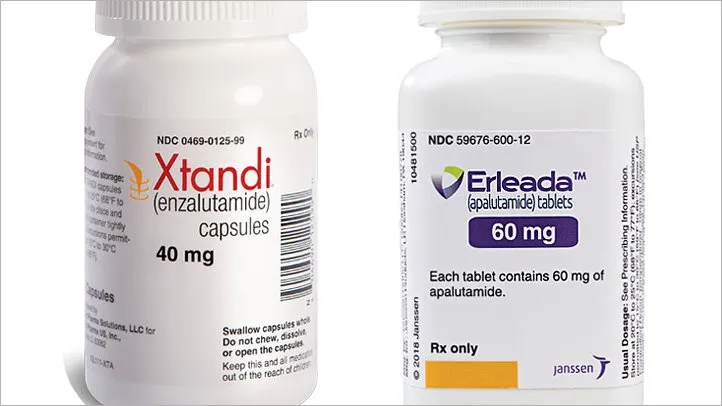
If you are looking for the short version before we dive into the details, here it is: treatment usually starts with continuing ADT, then deciding whether to add a next-generation androgen receptor inhibitor such as apalutamide, enzalutamide, or darolutamide. The choice depends on how fast the PSA is rising, the patient’s age and overall health, medication interactions, risk of falls or fatigue, and personal preferences about side effects and daily routine.
What nmCRPC Actually Means
To understand treatment, it helps to understand the label. Prostate cancer is called castration-resistant when it continues to grow despite very low testosterone levels. It is called nonmetastatic when standard imaging, traditionally CT scans, MRI, or bone scans, does not show spread to distant sites.
That definition is important, but it also has a catch. Newer imaging, especially PSMA PET, can sometimes detect metastatic spots that older scans miss. So a man may be “nonmetastatic” on conventional imaging but have tiny lesions identified on more sensitive imaging. That does not make the diagnosis meaningless. It just means the staging conversation is evolving, and treatment decisions now depend not only on the cancer itself but also on which imaging tools are being used.
The key risk marker in nmCRPC is PSA doubling time, often shortened to PSADT. This measures how quickly PSA is rising. A shorter doubling time generally signals a higher risk that the cancer will spread. In current practice, a PSADT of 10 months or less is the big red flag that often pushes doctors toward adding treatment beyond ADT alone.
The Core Rule: Don’t Stop ADT
One of the most important principles in nmCRPC treatment is also one of the easiest to misunderstand: even when the cancer becomes castration-resistant, ADT usually continues. That may sound counterintuitive. If the disease is resistant, why keep the therapy going?
Because resistance does not mean androgens no longer matter at all. Prostate cancer cells often remain dependent on androgen receptor signaling, even after they have learned how to survive in a low-testosterone environment. Stopping ADT can remove a layer of pressure the cancer still feels. In practice, that means men who are on a GnRH agonist or antagonist usually stay on it, unless they have already had surgical castration.
Think of ADT as the foundation, not the whole house. Once nmCRPC appears, the discussion is usually about what to build on top of that foundation, not whether to bulldoze it.
When Observation May Still Be Reasonable
Not every patient with nmCRPC needs an immediate escalation on day one. For men with a longer PSA doubling time, especially those with major competing health issues or a strong preference to avoid added side effects, careful observation with continued ADT can still be reasonable. This does not mean doing nothing. It means close follow-up with serial PSA testing, symptom review, and repeat imaging.
Observation makes the most sense when the cancer appears biologically quieter. A PSA that is rising slowly is different from a PSA that looks like it drank three espressos and sprinted uphill. The treatment plan should match the pace of the disease.
Standard Treatment Options for High-Risk nmCRPC
For men with high-risk nmCRPC, particularly those with a PSADT of 10 months or less, the modern standard is to add a next-generation androgen receptor inhibitor to continued ADT. Three medicines dominate this space: apalutamide, enzalutamide, and darolutamide.
Apalutamide
Apalutamide was one of the drugs that changed the treatment landscape for nmCRPC. It works by blocking androgen receptor signaling more completely than older antiandrogens. In the landmark SPARTAN trial, apalutamide significantly delayed the development of metastases and later showed an overall survival benefit as well.
What makes apalutamide attractive is its strong evidence base and its once-daily dosing. What makes clinicians pause is the side-effect profile in some patients. Fatigue, rash, falls, fractures, and thyroid-related issues may become part of the conversation, especially in older patients or in men who already have mobility or bone-health concerns.
Enzalutamide
Enzalutamide is another major option and has similarly strong evidence in high-risk nmCRPC. In the PROSPER trial, it substantially prolonged metastasis-free survival and later improved overall survival. It is also given once daily, which is convenient and easy to explain without needing a whiteboard and a color-coded schedule.
That said, enzalutamide can be a heavier lift for some patients. Fatigue can be prominent, and clinicians also pay attention to blood pressure, fall risk, cognitive effects, and drug interactions. For men taking many medications already, this can matter more than it first appears.
Darolutamide
Darolutamide quickly became a favorite in many clinics for a simple reason: it is effective, and its tolerability profile is often easier on patients. In the ARAMIS trial, darolutamide delayed metastasis and improved survival, while showing relatively low rates of central nervous system side effects compared with what clinicians had seen in this treatment class overall.
The tradeoff is practical rather than dramatic: darolutamide is taken twice daily with food. For some people, that is no problem. For others, especially anyone who already forgets where the reading glasses went while they are still on his face, once-daily treatment may feel easier. Still, when fall risk, fatigue, mental sharpness, or polypharmacy are major concerns, darolutamide often rises to the top of the list.
How Doctors Choose Between Apalutamide, Enzalutamide, and Darolutamide
There is no universal best drug for every patient. There is only the best fit for the patient sitting in front of the doctor. Treatment choice usually comes down to a handful of practical questions:
How fast is the PSA rising?
A rapid PSA doubling time supports acting sooner rather than later. If the cancer is showing aggressive kinetics, most clinicians lean toward adding one of the approved androgen receptor inhibitors instead of observation.
What is the patient’s daily life like?
An active man who drives often, works, or cares for a spouse may prioritize mental clarity and stability over almost everything else. Another patient may care most about keeping the dosing schedule simple. These are not “soft” issues. They are part of the treatment.
What other health conditions are in the picture?
History of falls, cardiovascular disease, seizures, uncontrolled hypertension, osteoporosis, frailty, and medication burden can all shape the decision. nmCRPC treatment is never only about the tumor. It is also about the body carrying it.
What side effects are most unacceptable to the patient?
Some men say, “I can handle fatigue, but don’t mess with my balance.” Others say, “I travel and need the easiest schedule possible.” Shared decision-making matters here because the best treatment is the one a patient can realistically stay on.
Monitoring During Treatment
Once treatment begins, follow-up does not stop at “PSA down, everybody high-five.” Monitoring is a real part of the plan. Doctors usually check PSA every 3 to 6 months, calculate or reassess PSA doubling time, and use imaging every 6 to 12 months, or sooner if symptoms change.
Monitoring also includes the less glamorous but equally important pieces: blood pressure, fatigue, balance, falls, bone health, rashes, laboratory abnormalities, and the patient’s own report of how he feels day to day. Quality of life is not an optional side quest. It is one of the main endpoints that patients actually live with.
With newer imaging such as PSMA PET, some patients thought to have nmCRPC may be restaged as having metastatic disease earlier than expected. When that happens, the treatment plan may shift. That does not mean the earlier treatment was wrong. It means the picture became clearer.
Supportive Care Matters More Than People Expect
Supportive care in nmCRPC is not decorative. It is part of good oncology. ADT and androgen receptor inhibitors can affect bone density, muscle mass, energy, sexual function, mood, and metabolic health. If treatment is the headline, supportive care is the part that keeps the rest of the article from falling apart.
That usually means paying attention to:
- Bone health: bone density testing, exercise, calcium and vitamin D when appropriate, and treatment for osteoporosis if needed.
- Fall prevention: especially in older adults or anyone with gait instability.
- Exercise: resistance training and walking can help with fatigue, muscle loss, and mood.
- Cardiometabolic health: blood pressure, weight, lipids, and diabetes risk should not be ignored.
- Sexual health and mental health: these are often affected and too often under-discussed.
Good supportive care makes it more likely a patient can stay on treatment, function independently, and feel like himself for longer. That is not a small win. That is the point.
What Usually Is Not Standard in nmCRPC
One area that can confuse patients is hearing about chemotherapy, immunotherapy, PARP inhibitors, or radioligand therapy and wondering whether they should be getting those now. In general, systemic chemotherapy and immunotherapy are not routine standard treatment for nmCRPC outside clinical trials. Those approaches are more commonly used later, especially once the disease becomes metastatic or if biomarker-driven options enter the picture.
Clinical trials, however, absolutely deserve attention. They may explore earlier use of imaging, treatment sequencing, new drug combinations, or approaches for men with molecular features that make the cancer behave differently. When a patient is eligible and interested, a clinical trial can be a smart move rather than a last resort.
What Patients Often Want to Know Most
Is nmCRPC curable?
With current systemic therapy, the usual goal is not cure. The goal is to delay metastasis, extend survival, and protect quality of life. That may sound less dramatic than a cure, but it is clinically meaningful and often life-shaping.
How long do these treatments work?
There is no single answer. Some men do well for years. Others progress sooner. PSA kinetics, imaging results, prior treatments, underlying health, and tumor biology all matter. This is one reason monitoring is built into the treatment plan.
Should one drug always be first?
No. All three approved androgen receptor inhibitors are evidence-based choices for high-risk nmCRPC. The “best” one depends on the patient’s risks, goals, and tolerance.
Experiences Related to Treatment for Nonmetastatic Castration-Resistant Prostate Cancer
The reflections below are composite, non-identifying examples based on common clinical patterns and patient concerns. They are included to make the subject more relatable and to show what treatment can feel like beyond the scan report.
For many men, the first experience of nmCRPC is confusion rather than pain. They hear that the cancer is “not metastatic,” which sounds good, and then hear “castration-resistant,” which sounds very much not good. That emotional whiplash is common. Patients often say the hardest part at first is trying to understand how both statements can be true at the same time. A rising PSA can feel abstract, but it carries a lot of psychological weight. Numbers on a lab sheet suddenly start running the household mood.
Another common experience is the shift from a relatively stable routine on ADT to a more active treatment phase. A man who had settled into the rhythm of regular injections and PSA checks may suddenly need to choose among new oral medications with different side-effect profiles. That choice can feel surprisingly personal. One patient may worry most about staying mentally sharp enough to work. Another may care more about avoiding falls because he lives alone. Another may just want the simplest pill schedule possible. In clinic, these are not trivial preferences; they often drive the final decision.
Fatigue is probably one of the most talked-about experiences once treatment intensifies. Patients describe it less as sleepiness and more as a dull reduction in horsepower. They can still do things, but the engine does not rev the same way. Some men notice they plan errands more carefully, take more breaks, or stop pretending that mowing the yard is “light activity.” The better experiences tend to happen when fatigue is addressed early with exercise, sleep habits, medication review, and honest expectations rather than stoic silence.
There is also the experience of scan anxiety, sometimes called “scanxiety,” which deserves its own zip code. Even when treatment is going well, follow-up imaging can feel like waiting for a plot twist nobody asked for. Men often say the days before a scan are harder than the scan itself. A good care team helps by explaining what the plan will be if the scan is stable, if it is unclear, or if it shows progression. Knowing the next step makes uncertainty easier to carry.
Many patients also talk about identity. nmCRPC treatment can affect libido, muscle mass, stamina, mood, and independence. For some, the hardest part is not the pill bottle but the feeling that their body has become unfamiliar. The most encouraging stories usually involve care teams that treat those changes as real medical issues, not as background noise. Physical therapy, nutrition counseling, sexual health support, bone-health planning, and mental health care can make a big difference.
Finally, there is the experience of learning that success in nmCRPC is often measured in delay: delaying spread, delaying symptoms, delaying the need for more intensive treatment. At first, some patients find that anticlimactic. Over time, many realize that delay is not a consolation prize. Delay can mean more years of driving, traveling, working, gardening, grandparenting, and living with fewer cancer-related limitations. In other words, treatment is not just buying time on a calendar. It is protecting the kind of time that still feels like life.
Conclusion
Treatment for nonmetastatic castration-resistant prostate cancer has changed dramatically in the last several years. The old strategy of continuing ADT and waiting for obvious spread has largely been replaced by a more proactive, risk-based approach. For men with high-risk disease, adding apalutamide, enzalutamide, or darolutamide to ongoing ADT can delay metastasis and improve survival. For lower-risk cases, careful observation with continued ADT may still make sense.
The smartest treatment plan is not the flashiest one. It is the one that matches the pace of the cancer, the patient’s health, and the patient’s goals. In nmCRPC, the best care is both evidence-based and human-sized: treat the biology aggressively enough, protect quality of life relentlessly, and keep adjusting as the story changes.