

Every food city has that one restaurant people use as a shortcut in conversation. Not because the comparison is perfectly precise, but because it gets everyone to nod at the same time. In Napa, that shorthand is The French Laundry: the polished temple, the benchmark, the place that turned dinner into a luxury ritual with a pulse. In Tribeca, when people ask, “What’s the closest thing to that kind of experience?” one answer keeps surfacing: Atera.
Now, let’s be clear before the tasting spoons come out. Atera is not literally New York’s version of The French Laundry, and calling any restaurant “the next” or “the neighborhood’s” anything is usually how nuance gets tossed into the stockpot. But the comparison sticks for a reason. Atera delivers the kind of experience diners usually mean when they invoke The French Laundry: obsessive technique, serious hospitality, tiny details with giant ambitions, and a meal that behaves less like dinner and more like a carefully rehearsed performance with butter.
So is Atera really Tribeca’s French Laundry? Kind of. But the better answer is more interesting: Atera is Tribeca’s answer to the same question The French Laundry once answered for Napa Valley. What should American fine dining feel like when a chef decides that “good enough” is an insult?
Why the comparison makes sense
The French Laundry has long represented a certain ideal in American dining: precision without chaos, luxury without shouting, and technique so polished it almost dares you to call it effortless. Its reputation was built on exacting execution, iconic tasting menus, and a sense that every fork placement has had a performance review. For decades, it has functioned as a benchmark restaurant, the kind people mention when they want to talk about craft, standards, and culinary mythology without using the phrase “culinary mythology” out loud.
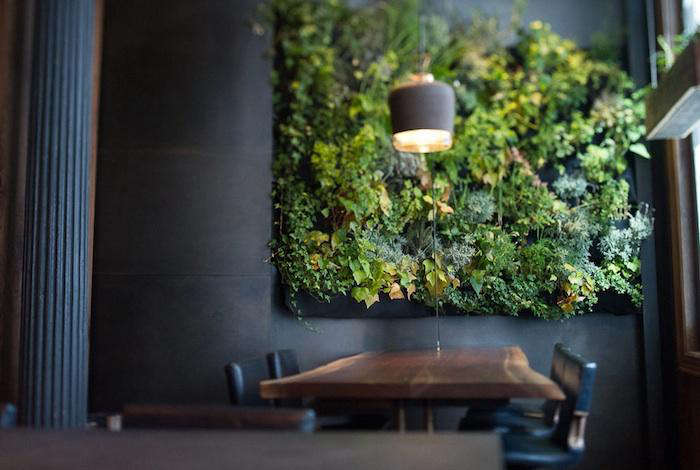
Atera, in Tribeca, belongs to that same rarefied conversation because it also sells more than food. It sells immersion. The room is intimate. The counter arrangement puts the kitchen in full view. The menu evolves seasonally. The tone is refined, but not stiff in that old-school “you are now entering a cathedral of asparagus foam” sort of way. It is high-end tasting-menu dining designed for a modern city audience that wants rigor and atmosphere, but would rather not feel as if it accidentally wandered into a museum gift shop after dark.
That is why the nickname works. Both restaurants stand for discipline, choreography, and culinary ambition. Both ask diners to surrender to a guided experience rather than simply order a main course and negotiate with their own indecision. Both are places where the meal is structured like an argument: this is why we chose this ingredient, this texture, this sequence, this temperature, this aroma, and yes, we absolutely expect you to notice.
Luxury, but make it geographically specific
The French Laundry feels inseparable from Napa. That matters. Its identity is tied to agricultural abundance, California light, gardens, and the romance of destination dining. You go there partly to eat and partly to feel that you have entered a very specific American dream in which the produce is flawless and the wine list probably knows more than you do.
Atera, by contrast, is unmistakably Tribeca. It is urban, discreet, moody, and a little harder to read from the sidewalk. It doesn’t radiate vineyard serenity. It radiates downtown confidence. You are not escaping the city so much as stepping into one of its most controlled, intimate pockets of sensory excess. That shift in setting changes the emotional texture of the experience. The French Laundry invites reverence. Atera invites concentration.
Atera’s strongest case for the nickname
If you want to understand why people compare Atera to The French Laundry, start with the fundamentals. Atera is a tasting-menu restaurant built around a chef-driven point of view. That sounds simple until you remember how many places confuse “chef-driven” with “there is tweezing.” At Atera, the cooking is built around seasonal produce, close attention to aroma and texture, and a style often described as sensory or immersive. In other words, the restaurant is not merely trying to feed you. It is trying to tune you.
That ambition is the real point of comparison. The French Laundry became iconic because it helped define a mode of American fine dining that fused exacting French technique with a distinctly American sense of place and personality. Atera operates in a later chapter of that same story. It reflects a world shaped by Nordic influence, contemporary tasting-menu culture, open-kitchen intimacy, and diners who expect originality rather than just ceremony.
In practical terms, that means Atera succeeds where many expensive restaurants stumble: it gives luxury a perspective. It does not just offer rarity, polish, or price. It offers a point of view. The menu is not a random parade of expensive nouns. It feels edited, intentional, and sensitive to pacing. That matters, because the difference between a transcendent tasting menu and a very elegant endurance sport is usually editing.
The room does a lot of the storytelling
Atera’s counter-facing format is a major reason the comparison works. The French Laundry is legendary for service and ritual, but it still belongs to a more classic model of dining-room grandeur. Atera feels more immediate. Diners are close to the action. The kitchen is not hidden behind swinging doors like a magician protecting trade secrets. It is part of the show.
This setup changes the psychology of fine dining. Instead of feeling separated from the labor that produces luxury, guests see the work. Plates appear not as mysterious miracles, but as the result of extraordinary control. That transparency can make the evening feel more alive, more contemporary, and frankly, a little more nerve-racking in the best way. When you can see the precision, you appreciate it differently.
That is one of Atera’s biggest advantages over many legacy fine-dining rooms. It can feel less ceremonial and more cinematic. Not casual, exactly. Nobody is showing up here because they “just felt snacky.” But the energy is less about preserving tradition and more about building a mood. In a neighborhood like Tribeca, where discretion often reads as a form of status, that works beautifully.
Nature without cosplay
Atera’s identity has long been linked to ingredients, seasonality, and a nature-forward approach that avoids becoming rustic theater. This is important. Plenty of restaurants use the language of forests, herbs, smoke, roots, and foraging as if diners should award extra points for sounding like a woodland poem. Atera tends to be more disciplined than that. The references to nature are part of the cuisine’s architecture, not just its marketing vocabulary.
That also connects it to The French Laundry, which has always been grounded in product quality and the idea that ingredient sourcing is not a side note but part of the restaurant’s moral and aesthetic logic. Great fine dining often comes down to this simple principle: the ingredient should feel as if it had no choice but to end up in exactly this dish. Atera understands that. The French Laundry built a dynasty on it.
Where the comparison breaks down
For all the similarities, calling Atera “Tribeca’s French Laundry” can flatten what makes both restaurants distinct. The French Laundry is not just a restaurant; it is a monument in the American fine-dining imagination. It carries decades of symbolism, influence, pilgrimage value, cookbook legacy, chef mythology, and industry prestige. Eating there is not only about what is on the plate. It is about participating in a story diners already know.
Atera does not operate on that scale, and honestly, that is part of its appeal. It feels more private, more niche, and less burdened by the weight of being a national institution. It is not trying to reenact a classic. It is trying to stage an experience that feels current. That difference matters because it affects how diners approach the meal. At The French Laundry, many people arrive with expectations stacked to the ceiling. At Atera, the relationship can feel more immediate and less museum-like.
There is also a difference in tone. The French Laundry, at its best, is about grandeur made graceful. Atera is about immersion made intimate. One is a destination restaurant that helped define a genre. The other is a downtown counter that refines and updates it. That makes Atera cooler in the literal urban sense, but not necessarily more important in the historical sense.
Benchmark versus interpretation
The French Laundry is often discussed as the benchmark, even by critics who now question whether the old magic lands as forcefully as it once did. That is the burden of greatness: eventually the thing you pioneered becomes the style everyone else learns to remix. Recent critical conversations around Keller’s flagship restaurants have reflected exactly that tension. They still command enormous respect, yet they now exist in a dining world they helped create, one crowded with restaurants offering extraordinary tasting menus, sharper novelty, and sometimes a looser, more contemporary energy.
Atera benefits from entering that conversation later. It does not need to invent the modern American tasting menu from scratch. It can adapt the language of luxury for diners who want excellence without the feeling of being trapped inside a velvet-lined time capsule. It is less origin story, more response essay.
What Tribeca adds to the equation
Neighborhood matters more than restaurant people sometimes admit. Tribeca is one of those New York neighborhoods where understatement is often the loudest form of wealth. The architecture is confident, the pace is controlled, and the dining culture tends to reward places that feel serious without feeling eager for your approval. Atera fits that environment almost too perfectly. It is special-occasion dining for people who do not need the occasion announced with fireworks.
That context helps explain why the French Laundry comparison lands here and not somewhere else. In another neighborhood, Atera might simply read as a great tasting-menu counter. In Tribeca, it feels like part of a larger luxury ecosystem: design-conscious, discreet, expensive, exacting, and a little bit smug in the way only the best downtown places are allowed to be. I say that affectionately. Smugness, when backed by competence, is basically one of New York’s unofficial sauces.
Tribeca also attracts a diner who often wants storytelling without kitsch. That is a sweet spot Atera knows how to hit. It can be sensory, dramatic, and ingredient-obsessed without descending into edible performance art for people who clap when smoke comes out of a cloche. The restaurant trusts that the audience is paying attention. That confidence is its own form of luxury.
Why this matters for modern fine dining
The bigger question behind “Tribeca’s French Laundry?” is not just about one restaurant. It is about what diners want from elite restaurants now. The old model of fine dining leaned heavily on hierarchy, distance, and solemnity. The newer model still values rigor, but often wants more intimacy, more transparency, and more personality. Atera sits comfortably in that newer model while keeping the standards high enough to earn the comparison.
That is why the nickname is useful even if it is imperfect. It tells you that Atera belongs in the American upper tier of tasting-menu destinations. It tells you that dinner here is not simply a meal, but an orchestrated event. And it tells you that if The French Laundry represents one of the most influential blueprints for luxurious American dining, Atera represents how that blueprint gets translated for downtown Manhattan in the 2020s.
So, is Atera really Tribeca’s French Laundry?
Yes, if by that you mean it is one of Tribeca’s clearest expressions of American fine-dining ambition: serious food, deeply intentional service, a room built around concentration, and a tasting menu that aims for memory rather than mere satisfaction.
No, if by that you mean it is a clone, a direct rival, or a carbon copy in a darker outfit. It is not. Atera is smaller in legend, more contemporary in spirit, and more urban in mood. It is less about reinforcing an inherited canon and more about proving that high-end dining can still feel intimate, current, and sharply alive.
The better conclusion is this: Atera is not Tribeca’s imitation of The French Laundry. It is Tribeca’s equivalent expression of what a luxury tasting-menu restaurant can be when it has conviction, discipline, and no interest in being ordinary. In a city overloaded with hype, that alone is worth paying attention to. Even if your credit card briefly faints.
The experience of “Tribeca’s French Laundry”: what a night like this actually feels like
To understand the appeal of the phrase, imagine the evening not as a list of dishes but as a sequence of sensations. You arrive on Worth Street and there is no giant neon announcement that you are about to spend serious money. That is part of the charm. Places like this do not scream; they smirk. Inside, the room narrows your focus almost immediately. The lighting is controlled, the counter arrangement tightens the atmosphere, and the kitchen becomes less a back-of-house operation than the center of gravity.
The first few minutes often tell you everything. You notice the calm, the pacing, the way staff members move with practiced ease that does not look robotic. Nobody appears to be rushing, which is impressive because somebody is absolutely rushing somewhere. Fine dining at this level is really the art of making intense labor look serene. That illusion is one reason people compare restaurants like Atera to The French Laundry in the first place. Guests are not just buying ingredients. They are buying the feeling that every variable has been anticipated before they even sit down.
Then the meal begins to build. A tasting-menu restaurant like this does not think in individual plates the way a neighborhood brasserie does. It thinks in rhythm. Something delicate arrives first, almost like a handshake. Then something richer. Then a dish built around temperature or aroma. Then a course that resets your attention. Then another that deepens it. Before long, you are no longer judging each bite like a courtroom exhibit. You are experiencing the menu as a narrative. The smartest restaurants understand that memory is often about sequence, not just flavor.
The counter also changes how diners process luxury. You can watch hands at work, see finishing touches, notice the absence of wasted motion. That visibility makes the meal feel collaborative, even though the kitchen is clearly in charge and you are mostly there to say “wow” in different tones. It creates intimacy without sacrificing precision. That balance is hard to achieve. Too much performance and the room feels gimmicky. Too much restraint and it feels clinical. The best nights in places like Atera live right in the middle, where wonder and discipline shake hands.
There is also the emotional shift that happens halfway through a meal like this. At first, diners arrive ready to evaluate. Is it worth it? Is it too precious? Is everyone here pretending to enjoy a leaf? Then, if the restaurant is doing its job, the skepticism fades and curiosity takes over. You start noticing scents, textures, transitions, even silences. You pay attention to how the beverages echo or contrast with the food. You notice how one savory course seems to make the next one brighter, or how dessert arrives not as sugar therapy but as a change in tempo.
That is when the “French Laundry” comparison makes emotional sense. It is not just about luxury. It is about control in the service of delight. It is about the rare pleasure of surrendering to a meal designed by people who have thought harder about your next two and a half hours than most of us think about an entire weeknight dinner plan. By the time you leave, the lasting memory is often not one single bite, but the total atmosphere of care, craft, and concentration. That is the experience people are really naming when they ask whether Atera is Tribeca’s French Laundry. They are asking whether this meal can still make the world feel briefly, gloriously smaller. At its best, yes. It can.
Conclusion
“Tribeca’s French Laundry?” turns out to be a smart question, even if the literal answer is no. Atera earns the comparison because it captures the seriousness, precision, and occasion-driven magic diners associate with America’s most famous tasting-menu institutions. But it also escapes the shadow of that comparison by feeling entirely of its place: intimate, urban, and modern in a way only a downtown New York restaurant can be.
If The French Laundry helped define what elite American dining could become, Atera shows what that ambition looks like after being filtered through contemporary Tribeca. Less pilgrimage, more immersion. Less mythology, more immediacy. Still luxurious. Still exacting. Still memorable. Just with a little more city edge and a little less vineyard sunlight.