

Measles was once considered a public health problem America had firmly pushed into the history books. Now, after record-setting case totals, prolonged outbreaks, and falling vaccination rates, the virus is behaving less like an occasional imported nuisance and more like an unwanted houseguest who has discovered the spare bedroom.
America Has Crossed a Sobering Measles Milestone
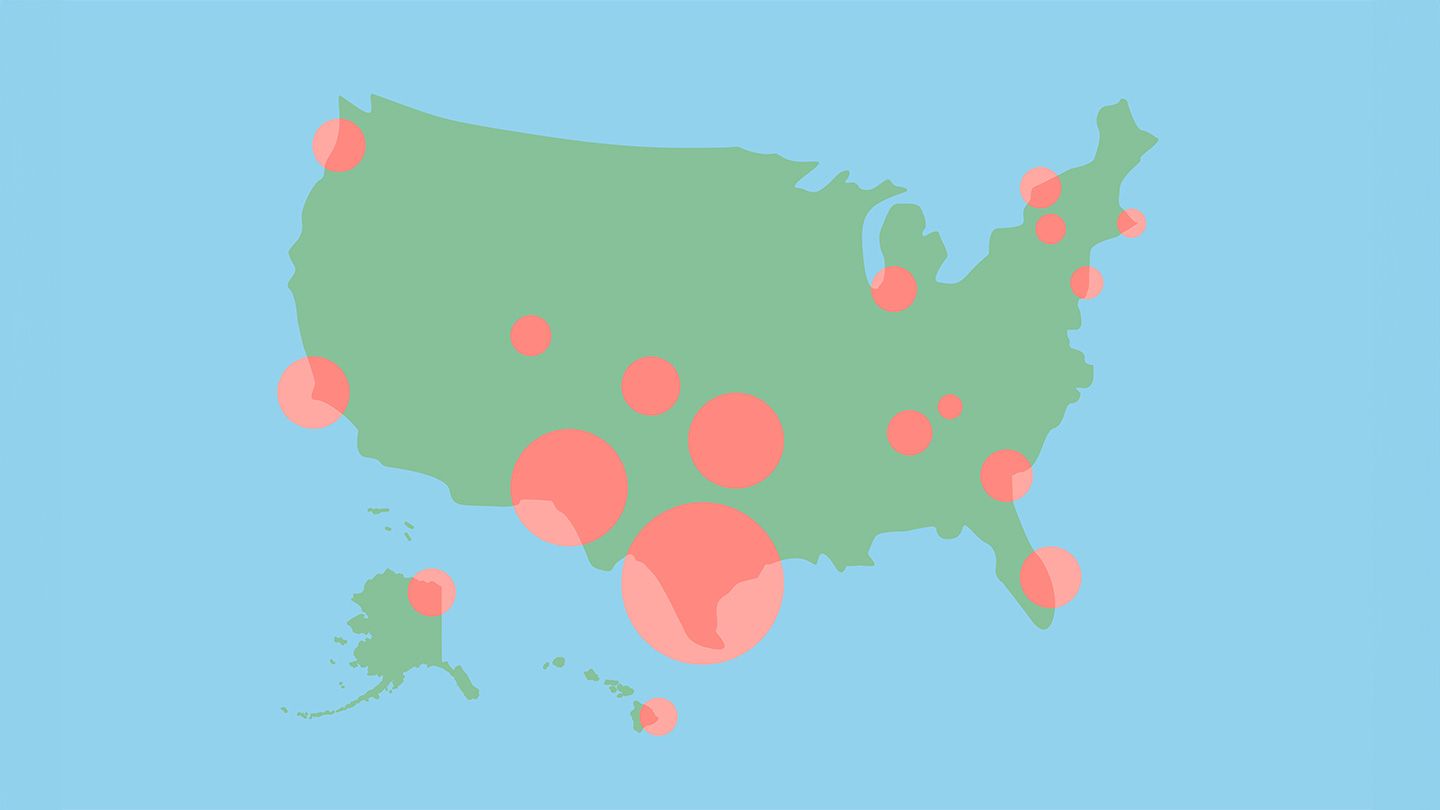
As of July 23, 2026, the United States had reported 2,318 confirmed measles cases across 45 reporting jurisdictions. That was already more than the 2,289 cases recorded during all of 2025 and represented the country’s highest annual total since 1991. Federal data also showed 35 newly reported outbreaks in 2026, with approximately 93% of confirmed cases connected to an outbreak.
These numbers matter because the United States declared measles eliminated in 2000. Elimination did not mean the virus had vanished from Earth or that an imported case could never land at an American airport. It meant measles was no longer spreading continuously within the country.
For years, imported cases usually reached communities with enough immunity to stop transmission quickly. In the current U.S. measles epidemic, however, the virus is finding larger pockets of people who are unvaccinated, undervaccinated, or uncertain about their vaccination status. Once measles enters one of those pockets, it can move with astonishing efficiency.
Up to nine out of 10 susceptible people who have close contact with an infected person may become infected. The virus can also remain infectious in the air for as long as two hours after the patient has left the room. Measles, in other words, does not require a handshake, a shared fork, or even especially bad luck. Sometimes sharing air is enough.
Does “Here to Stay” Mean Measles Is Endemic Again?
The words elimination, eradication, outbreak, and endemic are often tossed into news stories as though they are interchangeable. They are not.
Elimination Is Not the Same as Eradication
Eradication means a disease has been reduced to zero worldwide. Smallpox is the famous example. Measles has not been eradicated and continues to circulate internationally, so travel-related cases can enter the United States even when domestic elimination is maintained.
Measles elimination generally means there has been no continuous local transmission for at least 12 months within a defined geographic area while an effective surveillance system remains in place. A country may therefore experience several imported cases and limited outbreaks without automatically losing elimination status.
The Twelve-Month Question
The concern now is whether recent U.S. transmission chains have continued long enoughand are sufficiently connected epidemiologically or geneticallyto qualify as reestablished endemic transmission. The Pan American Health Organization postponed its formal review of the United States and Mexico until November 2026 while officials evaluate surveillance, outbreak, and genomic data.
Losing elimination status would be a major symbolic and public health setback, but it would not mean surrender is inevitable. Countries can interrupt transmission and regain the designation. The more important issue is what happens in everyday life: whether families must repeatedly worry about school exposures, whether health departments remain stuck in permanent emergency mode, and whether infants too young for routine vaccination face growing danger.
Thus, “here to stay” should not be interpreted as a scientific declaration that measles can never again be controlled. It means recurring outbreaks could become America’s new normal unless immunity gaps are repaired.
Why Measles Has Made Such a Powerful Comeback
Vaccination Coverage Has Fallen Below the Safety Target
Measles is so contagious that communities generally need vaccination coverage of about 95% to maintain strong community protection. National MMR coverage among kindergartners fell from 95.2% during the 2019–2020 school year to 92.5% during 2024–2025. The Centers for Disease Control and Prevention estimated that approximately 286,000 kindergartners were left at risk during that school year.
A national average can also hide the most dangerous gaps. A state might report respectable overall coverage while individual counties, schools, religious communities, or social networks have much lower rates. Viruses do not calculate statewide averages before choosing where to spread. They follow contact patterns.
By the 2024–2025 school year, 39 states had kindergarten MMR coverage below the 95% target, and 16 states reported coverage below 90%. Those figures create more opportunities for an imported infection to ignite a large cluster rather than fizzling out after one or two cases.
Global Measles Activity Keeps Supplying New Sparks
Measles remains common in many parts of the world, and international outbreaks have increased. An unprotected traveler can become infected abroad, return home before symptoms are obvious, and expose family members, airport passengers, clinic patients, classmates, or members of a faith community.
The first symptoms often appear seven to 14 days after exposure. That delay gives the virus time to travel quietly. A person may return from vacation, unpack, attend work, visit relatives, and sit through a crowded waiting room before the classic rash provides a more recognizable warning.
Vaccine Hesitancy Is Only Part of the Story
Misinformation has unquestionably damaged trust in routine childhood vaccination. False claims about the MMR vaccine continue circulating even though extensive research has found no credible connection between MMR vaccination and autism.
Still, labeling every unvaccinated family as stubborn or anti-science oversimplifies the problem. Some children miss doses because their families lack reliable transportation, paid time off, health care access, accurate records, or a convenient clinic. Others fall behind after moving, changing insurance, or missing routine appointments during periods of health system disruption.
Successful outbreak control therefore requires more than scolding people on social media, an activity that has never been known for its healing properties. Communities need trusted local messengers, mobile clinics, flexible vaccination hours, multilingual information, and respectful conversations with clinicians.
Measles Is Much More Than a Rash
Measles usually begins with high fever, cough, runny nose, fatigue, and red or watery eyes. Tiny white Koplik spots may appear inside the mouth. Several days later, a blotchy rash typically starts around the face or hairline and spreads downward over the body.
The illness may sound like an unpleasant childhood infection that ends after a week under a blanket. That description leaves out the part where measles can attack the lungs, brain, immune system, and pregnancy.
About one in five unvaccinated people in the United States who develop measles may require hospitalization. Up to one in 20 children with measles develops pneumonia, and approximately one in 1,000 patients develops encephalitis, or brain swelling. Measles during pregnancy can increase the risk of premature delivery and low birth weight.
A rare but fatal neurological disorder called subacute sclerosing panencephalitis can emerge seven to 10 years after the original infection, even after a patient appeared to recover completely.
The 2025 West Texas outbreak demonstrated how serious the disease can become. It eventually involved 762 confirmed cases, 99 hospitalizations, and two deaths. An early analysis of hospitalized patients found frequent pneumonia, dehydration, hypoxia, supplemental oxygen use, and intensive care admissions. Most hospitalized patients in that initial group were children, and none had documented measles vaccination.
The MMR Vaccine Remains the Best Defense
The measles, mumps, and rubella vaccine is highly effective. One properly administered dose is approximately 93% effective at preventing measles, while two doses are about 97% effective. Breakthrough infections can occur, but vaccinated people are far less likely to become infected and generally face a lower risk of severe disease.
Routine Childhood Recommendations
Under routine recommendations, children receive their first MMR dose at 12 through 15 months and the second at 4 through 6 years. During an outbreak, health authorities may recommend an earlier second dose as long as the required interval after the first dose has passed.
Infants between 6 and 11 months may receive an early MMR dose before international travel or when local public health officials recommend it because of an outbreak. That early dose does not replace the routine doses given after the first birthday.
What Adults Should Know
Adults without evidence of immunity may need one or two MMR doses, depending on age and risk. International travelers, health care personnel, college students, and people identified as being at increased risk during an outbreak may need documentation of two doses.
Most adults with documented age-appropriate vaccination do not require a routine extra booster simply because cases are rising. Anyone unsure about vaccination records should contact a health care professional or local health department rather than relying on childhood memories such as, “I definitely got some shots in a gymnasium once.”
Because MMR is a live attenuated vaccine, it is not appropriate for everyone, including certain pregnant or severely immunocompromised people. Individual medical guidance is important.
What to Do After a Possible Measles Exposure
Do not walk unannounced into a crowded medical waiting room. Call the clinic, urgent care center, emergency department, or local health department before arriving. Staff may arrange a separate entrance, outdoor testing, immediate masking, or an airborne isolation room.
People without evidence of immunity may qualify for post-exposure protection. MMR vaccine may help when administered within 72 hours of initial exposure. Immune globulin may be recommended for certain high-risk people within six days of exposure.
Anyone who develops fever, cough, runny nose, red eyes, or a spreading rash after a known exposure should remain away from school, work, public transportation, and shared indoor spaces while obtaining professional advice. Measles patients are generally contagious from four days before the rash appears through four days afterward.
There is no FDA-approved antiviral treatment that eliminates measles. Care is mainly supportive and focuses on hydration, fever management, respiratory support, and treatment of complications. Vitamin A may be used under medical supervision for children with measles, but high-dose vitamin A is not a substitute for vaccination and can be toxic when used incorrectly.
How Communities Can Keep Measles From Becoming Permanent
The most effective strategy is not mysterious: find immunity gaps and close them before the virus does. Schools and pediatric practices can identify children who missed doses. Health departments can direct mobile clinics toward neighborhoods with low coverage. Hospitals can strengthen screening and airborne infection procedures. Community leaders can communicate in the languages and settings where residents feel comfortable asking questions.
New Mexico’s response to its 2025 outbreak offers a useful example. State officials combined public messaging, a centralized information page, a telephone helpline, mobile vaccination services, and broader vaccine access. MMR doses administered statewide increased by 55% during the response period compared with the same months of the previous year, and the outbreak was eventually declared over.
CDC modeling related to the South Carolina outbreak also illustrates the power of immunity. In simulated communities with coverage below 90%, sustained transmission and large outbreaks were considerably more likely. As vaccination coverage increased, the probability of an outbreak involving more than 100 cases dropped sharply.
The lesson is encouraging: measles may be extraordinarily contagious, but it is not invincible. High vaccination coverage repeatedly turns a fast-moving epidemic into a dead end.
What Recent Outbreak Experience Teaches Families and Communities
The following experience-based scenario is a composite of recurring patterns documented in U.S. outbreak reports. It does not describe one identifiable patient, family, school, or town.
A typical outbreak does not begin with sirens or a dramatic announcement. It may start with a child who has a fever and cough after a family trip. The symptoms initially resemble a cold, influenza, or another routine childhood virus. The child stays home for a day, improves slightly, then attends a family gathering. Nobody sees a rash yet, so nobody thinks “measles.”
Several days later, the rash appears. The parents take the child to a clinic without calling ahead. During the visit, the child passes through the lobby, sits near an infant, shares air with an older adult receiving immune-suppressing treatment, and encounters staff members whose vaccination records need verification.
Once laboratory testing confirms measles, the public health investigation becomes enormous. Nurses and epidemiologists reconstruct the patient’s movements during the infectious period. Schools review attendance records. Clinics examine appointment logs. Airlines, churches, stores, camps, and sports programs may need to notify people who were present during specific time windows.
Families who were exposed begin searching for vaccine records. Some parents discover that their children are fully protected. Others learn that a second dose was postponed and forgotten. A pregnant employee cannot receive MMR and must ask whether she has laboratory evidence of immunity. Parents of a five-month-old infant realize their baby is too young for routine vaccination and depends heavily on the immunity of everyone else.
The practical burden quickly expands beyond the confirmed patients. Exposed people without evidence of immunity may be asked to quarantine. Parents miss work. Children miss school. A small business loses employees for days or weeks. Health department personnel spend hundreds of hours making calls, organizing testing, and locating vaccine doses. Hospital rooms require special airborne precautions. One infection can create a community-wide scheduling crisis with a medical emergency attached.
Then come the difficult conversations. A parent who previously declined MMR may feel frightened, guilty, or defensive. A productive clinician does not begin with humiliation. The clinician listens, explains the child’s actual risk, answers questions about vaccine safety, and makes vaccination easy to obtain. Trust is rarely rebuilt by winning an argument; it is rebuilt by showing up consistently with reliable information.
Communities also learn that speed matters. When clinics alert public health officials early, potentially exposed people can receive timely post-exposure protection. When schools maintain accurate records, vulnerable students are identified faster. When local leaders share clear information without exaggeration, rumors have less space to grow.
The final lesson arrives after case numbers decline: outbreak preparedness cannot be packed away until the next emergency. Vaccination catch-up, staff training, record checking, and community outreach must continue when measles is no longer on the evening news. Otherwise, the same immunity gaps remain open, quietly waiting for the next imported case to walk through them.
Conclusion: Measles Does Not Have to Be America’s New Normal
The current U.S. measles epidemic is not simply the result of a stronger virus or an unlucky year. It reflects a collision between rising global measles activity, frequent travel, declining MMR vaccination coverage, misinformation, access barriers, and concentrated communities with low immunity.
The United States may lose its measles elimination status after more than two decades, but a designation is not destiny. The country already possesses the main tool needed to reverse the trend: a safe, effective, widely studied vaccine capable of stopping transmission when enough people receive it.
Measles may be trying to settle in, but America is not required to hand it a key. Closing vaccination gaps, responding quickly to exposures, strengthening public health systems, and communicating with honesty and respect can make the virus an occasional imported threat againnot a permanent feature of childhood.