

Some fictional characters enter a story wearing a cape, a crown, a metal skeleton, or an expression that suggests they have personally argued with every customer-service representative in the galaxy. Yet their true power rarely comes from the costume alone. It comes from the past we can feel but do not fully see.
That is the secret behind unforgettable, larger-than-life characters. Their backstories are not always delivered through a 20-minute flashback, a diary entry, or a suspiciously convenient monologue during a thunderstorm. Often, the strongest details remain partially hidden. A scar, a strange habit, an old rivalry, a name they refuse to say out loud, or a room they will not enter can tell us more than a biography ever could.
Unspoken backstories for huge characters are the emotional architecture beneath the spectacle. They explain why a hero hesitates before a fight, why a villain laughs at the wrong moment, or why a king looks exhausted even while standing in a room full of gold. The audience may not know every chapter of the past, but it senses that the chapters exist.
That feeling matters. A character with no history can be entertaining for a scene. A character with hidden history can live in the reader’s mind for years, rent-free, eating imaginary popcorn.
Why Hidden Character History Makes Fiction Feel Bigger
A backstory is more than a list of childhood events, former jobs, lost loves, school awards, and embarrassing haircuts. It is the collection of experiences that shapes a character before the main plot begins. Storytelling guides often describe backstory as the material that informs present choices, emotions, fears, and relationships, whether or not every detail appears directly on the page or screen.
The key word is informs. Great hidden history changes behavior. A character does not need to announce, “I distrust authority because of a traumatic event in chapter zero.” Instead, they may avoid uniforms, reject help, or become strangely defensive when someone asks a simple question. Readers begin connecting the dots, and that mental participation turns passive viewing into active investment.
Unspoken backstory also creates scale. The present story feels larger because it appears to be only one chapter in a much longer life. The character had dreams before the opening scene. They made choices before the camera arrived. They carry regrets that do not wait politely in the wings until the plot needs them.
Most importantly, withheld history creates room for mystery. A writer should know more than the audience, but the audience should know enough to feel the pressure of what remains hidden. Too much explanation can flatten a character into a police report. Too little can make them feel like a cardboard cutout with excellent cheekbones. The sweet spot is suggestion: give the audience evidence, then let its imagination do some of the heavy lifting.
How Iconic Characters Use Unspoken Backstory
Darth Vader: The Villain Built From Fear of Loss
Darth Vader is unforgettable because the armor does not erase the person underneath it. Before becoming Vader, Anakin Skywalker was a gifted Jedi, a war hero, and someone deeply shaped by fear of losing the people he loved. His transformation becomes more tragic because it is not simply a switch from “good guy” to “bad guy.” It is a collapse driven by fear, secrecy, pride, manipulation, and grief.
The most effective part of Vader’s backstory is that audiences often encounter the intimidating result before they fully understand the wounded person behind the mask. His voice, posture, and mechanical breathing make him feel larger than human. Later revelations do not make him less frightening; they make him more complicated. The monster was once a person trying desperately to control pain. That does not excuse his choices, but it explains why his story carries tragedy instead of cartoon villainy.
For writers, Vader demonstrates an important lesson: a huge character can have a private fear that is surprisingly ordinary. Fear of loss is not flashy. It does not come with laser effects. But when it governs every major decision, it can reshape an entire fictional universe.
Batman: A Hero Whose Rituals Reveal the Wound
Batman’s origin is widely known, yet it remains powerful because it is not treated as a single sad event that disappears after the opening credits. Bruce Wayne’s childhood trauma becomes a continuing force in his adult life. His mission, discipline, secrecy, distrust, and obsession with preparation all point back to a moment when he was helpless and the world proved brutally unpredictable. DC’s official history places the murder of Thomas and Martha Wayne at the center of Bruce’s transformation into Batman.
What is unspoken in many Batman stories is just as interesting as what is stated. How lonely is a life built around being ready for the worst? How much does Bruce fear becoming emotionally close to people? How often does the billionaire playboy persona function as camouflage rather than personality? These questions give Batman durability. He is not just a detective in a cape. He is a person who turned grief into a lifelong system of rules, gadgets, shadows, and extremely expensive cave storage.
The hidden backstory is not always a secret event. Sometimes it is the invisible emotional cost of an event everyone already knows.
Wolverine: When Missing Memories Become Part of the Character
Wolverine is practically built from fragments. He has claws, a healing factor, an adamantium skeleton, a short temper, and a long history that repeatedly resists being organized into a neat timeline. The Weapon X program is central to his mythology because it transformed Logan into a weapon while leaving major holes in his memories. Marvel describes the experiment as a brutal process that turned him into an adamantium-laced berserker and deepened the mystery around his identity.
This incomplete past is not a flaw in the storytelling. It is the storytelling. Wolverine’s uncertainty creates emotional tension because he is searching for himself while trying to protect others. He may remember a scent, a place, a face, or a terrible feeling before he remembers the full story. That approach makes his trauma feel active rather than archived.
Wolverine also shows why mystery should affect behavior. His past is not merely trivia for fans to collect. It helps explain his guarded relationships, explosive anger, fierce loyalty, and resistance to being controlled. His missing history follows him around like a storm cloud with sideburns.
Severus Snape: The Late Reveal That Rewrites Earlier Scenes
Severus Snape is one of fiction’s most debated examples of a character whose full emotional context arrives late. For much of the Harry Potter series, he appears cold, bitter, cruel, and deeply suspicious. Later revelations expose a difficult childhood, his early bond with Lily Evans, his attraction to dangerous power, and his role as a double agent. Official character materials describe him as a figure with moral complexity rather than a simple hero or villain.
The reveal works because it changes how readers interpret earlier scenes without erasing those scenes. Snape’s cruelty still exists. His poor choices still matter. But the audience gains a deeper understanding of the grief, resentment, loyalty, and self-punishment beneath his behavior.
This is a useful reminder for character development: revelation should add context, not magically wash away consequences. A tragic backstory can explain a person. It should not become a coupon that cancels every harmful action at checkout.
T’Challa: The Private Weight of Inheritance
T’Challa’s hidden history is less about forgotten memories and more about inherited responsibility. As Black Panther and king of Wakanda, he carries the expectations of family, nation, tradition, technology, and leadership. Marvel presents T’Challa as both Wakanda’s ruler and the latest protector in a long legacy of Black Panther warriors.
That history gives his character a different kind of scale. His private burden is not merely, “Can I win this fight?” It is, “What does every decision mean for my people?” The audience can sense generations standing behind him. Even when the story focuses on action, there is a larger emotional question beneath it: how does someone become their own person while carrying a role that existed long before they were born?
T’Challa proves that an unspoken backstory can be cultural and familial, not only traumatic. A character can be shaped by duty, legacy, education, ritual, and the pressure of being expected to represent something greater than themselves.
Moana: A Personal Calling Rooted in Collective Memory
Moana’s story begins with a young woman who feels drawn toward the ocean despite the limits placed around her. Her journey gains emotional force because it is connected to a larger history: her people’s relationship with voyaging, the sea, and the knowledge that was lost or set aside over time. Disney introduces Moana as an independent wayfinder who takes pride in where she comes from, while the film’s premise centers on a community whose voyages stopped generations earlier.
The character’s backstory is therefore not just “what happened to Moana when she was little.” It is also the story of her ancestors, her community, and the worldview that shaped her before she understood it. That makes her adventure feel personal and communal at once.
There is an important storytelling lesson here: not every meaningful past belongs to a single individual. Sometimes the strongest unspoken history belongs to an entire family, village, nation, or world. The protagonist becomes compelling because they are discovering what was hidden from them, not because they are magically special for no reason other than narrative convenience and excellent hair.
The Joker: When Mystery Is the Backstory
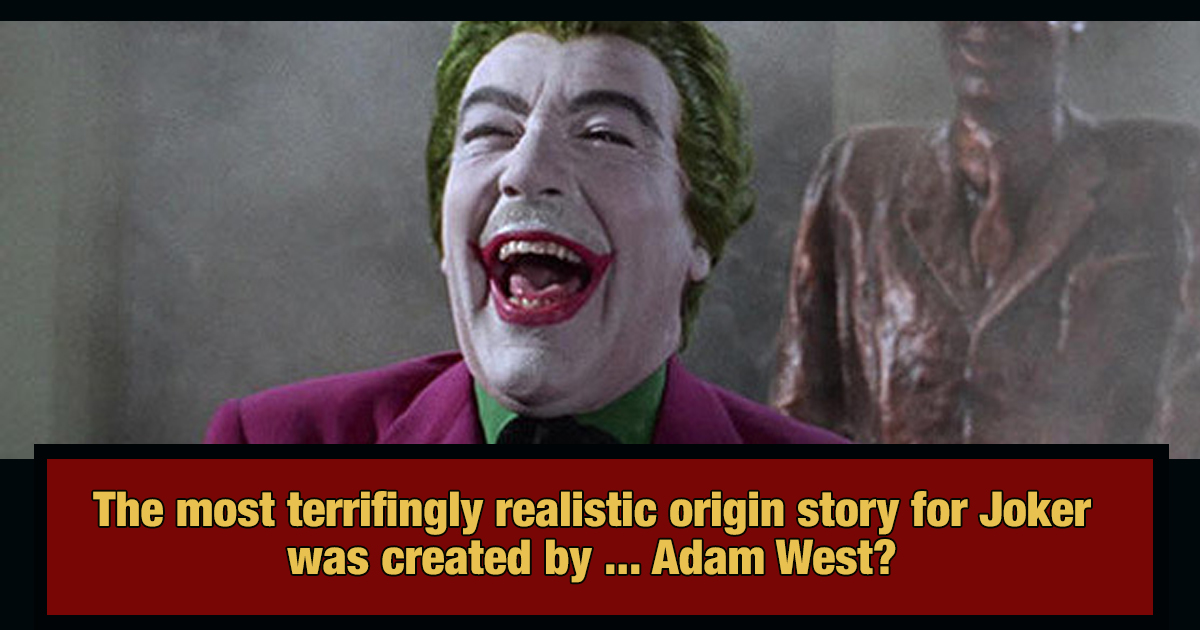
Unlike Batman, the Joker often becomes more effective when his past stays unstable. DC notes that the character entered comics as a villain whose true origin was unknown, with later stories offering different possibilities rather than one definitive explanation.
That uncertainty is not an accident. It is part of the character’s function. Batman is defined by a wound with a clear shape. The Joker is frequently defined by a wound that may be false, exaggerated, reinvented, or deliberately withheld. The audience cannot fully map him, which makes him unpredictable.
For writers, this is a useful warning against over-explaining every mystery. Some characters need a fully developed past. Others need a shadow. Giving a villain too much detail can make them smaller. Giving them too little can make them empty. The art lies in knowing whether the unanswered question creates depth or merely confusion.
What Great Unspoken Backstories Have in Common
Across these examples, the strongest hidden histories do three jobs at once. First, they create motivation. A character’s decisions feel connected to something deeper than whatever the plot needs that afternoon. Second, they create contradiction. A hero can be brave and terrified, loyal and resentful, brilliant and emotionally clueless. Third, they create pressure. The past is not over; it keeps pushing into the present.
Writers sometimes make the mistake of treating backstory like a storage closet. They pile in every childhood event, relationship, injury, school memory, and favorite breakfast cereal, then assume complexity has been achieved. But quantity is not depth. A detailed past matters only when it changes how a character sees the current problem.
A useful test is simple: remove the backstory detail and ask whether the character would behave differently. If the answer is no, the detail may be decoration. If the answer is yes, it is probably doing real work.
Great character backstory also leaves breathing room. The audience does not need a complete encyclopedia entry before caring. In fact, a carefully withheld detail can be more powerful than a fully explained one. The best fictional characters make us feel that their lives continue offscreen, in the silence after the scene ends.
Experiences With Unspoken Backstories: Why Audiences Keep Coming Back
One of the most memorable experiences a reader or viewer can have is realizing that they misunderstood a character. It usually happens quietly. You revisit an earlier scene after learning something new, and suddenly a line that once seemed ordinary feels loaded with pain, guilt, fear, or love. The story has not changed on the page, but your understanding of it has changed. That is one reason hidden backstories are so satisfying: they reward attention.
Think about the experience of watching a character refuse help. The first time, it may look like arrogance. Later, after the audience learns that the character was betrayed, abandoned, or controlled in the past, the same refusal can read as self-protection. The behavior remains frustrating, but it becomes human. That emotional shift is powerful because it mirrors real life. People rarely arrive with a perfectly labeled explanation for every habit. Nobody walks into a room wearing a badge that says, “Please excuse my strange reaction; chapter seven was rough.”
Hidden history also creates the pleasure of conversation. Fans love comparing interpretations because unspoken backstory leaves room for different readings. One person sees a character as guarded. Another sees them as selfish. A third notices a small gesture and argues that the character was trying, badly but sincerely, to connect. These discussions can become part of the entertainment itself. The story continues after the episode ends because viewers keep rebuilding the character in their minds.
For writers, the experience is slightly different but equally useful. Building an unseen past can make dialogue easier to write. A character who has a secret disappointment, an old loyalty, or a private fear will rarely speak in generic sentences. Their word choices, jokes, silences, and arguments begin to develop texture. They may dodge one topic but overreact to another. They may remember tiny details about people they claim not to care about. Suddenly, the character starts behaving like someone with a life beyond the outline.
Actors often rely on this same principle. Even when a script does not reveal every detail, a performer may invent a personal history that informs posture, movement, tone, and reaction. The audience may never learn exactly why a character avoids eye contact or pauses before saying goodbye, but it can sense intention. That intention gives a performance weight.
There is also a special emotional experience in discovering that a “huge” character is not huge because they are invincible. They are huge because they carry something difficult without being completely defined by it. Darth Vader’s fear, Batman’s grief, Wolverine’s fractured memory, Snape’s regret, T’Challa’s responsibility, Moana’s inherited calling, and the Joker’s uncertainty all create different forms of scale. The characters feel larger because their present actions seem connected to a deeper current beneath the story.
Ultimately, audiences do not need every answer. They need enough truth to believe the unanswered parts matter. A powerful character backstory is not a homework assignment. It is a trail of emotional footprints. We follow it through a story, notice what is missing, and understand that the missing space is part of the design.
Note: This article distinguishes established fictional canon from thematic interpretation. In long-running franchises, character details can vary across comics, films, books, games, adaptations, and alternate continuities. Research citations in this draft are editorial markers and can be removed before publication.
Conclusion: The Past We Do Not See Still Shapes the Story
The best unspoken backstories do not exist to make characters seem mysterious for mystery’s sake. They give characters emotional gravity. They reveal why a hero refuses to quit, why a villain becomes dangerous, why a leader carries silence like armor, and why a single decision can echo for years.
Huge characters become unforgettable when their visible actions suggest an invisible life. The audience senses the grief beneath the anger, the love beneath the loyalty, the fear beneath the confidence, and the history beneath the legend. That is how fictional icons stop feeling like plot devices and start feeling like people we somehow knew before the story began.