

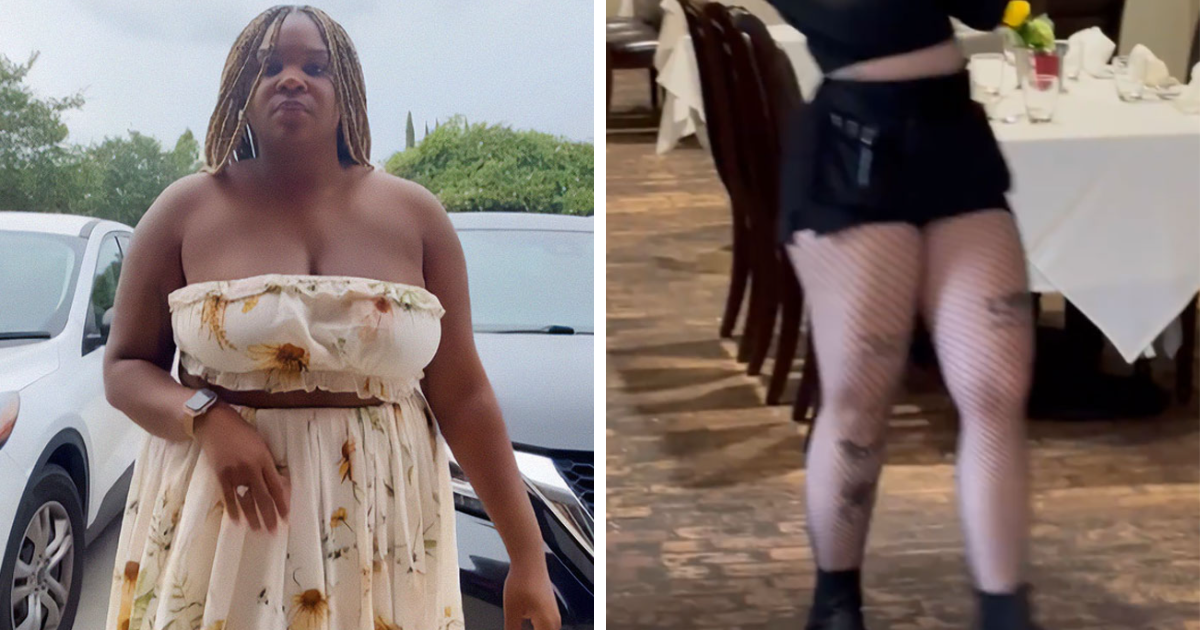
A nice lunch, a floral outfit, and a restaurant dress code walk into a Baton Rouge steakhouse. Unfortunately, only two of them made it past the front door.
The phrase “restaurant dress code controversy” may sound like a small internet storm, the kind of thing people argue about between coffee breaks and cat videos. But the story of Y’Mine McClanahan, a Louisiana nurse who said she was asked to leave Stab’s Prime Steakhouse and Seafood because her outfit was considered “too revealing,” became much bigger than a debate over crop tops. It turned into a national conversation about fairness, selective enforcement, customer dignity, race, gender, and how businesses communicate rules without making guests feel like they just failed a surprise fashion exam.
According to public reports, McClanahan arrived at the Baton Rouge restaurant in July 2024 wearing a floral two-piece outfit: a crop-style top and a long skirt. She said she had worn the same outfit to another location of the restaurant before without issue. This time, however, she was told the outfit violated the restaurant’s business casual dress code because it was “too revealing at the top.” In a video of the exchange, a restaurant representative said, “We have buckled down on our dress code.”
That sentence became the headline. The outfit became the evidence. The internet became the jury. And, later, McClanahan filed a federal lawsuit alleging discrimination, arguing that the policy was applied unevenly and that other patrons and staff members had worn similar or more revealing clothing without being asked to leave.
What Happened At The Restaurant?
The incident reportedly took place at Stab’s Prime Steakhouse and Seafood on Jefferson Highway in Baton Rouge, Louisiana. McClanahan, a working professional and nurse, said she intended to have lunch at the restaurant. Instead, she said she was confronted about her clothing before she could enjoy the meal she came for.
The outfit at the center of the dispute was described in reports as a floral crop top dress or two-piece set with a long skirt. McClanahan argued that the outfit was not inappropriate, especially because she had worn it previously at another Stab’s location. She also pointed to what she viewed as inconsistent standards, including restaurant staff uniforms and photos of other patrons who appeared to be dressed similarly.
The restaurant’s dress code reportedly called for business casual attire and prohibited gym wear, sweatpants, tank tops, and revealing clothing. On paper, that may sound simple. In real life, the phrase “revealing clothing” can be about as clear as a foggy bathroom mirror after a hot shower. One person’s “too much” is another person’s “perfectly normal summer outfit.”
The Key Disagreement: Policy Or Personal Judgment?
The main dispute was not whether restaurants can have dress codes. They can. Many upscale restaurants ask guests to avoid athletic wear, beachwear, offensive graphics, visible undergarments, and clothing that clashes with the dining atmosphere. The bigger question was whether the dress code was clear, consistently applied, and enforced in a respectful way.
McClanahan said she felt “mortified,” “violated,” “ashamed,” and “humiliated.” Those words matter. A dress code conversation may seem routine to a business, but to the guest being singled out in public, it can feel deeply personal. Nobody wants to walk into a restaurant hoping for seafood and leave feeling like they have become the daily special.
Why This Story Went Viral
The story spread quickly because it had all the ingredients of a viral debate: a visible outfit, a strong quote, a respected professional saying she was humiliated, a restaurant defending its standards, and social media users comparing screenshots like amateur fashion detectives.
People online argued over several questions. Was the outfit actually revealing? Was the restaurant being unfair? Should staff uniforms match the same modesty standards imposed on guests? Can a business casual dress code include crop tops? Does enforcement change depending on who is wearing the outfit?
That last question is the one that pushed the story beyond fashion and into civil rights territory. McClanahan, who is Black, later alleged in a lawsuit that the restaurant selectively enforced the dress code against her while allowing white patrons and employees to wear similar clothing. The restaurant, according to its public statement, maintained that its policy was not new and had been in place for more than three years. It also said it had been working on staff uniform changes so customers and employees would not appear to be held to different standards.
The Dress Code Problem: Vague Rules Create Big Trouble
Restaurant dress code policies often use phrases like “business casual,” “proper attire required,” “elegant casual,” or “no overly revealing clothing.” These phrases sound professional, but they leave plenty of room for interpretation.
For example, “business casual” can mean khakis and a collared shirt to one person, a sundress to another, and a nice two-piece outfit to someone else. In many modern workplaces, business casual no longer means the same thing it did twenty years ago. Jeans may be acceptable in one office and scandalous in another. Sneakers may be stylish in one setting and forbidden in a fine-dining room. A crop top may be seen as fashionable, neat, and intentional by one guest and too casual by another.
That ambiguity becomes risky when front-of-house staff must make quick decisions. If employees are not trained with specific examples, they may rely on personal taste, body type assumptions, gender expectations, or unconscious bias. That is when a policy meant to protect a restaurant’s atmosphere can start looking like a velvet rope with a mood swing.
Clear Dress Codes Work Better Than Vibes
A strong restaurant dress code should be specific. Instead of saying “dress appropriately,” a business can list concrete examples: no swimwear, no gym shorts, no visible undergarments, no offensive language on clothing, no bare feet, no excessively torn clothing, and no clothing that exposes private areas.
Specific wording helps guests plan ahead. It also protects employees from being forced to act as fashion philosophers at the host stand. Nobody should have to decide whether a floral top is “too revealing” while a reservation list is filling up and table seven wants more bread.
Can Restaurants Legally Enforce Dress Codes?
Yes, restaurants in the United States generally can enforce dress codes, especially when those rules are connected to health, safety, atmosphere, or brand standards. A fine-dining restaurant can ask guests not to wear beachwear. A steakhouse can ask guests to remove baseball caps. A private club may have stricter rules than a casual diner. A restaurant can also refuse service to guests who violate lawful, clearly posted policies.
However, restaurants open to the public are also public accommodations. That means they cannot enforce rules in a way that discriminates against people based on protected characteristics such as race, color, religion, or national origin under federal law. State laws may add further protections. In Louisiana, public accommodations law also addresses discrimination in access to places open to the public, including restaurants.
This is why consistency matters. A dress code is not automatically discriminatory. But a dress code can become legally risky if it is allegedly applied to one person and ignored for others in similar circumstances, especially when the difference appears connected to race, sex, disability, religion, or another protected category.
The Lawsuit: What McClanahan Alleged
In 2025, McClanahan filed a federal lawsuit against Stab’s Prime Steakhouse and Seafood. The lawsuit alleged that she was refused service because of her outfit while other patrons and employees were allegedly allowed to wear comparable or more revealing attire. Her legal team argued that if the restaurant selectively applied its dress code because she is Black, it would violate civil rights protections.
The complaint reportedly included images from the restaurant’s social media and references to staff attire, including fishnets, short shorts, and tank tops. McClanahan’s attorneys also argued that her outfit did not clearly fall under the specific banned items listed in the restaurant’s online policy.
It is important to be precise here: a lawsuit contains allegations, not final findings. The restaurant has defended its position publicly by saying the dress code had been in effect for years and that staff regularly spoke with guests about attire. The court process is where evidence, arguments, and legal standards are tested.
Why The Staff Uniform Issue Became So Important
One of the most memorable parts of the controversy was the comparison between McClanahan’s outfit and what some employees reportedly wore. If a restaurant tells a guest her outfit is too revealing while staff uniforms appear more revealing, customers may understandably see a double standard.
Restaurants often design employee uniforms to match a brand image. A sports bar may choose casual uniforms. A steakhouse may choose polished black attire. A themed venue may use uniforms that add personality. But when guest policies and staff uniforms send conflicting messages, the business creates confusion.
Imagine a restaurant sign that says “no hats,” while the host is wearing a baseball cap. Or a policy that says “no tank tops,” while the person enforcing the policy appears to be wearing one. Even if there is a technical explanation, the optics are rough. Customers do not read legal footnotes while being escorted out. They see what is in front of them.
What This Says About Modern Dining Culture
Dining out has changed. People dress differently than they did in previous generations. Athleisure, designer sneakers, crop tops, linen sets, jumpsuits, luxury streetwear, and high-low fashion combinations are now normal parts of American style. A guest may spend hundreds of dollars on an outfit that an old-school dress code still categorizes as “too casual.”
At the same time, restaurants have a legitimate interest in shaping atmosphere. A high-end dining room may not want guests arriving in wet swimsuits, torn gym clothes, or shirts with offensive slogans. Atmosphere is part of what customers pay for. A steakhouse does not only sell steak; it sells the feeling of having steak in a polished, comfortable environment where the lighting says, “Yes, order dessert.”
The challenge is finding balance. Restaurants need standards, but customers need respect. Policies should create hospitality, not embarrassment.
How Restaurants Can Avoid Dress Code Backlash
1. Make The Rules Specific And Visible
Dress codes should be easy to find on the restaurant website, reservation platform, front entrance, and confirmation emails. A guest should not discover the rules only after parking, walking in, and becoming the main character in an uncomfortable scene.
2. Use Examples, Not Just Labels
“Business casual” is a start, but examples are better. Restaurants should explain what is welcome and what is not. Clear examples reduce awkward judgment calls.
3. Train Staff To Enforce Policies Calmly
Even when a guest violates a rule, the conversation should be private, polite, and solution-focused. Staff can say, “We’re sorry for the inconvenience, but our dining room policy does not allow this specific item. We can offer seating in the bar, provide a cover-up if available, or help reschedule your reservation.” Tone can turn a conflict into a manageable moment.
4. Apply The Same Standard To Everyone
This is the big one. A policy must be enforced consistently across guests, staff, body types, genders, and races. If one guest is asked to leave for a crop top while another guest wearing a similar top is seated, the restaurant should be ready to explain the difference. If it cannot, the policy may need work.
5. Align Staff Uniforms With Guest Expectations
If customers are expected to avoid revealing clothing, staff uniforms should reflect the same standard. Otherwise, the restaurant sends mixed signals and invites criticism.
How Customers Can Handle A Dress Code Dispute
Customers should also know how to protect themselves in a tense situation. First, stay calm. That may sound annoyingly simple, but it matters. A heated argument can distract from the real issue and make the guest look unreasonable, even when the complaint is valid.
Second, ask for the written policy. If a restaurant claims an outfit violates its dress code, the guest can politely ask which specific rule applies. Third, document what happened. That may include saving the reservation confirmation, taking a photo of the outfit, writing down names, and noting whether similarly dressed guests were allowed inside.
Fourth, ask for a manager, but do not assume the conversation will be resolved immediately. Some businesses double down in the moment and reconsider later when public relations, legal counsel, or customer feedback enters the chat.
Finally, choose the response that fits the situation. That might mean leaving a review, contacting corporate management, filing a formal complaint, speaking with a civil rights organization, or consulting an attorney if discrimination may be involved.
The Bigger Lesson: A Dress Code Is Also A Trust Code
At its best, a dress code helps set expectations. It tells guests what kind of experience they are entering. It protects the atmosphere for birthdays, anniversaries, business lunches, and special nights out. But at its worst, a dress code can become a tool for exclusion, embarrassment, or unequal treatment.
The McClanahan story resonated because many people have felt judged in public spaces. Maybe not at a steakhouse, maybe not over a floral outfit, but in some moment where a rule seemed to appear only when they walked in. That feeling sticks. It can turn a restaurant from a favorite place into a place someone never wants to visit again.
For businesses, the lesson is simple: rules are only as good as their enforcement. For customers, the lesson is equally important: dignity matters, even when the disagreement is about clothing.
Related Experiences: What This Controversy Teaches Diners And Restaurants
Stories like “woman kicked out of restaurant over revealing outfit” often make people ask what they would do in the same situation. The answer depends on where you are standing. If you are the diner, you may feel embarrassed, angry, confused, and suddenly very aware of every eye in the room. If you are the restaurant manager, you may feel pressure to protect the business’s image while avoiding a scene. If you are another customer, you may wonder whether to speak up, keep eating, or pretend your menu is the most fascinating novel ever written.
A useful experience-based takeaway is that most dress code disputes are not really about fabric. They are about communication. A guest can accept a rule more easily when it is explained clearly and respectfully. For example, “Our policy does not allow swimwear in the dining room” is much easier to understand than “That is not the vibe we want.” The first statement points to a rule. The second sounds like a personal judgment wearing a blazer.
Another common experience is the “I wore this here before” problem. Many customers become frustrated because they visited the same restaurant in the same or similar outfit and no one objected. From the restaurant’s side, that may happen because different managers work different shifts or because the policy was not enforced consistently in the past. But from the guest’s side, it feels unfair. Consistency is not a tiny detail; it is the foundation of trust.
Body type can also affect how dress codes are perceived. Two people may wear similar tops, but one may be labeled “revealing” because of body shape, bust size, or fit. That is why restaurants should focus on objective standards instead of subjective impressions. A rule based on visible undergarments or exposed private areas is easier to apply fairly than a rule based on whether someone looks “too revealing.” The mirror may be neutral, but people are not always neutral when interpreting what they see.
For diners, one practical habit is to check the dress code before visiting an upscale restaurant, especially for birthdays, dates, business meals, or travel dining. Reservation platforms, restaurant websites, and confirmation texts often include attire notes. When in doubt, bring a light jacket, blazer, cardigan, or wrap. Not because anyone should have to hide, but because backup layers are the Swiss Army knife of dining fashion.
For restaurants, the best experience comes from hospitality-first enforcement. A manager can preserve the rule while preserving the guest’s dignity. Pull the guest aside. Avoid public shaming. Offer options. Apologize for confusion. Explain the exact policy. If the business made a mistake, say so. A sincere apology costs less than a lawsuit, a viral video, or a thousand angry comments from people who have never been to Louisiana but are now emotionally invested in your host stand.
The McClanahan controversy is a reminder that restaurants are not just rooms with food. They are social spaces where people celebrate, relax, network, flirt, mourn, and treat themselves after long shifts. A person’s outfit may be part of that experience. When a restaurant challenges it, the moment can feel intimate and exposing. That is why dress code enforcement should be handled with care, clarity, and humility.
In the end, the best dining experiences happen when expectations are clear before guests arrive, rules are applied fairly after they do, and everyone remembers the point of hospitality: making people feel welcome. The steak may be prime, the lighting may be elegant, and the wine list may be longer than a tax form, but if a guest leaves feeling humiliated, the restaurant has served the wrong final course.
Conclusion
The story behind “We have buckled down on our dress code” is more than a viral argument about a floral outfit. It highlights a larger issue facing modern restaurants: how to maintain standards without creating confusion, humiliation, or unequal treatment. Dress codes can be legal, useful, and even necessary in certain dining environments. But they must be clear, consistently enforced, and respectful.
For restaurants, the safest policy is one that guests can understand before they arrive and staff can apply without guesswork. For diners, the best response to a dress code dispute is to stay calm, ask for the written rule, document the situation, and pursue the appropriate channel if the treatment appears unfair or discriminatory.
McClanahan’s experience struck a nerve because it raised a question many people understand instantly: was this really about the outfit, or about who was wearing it? That question is why the story did not disappear after one lunch. It became a case study in hospitality, public perception, and the difference between having a rule and applying it fairly.
Note: This article is written for informational and editorial purposes, based on publicly reported details and general legal context. Allegations mentioned in connection with the lawsuit should not be read as final court findings.