

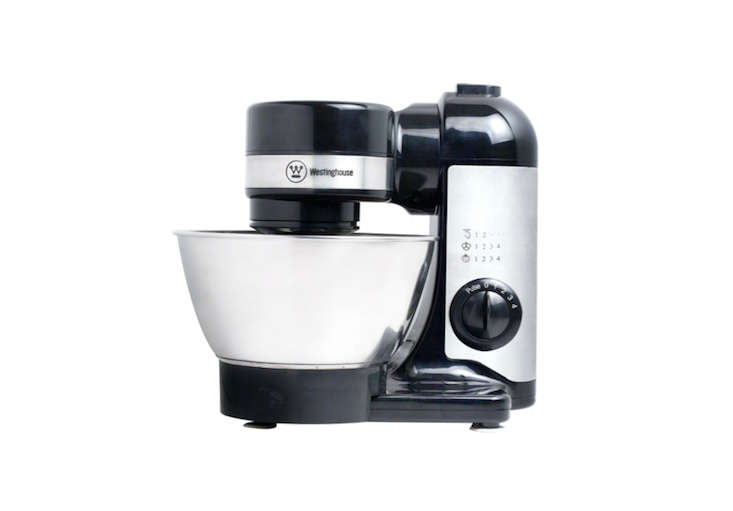
The Westinghouse SA61950 Stand Mixer comes from an earlier generation of kitchen appliances, when a mixer could arrive with a stainless steel bowl, three useful attachments, and a straightforward speed dial without demanding its own smartphone app. Refreshingly, it does not send notifications. It simply mixes things.
Built around a 450-watt direct-drive motor, four operating speeds, pulse control, and planetary mixing action, the SA61950 was designed as a compact, moderately priced stand mixer for everyday home baking. Its 3.5-quart bowl makes it smaller than many current five- and seven-quart machines, but that can be an advantage for cooks with limited counter space or modest batch sizes.
However, the Westinghouse SA61950 is now a discontinued model. Shoppers are most likely to encounter it through secondhand listings, estate sales, appliance resellers, or a suspiciously well-organized relative who still has the original box. That changes the buying decision. Performance matters, but condition, completeness, and replacement-part availability matter just as much.
Westinghouse SA61950 Specifications at a Glance
| Motor | 450-watt direct-drive motor |
|---|---|
| Mixing system | Planetary mixing action |
| Speed settings | Four speeds plus pulse control |
| Bowl capacity | 3.5-quart stainless steel bowl |
| Included attachments | Wire whisk, dough hook, and aluminum flat paddle |
| Additional accessory | Transparent splashguard with ingredient feeder |
| Color and finish | Black housing with stainless steel trim |
| Current availability | Discontinued; generally found used |
Design and Build Quality
The SA61950 has the familiar tilt-head design used by many consumer stand mixers. Pressing the head-release control allows the upper section to lift, providing access to the bowl and attachment post. The stainless steel bowl twists into a locking plate on the base, while the selected mixing tool connects beneath the motor head.
Its black-and-stainless appearance is conservative enough to suit most kitchens. It does not have the collectible color range of some premium mixers, but it also does not look like a toy wearing a chrome hat. The metal bowl is durable, resists staining, and is easier to clean than many plastic alternatives.
Suction cups beneath the mixer help hold it to a smooth work surface. This is particularly useful when mixing dense dough, which can cause lightweight appliances to shuffle across a countertop like they have remembered an urgent appointment elsewhere.
The mixer should still be placed on a clean, flat, sturdy surface. Flour, oil, moisture, or an uneven counter can reduce the grip of the suction feet and increase movement during operation.
How the 450-Watt Motor Performs
Wattage alone does not determine whether a stand mixer performs well. Gear design, motor efficiency, attachment geometry, bowl shape, and load management are also important. Still, the SA61950’s 450-watt rating places it within a practical range for cakes, cookies, frostings, whipped cream, mashed potatoes, and moderate bread dough.
The direct-drive configuration is intended to transfer motor power efficiently to the attachment. Combined with planetary action, it allows the beater to spin while traveling around the bowl, reaching ingredients in multiple areas rather than circling one small patch in the center.
For normal household recipes, this arrangement should produce more consistent mixing than a basic rotating-bowl mixer. The machine is best treated as a compact home appliance, however, not as a miniature commercial bakery employee who never takes lunch.
Cakes and Everyday Batters
The flat paddle is the primary attachment for cake batter, brownies, muffins, frosting, mashed potatoes, and many cookie recipes. It can stir ingredients at low speed, blend wet and dry components, and cream softened butter with sugar.
The gradual startup is valuable when flour or powdered sugar is in the bowl. Rather than immediately launching dry ingredients into low Earth orbit, the mixer begins more gently and builds toward the selected speed. The splashguard and ingredient feeder provide additional protection from messes.
Cookies and Heavier Mixtures
Moderately thick cookie dough should be within the SA61950’s capabilities, particularly when ingredients are properly softened and the batch fits comfortably inside the 3.5-quart bowl. The manual recommends the dough hook rather than the flat paddle for especially heavy cookie dough.
Large quantities of cold butter, hardened brown sugar, nuts, dried fruit, and chocolate chips can sharply increase resistance. Add heavy ingredients gradually and watch for straining, slowing, repeated head movement, or excessive heat. A motor that sounds increasingly offended is offering useful feedback.
Whipped Cream, Egg Whites, and Frosting
The wire whisk is designed to incorporate air into cream, egg whites, thin batters, sauces, meringues, and light frostings. The 450-watt motor can whip small and medium quantities quickly, so visual monitoring is important.
Overwhipped cream can move from soft clouds to homemade butter faster than expected. Begin at a lower setting, increase speed gradually, and stop periodically to inspect the texture. The same careful approach helps prevent egg whites from becoming dry and grainy.
Bread and Pizza Dough
The dough hook is intended for yeast dough, pizza dough, heavy pastry mixtures, and other dense recipes. Its shape helps pull sticky dough from the bowl while limiting the tendency of dough to climb the attachment.
The mixer manual recommends lower speeds for kneading. That is sensible because fast kneading can place unnecessary stress on the motor and transmission. Start slowly, allow dry ingredients to become hydrated, and knead only until the dough reaches the texture required by the recipe.
The 3.5-quart bowl is better suited to a modest loaf or a regular pizza-dough recipe than to double or triple batches. Highly enriched, low-hydration, whole-grain, or unusually stiff dough can also demand more from a mixer than ordinary white bread dough.
Four Speeds and Pulse Control
The front rotary dial provides four numbered speeds, an off position, and a pulse setting. Four speeds may sound limited beside modern machines advertising 10 or 12 settings, but they cover the main categories of stand-mixer work:
- Low-speed folding and initial ingredient incorporation
- Slow kneading and blending
- Medium-speed mixing, beating, and creaming
- Higher-speed whipping and aeration
The pulse function provides a short burst of high-speed movement. According to the operating guide, pulse should be used only with the flat paddle. It can help incorporate stubborn ingredients, finish a mixture, or break up a small pocket of unmixed material without running the machine continuously.
More speed settings can offer finer control, but the SA61950’s simpler dial is easy to understand. Start low, increase only when needed, and remember that “maximum” is not a personality requirement.
Attachments and What Each One Does
Aluminum Flat Paddle
The flat paddle is the everyday workhorse. Use it for cakes, standard cookie dough, brownies, buttercream, mashed potatoes, meatloaf mixtures, and general stirring. It is also the correct attachment for the pulse setting.
Stainless Steel Wire Whisk
The whisk is intended for mixtures that need air. It works well for whipped cream, egg whites, thin frostings, meringue, and light sauces. Avoid using it on heavy dough because the fine wires are not designed for that resistance.
Dough Hook
The dough hook kneads yeast dough and handles dense mixtures. It is also recommended for particularly heavy cookie or pastry dough. Use low speeds and avoid exceeding the practical capacity of the bowl.
Splashguard and Flour Feeder
The transparent guard sits over the bowl and includes a funnel for adding ingredients. Besides reducing flour clouds and liquid splatter, it creates a useful barrier between the cook and the moving attachment.
Is the 3.5-Quart Bowl Large Enough?
A 3.5-quart stand mixer is compact by current standards. Many popular household mixers use bowls between 4.5 and 7 quarts. Bigger is not automatically better, though. Large bowls can be awkward with very small quantities and require more storage space.
The SA61950 is a sensible size for couples, small families, occasional bakers, apartment kitchens, and recipes prepared one batch at a time. It should handle a standard cake, a moderate batch of cookies, whipped cream, frosting, mashed potatoes, or one modest bread recipe.
It is less appropriate for frequent entertaining, weekly bulk meal preparation, several loaves of bread at once, or holiday cookie production on a scale normally associated with an airport catering department.
Ease of Cleaning and Maintenance
The bowl and attachments can be washed with warm, soapy water. The original care instructions also describe the bowl and attachments as dishwasher-safe, with attachments placed on the top rack. Because the flat paddle is aluminum and older finishes may deteriorate, cautious owners may still prefer hand-washing it and drying it immediately.
The motor housing should be wiped with a damp cloth. It must never be immersed in water, placed in a dishwasher, or sprayed directly with cleaning products. Abrasive pads, bleach-based cleaners, pine cleaners, solvents, and metal polish can damage the exterior.
Always switch the mixer off and unplug it before removing attachments, scraping the bowl, or cleaning. The attachment may continue moving briefly after the dial reaches the off position because the mixer completes several rotations before stopping in its parked position.
Advantages of the Westinghouse SA61950
- Useful 450-watt direct-drive motor
- Planetary mixing for broad bowl coverage
- Compact 3.5-quart stainless steel bowl
- Includes whisk, paddle, and dough hook
- Splashguard with ingredient feeder
- Gradual startup helps control flour and splatter
- Suction feet improve countertop stability
- Simple rotary speed control
Potential Drawbacks
- The model is discontinued
- Replacement parts may be difficult to locate
- The bowl is too small for frequent large batches
- Four speeds offer less precision than newer mixers
- It lacks a modern attachment hub for pasta rollers or grinders
- Used units may have worn gears, cords, switches, or suction feet
- Warranty coverage is unlikely on secondhand purchases
Should You Buy a Used Westinghouse SA61950?
The SA61950 may be worth considering when it is inexpensive, clean, complete, and demonstrably functional. Its documented feature set remains useful for ordinary home baking. However, it should not command a premium price simply because the Westinghouse name appears on the housing.
Before buying, inspect the power cord and plug for cracks, repairs, exposed wire, discoloration, or looseness. Test every speed with an empty bowl, listening for grinding, clicking, electrical buzzing, or irregular changes in speed. The mixer head should lock securely in both raised and lowered positions.
Confirm that the bowl, paddle, whisk, dough hook, and splashguard are included. Missing accessories can erase the value of an apparently cheap purchase, especially when model-specific replacements are scarce.
Check the attachment post and bowl-locking plate for corrosion or damage. Run the machine briefly under light resistance if the seller permits it. A mixer that spins freely when empty may behave very differently when introduced to cookie dough, which is the appliance equivalent of a job interview becoming real work.
Who Is the Westinghouse SA61950 Best For?
This mixer is best suited to an occasional or moderate home baker who prepares small-to-medium recipes and can purchase a well-maintained unit at a low price. It may also appeal to someone furnishing a first apartment, vacation home, guest kitchen, or secondary baking station.
Frequent bread bakers, large families, batch cooks, and users who want readily available accessories or service support will probably be happier with a current-production mixer. A modern model may cost more initially, but warranties, replacement parts, and predictable attachment compatibility have real value.
Extended Real-World Ownership Experience
Living with the Westinghouse SA61950 would likely feel pleasantly uncomplicated. The mixer does not require a long learning period. Lock in the bowl, install the correct attachment, lower the head, add the splashguard, and turn the dial. After one or two baking sessions, the operating routine should become automatic.
For a simple yellow cake, the compact bowl is convenient rather than restrictive. Butter and sugar can be creamed with the flat paddle, eggs added gradually, and flour incorporated at low speed through the feeder. The gentle startup helps keep flour inside the bowl, although a determined baker can still create a countertop snowstorm by adding three cups at once. Technology can only do so much.
Cookie dough highlights both the strengths and boundaries of the machine. A normal batch of chocolate chip cookies should fit comfortably when the butter is properly softened. The paddle can cream, mix, and combine efficiently. Once chips and nuts are added, lowering the speed reduces strain and prevents the heavier ingredients from bouncing around the bowl.
A doubled recipe would be a different experience. The 3.5-quart capacity leaves less room for ingredients to move, and thick dough may climb the attachment or gather above the ideal mixing zone. Dividing the recipe into two batches would usually produce better results and place less stress on an older motor.
The wire whisk should make whipped cream and meringue relatively easy. Because the bowl is not enormous, the whisk has a reasonable chance of engaging modest quantities. The cook still needs to watch closely. Small amounts can progress quickly from soft peaks to stiff peaks, followed by the culinary stage known as “I answered one text message and now this is butter.”
Bread dough requires the most judgment. A hydrated pizza dough or ordinary sandwich loaf should be a more comfortable assignment than stiff bagel dough or a huge whole-wheat batch. Adding liquid first, as the operating guide suggests for many hand-converted recipes, helps flour incorporate more evenly. Starting at the lowest speed also reduces dust and gives the motor time to take up the load.
During kneading, the suction feet become important. On a clean counter, they should help the base stay planted. If the mixer begins moving, the correct response is not to leave the room and hope it develops a sense of direction. Stop the machine, reduce the batch or speed, and verify that the surface and suction cups are clean.
Cleanup should be manageable. The stainless steel bowl releases most batter with warm water and dish soap. Washing promptly is much easier than allowing dough to dry into a material apparently intended for bridge construction. The housing has enough seams and controls to collect flour, so wiping it after each use prevents buildup.
The greatest ownership concern is age rather than design. Rubber feet can harden, grease can migrate, switches can wear, and cords can become brittle. A well-preserved unit may continue to provide useful service, but buyers should accept that repairs and accessories may require patience. This is not the ideal mixer for someone who expects overnight replacement parts with a cheerful tracking notification.
Overall, the practical experience is likely to be positive for small recipes and reasonable workloads. The SA61950 offers the core functions that matter: planetary mixing, a stainless steel bowl, standard attachments, controlled startup, and enough power for common baking projects. Its charm lies in doing ordinary kitchen jobs without unnecessary theater.
Final Verdict
The Westinghouse SA61950 Stand Mixer remains an interesting compact appliance with a capable 450-watt motor, planetary mixing action, four speeds, pulse control, and a complete set of standard attachments. Its 3.5-quart bowl is well matched to small households and everyday recipes, while the splashguard and gradual startup make operation cleaner and more comfortable.
Its discontinued status prevents an unconditional recommendation. A clean, complete, smoothly operating unit can be a worthwhile budget purchase, but a damaged or incomplete mixer may be more trouble than the savings justify. Evaluate the individual appliance rather than buying solely on the brand name or original specifications.
Note: Availability, accessory completeness, electrical condition, and replacement-part support can vary significantly among used SA61950 mixers. Inspect and test any secondhand unit before purchase, and discontinue use immediately if the cord, plug, controls, locking mechanism, or motor appears damaged.