

Memorization has terrible branding. Say the word out loud and people immediately picture a miserable student hunched over a desk, whispering vocabulary terms like a tiny overcaffeinated ghost. In modern conversations about learning, memorizing things often gets treated like the villain: boring, outdated, robotic, and possibly wearing a tweed jacket from 1957.
But that reputation is only half true. Yes, mindless cramming is a terrible way to learn. Yes, repeating facts without understanding them can leave your brain feeling like a junk drawer full of takeout menus and mystery batteries. But memorization itself is not the problem. In fact, when you use it the right way, memorization is one of the most useful tools your brain has.
That is because knowing things by heart frees your mind to do bigger, better work. It helps you read faster, think more clearly, solve problems more efficiently, and build real expertise over time. In other words, memorizing things is not the opposite of understanding. Very often, it is the foundation that makes understanding possible.
So no, memorizing things is not a waste of time. The real waste of time is treating memory like an embarrassing old technology when it is still powering almost everything we do.
Why Memorization Got Such a Bad Reputation
Memorization earned its bad name honestly. For years, people were taught that “learning” meant copying notes, rereading chapters, and drilling isolated facts until their eyes started filing formal complaints. That approach can produce short-term performance, but it often falls apart quickly. You can pass a quiz on Tuesday and forget everything by Thursday, which is not exactly the inspiring educational legacy anyone was hoping for.
Because of that, many people swung hard in the opposite direction. They started saying things like, “Don’t memorize. Just understand.” It sounds wise, modern, and slightly superior. The problem is that it creates a false choice. Real learning is not memorization or understanding. It is memorization plus understanding, each strengthening the other.
Think about it this way: if you are constantly stopping to remember basic information, your brain has less energy available for deeper thinking. You cannot analyze a poem well if half your attention is spent trying to remember what metaphor means. You cannot solve algebra confidently if multiplication facts still feel like surprise guests. You cannot write fluently in another language if every other sentence turns into a scavenger hunt for basic vocabulary.
Understanding feels glamorous, but memory does a lot of the heavy lifting backstage.
Memory Is Not the Enemy of Thinking
One of the biggest myths in education is that critical thinking somehow floats above knowledge, like a majestic eagle soaring over facts. In real life, thinking depends on what is already stored in your mind. The more useful knowledge you have in long-term memory, the less pressure there is on working memory, which is the limited mental space you use in the moment to process information.
That matters because working memory is not an endless warehouse. It is more like a tiny kitchen counter. You can prepare a great meal there, but not if every ingredient is still in the grocery bag and the blender is balanced on top of a cereal box. When important facts, terms, patterns, and procedures are already familiar, your brain can use them quickly without constantly stopping to reload.
This is why memorized knowledge helps with reading, writing, problem-solving, and creativity. Far from making you rigid, strong memory can make you more flexible. When basic information comes to mind easily, you can compare ideas, spot patterns, argue persuasively, and create something new. That is not anti-thinking. That is thinking.
Why Memorizing Things Actually Helps You Learn Better
1. Memorization builds mental shortcuts
When you remember key facts automatically, you do not have to rebuild them every time. That saves mental energy. A pianist who has memorized scales can focus on expression. A nurse who has memorized common medication names can work faster and more accurately. A cook who knows measurements and techniques by heart can improvise dinner instead of panic-googling “how many teaspoons in a tablespoon” with sauce on their hands.
These are not flashy examples, but they show the point: memory creates speed, and speed creates room for judgment.
2. Memorization supports understanding over time
People often imagine that understanding should come first and memory second. Sometimes it works the other way around. At first, a fact may feel random. Then you encounter it again in a new context. Then again. Over time, pieces connect. What was once “just memorized” starts turning into genuine understanding.
This happens all the time in science, music, language learning, history, and math. Students may first memorize the periodic table symbols, multiplication tables, grammar patterns, or historical dates. Later, those facts become anchors for deeper insight. Memorized knowledge gives the brain something to organize around.
3. Retrieval makes memory stronger
Here is where things get fun, or at least as fun as memory science can get without hiring a mascot. The act of trying to remember something helps strengthen the memory itself. That means memorization is not just about exposure. It is about retrieval.
In plain English, you learn more when you pull information out of your brain than when you just keep pouring information in. Self-quizzing, flashcards, writing down what you remember on a blank page, teaching someone else, and answering practice questions all force your brain to retrieve information. That effort can feel harder than rereading notes, but that struggle is often what makes learning stick.
So if memorization has felt ineffective in the past, the issue may not be memorization. The issue may be that you were using passive review when your brain wanted a workout.
4. Meaning makes memories last longer
Not all memorization is created equal. Your brain is much more likely to remember information that feels meaningful, organized, and connected to what you already know. That is why random lists are hard and stories are easier. It is why a date in history is forgettable on its own but memorable once you understand what changed because of it. It is why a vocabulary word sticks better when you use it in a sentence than when you stare at it like it owes you money.
The smartest memorization strategies are not mechanical. They are relational. They link new material to images, patterns, categories, and prior knowledge.
Real-Life Situations Where Memorization Pays Off
Language learning
You cannot become fluent in a language by understanding “the concept of Spanish” or “the vibe of French.” At some point, you need words, sounds, sentence structures, and common expressions ready to go. Memorized vocabulary is not the enemy of communication. It is what makes communication possible.
Public speaking and performance
Ask anyone who has given a speech, acted onstage, taught a class, or led a meeting. When the structure is memorized well enough, confidence rises. You become more present, more expressive, and less dependent on notes. You are not trapped by memorization. You are liberated by it.
Professional expertise
Experts in every field rely on memory. Doctors memorize anatomy and clinical patterns. Electricians memorize codes and procedures. Journalists memorize names, beats, and context. Athletes memorize plays. Designers memorize principles. Programmers memorize syntax, debugging habits, and common structures. Nobody becomes skilled by googling every tiny detail forever.
Reference tools matter, of course. But if every task begins at square one, expertise develops at the speed of a three-legged turtle.
Everyday life
Memorization is not just for school or work. It makes ordinary life smoother too. Remembering phone numbers, routes, family birthdays, recipes, medication instructions, passwords, directions, names, and emergency information can save time and reduce stress. A brain that remembers useful things is not old-fashioned. It is practical.
How to Memorize Smarter Instead of Harder
Use active recall
Close the book. Hide the notes. Try to say, write, sketch, or explain what you know from memory. This is more effective than rereading because it turns remembering into practice instead of wishful thinking.
Space your review
Memories strengthen when you revisit information over time rather than cramming it all at once. Short study sessions spread across days or weeks beat one dramatic midnight battle with your textbook and your remaining will to live.
Chunk information
Big piles of information are harder to remember than organized groups. Break material into categories, themes, steps, or patterns. Your brain likes structure. Frankly, so do most of us.
Use images and cues
Visualization, sensory cues, and memorable associations can make information stick. Turn abstract details into something concrete. Build a mental picture. Attach a weird image to a term. The brain is surprisingly willing to remember odd things, which explains both mnemonic devices and the existence of commercial jingles.
Connect new ideas to old ones
The more connections you create, the more places your brain can find the memory later. Ask yourself what the new information reminds you of, why it matters, where it fits, and how you would explain it to someone else.
Sleep and move
If you want memory to work better, treat your brain like part of your body instead of an annoyed roommate living behind your forehead. Sleep supports memory formation, and regular physical activity helps brain health, learning, and thinking. In other words, studying until 3 a.m. while fused to a chair is not always the intellectual flex it appears to be.
When Memorization Does Become a Waste of Time
To be fair, memorization can absolutely be wasted effort in certain situations. It is not useful when:
- you memorize facts with zero understanding of what they mean,
- you cram information once and never use it again,
- you memorize answers without learning how to apply them,
- you focus on trivia while ignoring the core concepts that actually matter.
In those cases, the problem is not memory. The problem is strategy.
Good memorization is purposeful. It focuses on knowledge that will help you read, think, communicate, solve problems, or perform a skill. It is not about collecting random facts like a squirrel hoarding acorns it will never eat. It is about building a mental toolkit you can actually use.
The Bigger Truth: Memory Makes Creativity Possible
People sometimes talk as if memorization kills originality. In practice, originality usually grows from what you already know. Writers borrow rhythm from the phrases they have absorbed. Musicians build on scales, chords, and patterns they have internalized. Comedians rely on timing and language that become second nature through repetition. Great ideas do not appear out of an empty brain. They emerge from a stocked one.
This does not mean you should memorize everything. It means that a well-fed mind has more material to combine, question, remix, and improve. Memory is not the ceiling of thought. It is often the launchpad.
Conclusion
Memorizing things is not a waste of time. Bad memorization is a waste of time. There is a difference.
When memorization is paired with meaning, retrieval practice, spaced review, and real-world use, it becomes one of the most efficient ways to strengthen learning. It helps move knowledge into long-term memory, reduces the load on working memory, and creates the mental fluency that supports understanding, confidence, and creativity.
So the next time someone acts like memorizing things is beneath them, feel free to smile politely and continue learning your material anyway. Your future self, who would like to think faster and panic less, will appreciate the effort.
Experiences That Show Why Memorizing Things Is Still Worth It
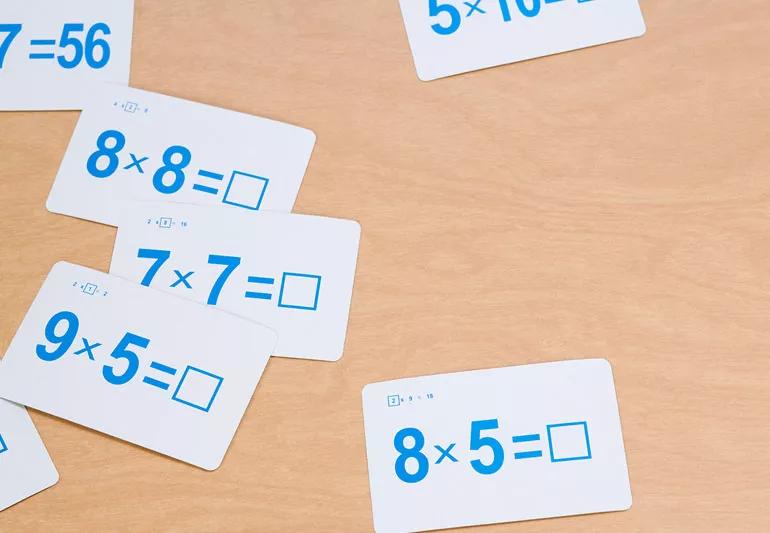
I remember realizing this most clearly while learning basic math as a kid. At the time, memorizing multiplication tables felt like educational wallpaper: boring, repetitive, and aggressively unglamorous. But later, those facts became invisible helpers. I no longer had to stop and calculate every tiny step, which made word problems easier, budgeting faster, and everyday mental math far less painful. The memorization was not the final goal, but it quietly removed friction from everything that came after.
The same thing happens with language. Many people say they want to “just speak naturally,” but natural speaking usually depends on having lots of words and patterns stored in memory. I have seen learners freeze not because they lacked intelligence, but because they lacked quick recall. Once common phrases, verb forms, and vocabulary were memorized through repeated use, their confidence changed almost overnight. Conversation became smoother. Listening improved. They could finally focus on meaning instead of mentally crawling through wet cement.
Work life offers the same lesson. In almost every profession, people perform better once the basics are stored deeply enough to feel automatic. A new employee may need to look up every process step, every abbreviation, and every routine response. That is normal. But after memorizing core workflows, things speed up. The person becomes calmer, more accurate, and more capable of handling unusual situations. Memory creates the stability that lets judgment shine.
I have also seen memorization help in creative work, which surprises people. Writers who have internalized sentence rhythms, useful vocabulary, and structural patterns can draft more freely. Musicians who know scales and chord progressions by heart improvise better. Cooks who remember flavor pairings and basic ratios are more adventurous in the kitchen. In each case, memorization does not replace creativity. It gives creativity something to stand on.
Even ordinary adult life is full of moments where memory saves the day. Remembering directions when your phone battery dies. Knowing a loved one’s medication schedule without hunting for a note. Recalling a speech opening without staring at the podium like it personally betrayed you. Keeping track of names in a meeting. Remembering the checklist before leaving the house. These are not dramatic movie scenes, but they matter. Memorized knowledge reduces stress and increases competence in ways that are easy to overlook because they feel so natural once they are in place.
That may be the best argument of all. The payoff of memorization is often invisible. It shows up as fluency, ease, speed, confidence, and mental space. You stop noticing the memory itself because you are busy benefiting from it. And honestly, that is a pretty great return on investment for something people keep calling a waste of time.