

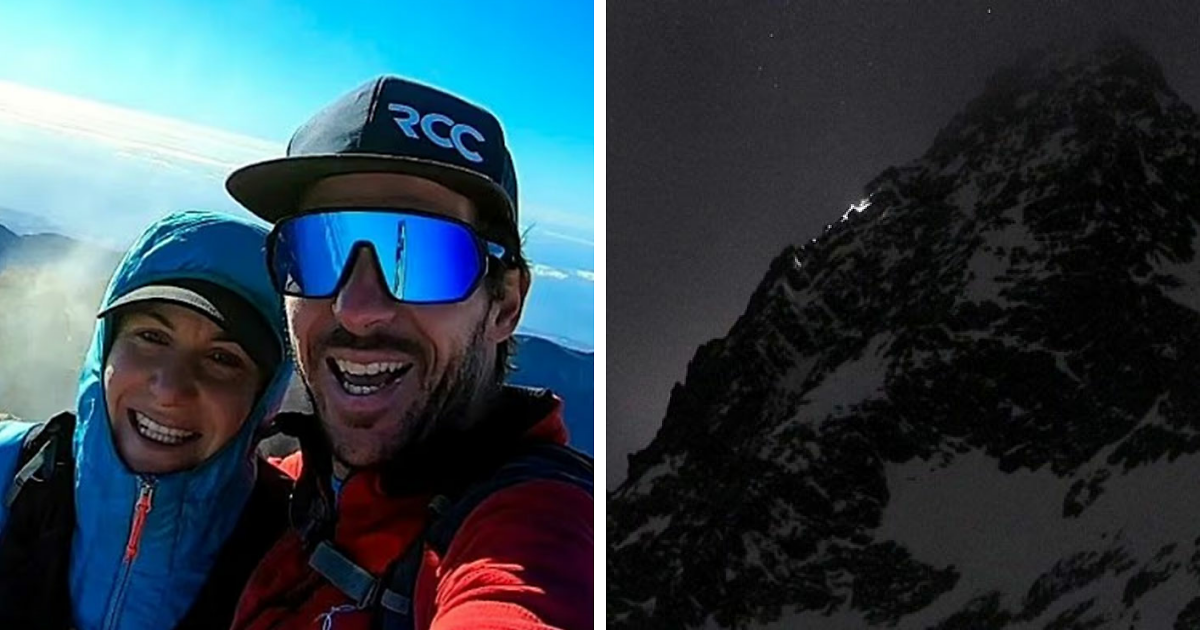
A tragic winter climb on Austria’s highest mountain has become one of the most closely watched alpine negligence cases in recent years. The woman who died near the summit of Grossglockner has been identified in public reporting as Kerstin Gurtner, a 33-year-old Austrian woman whose final climb with her boyfriend, Thomas Plamberger, ended in a courtroom, a suspended sentence, and a painful public debate about responsibility in the mountains.
The headline is shocking, but the deeper story is not just about one couple, one mountain, or one terrible night. It is about planning, experience gaps, emergency decisions, leadership, and the uncomfortable truth that nature does not care how confident someone looks in a summit selfie. In the high Alps, optimism is not equipment. Love is not a rescue plan. And “we’ll figure it out” can become a very expensive sentence when the weather turns serious.
The Tragedy On Grossglockner
Grossglockner rises to about 12,460 feet, or 3,798 meters, making it Austria’s tallest mountain. It is beautiful, dramatic, and absolutely not the kind of place where winter mistakes politely tap you on the shoulder. In January 2025, Gurtner and Plamberger attempted a winter ascent of the mountain. According to prosecutors and later court reporting, the couple fell badly behind schedule and encountered severe conditions close to the summit.
Gurtner reportedly became exhausted and showed signs of hypothermia. The couple was only about 50 meters, or roughly 160 feet, below the summit cross when the situation became critical. Prosecutors alleged that Plamberger, who was considered the more experienced climber and the planner of the trip, eventually left her behind while he descended to seek help.
The case drew worldwide attention because the question was not as simple as, “Did he go for help?” In mountain emergencies, leaving someone to seek rescue can sometimes be a desperate choice. The legal question became whether earlier decisions, delayed calls, poor equipment choices, and failure to protect Gurtner from the cold amounted to gross negligence.
Who Was Identified By Officials And Reports?
Public reports identified the woman as Kerstin Gurtner, age 33. Her boyfriend was identified in multiple reports as Thomas Plamberger, an Austrian climber from Salzburg. Some European legal reporting initially used partial names because of privacy rules, but international outlets later named both individuals.
Gurtner’s identification turned a distant mountain tragedy into a human story. She was not simply “a climber” or “a girlfriend.” She was a real person with a family, friends, and a life that ended in a place where rescue became too difficult and decisions became irreversible.
What Prosecutors Said Went Wrong
The Innsbruck Public Prosecutor’s Office accused Plamberger of several critical errors. These included taking a less experienced partner on a demanding winter alpine route, starting the tour too late, failing to bring sufficient emergency bivouac gear, not turning back earlier, failing to make an emergency call before darkness, and not properly protecting Gurtner from wind and cold before leaving her.
Prosecutors also raised concerns about equipment. Gurtner was reportedly using snowboard-related gear that authorities considered unsuitable for mixed high-alpine winter terrain. Anyone who has ever worn the wrong shoes to a casual dinner knows discomfort. On a high winter mountain, the wrong footwear is not a fashion problem; it can become a survival problem.
Another major issue was the timing of emergency communication. Authorities said the pair had effectively stopped making progress hours before Plamberger left Gurtner. Prosecutors alleged that he did not call for help early enough and did not signal a police helicopter that flew near them earlier in the night. They also said his phone became difficult for rescuers to reach after initial contact.
The Court’s Decision
In February 2026, an Austrian court convicted Plamberger of manslaughter caused by gross negligence. He received a suspended five-month sentence and a financial penalty. The punishment was far below the maximum possible sentence, but the conviction itself sent a strong message through the climbing world.
The judge did not describe Plamberger as malicious. In fact, the court recognized that he had eventually tried to get help. But the judge concluded that he failed in what was described as a leadership responsibility. Because Plamberger had more alpine experience and had planned the climb, the court found that he should have recognized the danger sooner and adjusted the plan to match Gurtner’s ability and condition.
Why This Case Hit The Mountaineering Community So Hard
Mountaineering has always carried risk. Climbers accept that storms happen, fatigue happens, and plans sometimes collapse faster than a cheap camping chair. But this case raised a harder issue: when does a bad decision in the mountains become a crime?
Many climbers understand that partners must make judgment calls under stress. Rescue is not instant. Phones may fail. Helicopters cannot always fly. Weather can change quickly. Still, this case was different because prosecutors argued the danger developed over hours, not seconds. The alleged mistakes were not limited to one panicked choice but included planning, equipment, timing, communication, and group management.
The Importance Of Experience Gaps
One of the most important lessons from the Grossglockner case is that a team is only as safe as the least prepared person in it. That may sound like something printed on a scout handbook, but in alpine terrain it is brutally practical.
A strong climber may move efficiently, read terrain well, and tolerate cold better than a beginner. But if that strong climber invites or leads someone with less experience, the route choice must fit the weaker partner’s skill level, not the stronger partner’s ego. Mountains do not award bonus points for confidence.
The court’s reasoning reflected this principle. Plamberger’s experience made him more responsible, not less. The stronger partner does not get to say, “I knew what I was doing,” if the other person clearly did not have the same capacity for the route.
Hypothermia: The Silent Emergency
Hypothermia is especially dangerous because it does not always look dramatic at first. A person may seem tired, slow, confused, clumsy, unusually quiet, or unable to make good decisions. In cold wind, wet clothing, exhaustion, and altitude, the body can lose heat faster than it can produce it.
That matters because the person suffering from hypothermia may not be able to advocate clearly for themselves. They may insist they are fine when they are not. They may struggle with simple movements. Their judgment may fade at exactly the moment when clear thinking is most needed.
In the Grossglockner case, prosecutors and expert witnesses focused heavily on whether signs of Gurtner’s decline should have been recognized earlier. The question was not only what happened after she could no longer continue, but why the climb had reached that point at all.
Why “Turning Back” Is Often The Smartest Summit Move
Turning back can feel like defeat, especially after hours of effort. But in mountain travel, retreat is not failure. It is often the most adult decision in the room, even if the room is a freezing ridge with zero chairs.
Summit fever is real. People get emotionally attached to finishing what they started. They think, “We are so close.” But “close” can be misleading in alpine terrain. Fifty meters below a summit can still be a long way from safety. A few hundred feet can become impossible when darkness, wind, cold, and exhaustion pile up together.
The safest climbers are not the ones who never feel fear. They are the ones who notice small warning signs early enough to act. Slow movement, worsening weather, fading daylight, repeated slips, poor communication, and cold stress are not annoyances. They are votes. When enough of them vote against continuing, the mountain has already made its recommendation.
Public Reaction And Media Attention
The case spread widely online because it contains several elements that attract intense public reaction: a romantic relationship, a fatal climb, allegations of abandonment, webcam footage, emergency calls, and a courtroom ruling. Online audiences quickly debated whether Plamberger had made an impossible survival decision or whether he had failed Gurtner long before the final moment.
Some reports noted that Gurtner’s family expressed support for Plamberger and did not portray their daughter as someone who blindly followed others. That added complexity to the public narrative. Real cases rarely fit neatly into social media’s favorite boxes: villain, victim, hero, monster. The court ultimately treated the case as gross negligence, not intentional killing.
That distinction matters. The ruling was not that Plamberger set out to harm Gurtner. It was that his actions and inactions created, worsened, or failed to prevent a foreseeable danger that he had a duty to manage more responsibly.
Lessons From The Case
1. The Plan Must Match The Least Experienced Person
A route that is reasonable for one climber can be unreasonable for another. Before any serious mountain trip, partners should honestly compare fitness, technical skills, cold-weather experience, and comfort with exposure. If one person is quietly terrified, under-equipped, or inexperienced, the plan needs to change.
2. Emergency Gear Is Not Decoration
Emergency blankets, bivy sacks, extra insulation, headlamps, batteries, navigation tools, and communication devices only matter if they are available and used at the right time. Carrying gear without a plan is like bringing a cookbook to a house fire. Technically, it is paper, but it is not helping.
3. Call For Help Early
Many outdoor emergencies become worse because people wait too long to admit they are in trouble. Calling for help does not mean rescue will arrive instantly. In bad weather or darkness, response may be delayed or impossible. That is exactly why early communication matters.
4. Do Not Let Pride Make The Weather Forecast
Weather does not negotiate. Wind, cold, and darkness do not become safer because someone is experienced or determined. In winter terrain, conditions can turn a manageable delay into a life-threatening situation.
5. Partners Are Responsibilities, Not Accessories
In technical or remote terrain, a partner is not just company. Each person becomes part of the other person’s safety system. The stronger partner must pay attention not only to the route but also to the weaker partner’s condition, pace, equipment, and morale.
Experience-Based Reflections Related To This Topic
The Grossglockner tragedy is the kind of story that makes outdoor people stop mid-scroll and stare at the wall for a moment. Anyone who has spent time hiking, skiing, climbing, or even driving through winter mountains knows how quickly confidence can shrink when weather changes. A plan can feel solid at breakfast and foolish by sunset.
One useful experience from cold-weather travel is that discomfort often arrives before danger, but people are very good at ignoring discomfort. Wet gloves? Keep going. Tired legs? Keep going. A partner moving slower than expected? Keep going. Clouds building? Keep going. Each little compromise seems manageable alone. Together, they can stack into a crisis.
The most dependable outdoor partners are not always the fastest or strongest. They are the ones who ask boring questions early. Do we still have enough daylight? Is everyone eating? Are hands working normally? Are we still moving at the pace we planned? Does anyone feel too cold to think clearly? These questions are not glamorous, but neither is explaining to rescuers why the obvious warning signs were ignored.
Another experience many hikers learn the hard way is that group dynamics can be awkward. A less experienced person may not want to disappoint the group. A stronger person may underestimate how hard the route feels to someone else. Couples can add another layer of pressure because nobody wants to seem weak, bossy, dramatic, or overprotective. That is why safety decisions should be discussed before the trip, not during a crisis when wind is screaming and everyone is hungry enough to fight a granola bar wrapper.
A good pre-trip conversation can be simple: What is our turnaround time? What conditions make us stop? Who calls for help? What happens if one person is too tired to continue? Are we staying together no matter what? The best time to answer those questions is when everyone is warm, fed, and capable of using full sentences.
This case also shows why “almost there” is one of the most dangerous phrases in mountain travel. People can be close to a summit and still far from safety. Reaching the top is optional. Getting back is the actual goal. A summit photo is nice, but survival has a better long-term user experience.
For everyday readers, the broader lesson applies beyond mountaineering. Whenever one person has more knowledge, more power, or more control over a risky situation, responsibility increases. That could be in the mountains, on a road trip, during a boat outing, or even while planning a challenging group adventure. Leadership is not about being the toughest person in the group. It is about noticing when someone else is not okay and changing the plan before the situation becomes irreversible.
The death of Kerstin Gurtner is not a campfire tale or a piece of online outrage to consume and forget. It is a reminder that safety is built from dozens of small choices: the start time, the weather check, the gear list, the route decision, the honest conversation, the early phone call, the willingness to turn around. In the mountains, those choices are not details. They are the difference between a hard day and a final one.
Conclusion
The case of the woman abandoned by her boyfriend on Austria’s highest peak is heartbreaking because it sits at the intersection of love, adventure, judgment, and legal responsibility. Kerstin Gurtner’s death on Grossglockner led Austrian authorities and a court to examine not only one fatal moment, but the chain of choices that came before it.
Thomas Plamberger was convicted of gross negligent manslaughter, and the ruling has become a major talking point in the mountaineering world. It asks a difficult but necessary question: when someone takes the lead in dangerous terrain, how much responsibility do they carry for the person who trusted them?
The answer from this case is clear enough to echo beyond the Alps. Experience is not just a personal advantage. Sometimes, it is a duty.