

Every once in a while, the internet stumbles onto a topic that makes people stop scrolling, raise an eyebrow, and whisper, “Wait… that can’t possibly be true.” Then it turns out to be true, or at least true enough to send half the comments section into a spiral. That is exactly the energy behind the viral wave sparked by creator Selena Wright, whose social content spotlighted bizarre, clever, and occasionally ridiculous facts from the marketing world. And honestly, it makes perfect sense that people were hooked.
Marketing is one of those industries everyone thinks they understand until they hear a story about a cereal brand boosting attention by rotating a square, or a beloved juice brand losing millions because it messed with packaging people recognized from ten feet away. Suddenly, marketing stops sounding like buzzwords in a blazer and starts looking like applied psychology with a splash of theater.
What made this topic explode is not just the weirdness. It is the combination of surprise, usefulness, and brag-worthy trivia. Viewers were not only entertained; they were armed. A good “crazy marketing fact” is social currency. You learn it, you repeat it, and five minutes later you are the smartest person in the group chat. That is powerful content.
But beneath the viral sparkle lies something more interesting: these facts reveal how branding, consumer behavior, design, trust, memory, and emotion really work. So let’s unpack why this kind of story travels so far, what the most memorable examples teach us, and why modern marketers should pay very close attention.
Why a Viral Marketing-Facts Series Hit So Hard
The internet loves what marketers now call edutainment: content that teaches while entertaining. That sweet spot matters more than ever because audiences are not looking for lectures disguised as posts. They want something fast, clever, memorable, and a little shareable. In plain English, they want to learn without feeling like they have been trapped in a webinar.
That is why a post about odd marketing facts can outperform a polished corporate explainer. It feels less like a brand talking at people and more like a smart friend letting them in on the secret playbook. The hook is simple: “Here is the weird thing you never noticed about the products you buy every day.” That line works because it turns the audience into insiders.
There is also a bigger shift happening in how people discover and evaluate brands. Consumers increasingly rely on reviews, recommendations, online conversations, creator commentary, and post-purchase chatter. Traditional advertising still matters, but it is no longer the only show in town. In fact, the modern buyer often trusts the surrounding conversation more than the original campaign.
So when someone posts a rapid-fire series exposing the psychology behind branding and advertising, the content does not feel random. It feels like decoding the matrix, but with snack foods and packaging instead of dark sunglasses.
Crazy Marketing Facts That Sound Fake but Reveal Real Strategy
1. Philadelphia Cream Cheese Was Not Born in Philadelphia
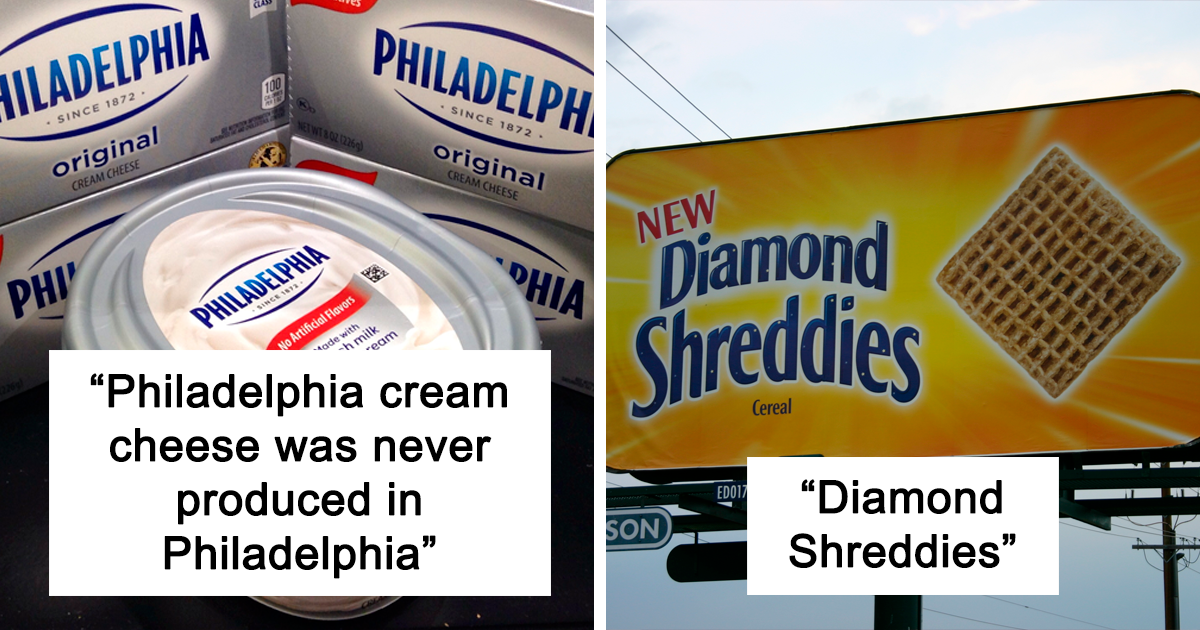
This one sounds like a prank, but it is a real lesson in brand positioning. Philadelphia Cream Cheese was invented in New York, not Pennsylvania. The “Philadelphia” name was adopted because Philadelphia had a reputation for premium-quality food. In other words, the brand borrowed trust from a place name long before “brand association” became agency jargon.
That tiny bit of history says a lot about marketing. Perception is often part of the product. The name, the story, the setting, and the associations around an item can shape how people receive it before they ever try it. Consumers do not just buy what something is. They buy what it signals.
And yes, that might sound a little dramatic for cream cheese. But welcome to marketing, where even your bagel spread has a strategy.
2. Tropicana’s Packaging Redesign Became a Cautionary Tale
One of the most famous branding missteps of the modern era involved Tropicana’s 2009 packaging redesign. The company replaced recognizable visual elements, including the familiar orange-with-a-straw imagery, with a cleaner look intended to feel more modern. The result was not delight. It was confusion.
Shoppers could not spot the product as easily, brand recognition weakened, and the redesign was quickly reversed. Over the years, this story has bounced around the internet as a “massive marketing fail,” and while viral retellings sometimes inflate the financial damage, the core lesson is real: packaging is not decoration. It is navigation.
For consumers in a hurry, familiar design acts like a shortcut. Remove too many cues at once and the shelf suddenly becomes a Where’s Waldo puzzle nobody asked for. This is why strong brands do not casually throw away their visual memory assets. If customers have spent years learning what your product looks like, changing it overnight can feel less like innovation and more like hiding your own keys.
3. Diamond Shreddies Proved Reframing Can Be Powerful
Another classic example came from the “Diamond Shreddies” campaign. The product itself did not change in any meaningful way. The cereal was simply reframed as a diamond instead of a square. Same piece. New angle. New story. More attention.
It was funny, self-aware, and oddly brilliant. The campaign worked not because people were fooled forever, but because people enjoyed being invited into the joke. The brand turned a stale product into a conversation piece.
This is one of the clearest reminders that marketing is often about perception, context, and framing more than raw invention. Not every campaign needs a breakthrough technology or a moonshot budget. Sometimes it needs a stronger narrative and the confidence to wink at the audience.
4. Scent and Sensory Marketing Are Real, Not Sci-Fi
One of the wildest examples tied to viral marketing trivia is the famous Dunkin’ bus-stop campaign in Seoul, where coffee aroma was released in sync with an audio cue. Whether people first heard about it through social clips or case-study retellings, the reason the story sticks is obvious: it shows that marketing is not limited to logos and taglines. Brands can influence memory and perception through the senses.
That does not mean every business should start pumping cinnamon into the parking lot like a holiday candle with ambition issues. It does mean sensory marketing is real. Smell, sound, texture, and environment all shape consumer response. The right cue can make a product feel warmer, more premium, more memorable, or more emotionally resonant.
Great marketers understand this intuitively. They know customers experience brands with more than their eyes. They feel the packaging, hear the tone, absorb the pacing, and remember the atmosphere. Sometimes the sale starts long before the sales pitch.
5. Banner Blindness Explains Why So Much Marketing Gets Ignored
One of the least glamorous but most important truths in marketing is that people get very good at ignoring anything that looks like an ad. Researchers call this banner blindness. Regular humans call it “I did not even see it.”
This matters because brands often assume visibility means attention. It does not. A page can be covered in calls to action, pop-ups, badges, discount boxes, and attention-grabbing colors, yet users will skip right over them if they resemble digital clutter.
That is why the most effective content often feels useful before it feels promotional. The audience’s guard goes down when the content helps, entertains, or genuinely interests them. In other words, the internet has trained people to avoid being interrupted. If you want attention, earn it.
What These Viral Facts Reveal About Human Behavior
The common thread running through all of these stories is not trickery. It is psychology.
Humans rely on shortcuts. We recognize familiar packaging faster than we process new information. We remember emotional experiences better than neutral ones. We trust people more than polished slogans. We react strongly to surprise, novelty, scarcity, humor, and social proof. And most of the time, we do not even realize how much these forces shape our choices.
That is what makes marketing both fascinating and dangerous in the wrong hands. Used well, it helps brands communicate clearly, create stronger experiences, and make products easier to understand. Used poorly, it becomes noise, manipulation, or cleverness with no real value behind it.
The best marketing is not magic. It is alignment. It lines up the product, the message, the design, the audience, and the emotional tone so the offer feels easy to understand and easy to remember.
Why “Crazy Marketing Facts” Spread So Easily Online
There is a reason people share this kind of content instantly. It taps several powerful social triggers at once.
First, it creates surprise. Surprise makes people pause, and pause is everything in a crowded feed. Second, it offers instant value. A good fact teaches something useful in under fifteen seconds. Third, it boosts identity. Sharing a smart or strange fact allows people to signal that they are informed, observant, witty, or in on the joke.
It also helps that this topic sits at the intersection of business, psychology, media, and everyday life. You do not need a marketing degree to care about why shoppers ignored a package redesign or why a product name was chosen for emotional reasons. These are stories about how people behave, and people are endlessly interested in people.
There is also a modern platform effect. Funny, relatable, bite-sized content performs well, especially when it sparks comments like “I never knew that,” “this explains so much,” or “marketing is terrifying and kind of genius.” Those responses are not just reactions. They are distribution engines.
What Brands and Creators Should Learn From This
If there is one major lesson from the success of a viral marketing-facts series, it is this: audiences want substance wrapped in personality. They do not just want information. They want information with flavor.
That has practical implications for any brand, publisher, or creator.
Lead with the unexpected. The opening line has to make people curious enough to keep going.
Teach something real. Viral reach without useful information fades fast. The memorable posts are the ones people can repeat later.
Use relatable examples. Everyday products, familiar brands, and recognizable buying experiences make abstract concepts feel concrete.
Keep it people-first. Search engines and social platforms may change constantly, but content that genuinely helps people remains the safest long-term bet.
Do not fake authenticity. Audiences are better than ever at spotting forced relatability, suspicious reviews, and undeclared sponsorships. Transparency is not optional anymore.
Think conversation, not just campaign. The goal is not always to “go viral.” Sometimes the real win is becoming memorable enough that people keep talking about you after the post ends.
Real-World Experiences That Make These Marketing Lessons Hit Home
Here is where the topic gets especially relatable. Most people have already lived through these marketing lessons without realizing it.
You walk into a grocery store and cannot find the product you always buy, even though it is sitting right in front of you. The company updated the packaging, changed the color balance, moved the logo, and removed the visual cue your brain had been using for years. That is not a small design issue. That is a real buying experience, repeated at scale.
Or maybe you have clicked past a website banner a dozen times without reading it once. Then the same message shows up inside a useful article, in a creator video, or as a customer testimonial, and suddenly it lands. Same offer. Different context. That is not random. That is attention behavior in action.
Small business owners see this all the time too. A local bakery posts a perfectly polished product photo and gets polite silence. Then it posts a funny behind-the-scenes clip about a cake that almost collapsed, or a short explainer about why one pastry takes two days to make, and people flood the comments. Why? Because the second post gives the audience a story, a personality, and a reason to care.
Marketers also learn quickly that the “best” campaign in the conference-room sense is not always the one customers respond to. A team may fall in love with a sleek redesign, a clever slogan, or an edgy ad concept, only to watch customers shrug because the update removed clarity instead of adding value. The market is brutally honest that way. It does not grade on effort. It grades on recognition, trust, and response.
Creators have parallel experiences. A highly produced video may underperform, while a simple clip with one sharp insight takes off because it feels natural and useful. That does not mean quality does not matter. It means relevance matters more. People share content that makes them feel something and gives them something to say.
Then there is the experience of recommendation itself. Think about how often people try a restaurant, app, skincare product, or coffee order because a friend mentioned it casually. Not an ad. Not a billboard. Not a dramatic sales page. Just one believable person saying, “Honestly, this is worth it.” That is why word of mouth remains one of the most valuable forces in marketing. It travels with built-in trust.
Even influencer marketing works best when it feels closer to that kind of believable recommendation than to an obvious sales script. Once audiences sense the post exists only to push a product, trust drops fast. But when the creator has credibility, context, and honesty, the content performs very differently.
All of this helps explain why a woman sharing “crazy facts about marketing” could go viral so easily. The facts are fun, sure. But they also validate everyday experiences people have had for years: getting pulled in by a product name, missing a redesigned package, trusting a recommendation over an ad, or suddenly realizing a brand has been shaping their impressions all along. That recognition is what turns trivia into traction.
Conclusion
The viral success of this marketing-facts trend is more than a fleeting internet moment. It is a reminder that people are deeply curious about what influences them, especially when the explanation is funny, surprising, and grounded in everyday life.
Marketing goes viral when it stops sounding like corporate wallpaper and starts revealing something true about how humans think, shop, notice, ignore, trust, and share. That is why stories about packaging failures, sensory tricks, brand naming, and attention habits travel so far. They do not just tell us how brands work. They tell us how we work.
And maybe that is the craziest marketing fact of all: the best campaigns are not only about selling products. They are about understanding people well enough to become memorable in the tiny window before they scroll away.