

The Amiga is one of those computers that refuses to stay quietly in the attic. It sits there, yellowed by time, maybe missing a keycap, possibly smelling faintly of warm dust and 1989, and still somehow gives off the energy of a machine that could boot up and show your modern laptop a few party tricks. Now, thanks to new Amiga PCB projects, builders and collectors can do something that once sounded almost absurd: order a brand-new Amiga-compatible circuit board and build a fresh machine around classic hardware.
The headline is exciting, but it deserves a careful explanation. A brand-new Amiga PCB is not the same as buying a sealed, factory-new Commodore Amiga from a magic warehouse behind a shopping mall. What you are getting is usually a modern manufactured motherboard or replacement PCB designed to work with original Amiga custom chips, a Motorola 68000-family CPU, and compatible supporting parts. In other words, it is a new skeleton for an old soul.
For retro computing fans, that is a big deal. Original Amiga boards are aging, corroding, and becoming harder to repair. Battery leakage, cracked solder joints, damaged traces, and decades of questionable storage have taken their toll. A new Amiga PCB gives restorers a cleaner path: salvage the rare chips, install them into a fresh board, and create a system that keeps the real hardware experience alive without relying entirely on emulation.
What Is This Brand-New Amiga PCB?
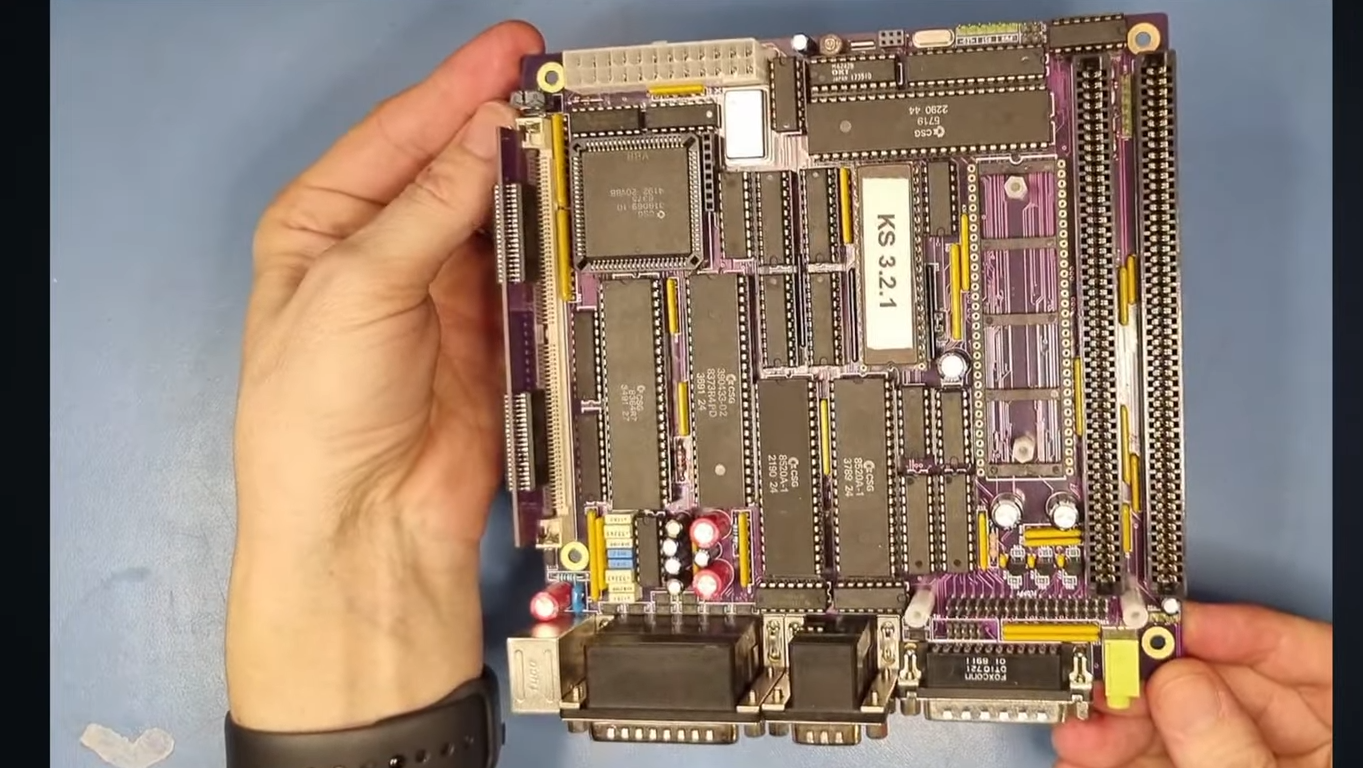
The project that brought renewed attention to the phrase “brand-new Amiga PCB” is Denise, a compact Amiga-compatible motherboard inspired by the Amiga 500 Plus design. Denise is not a direct one-to-one copy of a single Commodore board. Instead, it is best understood as a compact A500+ compatible motherboard with two Zorro II-compatible expansion slots and several practical modern touches.
That combination is what makes the board interesting. Denise keeps the classic Amiga hardware philosophy at its core. It is designed around real Amiga custom chips rather than replacing everything with software emulation or an FPGA-only approach. Builders still need to source key chips such as Agnus, Denise, Paula, Gary, CIA chips, ROMs, and a suitable 68000-series processor. The board gives those parts a new home, but it does not magically manufacture the rare chips for you. Sadly, the chip fairy remains unreliable and refuses to answer emails.
Modern support components help make the board more convenient. Denise uses microcontrollers for functions such as Amiga or PC keyboard support, Amiga or PS/2 mouse compatibility, scroll wheel support, floppy detection, and ROM selection. This gives the project a nice “best of both worlds” feel: real Amiga character with fewer daily annoyances.
Why Amiga Fans Care So Much
To understand why a new Amiga PCB matters, you have to understand why the Amiga itself still matters. Released in the 1980s, the Amiga line stood out because it was built around a custom-chip architecture that felt wildly advanced for home users. The familiar trio of Agnus, Denise, and Paula handled major graphics, audio, memory, and I/O responsibilities, allowing the system to punch above its weight.
The Amiga 500, in particular, became the people’s Amiga. It brought multimedia computing, multitasking, colorful games, tracker music, animation, and creative software into homes at a time when many other computers were still trying to look exciting in beige. The machine was beloved by gamers, artists, musicians, demo-scene coders, and anyone who thought computers should do more than display spreadsheets with the emotional range of a filing cabinet.
That popularity created a huge installed base, but time has not been gentle. The Amiga 500 Plus and related boards are especially known for problems caused by leaking barrel batteries used for the real-time clock. Once those batteries leak, alkaline residue can creep across traces and components, causing green corrosion, signal failures, unstable boots, and emotional damage to anyone holding a soldering iron at 1 a.m.
The Big Problem: Original Amiga Boards Are Getting Old
Vintage computers age in several ways at once. Capacitors dry out. Sockets loosen. Connectors oxidize. Plastic yellows. Batteries leak. Previous owners perform “repairs” with the confidence of a raccoon operating a glue gun. A machine that looks fine in an online auction photo can arrive with hidden corrosion, lifted pads, bodge wires, missing custom chips, and a mysterious screw rolling around inside the case like a tiny metal ghost.
For many Amiga owners, the most valuable parts of a damaged machine are still the custom chips. These chips are difficult to replace because they are no longer produced. If the chips survived but the motherboard did not, a replacement PCB becomes an appealing option. Instead of spending weeks chasing broken traces, a builder can transfer good chips to a new board and rebuild the computer from a cleaner foundation.
This is the same logic behind other Amiga-compatible board projects such as A500++, Rämixx500, ReAmiga, and similar community hardware efforts. These projects vary in form factor, licensing, availability, and design goals, but they share a common theme: preserve the experience of real Amiga hardware before original boards become too scarce or too fragile to use.
Denise, A500++, and Rämixx500: Similar Spirit, Different Paths
Denise is part of a broader movement in retro computing. The A500++ project is a replica-style Amiga 500 Plus PCB with enhancements, commonly associated with Rob “Peepo” Taylor and Bob’s Bits. It is often used as a replacement for damaged A500+ boards, letting builders move over original custom chips and populate the rest with new or available components.
Rämixx500 takes another notable approach. It is an open hardware remake of the Commodore Amiga 500 Plus Rev. 8A.1 mainboard. Its documentation and schematics are publicly available, which makes it especially attractive for builders who want transparency, modifiability, and a deeper understanding of how the machine works. It also highlights one important reality: building a new Amiga board is not beginner-level weekend crafting. It is more “careful electronics project” than “snap together a plastic model while eating chips.”
Denise differs because it is not merely a full-size board replacement. It aims for a compact, semi-modern, expandable Amiga-compatible system. With its smaller layout, two Zorro II-compatible slots, and modern input support, it appeals to builders who want the classic Amiga experience but are comfortable stepping slightly away from the original case-and-board format.
What You Actually Need To Build One
A new Amiga PCB is only the beginning. Builders typically need a full set of compatible Amiga custom chips, a Motorola 68000-family CPU, ROMs, memory, passives, sockets, connectors, and other components. Depending on the board, some surface-mount parts may already be installed, while others must be soldered by the builder or a professional technician.
Rare components should be sourced first. This is practical advice, not pessimism wearing a fake mustache. Common resistors and capacitors are easy to buy. Original Amiga custom chips are not. Before ordering piles of standard parts, make sure the critical chips are available, tested, and compatible with the board version you plan to build.
Typical build requirements include:
- Amiga custom chips such as Agnus, Denise, Paula, Gary, and CIA chips
- A compatible Motorola 68000-series CPU
- Kickstart ROMs or supported ROM solution
- RAM, sockets, resistors, capacitors, connectors, and logic ICs
- A keyboard and mouse solution supported by the board
- A floppy drive, Gotek, or other storage setup
- A safe, modern power supply
- Patience, flux, magnification, and the ability to admit when a solder bridge is your fault
Who Should Order A Brand-New Amiga PCB?
A brand-new Amiga PCB is ideal for experienced hobbyists, vintage computer restorers, electronics technicians, and serious Amiga collectors. It is especially useful if you already own a dead or battery-damaged Amiga with recoverable custom chips. In that situation, the new board can turn a sad donor machine into a working system again.
It may not be the best choice for someone who simply wants to play Lemmings, Speedball 2, or The Secret of Monkey Island tonight. For that, an emulator, THEA500 Mini, MiSTer FPGA, or a refurbished working Amiga may be easier. Building a PCB-based Amiga is rewarding, but it is not always quick, cheap, or forgiving. The machine will teach you humility, usually through a black screen and a power LED that looks judgmental.
That said, the reward is special. When a newly built Amiga-compatible board finally boots, it is not just another retro gadget coming to life. It is a rescue mission, a hardware lesson, and a small rebellion against disposable technology. You are not just consuming nostalgia; you are participating in preservation.
Why This Matters For Retro Computing Preservation
Retro computing preservation is not only about keeping software files on archive servers. Hardware matters too. Original timing, analog video behavior, audio characteristics, expansion quirks, and physical interfaces all shape the experience. A real Amiga running on real chips behaves differently from a purely emulated environment, and many enthusiasts value those differences.
New PCBs help bridge the gap between museum-piece fragility and practical usability. They allow collectors to keep machines running without sacrificing every original board to corrosion repair. They also create learning opportunities. Builders can study schematics, trace signal paths, understand custom-chip behavior, and appreciate how much engineering Commodore packed into machines that now look charmingly modest on a desk.
In a funny way, the Amiga community has become what Commodore itself never quite managed to remain: patient, inventive, and deeply committed. Decades after the original commercial era ended, hobbyists are still designing boards, writing firmware, documenting repairs, testing expansions, and helping strangers online diagnose why a screen is green, gray, red, or emotionally complicated.
Important Buying Advice Before You Click Order
Availability changes quickly. Many of these boards are produced in small batches by individual makers or niche retro hardware shops. A listing may be active one month and out of stock the next. Some sellers move between platforms such as Tindie, Lectronz, private stores, or specialist retro shops. Always verify current stock, shipping options, included parts, and whether the board is bare, partially assembled, or fully assembled.
Read the documentation before buying. That sentence sounds boring, but it can save you money and several evenings of muttering at a multimeter. Confirm which Agnus version is required, whether OCS or ECS chips are supported, what ROM options exist, which keyboard and mouse interfaces are available, and whether any SMD soldering is required.
Also budget honestly. The PCB itself may not be the most expensive part. Custom chips, sockets, shipping, tools, donor machines, cases, keycaps, power supplies, video adapters, storage upgrades, and “just one more small part” can turn a modest project into a wallet cardio routine.
The Experience: What It Feels Like To Build A New Amiga PCB
Building a brand-new Amiga PCB is a strange and wonderful experience because it mixes archaeology with modern electronics. You begin with a clean board that looks almost too perfect. The silkscreen is crisp. The pads shine. There is no dust, no battery crust, no suspicious brown patch near a resistor, and no evidence that someone once tried to fix it with a kitchen knife. It feels less like repairing an old computer and more like assembling an alternate timeline where Commodore had better long-term planning.
The first stage is usually research. Builders compare board revisions, check chip compatibility, review bills of materials, and hunt for rare parts. This is where the project teaches its first lesson: the Amiga was not one simple machine. It was a family of related designs with chipset revisions, ROM versions, memory configurations, and expansion behaviors that can matter a lot. A chip that works beautifully in one setup may be wrong for another. The details are not decoration; they are the difference between a boot screen and a very expensive paperweight.
Then comes the sourcing phase, which is basically a treasure hunt with shipping fees. You might find a donor board with dead traces but good chips. You might buy tested ICs from a specialist. You might discover that a connector is easy to describe but oddly difficult to find in the exact format you want. This is when you learn that “available” and “available at a reasonable price from a seller who ships to your country” are two very different concepts.
Soldering the board can be calming if you enjoy detail work. It can also be terrifying when you reach a fine-pitch component and realize coffee was a poor lifestyle choice. Good lighting, magnification, flux, and a temperature-controlled iron are not luxuries. They are your tiny army. Many builders prefer to install low-profile parts first, then sockets, then taller components such as capacitors and connectors. This makes handling easier and reduces the chance of bending parts while flipping the board.
The first power-on is the dramatic scene. You check the voltages. You check them again. You wonder if you should check them a third time because the Amiga gods appreciate caution. Then you apply power and watch. If everything works, the machine may greet you with a Kickstart screen, and suddenly all the part hunting, solder smoke, and nervous continuity testing feel worth it. If it does not work, welcome to troubleshooting, where every signal has a story and every socket becomes a suspect.
The best part is that a successful new Amiga PCB build does not feel like a clone in the cheap sense. It feels like continuity. The custom chips are still doing their dance. The audio still has that familiar character. The graphics still carry the charm that made the Amiga special. Yet the board underneath is fresh, reliable, and easier to trust than a corroded original that has spent thirty years losing a slow argument with chemistry.
For collectors, the experience also changes the relationship with vintage hardware. Instead of treating every original motherboard as a fragile relic, you can see it as part of a living ecosystem. Some boards should be preserved untouched. Some should be repaired. Some are too far gone but can donate chips to new builds. New PCBs give the community more choices, and that is exactly what preservation needs.
Conclusion
The ability to order a brand-new Amiga PCB is more than a neat retro headline. It represents a practical solution to a growing preservation problem. Original Amiga computers are aging, but the passion around them is not fading. Projects like Denise, A500++, and Rämixx500 show that the community is willing to do the careful, technical, occasionally maddening work required to keep real Amiga hardware alive.
For the right builder, a new Amiga-compatible PCB can become the foundation of a dream machine: part restoration, part education, part nostalgia-powered electronics adventure. It will not eliminate the challenge of sourcing rare chips, and it will not turn every beginner into a repair wizard overnight. But it does offer something valuable: a fresh path forward for one of the most beloved computers ever made.
So yes, you can now order a brand-new Amiga PCB. Just remember: the board may be new, but the Amiga spirit inside it is delightfully, stubbornly, gloriously old-school.