

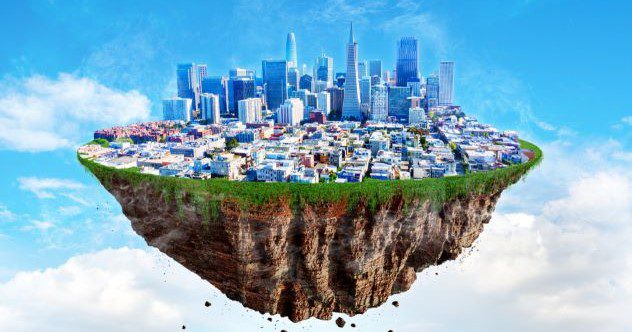
Future architecture is no longer limited to “taller glass box, shinier lobby, better coffee machine.” Engineers, urban planners, climate scientists, aerospace teams, and designers are now imagining structures that float, breathe, print themselves, generate energy, resist floods, and maybe even hang in orbit like humanity’s most ambitious DIY project. The phrase extreme structures we might see in the future sounds like science fiction, but many of the ideas below are already being explored through real prototypes, research programs, public-private partnerships, and bold urban proposals.
Of course, not every futuristic structure will become reality exactly as advertised. Some concepts may be scaled down, delayed, redesigned, or politely placed in the “cool, but not this decade” drawer. Still, the direction is clear: tomorrow’s buildings will need to solve bigger problems than square footage. They may have to handle sea-level rise, population growth, energy demand, space exploration, food production, heat waves, and the small matter of keeping humans comfortable without turning the planet into a toaster oven.
Below are ten extreme future structures that could reshape how we live, work, travel, and survive. Some may arrive within decades. Others may take a century or more. All of them reveal one big idea: the future of construction will be less about building objects and more about building systems.
1. Megatall Vertical Cities
The skyscraper has always been architecture’s way of saying, “Look what we can do when land gets expensive.” But future megatall buildings could go far beyond office towers. We may see vertical cities that combine housing, schools, parks, clinics, grocery stores, coworking spaces, entertainment, and transit hubs inside one enormous structure.
Today’s tallest buildings already push materials, elevator design, wind engineering, and structural systems to the limit. Future vertical cities would add another layer of complexity: they would need to function like neighborhoods stacked in the sky. Instead of commuting across town, residents might travel between “districts” using high-speed elevators, sky bridges, drone ports, and automated delivery systems.
Why It Could Happen
Urban land is becoming more valuable, and many cities are looking for ways to reduce sprawl. A well-designed vertical city could concentrate services, lower transportation demand, and preserve more land outside the urban core. The challenge is making these structures humane, not just huge. Nobody wants to live on floor 198 if the only view is another wall and the nearest tree is a loading-screen image.
2. Linear Megacities
Instead of spreading outward like spilled coffee, some future cities may stretch in long, narrow lines. Linear city concepts imagine dense urban development organized along high-speed transit corridors. The goal is simple: put homes, jobs, schools, shops, and public services within a short walk of transit, while reducing car dependency.
The most famous modern example is Saudi Arabia’s proposed THE LINE, an ambitious linear urban project planned as part of NEOM. Whether that specific project reaches its original scale or evolves into something smaller, it has already pushed the linear city conversation into the mainstream. The idea is extreme because it challenges the circular, grid-based, and suburban patterns that have shaped cities for centuries.
What Makes It Extreme?
A true linear megacity would require extraordinary coordination: transit, utilities, emergency access, climate control, waste systems, logistics, and public life would all need to work along a narrow footprint. If done well, it could reduce travel time and land use. If done poorly, it could become the world’s longest hallway with better branding.
3. Floating Cities
As coastal cities face higher flood risks, floating urban districts may move from wild idea to serious adaptation strategy. Floating cities are designed to rise and fall with water levels, using buoyant platforms, modular construction, renewable energy, water recycling, and protected marine infrastructure.
Projects such as OCEANIX Busan have explored how floating communities could help land-constrained coastal cities adapt to sea-level rise. These communities are not imagined as cruise ships with rent payments. The more serious versions include food production, solar energy, storm-resistant platforms, shared public spaces, and systems for handling water and waste.
Why It Matters
Sea-level rise and coastal flooding are no longer distant worries. Many cities are already investing in seawalls, elevated roads, floodable parks, and retreat plans. Floating districts could become one more tool in the climate adaptation toolbox, especially in places where moving inland is difficult or politically complicated.
4. Underwater Habitats
Humans have explored the ocean for centuries, but we still know less about deep-sea environments than we probably should, considering the ocean covers most of Earth. Future underwater structures could support marine research, climate monitoring, aquaculture, tourism, and even temporary living spaces for scientists.
Unlike floating cities, underwater habitats would need to handle pressure, corrosion, oxygen supply, emergency evacuation, and the psychological weirdness of looking out the window and seeing a fish judge your life choices. These structures would likely begin as research stations before expanding into more ambitious uses.
Potential Uses
Underwater structures could support coral reef restoration, ocean farming, climate data collection, and marine robotics. They could also become specialized training environments for space missions, since isolated underwater habitats share some similarities with off-world living: limited resources, controlled air, tight spaces, and a strong need for teamwork.
5. Underground “Earthscrapers”
If skyscrapers go up, earthscrapers go down. Future underground structures could extend deep below city streets, creating climate-protected districts for transportation, storage, data centers, retail, cultural spaces, and even housing in extreme climates.
Underground construction is not new. Cities already use tunnels, subways, utility corridors, parking structures, stormwater systems, and underground malls. What may change in the future is scale. As surface land becomes crowded and heat becomes more intense, underground spaces could offer stable temperatures and protection from harsh weather.
The Big Challenge
The main problem is not digging holes. Humans are surprisingly good at that. The real challenge is making underground environments healthy, bright, safe, and emotionally comfortable. Future earthscrapers would need excellent ventilation, natural-light systems, green interiors, clear navigation, and public spaces that do not feel like a parking garage decided to become a lifestyle brand.
6. 3D-Printed Moon and Mars Habitats
One of the most exciting categories of future structures is off-world housing. NASA and other space organizations have studied how habitats on the Moon or Mars could be built using local materials, robotic systems, and additive construction. In plain English: future astronauts may not bring every brick from Earth. They may print shelters using lunar or Martian soil-like material.
This matters because launching heavy construction materials into space is extremely expensive. A 3D-printed habitat could use local regolith as a building ingredient, creating protective shells around pressurized living spaces. These structures would need to shield crews from radiation, temperature extremes, dust, micrometeorites, and isolation.
Why It Could Change Earth Construction Too
Technologies developed for space often loop back to Earth. Robotic construction, low-waste printing, autonomous site preparation, and resource-efficient materials could help build housing in remote, disaster-hit, or hard-to-reach regions. Mars may be far away, but the housing crisis is very much local.
7. Inflatable Space Habitats
Inflatable space habitats sound like pool toys with a PhD, but the concept is serious. Instead of launching rigid modules that take up a lot of rocket volume, expandable habitats can be compact during launch and then deployed in orbit or on planetary surfaces.
These structures could provide more internal volume for astronauts while reducing launch constraints. Their flexible walls would not be flimsy balloons; they would use advanced layered materials designed for strength, pressure retention, radiation protection, and micrometeoroid resistance.
Where We Might See Them
Inflatable habitats could appear in commercial space stations, lunar bases, Mars missions, and deep-space research platforms. If private space stations become more common after the International Space Station era, expandable structures may help create larger living and working areas without requiring massive single-piece modules.
8. Space Elevators
The space elevator is one of the most extreme engineering dreams ever proposed: a tether stretching from Earth toward space, allowing climbers to move cargo upward without traditional rockets. It sounds like someone looked at a launchpad and said, “What if we just built a really, really long rope?”
The appeal is obvious. Rockets are powerful but expensive and energy-intensive. A working space elevator could dramatically change access to orbit. The problem is also obvious: the material requirements are brutal. The tether would need extraordinary strength, low weight, resistance to damage, and long-term durability in a harsh environment.
Is It Realistic?
Not soon. Current materials are not ready for a full Earth-based space elevator. However, research into carbon nanotubes, advanced fibers, orbital dynamics, and robotic climbers keeps the concept alive. A lunar space elevator, where gravity is weaker, may be more realistic than an Earth version. Either way, this remains one of the boldest future structure ideas on the list.
9. Space-Based Solar Power Stations
Imagine gigantic solar arrays in orbit collecting sunlight almost continuously, then transmitting energy back to Earth. That is the basic idea behind space-based solar power. The structure would not look like a normal building, but it would be one of the largest engineered systems humans could ever assemble.
Because orbiting solar platforms can avoid clouds, night cycles, and many weather interruptions, they could provide a more consistent energy source than ground-based solar. The trade-offs are significant: launch cost, assembly, maintenance, transmission safety, orbital debris, regulation, and economics all need to work.
Why It Is Still Being Studied
As the world searches for clean, reliable energy, space-based solar power keeps returning to the conversation. Even if it does not become the cheapest solution, research into lightweight solar materials, wireless power transmission, robotics, and in-space assembly could support other future industries.
10. Carbon-Absorbing Smart Skyscrapers
Buildings are responsible for a major share of global energy use and construction-related emissions. Future skyscrapers may not only reduce emissions; some may be designed to absorb or store carbon over their life cycle. Concepts such as SOM’s Urban Sequoia imagine high-rises that combine low-carbon materials, carbon capture strategies, biomaterials, renewable energy, and circular design.
A carbon-absorbing skyscraper would not be a magic wand. It would still require careful engineering, responsible sourcing, durable materials, and realistic accounting. But the concept points toward an important shift: buildings may become active environmental tools rather than passive energy consumers.
What This Could Look Like
Future smart skyscrapers may include algae facades, mass timber components, recycled steel, carbon-sequestering concrete, responsive windows, AI-managed energy systems, rainwater harvesting, rooftop farming, and integrated battery storage. In other words, the building of the future may act less like a sealed box and more like a living machine with a very expensive maintenance manual.
Common Technologies Behind Future Extreme Structures
Although these ten structures seem wildly different, they share several core technologies. Advanced materials will be essential, including ultra-strong composites, low-carbon concrete, engineered timber, smart glass, and corrosion-resistant alloys. Robotics will also matter, especially for space construction, underwater maintenance, and high-risk environments.
Artificial intelligence may help manage energy, elevators, traffic, safety systems, and building maintenance. Sensors will monitor structural health in real time, detecting cracks, stress, moisture, vibration, and temperature changes before they become disasters. Renewable energy, water recycling, and circular material flows will become standard features rather than luxury upgrades.
The most successful future structures will not simply be extreme in appearance. They will be extreme in performance. A building shaped like a spaceship is fun. A building that uses less energy, survives floods, supports public life, and improves health is actually useful.
Risks and Reality Checks
Extreme structures can inspire innovation, but they can also become expensive distractions. Not every city needs a floating neighborhood. Not every desert needs a mirrored megastructure. Not every problem should be solved by making something enormous and then asking a marketing team to describe it as “human-centered.”
Future architecture must balance ambition with ethics, cost, ecology, and livability. Who gets to live in these structures? Who pays for them? What communities are displaced? How much energy do they use? Are they resilient, or just visually dramatic? These questions matter as much as the engineering.
The best future structures will likely be those that combine bold design with everyday usefulness. A flood-resilient school, a cool shaded transit hub, a low-carbon apartment tower, or a flexible emergency shelter may not look as extreme as a space elevator, but it can still change lives.
Experience-Based Reflections: What It Might Feel Like to Live Around Extreme Future Structures
Imagining these structures is easy from a distance. Living near them would be a different experience entirely. Picture waking up in a vertical city where your apartment, doctor, gym, grocery store, school, and favorite noodle spot are all inside one tower. Your morning commute might be an elevator ride, which sounds wonderful until everyone else in the building also decides to leave at 8:05 a.m. The design would need to make daily life feel natural, not like living inside an airport terminal with houseplants.
A floating city would feel even more unusual. The first few days might be magical: sea air, water views, solar panels, boardwalks, and the gentle reminder that your neighborhood has buoyancy. But residents would quickly care less about the novelty and more about ordinary details. Is the floor stable during storms? Is the drinking water reliable? Can kids play safely outside? Does delivery pizza arrive by boat, drone, or an exhausted person on a very committed paddleboard?
Underground cities would create another kind of adjustment. Some people might love the quiet, temperature stability, and protection from extreme weather. Others might miss the sky after approximately twelve minutes. The success of underground living would depend on design tricks that support mental comfort: daylight tubes, open atriums, plants, art, warm materials, and clear exits. Nobody wants their home to feel like a bunker unless the bunker has excellent Wi-Fi and emotional range.
Space habitats would be the most psychologically intense. A 3D-printed Mars shelter might be a triumph of engineering, but daily life inside would be strict, repetitive, and highly cooperative. Every wall, seal, airlock, and water system would matter. On Earth, a leaking faucet is annoying. On Mars, it becomes a team meeting with consequences. The experience would teach humans to respect resources in a way that ordinary city life often hides.
Carbon-absorbing skyscrapers and grid-smart buildings may be less dramatic, but they could change daily experience in subtle ways. Your apartment might automatically shift energy use when the grid is stressed. Windows could tint during heat waves. Shared batteries could store rooftop solar power. Indoor air quality systems could react to pollution before you notice it. The building would become a quiet partner in comfort, like a very responsible roommate who never leaves dishes in the sink.
The most exciting part of future structures is not the “wow” factor. It is the possibility that architecture becomes more responsive to human needs and planetary limits. Extreme buildings should not exist just to win skyline competitions. They should help people live safely, affordably, and with dignity in a changing world. If the future gives us floating neighborhoods, lunar habitats, vertical farms, and carbon-storing towers, the real success will be measured not by how futuristic they look, but by whether ordinary people can thrive inside them.
Conclusion
The future of architecture will be bold, strange, practical, and occasionally ridiculous in the best possible way. The 10 extreme structures we might see in the future show how construction is expanding beyond traditional buildings into climate adaptation, space exploration, energy systems, and living infrastructure. Some concepts may remain experimental, while others may quietly become normal. A floating district might sound outrageous today, but so did skyscrapers, airplanes, and ordering groceries from a phone.
What matters most is not whether every futuristic structure becomes real. What matters is that architects and engineers are asking bigger questions. How can cities survive rising seas? How can buildings reduce carbon instead of creating more of it? How can humans live beyond Earth? How can infrastructure become smarter, cleaner, and more flexible? The answers may shape the next century of human life.
If the past was about building higher, the future will be about building wiser. And yes, maybe also higher, deeper, farther, floatier, and occasionally in orbit.