

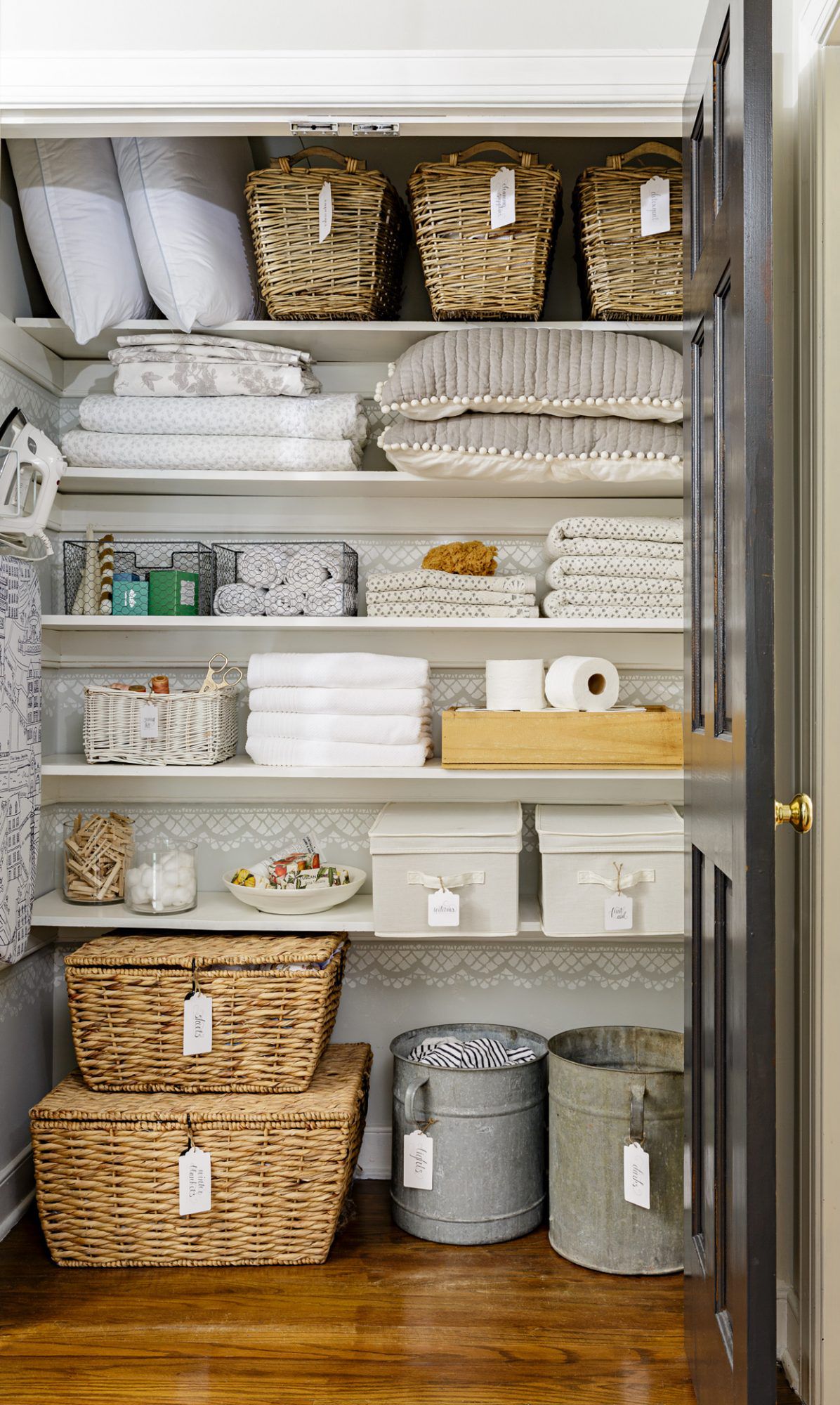
Clutter isn’t a personality flaw. It’s usually a design flaw. When stuff doesn’t have an obvious home, or putting it away takes more steps than making a frozen pizza, your home quietly votes for chaos. The fix isn’t buying more bins (although, yes, bins are adorable). The fix is building storage systems that match real life: where you drop your keys, how you cook, where the mail piles up, and why your “temporary” junk drawer has been temporary since 2019.
Below are 12 smart storage ideas to combat clutterpractical, realistic, and friendly to small spaces. Each one is designed to reduce visual noise, speed up cleanup, and keep your stuff easy to find without turning your home into a color-coded museum.
1) Create an “Entry Drop Zone” That Stops the Pile-Up
Most clutter starts at the front door: keys, bags, sunglasses, random receipts that somehow multiply overnight. Give that chaos a designated landing stripa small console, wall shelf, or narrow bench that screams “drop it here.”
Try this
- Hooks at eye level for coats, backpacks, and dog leashes.
- A tray or bowl for keys and earbuds (because pockets are liars).
- A slim file sorter for mail: “Act,” “File,” “Recycle.”
Bonus points if you add a small basket labeled “Returns” so you stop “meaning to return that” for three full seasons.
2) Go Vertical: Walls Are Storage Gold
If your floors are crowded, look up. Vertical storage is one of the fastest ways to create space without adding furniture. Think floating shelves, wall rails, hanging racks, and tall bookcases that use height instead of square footage.
Where it shines
- Kitchens: wall rails for utensils, shelves for everyday dishes.
- Bathrooms: narrow shelves over the toilet, baskets on hooks.
- Bedrooms: tall shelving units for folded clothes, bins, or books.
The trick is to store what you actually use within easy reach and put “rarely” items higher up. If you need a ladder every day, the system is roasting you.
3) Use the Back of Doors (They’re Just Standing There, Unemployed)
Over-the-door organizers are basically free square footage. They work best when you store lightweight, high-frequency items you want visible and easy to grab.
Smart uses
- Pantry door: snacks, foil, zip bags, spices.
- Bathroom door: hair tools, skincare backups, first-aid basics.
- Closet door: shoes, accessories, workout gear.
Keep it from becoming a “door junk drawer” by limiting categories. One door = one mission.
4) Under-Bed Storage, Upgraded (No Dust Bunnies Allowed)
Under the bed is prime storage real estateespecially in small homes. Use low-profile, zippered fabric bins, lidded boxes, or rolling drawers to store off-season clothing, spare bedding, or holiday decor.
Make it work better
- Choose containers with handles so you’ll actually pull them out.
- Store items in “sets” (all guest bedding together, all winter sweaters together).
- Add a simple label: “Winter,” “Extra Towels,” “Gift Wrap.”
If you’re storing textiles, breathable fabric containers help prevent that “mystery closet smell” from showing up uninvited.
5) Pick Furniture That Secretly Stores Stuff
Storage furniture is the adult version of hiding vegetables in mac and cheese. It looks normal, but it’s doing heroic work behind the scenes. Think ottomans with lids, benches with cubbies, bed frames with drawers, and lift-top coffee tables.
Best places to use it
- Living room: blankets, remotes, board games, chargers.
- Entry: shoes, hats, dog gear.
- Bedroom: extra linens, seasonal accessories.
One rule: don’t turn hidden storage into hidden clutter. Store “useful, not guilty.”
6) Build Closet “Zones” So Items Stop Migrating
Closets get messy when everything is everywhere. Zoning fixes that by giving each category a home: work clothes, casual, shoes, bags, accessories, seasonal. When you can’t find something, it’s often because your closet has no map.
Zone like a pro
- Keep daily items in the “prime zone” (easy reach).
- Use shelf dividers to keep stacks from collapsing into fabric avalanches.
- Store off-season items up high or in labeled bins.
Matching hangers aren’t just aestheticthey reduce bulk and help clothing hang evenly, which makes your closet feel bigger.
7) Containerize by Category (Not by Room)
One of the most effective decluttering tricks is to group “like with like,” then store the group in one container. This prevents scavenger hunts and duplicate buying (“Do we own scissors?” becomes “Check the scissors bin.”)
Examples that actually change your life
- Gift wrap bin: tape, scissors, tags, ribbons, bags.
- Battery + lightbulb box: all sizes, plus a tester.
- Pet station: grooming tools, treats, poop bags, meds.
The best part: cleanup is faster because you’re putting away categories, not random objects with no tribe.
8) Make Labels Your “Future You” Love Language
Labels aren’t about being fancy. They’re about reducing decision fatigue. When a bin is labeled, you don’t have to remember what’s insideor where it goes. That’s how systems last past the first enthusiastic weekend.
What to label first
- Pantry containers and bins
- Cords and chargers (yes, all of them)
- File folders for paperwork and warranties
- Kids’ toy bins (so cleanup isn’t a negotiation)
Keep labels simple: one to three words. If your label needs a paragraph, the category is too complicated.
9) Tame the “Under-Sink Black Hole” With Pull-Outs and Tension Rods
Under-sink cabinets are awkward: pipes, weird corners, and a mysterious drip that appears exactly when guests are over. The best strategy is to use tools designed for tight spacespull-out bins, lazy Susans, small drawers, and a tension rod for hanging spray bottles.
Quick setup
- Bottom level: two pull-out bins (cleaning, backups).
- Side wall: adhesive hooks for gloves and brushes.
- Top area: tension rod to hang spray bottles by the trigger.
This turns the under-sink area into a “cleaning supply station” instead of a place where sponges go to retire.
10) Divide Drawers So They Stop Eating Small Items
Drawers without dividers become a blender set to “panic.” Modular drawer inserts create micro-homes for things like makeup, tools, utensils, and office suppliesso items don’t slide around and disappear.
Where drawer dividers are most magical
- Kitchen: utensils, measuring spoons, snack bags
- Bathroom: skincare, hair ties, razors
- Office: pens, chargers, paper clips, sticky notes
Measure your drawer first. Nothing is more humbling than buying dividers that fit… nowhere.
11) Put Pegboard or Slatwall to Work in Busy Spaces
Pegboard and slatwall systems aren’t just for garages. They’re excellent in laundry rooms, craft corners, mudrooms, and home officesanywhere you want tools and supplies visible, flexible, and off countertops.
Why it works
- It uses vertical wall space and clears floors.
- Hooks and shelves can be rearranged as needs change.
- You can store odd shapes (scissors, tape, tools) that hate drawers.
If your hobby supplies constantly explode into the living room, a pegboard is basically a peace treaty.
12) Use Overhead Storage for Seasonal and Bulky Gear
Bulky itemsholiday decor, camping gear, sports equipmentdon’t belong in your daily living space. In garages (or basements), overhead racks and high shelving keep these items out of the way while still accessible.
Safety + sanity tips
- Store heavy items on sturdy shelving (not above your car’s hood, please).
- Use identical totes so stacking is stable.
- Label two sides of each tote for easy spotting.
This is one of the few storage upgrades that can instantly make a garage feel twice as bigwithout moving a wall.
Conclusion + Real-Life Experience (So You Don’t Repeat My Mistakes)
The most “clutter-proof” homes aren’t the ones with the most storage productsthey’re the ones with the least friction. When every high-traffic item has a home, the mess stops forming in the first place. If you only do three things this week, start here: (1) create an entry drop zone, (2) label your most-used bins, and (3) divide one junk drawer into clear sections. Small wins compound fast.
My 500-ish Words of Experience: What Actually Worked (and What Totally Didn’t)
I’ve learned the hard way that clutter doesn’t vanish because you bought “pretty storage.” Clutter vanishes when your storage matches your habits. My first attempt at organizing was basically a shopping spree disguised as self-improvement. I bought matching bins, matching baskets, andbecause I was feeling ambitiousmatching labels. My home looked amazing for approximately 48 hours, right up until real life showed up wearing muddy shoes and carrying a pile of mail.
Here’s mistake number one: I bought containers before deciding what deserved space in my home. That’s how you end up with a beautifully organized collection of things you don’t even like. The fix was annoying but effective: I had to sort by category first (all cables together, all cleaning supplies together, all “maybe I’ll scrapbook someday” supplies together) and ask, “Would I replace this if it disappeared?” If the answer was no, it didn’t deserve a premium suite in a lidded box.
Mistake number two: I created systems that were too complicated. I once made a “perfect” pantry setupeverything decanted, everything labeled, everything lined up like a grocery store display. It looked stunning. It also required me to refill containers after every trip, which meant I stopped doing it after exactly one trip. The system that stuck was simpler: a few stackable bins (snacks, baking, breakfast) plus labels, plus a rule that anything half-used had to stay visible so it didn’t get forgotten in the back. Pretty is nice. “Works on a Tuesday” is better.
Mistake number three: I ignored “drop zones.” I kept thinking I could train myself to put things away perfectly every time. Spoiler: I could not. What worked was giving myself a safe place to land items where they naturally ended up. Keys got a tray by the door. Bags got hooks. Mail got a sorter with only three slots. When I reduced the number of decisions required, the clutter stopped breeding.
The biggest surprise? Labels aren’t just for show. Once I labeled bins (“Batteries,” “Lightbulbs,” “Gift Wrap”), everyone in the house stopped asking where things wereand things started returning to their homes. It wasn’t magic; it was clarity. The label did the remembering for us.
So if you’re feeling overwhelmed, here’s the best advice I can give: don’t aim for perfect. Aim for obvious. Obvious homes. Obvious categories. Obvious labels. A system you’ll actually use beats a system that looks good in photosand the moment your storage starts serving your life (instead of the other way around), clutter loses most of its power.