

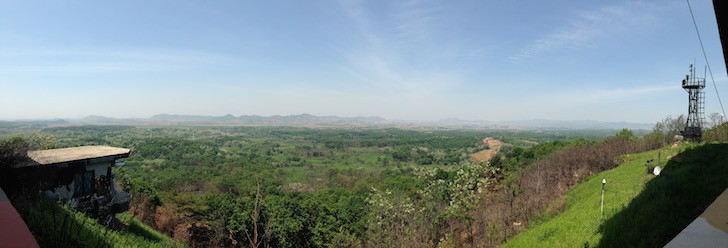
There are borders, and then there is the Korean Demilitarized Zone. Most borders are lines on maps, minor annoyances at airports, or those places where your phone suddenly decides it is now roaming and would like to charge you for the privilege. The DMZ is something else entirely. It is history under tension, geography with a pulse, and one of the rare places on Earth where a view can feel both breathtaking and deeply unsettling.
Stretching across the Korean Peninsula, the DMZ is the strip of land that separates North Korea from South Korea. On paper, it was created to stop a war. In practice, it became a frozen stage where ideology, memory, fear, and propaganda still perform their longest-running show. To look across this border is to see more than fences and guard posts. It is to see the unfinished business of the twentieth century staring straight into the twenty-first.
That is why the DMZ continues to fascinate travelers, historians, diplomats, photographers, military analysts, and frankly anyone who has ever looked at a map and wondered how one nation became two countries that still share a wound. If the phrase “edge of the world” sounds dramatic, the DMZ earns it. Few places feel so close to another reality while remaining so physically near.
What the DMZ Actually Is
The Korean DMZ was established in 1953 after the Korean War ended in an armistice, not a peace treaty. That distinction matters. A peace treaty wraps things up with diplomatic ribbon. An armistice is more like saying, “Let’s stop shooting for now and stand over here glaring at each other.” More than seven decades later, the war is still technically unresolved, and the DMZ remains the most visible symbol of that unfinished conflict.
The zone runs roughly across the peninsula near the 38th parallel, though it does not perfectly follow it. It is about 2.5 miles wide and around 150 miles long, a narrow band that manages to hold an enormous amount of military, political, and emotional weight. It is called a demilitarized zone, which is one of geopolitics’ great ironies, because the areas around it are among the most heavily fortified on Earth.
On either side are fences, land mines, observation posts, artillery positions, and layers of military readiness built over generations. The DMZ is less a relaxed buffer than a rigid pause button with barbed wire. It marks the divide between two states that share language, history, and ancestral memory, yet developed in radically different directions after war, Cold War rivalry, and competing political systems hardened the split.
How Korea Reached This Line
To understand why the DMZ feels so charged, you have to rewind before 1953. After Japan’s surrender in World War II, Korea was divided into zones of occupation. What was first treated as a temporary arrangement calcified into separate governments, separate systems, and eventually open war. North Korea invaded the South in 1950, drawing in the United States, United Nations forces, and China. Millions died, cities were devastated, and the peninsula emerged scarred and divided.
That is the real force field around the DMZ: not only soldiers and sensors, but memory. Families were separated. Villages disappeared. Whole lives were rerouted by a line that hardened into history. The DMZ is not just a military boundary. It is a human one, and that is part of what makes a view from its edge so haunting.
Why the DMZ Feels Like the Edge of the World
Standing near the DMZ is strange because the landscape often refuses to match the politics. Mountains roll quietly in the distance. Fields sit under shifting light. Birds move overhead as if borders are someone else’s problem. Then your eye catches a watchtower, a line of fencing, a road that seems to go nowhere, and the spell breaks. Beauty and danger share the same frame.
That contrast is what makes the place unforgettable. The DMZ does not scream constantly. Sometimes it whispers. It can look almost peaceful, which somehow makes it more unnerving. The silence does not feel empty. It feels supervised.
For many visitors approaching from the South, the journey itself adds to the mood. Modern Seoul hums with traffic, coffee shops, apartment towers, and neon-lit normalcy. Then the road north begins to thin out. Security checks appear. The atmosphere tightens. Tourist sites exist, yes, but this is not the kind of tourism where you casually buy a fridge magnet and drift into a medieval church afterward. The DMZ has always demanded a different kind of attention.
Panmunjom and the Joint Security Area
No place captures the psychological drama of the border like Panmunjom, home to the Joint Security Area, or JSA. This is the famous enclave where North Korean and South Korean forces have stood face-to-face for decades. It is the image many people picture when they think of the DMZ: tense guards, rigid posture, conference buildings, and a concrete line that marks the Military Demarcation Line between the two Koreas.
At Panmunjom, the border stops being abstract. It becomes tabletop distance. This is where negotiations have taken place, where headlines have been made, and where even tiny gestures can echo around the globe. It is also where the surreal nature of the Korean divide becomes almost theatrical. A few steps can carry immense symbolism. One side of a room is South Korea. The other is North Korea. That is not metaphor. That is furniture-level geopolitics.
The JSA has seen diplomacy, defections, propaganda, ceremonial handshakes, and moments that reminded the world how quickly symbolism can turn dangerous. It is one of the few places where the Korean conflict feels both frozen and immediate at the same time.
The Tunnels, Observation Posts, and Long View North
Beyond Panmunjom, the DMZ’s story is also told through observation points and infiltration tunnels. Several tunnels dug by North Korea were discovered south of the border over the years, reinforcing the long-standing fear that the ceasefire never erased military ambition. They added a subterranean chapter to an already tense border: even the ground, apparently, could not be trusted to behave.
Observation posts near the DMZ offer one of the strangest vistas in the world. Looking into North Korea from the South is not like looking into another country in the usual sense. It feels more like peering into a sealed historical chamber. You may see roads, hills, buildings, and giant flagpoles. You may also see very little movement at all. That emptiness becomes part of the message.
And that is the real power of the view. The DMZ does not simply show you North Korea. It shows you distance made visible. Not just physical distance, but political distance, informational distance, and emotional distance. It is a frontier between neighboring realities.
The Great DMZ Paradox: “Demilitarized” and Deeply Militarized
The DMZ’s name has always had a dark sense of humor. “Demilitarized” suggests a calm space from which armies have politely excused themselves. In reality, the strip itself is restricted, but the broader border region is packed with military infrastructure and strategic anxiety. North Korea maintains major conventional firepower near the frontier, and South Korea, together with the United States, sustains a robust deterrent posture in response.
This is why the DMZ matters far beyond Korea. It is not just a local border dispute. It sits at the center of regional security in East Asia and remains tied to questions involving nuclear weapons, missile programs, alliance politics, and crisis management. When tensions rise on the peninsula, the DMZ stops being a historical relic and becomes a live wire.
Recent years have shown that clearly. Confidence-building efforts have frayed, military agreements meant to reduce accidental clashes have weakened or been suspended, and incidents along the border still occur. Troops crossing the line, warning shots, destroyed links between North and South, and escalating rhetoric all serve the same reminder: the DMZ is not a museum exhibit. It is still active history.
What the DMZ Reveals About North Korea
If North Korea is often described as one of the world’s most isolated states, the DMZ is where that isolation becomes visible. The border is not merely a defense line. It is a political statement. Everything around it speaks the language of control: controlled movement, controlled images, controlled narratives, controlled contact.
That is why a simple glance across the line can feel so profound. North Korea is geographically close, yet psychologically distant. The DMZ turns that contradiction into a physical experience. You are near, but you are not allowed to be close. You can see, but only partially. You are looking at a country that has shaped global headlines for decades, yet remains opaque to much of the outside world.
For many visitors, that produces a strange emotional mix: curiosity, sadness, tension, and an almost cinematic disbelief. How can a place so close feel so unreachable? How can a mountain ridge or empty road seem loaded with so much meaning? The answer is simple and heavy at once: because the border is not only dividing territory. It is dividing systems, stories, and futures.
Not Just a Border, but a Mirror
The DMZ also reveals something about South Korea. On the southern side, visitors approach from one of the world’s most wired, modern, and globally connected democracies. On the northern side lies a state defined by secrecy, militarization, and dynastic authoritarian rule. The line between them is therefore not just geographic. It is comparative.
That comparison can feel jarring. The DMZ invites people to think not only about conflict, but about divergence. Two Koreas emerged from one peninsula and one national story, yet they now project dramatically different political identities. The border is the evidence.
An Accidental Wildlife Sanctuary
As if the DMZ were not already layered enough, it also contains one of the most remarkable ecological ironies in the world. Because human access has been heavily restricted for decades, parts of the area have become an accidental refuge for wildlife. In a cruel twist only history could write, war helped create a sanctuary.
Researchers and journalists have long noted that rare and migratory species thrive in and around the zone. Red-crowned cranes and white-naped cranes have become especially powerful symbols, elegant birds moving through a landscape defined by barbed wire and military tension. Other species, including musk deer, black bears, and Amur gorals, have also been associated with habitats in the broader border region.
This ecological dimension gives the DMZ an almost unbelievable quality. It is at once a scar and a sanctuary. A place humans made dangerous became, for some animals, a strange version of safety. That does not make the zone benign. Land mines are not conservation tools, and military stalemate is not environmental policy. But the result is still extraordinary: one of the world’s most militarized frontiers doubles as a haven of relative ecological quiet.
That paradox only deepens the sense that the DMZ sits outside ordinary categories. It is not simply battlefield, border, memorial, tourist site, or nature reserve. It is all of those things at once.
Why the World Keeps Looking Back at the DMZ
The Korean DMZ continues to attract global attention because it condenses so many big themes into one narrow strip of land. Cold War history. Nuclear-era deterrence. Divided families. Competing national myths. Symbolic diplomacy. Environmental paradox. Human longing for reconciliation. Few places offer so much meaning per square mile.
It also resists easy conclusions. Some borders eventually soften into memory. The DMZ has not. Some conflicts fade into textbook chapters. The Korean divide still shapes policy, identity, and security planning every year. Some walls fall. Some lines remain stubborn. The DMZ endures because the political conditions that created it have never fully disappeared.
And yet the border also carries a strange, persistent hope. Every handshake at Panmunjom, every family reunion, every diplomatic thaw, every peace proposal has projected the possibility that the line might someday lose its power. That hope has often been disappointed, but it has never fully vanished. The DMZ is where realism and hope keep having the same exhausting conversation.
Extended Experience: What Standing Near the DMZ Feels Like
Imagine arriving on a gray morning when the sky cannot decide whether it wants to brighten or brood. The road north has already changed your mood. Seoul, with all its speed and steel and smart screens, now feels farther away than the map suggests. Security checkpoints have broken the rhythm of the day. Signs grow more official. Cameras feel less casual. Even the bus, if you are on one, seems to quiet down as though everyone has collectively realized this is not ordinary sightseeing.
Then the landscape opens.
You see ridgelines first, then fences, then watchtowers. Somewhere beyond them is North Korea, though what hits you is not drama in the Hollywood sense. It is restraint. The land does not perform for visitors. It waits. Wind moves through grass. A bird cuts across the sky. The tension is not noisy; it is disciplined.
At an observation point, people tend to lean forward instinctively, as if a few extra inches might help them understand the place better. Binoculars turn villages, roads, and distant structures into evidence. Every detail begins to look symbolic. A flagpole is not just a flagpole. A road is not just a road. An empty field is not just an empty field. The mind starts filling in stories because the border offers so few complete answers.
The strangest part is how normal some of it can look. Hills are still hills. Trees are still trees. If you removed the political context, the scene might read as quiet countryside. But context is the whole point here. Once you know what you are looking at, stillness stops feeling simple. It begins to feel curated by fear, protocol, and decades of mutual suspicion.
Visitors often talk about the emotional whiplash. One minute you are listening to historical explanations, tunnel stories, military briefings, and reminders about what not to do. The next minute you are staring at a beautiful horizon. The place keeps switching channels between postcard and pressure cooker. That contrast is what lodges in memory.
There is also a peculiar intimacy to the distance. North Korea is right there, not as an abstract headline but as visible terrain. You do not need to imagine it from a documentary voice-over. You are looking at it. Yet the proximity does not produce familiarity. It produces ache. The country appears close enough to touch and far too sealed to know.
That is why the DMZ can leave people unexpectedly quiet afterward. It is not just the military spectacle or the historical gravity. It is the realization that division can become landscape. It can become routine, architecture, etiquette, and inherited caution. A line drawn by war can shape how generations move, speak, remember, and dream.
And then, almost rudely, ordinary life resumes. The bus turns around. Phones light up again. Someone makes a joke. Someone buys a souvenir. Traffic reappears. The world starts acting normal. But the feeling lingers, because for a little while you stood at a place where history still has its boots on, where diplomacy and danger share a horizon, and where one glance across a border can feel like looking at the edge of the known world.
Conclusion
The DMZ is one of the most compelling places on Earth because it refuses to be just one thing. It is a military buffer that never truly became peaceful, a historical wound that still shapes the present, a tourist destination that resists turning into mere spectacle, and an accidental wildlife refuge born from human division. Most of all, it is a view into North Korea that also becomes a view into war, memory, and the stubborn durability of unresolved history.
To stand near the Korean DMZ is to confront a border that is both literal and symbolic, both immediate and decades old. It reminds the world that some conflicts do not end cleanly. They settle into the ground, into institutions, into family histories, and into the human imagination. That is why the DMZ still matters. It is not just the edge of North Korea. It is the edge of certainty, the edge of peace, and the edge of a story that still has not finished telling itself.