

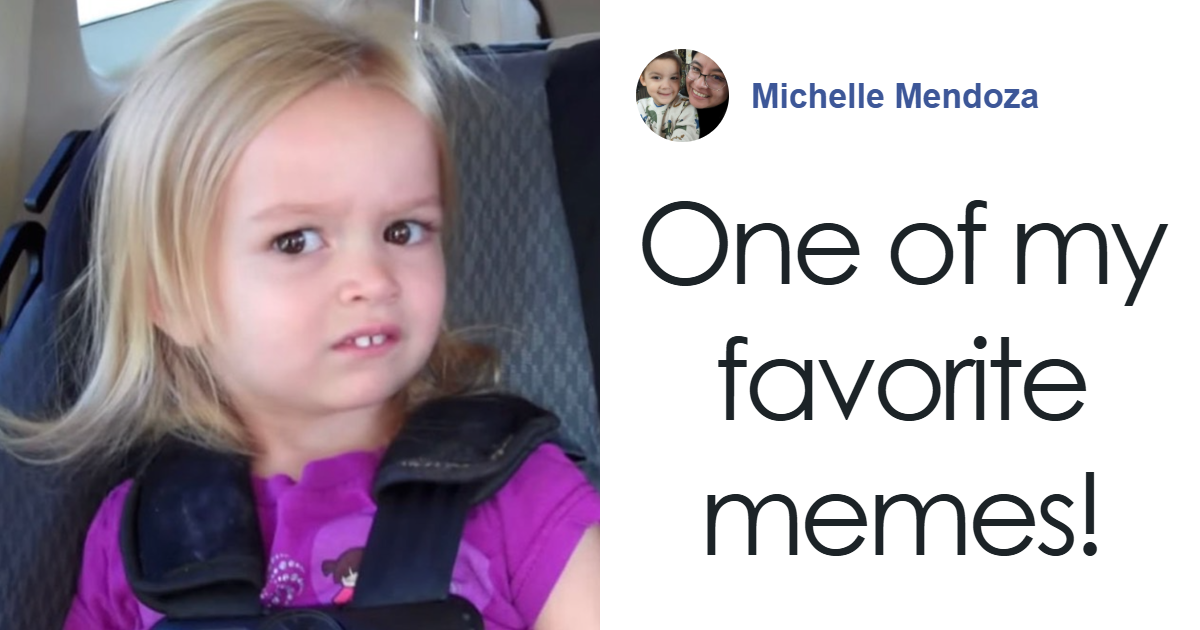
Some faces become famous because of blockbuster movies. Some because of politics. And some because the internet sees a toddler give one suspicious little glance from the back seat of a car and collectively decides, “Yes. That is the human expression for every mildly disturbing group chat, awkward meeting, and terrible life choice.” That is exactly how Chloe Clem, better known online as “Side-Eyeing Chloe,” became part of internet history.
More than a decade after that legendary reaction image took over timelines, text threads, Tumblr pages, meme roundups, and reaction-image folders everywhere, Chloe’s story has come back into focus for a more serious reason. Her mother, Katie Clem, has opened up about what the viral moment actually meant behind the joke. And spoiler alert: it was not just laughs, likes, and “OMG that face.” It was also money, survival, guilt, privacy questions, and the strange emotional math of raising a child whose expression became a permanent piece of internet language.
This is what makes the Chloe story worth revisiting in 2025 and beyond. It is not simply a nostalgia trip about an old meme. It is a case study in how online fame can rescue a family financially while also forcing parents to wrestle with something much harder: what happens when a child becomes famous before she can even understand what fame is?
How “Side-Eyeing Chloe” Became One of the Internet’s Most Durable Memes
The image came from a 2013 YouTube video showing sisters Lily and Chloe reacting to a surprise Disneyland trip. Lily burst into emotional tears of happiness. Chloe, sitting beside her, looked deeply unconvinced by the whole situation. That split-screen emotional contrast made the clip internet gold. Lily gave the full Disney-channel meltdown. Chloe gave what looked like a toddler-sized expression of suspicion, confusion, and judgment all at once.
Online culture did the rest. The frame spread rapidly, becoming a meme shorthand for disbelief, side-eye, secondhand embarrassment, and that very specific feeling of watching nonsense unfold in real time. In meme terms, “Side-Eyeing Chloe” had everything: a clear facial expression, flexible meaning, and endless caption potential. It could be used for work drama, relationship chaos, celebrity gossip, bad fashion choices, political nonsense, and moments when your brain simply whispers, absolutely not.
That is one reason the meme lasted. It was not tied to a single joke. It became a reaction template. And reaction memes tend to age well because human awkwardness never goes out of style.
The Viral Moment Was Funny. The Family’s Reality Was Not.
In recent reporting, Katie Clem shared the harder truth beneath the meme’s success: when Chloe’s face exploded online, the family was struggling financially. The meme was not merely an internet novelty that earned them a few fun perks. It became a source of real support during difficult years.
That detail changes the emotional framing of the story. People love to imagine viral fame as one long confetti cannon of attention, brand deals, and free trips. But for many families, especially those without generational wealth or a financial cushion, monetizing a viral moment can feel less like a glamorous business decision and more like grabbing a life preserver. When Katie said the family had been poor, she was not describing abstract money stress. She was describing basic realities: bills, rent, food, transportation, and the pressure of trying to keep a household afloat.
That matters because it explains why the family said yes to opportunities that came after the meme took off. Sponsorships, travel, media appearances, and eventually the sale of the image as an NFT were not just side quests in internet celebrity. They were part of a financial lifeline. It is very easy for outsiders to judge parental choices from the comfort of hindsight. It is much harder when you remember that survival has a way of making complicated decisions feel painfully practical.
And that is what gives this story its emotional sting. The same image that made millions laugh also helped a family stay on its feet. The internet loves irony, and this story has plenty of it.
Katie Clem’s Guilt Adds the Part the Internet Usually Skips
The most compelling part of the family’s recent reflections is not the money. It is the guilt. Katie has acknowledged that, in the early days, she did not really factor in her daughters’ consent. That is not an easy thing for a parent to say publicly, especially when the internet tends to reduce every complicated family story into either “good parenting” or “bad parenting” within six seconds.
Her honesty lands because it reflects a broader shift in how people think about kids online. Back in the early 2010s, the internet still felt looser, more chaotic, and oddly innocent at the same time. Parents posted family moments because everyone was posting family moments. Viral fame felt accidental, not industrial. The creator economy had not yet matured into the highly monetized machine it is today. The phrase digital footprint existed, but it did not carry the same everyday urgency it does now.
So when Katie talks about looking back differently now, she is speaking for a lot of parents who posted first and thought deeply later. Her regret is not framed as “we were monsters.” It is framed more like, “we made the best choices we understood at the time, but now we know more.” That nuance is important. It is also rare on the internet, a place that usually prefers either sainthood or cancellation.
Why Consent Is the Heart of the Story
A toddler cannot meaningfully agree to becoming a meme. That is the central ethical issue, and Katie seems to understand that more sharply now than she did when Chloe first went viral. The concern is not just public recognition. It is permanence. Once an image becomes part of online culture, it can outlive childhood, outlive trends, and outlive the family’s control over how it is used.
That tension sits at the center of modern “sharenting,” the term used for parents sharing their children’s lives online. Sharing can feel joyful and harmless. It can connect families, preserve memories, and build community. But it also creates a digital identity for a child before that child has the power to shape it for themselves.
The Side-Eye Heard Around the World Also Became a Business
Like many early viral stars, Chloe’s fame eventually became monetizable. The family reportedly benefited from sponsorships and commercial opportunities, and the original image was later sold as an NFT. That move may sound peak internet, because it absolutely was, but it also points to a bigger truth: memes are cultural products, and cultural products can generate money.
For years, the internet operated like a giant content factory where ordinary people accidentally produced value while platforms, aggregators, advertisers, and media companies harvested the attention. Meme subjects often got fame without control and visibility without protection. In Chloe’s case, the family’s ownership of the original image gave them more leverage than many viral subjects ever had. That helped them turn internet recognition into something financially useful.
Still, monetization does not erase the emotional complexity. A profitable meme can still come with anxiety, public scrutiny, and second-guessing. Money can solve rent problems. It cannot solve every privacy problem. It definitely cannot travel back in time and ask a two-year-old for informed permission.
Why This Story Feels Different in 2026 Than It Did in 2013
If the Chloe meme happened for the first time today, the public conversation would likely sound very different. People would still laugh, because internet users remain loyal to funny facial expressions. But they would also immediately debate exploitation, labor protections, predator risks, platform safety, revenue sharing, and whether the child should be shown at all.
That change reflects how much the digital world has evolved. Research in recent years has shown just how deeply social media shapes teen life, with large numbers of teens using major platforms daily and many reporting near-constant online presence. At the same time, experts and parent-focused organizations have warned that children’s privacy, autonomy, and long-term self-image can be affected by what adults post about them online.
Meanwhile, lawmakers have started catching upslowly, imperfectly, but still more seriously than before. States including Illinois, California, and Utah have moved to create or expand protections for children featured in monetized online content. In plain English, society is finally starting to admit that “family content” is not just cute content. It is labor, identity, publicity, and in some cases, risk.
That wider context makes Katie Clem’s comments feel less like a celebrity-parent confession and more like a warning from the internet’s earlier era. She is not just looking back at one famous meme. She is reflecting on a whole digital culture that often treated children’s visibility as harmless fun until the consequences became harder to ignore.
How Chloe Seems to See It Now
One of the most striking details from recent coverage is that Chloe herself appears to look back on the meme with pride rather than resentment. That does not erase the ethical questions, but it does add complexity. Not every viral childhood story ends in bitterness. Some kids eventually embrace the weirdness of their online legacy. Some even enjoy the unusual place they occupy in internet culture.
Still, pride is not the same as proof that everything was fine. A child can feel okay about a viral moment and the adults around them can still reasonably question whether the structure around that fame was healthy. Both things can be true. Chloe can appreciate being iconic, and her mother can still wonder whether the whole experience shaped her in ways the family did not anticipate.
That double truth is one reason this story resonates. It is not neatly tragic, and it is not neatly triumphant. It lives in the messy middle, where most real family stories live.
What “Side-Eyeing Chloe” Says About Internet Fame, Class, and Parenting
There is another reason this story hits people so hard: it collides with class reality. The internet loves talking about fame but often hates talking about money unless it is bragging, scandalous, or both. Katie’s admission that the meme money helped the family survive cuts through that performance. It reminds readers that behind viral content are people with rent due, groceries to buy, and kids to raise.
That is why the phrase “We were so poor” lands with such force. It strips away the polished myth that viral fame is always vanity. Sometimes it is dignity. Sometimes it is relief. Sometimes it is a family trying to convert random online attention into stability before the algorithm moves on to the next thing wearing sunglasses or falling off a trampoline.
And yet, even that financial relief comes with a cost. Parents can feel grateful and guilty at the same time. Children can benefit materially while giving up pieces of privacy they never knowingly traded away. Internet fame can open doors while also putting a spotlight on the doorway forever.
A 500-Word Reflection on the Experiences Around This Story
Stories like Chloe’s stick because nearly everyone has lived some smaller version of them, even without becoming a meme. Most people know what it feels like to have a moment frozen in time that does not fully represent who they are now. Maybe it is an awkward school photo. Maybe it is a cringey Facebook status from middle school. Maybe it is a family story that gets retold at every holiday dinner until you would happily fake your own disappearance if it meant never hearing it again. Chloe’s experience is that ordinary feeling turned all the way up to internet scale.
There is also something deeply relatable about the family side of this story. Parents often make choices with love and urgency, not with perfect foresight. A lot of adulthood is basically doing your best with incomplete information and then lying awake at 2 a.m. years later wondering whether your “best” was actually chaos in a nice sweater. Katie Clem’s reflections sound familiar because many parents recognize that feeling. Technology moved fast. Culture moved fast. The boundaries were fuzzy. What seemed cute, smart, or harmless in one era can look much more complicated in the next.
For readers who grew up online, Chloe’s story may also trigger a very specific kind of recognition: the realization that childhood on the internet is not really over when childhood ends. A viral image can follow someone into middle school, high school, college, jobs, dating, and adulthood. Even if recognition fades in public, the image still floats around online like a digital ghost with excellent timing. That can feel flattering, bizarre, invasive, funny, and exhausting all at once.
Then there is the emotional whiplash of being grateful for something that may also have hurt you. That contradiction shows up in many families, not just famous ones. Sometimes a decision helps pay the bills and still leaves emotional residue. Sometimes an opportunity changes your life for the better and still makes you ask difficult questions later. People love clean narratives, but real life rarely hands them out. More often, it gives you a blessing with weird side effects.
The public reaction to Chloe’s story also says something about how audiences have matured. Years ago, many people would have stopped at “Look, the meme kid is older now.” Today, more readers want to know what the experience actually felt like, what the family gained, what they lost, and what it means for other children growing up in public. That is progress. It suggests internet culture is finally becoming self-aware enough to look past the punchline.
And maybe that is the real reason “Side-Eyeing Chloe” still matters. The face is funny, yes. Iconic, absolutely. But the story behind it now reveals something bigger about survival, parenting, class, consent, and the internet’s habit of turning real people into symbols before anyone has time to think. Chloe gave the world a perfect side-eye. Twelve years later, her family’s story gives that side-eye contextand suddenly the meme feels less like a joke and more like a mirror.
Conclusion
Twelve years after Chloe Clem became one of the web’s most recognizable reaction faces, the story has evolved from meme nostalgia into something far more human. Her mother’s recent comments do not ruin the joke; they deepen it. They remind us that internet history is made out of real families, real bills, real compromises, and real consequences.
“Side-Eyeing Chloe” remains funny because the expression is universal. But the family’s reflections matter because they reveal the cost of turning a child into a cultural symbol before she can understand what that means. In the end, this is not just a story about a meme. It is a story about survival, digital footprints, parental hindsight, and the strange bargain at the heart of online fame: sometimes the thing that saves you is also the thing you spend years trying to understand.