

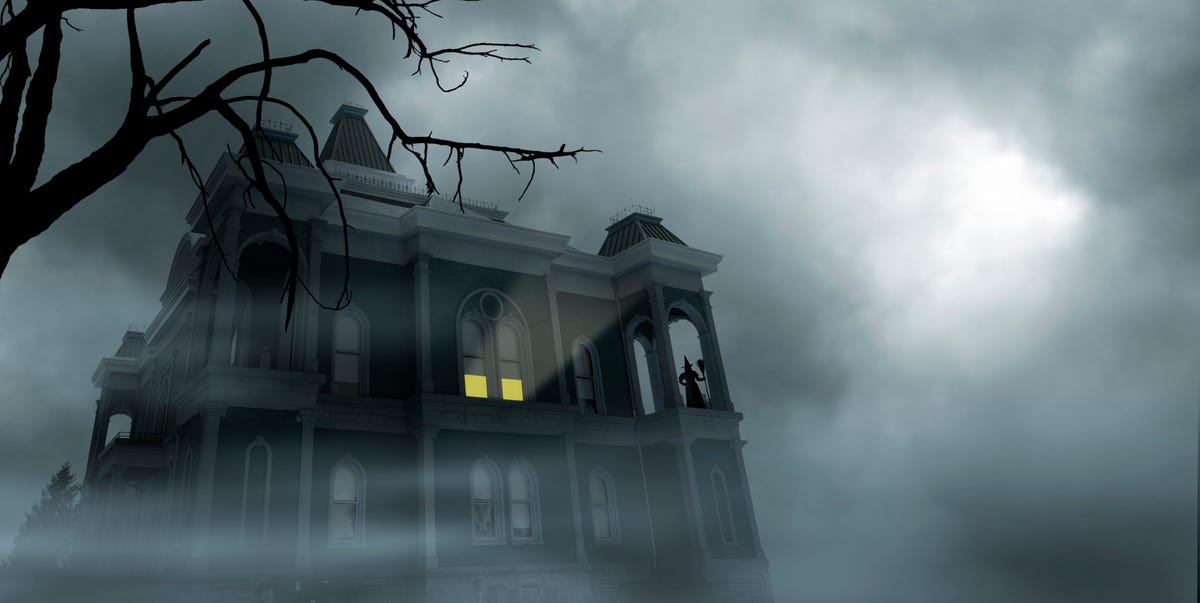
Some horror movies chase you with knives. Haunted house movies politely invite you inside, lock the door, whisper something from the attic, and then act surprised when you scream into your popcorn. The best haunted house movies do more than deliver jump scares. They turn architecture into anxiety, family secrets into furniture, and dark hallways into emotional support nightmares.
What makes this subgenre so powerful is simple: a house is supposed to be safe. It is where we sleep, eat cereal at midnight, lose the remote, and pretend that strange basement noise was definitely “just the pipes.” Haunted house films violate that comfort. They suggest that home may remember things, absorb trauma, and occasionally throw a chair when the mood strikes.
This ranked guide to the 15 best haunted house movies of all time blends classic Gothic horror, supernatural thrillers, found-footage nightmares, and modern ghost stories. Some films rely on suggestion. Others fling objects around like the spirits are redecorating with rage. All of them prove one thing: real estate is scary, and not just because of mortgage rates.
What Makes a Great Haunted House Movie?
A great haunted house movie usually has three ingredients: a memorable location, emotional stakes, and a supernatural presence that feels connected to the characters. The house should not simply be a spooky backdrop. It should feel like a character with moods, secrets, habits, and possibly terrible plumbing.
The best films in this genre also understand pacing. A creaking floorboard can be scarier than a screaming demon if the movie earns the silence around it. That is why many classics on this list remain terrifying decades later. They know that the imagination is the cheapest special effect ever inventedand still the most effective.
15 Best Haunted House Movies of All Time
15. His House (2020)
Director: Remi Weekes
His House is one of the most emotionally devastating haunted house movies of the modern era. The story follows Bol and Rial, a refugee couple from South Sudan who are placed in a government-assigned house in England after surviving a traumatic escape. At first, the setting looks ordinary: peeling walls, cramped rooms, dim lighting. Then the house begins to breathe with guilt, grief, and something far older than bad wallpaper.
What makes His House so powerful is its refusal to separate supernatural horror from human suffering. The haunting is not just about a ghost in the walls. It is about displacement, memory, survivor’s guilt, and the brutal pressure to “fit in” while carrying unbearable loss. The scares are sharp, but the emotional aftershock is sharper.
14. Crimson Peak (2015)
Director: Guillermo del Toro
Crimson Peak is less a traditional ghost story and more a lavish Gothic romance wearing a blood-red velvet cape. Guillermo del Toro builds Allerdale Hall as a rotting mansion that seems alive: leaves drift through the ceiling, clay stains the snow red, and every corridor appears to be judging your life choices.
The film follows Edith Cushing, a young writer who marries into the mysterious Sharpe family and moves into their decaying estate. The ghosts here are frightening, but del Toro also treats them as warnings. The real danger may not be the dead. It may be the living people who keep insisting everything is perfectly normal while the house literally oozes red mud. Subtle? No. Gorgeous? Absolutely.
13. Paranormal Activity (2007)
Director: Oren Peli
Paranormal Activity made bedroom doors terrifying again. Shot with a stripped-down found-footage style, the movie focuses on a couple, Katie and Micah, who set up cameras to capture strange events in their suburban home. At first, the disturbances are small: noises, footsteps, a door moving by itself. Then the house becomes a stage for escalating dread.
The genius of Paranormal Activity is its simplicity. It understands that staring at a static night-vision shot of a sleeping couple can be unbearable when you know something is about to happenbut not when, where, or how loudly. The film’s low-budget style makes it feel uncomfortably close to real life, especially if you have ever woken up at 3:12 a.m. and decided your laundry pile was definitely a person.
12. The Orphanage (2007)
Director: J.A. Bayona
The Orphanage is a haunted house movie with a broken heart. Laura returns to the orphanage where she grew up, hoping to reopen it as a home for children with disabilities. When her son Simón begins speaking to invisible friends, the film slowly transforms from family drama into a mournful supernatural mystery.
Unlike horror movies that chase quick shocks, The Orphanage builds fear through sadness, memory, and unanswered questions. Its haunted building feels like a place where childhood never fully ended. The result is atmospheric, elegant, and quietly crushing. By the final act, the movie has done something rare: it has scared you, hurt you, and made you care deeply about every locked door.
11. The Others (2001)
Director: Alejandro Amenábar
Nicole Kidman gives one of her finest genre performances in The Others, a Gothic ghost story set in a dark mansion after World War II. She plays Grace, a strict mother raising two children who are extremely sensitive to sunlight. The curtains stay closed. The rooms stay dim. The servants are suspicious. Naturally, this is an ideal environment for everyone to remain calm and rational. Just kidding. It is a nightmare with lace curtains.
The movie thrives on mood rather than gore. It uses candlelight, silence, and old-fashioned suspense to create a sense of spiritual suffocation. Its famous twist works because the film carefully builds its rules and emotional logic. The Others is a reminder that haunted house horror does not need buckets of blood when it has atmosphere, grief, and Nicole Kidman looking haunted enough to frighten the wallpaper.
10. The Amityville Horror (1979)
Director: Stuart Rosenberg
Few haunted house movies have created a cultural legend as durable as The Amityville Horror. Based on Jay Anson’s book, the film follows the Lutz family after they move into a Long Island home with a gruesome past. Soon, the house serves up flies, strange odors, cold spots, bleeding walls, and the kind of basement you should never investigate without at least three priests and a flashlight from the future.
Critics have long debated the film’s quality, and the “true story” claims remain controversial. Still, its influence is undeniable. The Amityville Horror helped define the modern haunted house formula: a family moves in, the house behaves badly, the father changes, the priest struggles, and everyone realizes the real estate listing forgot to mention “possible demonic activity.”
9. House on Haunted Hill (1959)
Director: William Castle
Before haunted house movies became prestige horror, William Castle turned them into delicious theatrical fun. House on Haunted Hill stars Vincent Price as eccentric millionaire Frederick Loren, who offers guests money if they can survive one night in a supposedly haunted mansion. This is a terrible business model but an excellent horror premise.
The movie is campy, theatrical, and wonderfully entertaining. Vincent Price glides through it with the confidence of a man who knows he could make a grocery list sound cursed. The scares may feel old-fashioned now, but the film’s influence is huge. It helped establish the haunted house as both a horror setting and a spooky party game where the party favors include skeletons, betrayal, and poor decision-making.
8. House, also known as Hausu (1977)
Director: Nobuhiko Obayashi
If most haunted house movies are nightmares, House is a nightmare after eating too much candy and watching experimental television during a thunderstorm. This Japanese cult classic follows a group of schoolgirls who visit a country home, only to encounter a supernatural assault of flying heads, killer furniture, demonic cats, and one very aggressive piano.
House is not scary in the traditional sense. It is too colorful, too strange, too wildly creative to fit neatly into one box. But its haunted home is unforgettable because anything can happen inside it. The movie feels like childhood imagination turned feral. It is funny, bizarre, sad, and completely unrepeatable. Watch it with friends, then enjoy the long silence afterward as everyone tries to explain what just happened.
7. Poltergeist (1982)
Director: Tobe Hooper
Poltergeist brought the haunted house into American suburbia. No crumbling castle. No foggy cliffside mansion. Just a comfortable family home, a glowing television, a planned community, and the deeply unpleasant discovery that the neighborhood was built over graves. Homeownership: now with spiritual consequences.
The Freeling family’s ordeal is full of iconic moments: the static-filled TV, the creepy tree, the clown doll, the swimming pool scene, and young Carol Anne announcing, “They’re here.” What makes Poltergeist endure is its mix of wonder and terror. It feels like a family adventure movie that accidentally opened a portal to hell. The emotional centerparents fighting to save their childkeeps the supernatural chaos grounded.
6. The Changeling (1980)
Director: Peter Medak
Few haunted house movies are as elegant and chilling as The Changeling. George C. Scott plays John Russell, a grieving composer who moves into a historic mansion after a devastating personal loss. The house soon reveals signs of a restless spirit, but the film is not interested in cheap shocks. It is a slow, sorrowful mystery about buried injustice.
The famous séance scene remains one of the greatest in ghost-story cinema. The bouncing ball, the hidden room, the wheelchair, and the echo of a child’s tragedy all build a mood of unbearable sadness. The Changeling proves that haunted house movies are often strongest when the ghost is not simply evil, but wounded, angry, and waiting for someone to finally listen.
5. The Shining (1980)
Director: Stanley Kubrick
Technically, The Shining is a haunted hotel movie, not a haunted house movie. But the Overlook Hotel functions like the ultimate haunted home: isolated, enormous, hungry, and extremely bad for family bonding. Stanley Kubrick’s adaptation of Stephen King’s novel follows Jack Torrance, his wife Wendy, and their son Danny as they spend the winter caretaking the hotel. Nothing improves from there.
The Overlook is one of cinema’s greatest haunted spaces. Its impossible architecture, patterned carpets, empty ballroom, forbidden Room 237, and endless corridors make it feel both luxurious and diseased. Jack Nicholson’s performance is volcanic, Shelley Duvall’s terror is painfully human, and Danny’s psychic visions add a layer of cosmic dread. The Shining is less about ghosts jumping out and more about a place patiently turning a family against itself.
4. The Conjuring (2013)
Director: James Wan
The Conjuring revived mainstream haunted house horror with old-school craftsmanship and modern intensity. Inspired by the case files of paranormal investigators Ed and Lorraine Warren, the film follows the Perron family as they move into a Rhode Island farmhouse plagued by violent supernatural activity.
James Wan stages the scares with expert timing. The clapping game, the basement, the wardrobe, and the slow reveal of the house’s history all show how effective controlled suspense can be. What separates The Conjuring from many imitators is its emotional warmth. The Warrens are not just ghost hunters; they are a loving couple trying to protect a frightened family. That human anchor makes the demonic set pieces hit harder.
3. The Uninvited (1944)
Director: Lewis Allen
The Uninvited is one of the foundational American haunted house films. It follows a brother and sister who buy a seaside mansion in Cornwall and discover that the bargain price may have something to do with ghosts. Real estate tip: if a gorgeous cliffside house is mysteriously affordable, ask follow-up questions.
The film helped shape the serious cinematic ghost story. Instead of treating the supernatural as a joke or a fake-out, it presents haunting as romantic, tragic, and genuinely eerie. Its use of atmosphere, sound, and emotional mystery influenced generations of haunted house storytelling. Even today, The Uninvited feels graceful and strange, like a candlelit secret told beside a window during a storm.
2. The Innocents (1961)
Director: Jack Clayton
Based on Henry James’s The Turn of the Screw, The Innocents is a masterclass in ambiguity. Deborah Kerr plays Miss Giddens, a governess who becomes convinced that the children in her care are being influenced by malevolent spirits at a remote estate. Or perhaps she is projecting her own fears. Or perhaps both things are true, which is exactly why the movie crawls under your skin and makes itself comfortable.
The black-and-white cinematography is stunning, turning rooms, gardens, and windows into psychological traps. The film rarely tells you exactly what to think. Instead, it lets dread gather in the corners. That uncertainty makes The Innocents one of the most sophisticated haunted house movies ever made. It is not loud. It does not need to be. It whispersand somehow that is worse.
1. The Haunting (1963)
Director: Robert Wise
At the top of the list sits The Haunting, Robert Wise’s brilliant adaptation of Shirley Jackson’s The Haunting of Hill House. The story brings a small group of investigators to Hill House, a mansion with a violent history, odd architecture, and a personality best described as “deeply unfriendly.”
What makes The Haunting the greatest haunted house movie of all time is how little it shows. The film uses sound, shadows, camera movement, and psychological tension to make the unseen feel overwhelming. The famous pounding on the walls is terrifying because the viewer is forced to imagine what is outside the door. Hill House feels wrong in a way that cannot be fixed with sage, renovation, or a strongly worded homeowner’s association complaint.
The film also understands loneliness. Eleanor, played with aching vulnerability by Julie Harris, is not merely visiting a haunted house. She is searching for belonging, and Hill House recognizes that need. That emotional vulnerability gives the movie its lasting power. Many haunted house films scare us. The Haunting invites us to wonder whether the house wants usand whether some part of us wants to stay.
Why Haunted House Movies Never Go Out of Style
Haunted house movies endure because they transform everyday fears into supernatural drama. A strange noise at night, a locked room, a family secret, a cold draft, a child talking to someone who is not therethese are simple details, but horror turns them into mythology. The house becomes a container for everything people avoid discussing: grief, guilt, abuse, greed, loneliness, trauma, and memory.
Another reason the genre lasts is flexibility. A haunted house movie can be Gothic, funny, tragic, political, romantic, or brutally intense. House on Haunted Hill treats the premise like a spooky carnival ride. His House uses it to explore refugee trauma. Poltergeist turns suburbia into a supernatural battlefield. The Others uses closed curtains and religious anxiety to build dread. The haunted house is not one formula. It is a stage where many fears can perform.
Viewing Experience: How to Watch the Best Haunted House Movies Like a True Horror Fan
Watching haunted house movies is an art. Yes, you can press play at noon with every light on, phone in hand, and a half-finished sandwich nearby. But that is not watching a haunted house movie. That is filing a casual complaint against cinema. These films work best when you give them the atmosphere they deserve.
Start with the room. Turn off the big lights, but leave one small lamp glowing somewhere behind you. This creates the perfect level of “I am safe, probably.” Avoid watching on a laptop while scrolling through social media. Haunted house movies depend on patience, silence, and attention. If you miss the tiny sound in the hallway or the figure in the background, you miss the slow poison of the scene.
Sound matters even more than picture. Many of these films weaponize audio: knocks, whispers, footsteps, music boxes, distant crying, static, and floorboards complaining like they pay rent. Use a decent speaker or headphones if possible. Just remember that headphones make every creak in your actual home sound suspicious. That is part of the fun, unless you live alone, in which case congratulations on your bravery and questionable decision-making.
Choose the right order for a movie marathon. Begin with a classic like The Uninvited or House on Haunted Hill to warm up. Move into psychological dread with The Innocents or The Haunting. Then escalate to modern crowd-pleasers like Poltergeist, The Conjuring, or Paranormal Activity. Save emotionally heavy films such as The Orphanage or His House for when viewers are ready for more than simple scares. Those movies do not just rattle the windows; they rattle the soul.
Snacks are important, but choose wisely. Popcorn is classic, though it may betray you during quiet scenes. Crunching loudly while a ghost slowly approaches a door feels disrespectful to the ghost’s craft. Avoid red drinks during Crimson Peak unless you enjoy dramatic carpet incidents. For The Shining, hot drinks are a cozy choice, but do not spill them when Jack Nicholson starts doing Jack Nicholson things.
Watching with friends changes the experience. Some people laugh when scared. Some narrate every bad decision. Some insist they would “simply leave the house,” as if horror characters have not considered that revolutionary strategy. These reactions are part of the joy. Haunted house movies are communal because everyone brings a different fear into the room. One person fears dolls. Another fears basements. Another fears old portraits. Someone always fears children singing, which is reasonable and should be respected.
For solo viewing, pick carefully. The Haunting and The Innocents are perfect for quiet nights when the house already feels too still. Paranormal Activity is dangerous solo viewing because it makes your own bedroom feel like part of the movie. Afterward, every open closet door becomes a personal insult. You may check the hallway once. Maybe twice. Maybe you suddenly become very interested in sleeping with the lights on “for productivity reasons.”
The best experience comes from leaning into the genre’s central question: what if the place meant to protect you knows your secrets? That idea is why haunted house movies stay with us. They turn ordinary rooms into emotional traps. They make home feel mysterious again. And they remind us that sometimes the scariest thing behind the door is not a monster, but a memory that refuses to leave.
Conclusion
The best haunted house movies of all time prove that fear does not need to travel far. Sometimes it is already upstairs, behind the wall, under the floorboards, or sitting politely in the nursery waiting for someone to notice. From the classic elegance of The Uninvited and The Haunting to the modern emotional force of His House, this genre continues to evolve because the idea of an unsafe home never stops being disturbing.
Whether you prefer Gothic shadows, suburban chaos, found-footage realism, or ghost stories soaked in grief, haunted house movies offer something uniquely personal. They do not just ask what is haunting the house. They ask what is haunting the people inside it. That is why these films remain timelessand why you may want to think twice before investigating that noise in the attic.
Note: This original article was synthesized from reputable film databases, critic aggregators, official movie references, and major entertainment publications. Source links are intentionally not embedded in the article for clean web publishing.