

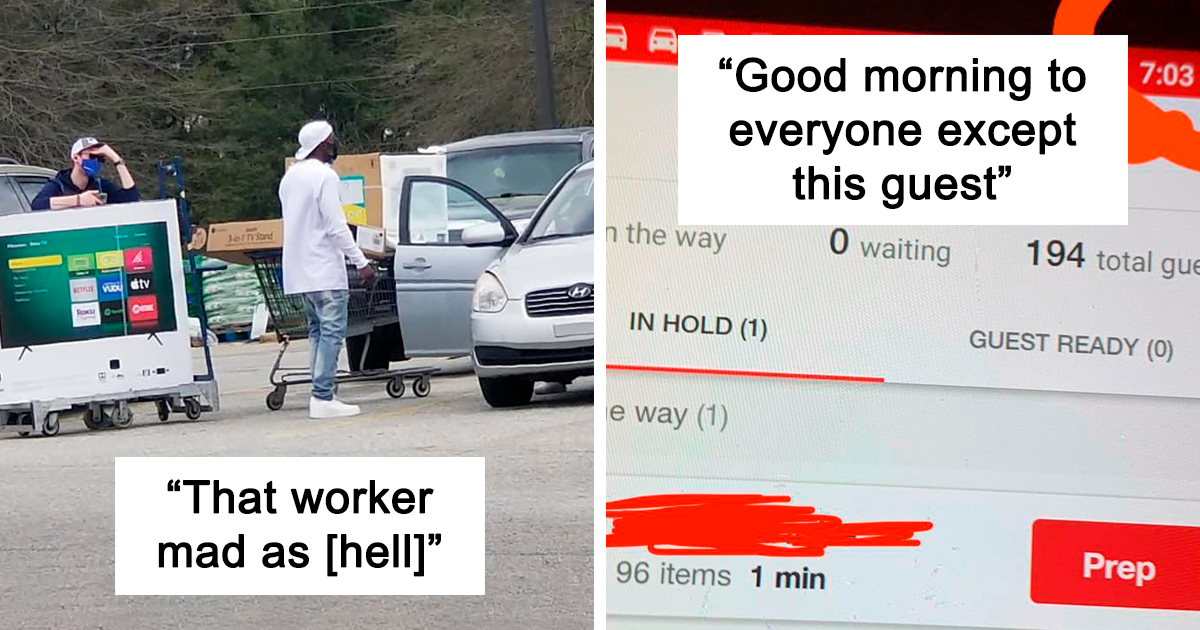
Retail workers deserve medals, ergonomic shoes, and at least one uninterrupted sip of coffee per shift. Instead, many of them get a front-row seat to humanity at its most impatient, messy, entitled, and oddly creative. Spend enough time behind a register, in a fitting room, or on a sales floor, and you start collecting stories like battle scars with name tags.
This article rounds up the customer habits retail employees complain about again and again. Some are mildly annoying. Some are deeply disrespectful. A few make workers question whether common sense quietly left the building without buying anything. Taken together, these habits reveal a simple truth: shopping is easier for everyone when customers remember there are actual humans working the floor.
Why Retail Workers Remember Bad Customer Behavior So Clearly
Retail is emotional labor in a bright-lit box. Workers are expected to stay calm when the line is long, the stockroom is empty, the return policy is unpopular, and someone is demanding a miracle in aisle seven. That is why certain customer behaviors stick in employees’ minds far longer than a coupon ever will.
Most of the complaints are not really about one spilled drink or one impatient sigh. They are about disrespect. When shoppers ignore store policies, create unnecessary messes, argue about things employees cannot control, or treat staff like background furniture, they turn an ordinary shift into a stress marathon. In other words, the problem is rarely the question. It is the attitude wrapped around it like cheap plastic packaging nobody can open.
30 Things Customers Do That Retail Employees Can Never Forgive
1. Asking employees to “check the back” after being told an item is sold out
Retail workers know the inventory better than the hopeful shopper who just arrived three minutes ago. When customers act like the back room is a magical Narnia of secret stock, employees hear one thing loud and clear: “I assume you are either wrong or lazy.”
2. Shopping right before closing and moving like it is a leisurely museum tour
There is a huge difference between grabbing one forgotten item at 8:57 p.m. and beginning a full spiritual journey through housewares at 8:59. Retail employees still have to clean, count, recover, and go home.
3. Leaving frozen or refrigerated items in random aisles
Few things make workers groan faster than finding ice cream sweating next to shampoo or yogurt parked beside throw pillows. It is wasteful, careless, and extra work for people already juggling enough.
4. Treating the fitting room like a tornado rehearsal space
Clothes inside out, hangers twisted, tags ripped, wrappers on the bench, and mystery stains nobody wants to investigate. Retail staff do not expect perfection, but they also should not need a hazmat mindset to restock a dressing room.
5. Throwing merchandise on the floor instead of handing it back
If a customer would not toss their own jacket onto a dusty floor at home, they probably should not do it in a store. Employees notice the difference between “I changed my mind” and “someone else can clean that up.”
6. Snapping fingers, whistling, or shouting “Hey!” to get attention
Retail workers are employees, not remote-controlled appliances. A polite “Excuse me” still works beautifully and does not make the whole interaction feel like a scene from a very bad comedy.
7. Arguing about policies the employee did not create
Return windows, membership rules, price-matching limits, fitting-room counts, and coupon exclusions are usually set far above the pay grade of the person standing in front of the customer. Yelling at them will not rewrite corporate policy.
8. Expecting rule-breaking as a reward for being rude
Some customers behave as if the proper path to special treatment is open hostility. Retail employees remember these people because nothing says “customer loyalty” like demanding an exception while insulting the person you need help from.
9. Letting children run wild through the store
Kids get restless. That is normal. What is not normal is letting them climb displays, scatter products, scream through aisles, or play hide-and-seek in racks while employees become unwilling substitute referees.
10. Opening sealed products just to “take a look”
Once packaging is ripped, the item may be harder or even impossible to sell. Workers see this as one of the clearest examples of a customer creating a problem and then walking away from it like it never happened.
11. Using stores as free day-care, lounge, or snack zone
Retail spaces are designed for shopping, not picnics in the furniture department or juice-box intermission next to the bedding display. Employees hate cleaning up crumbs from places where people really should not have been eating in the first place.
12. Leaving trash wherever they happen to stand
Receipts, coffee cups, sample cups, tissues, wrappers, and random packaging all seem to grow legs and migrate to shelves. Retail employees notice every abandoned mess because they are usually the ones who have to pick it up.
13. Demanding immediate help while the worker is already helping someone else
Interrupting another customer interaction with “I just have a quick question” is rarely as quick as advertised. To staff, it signals impatience mixed with the belief that other shoppers’ time matters less.
14. Dumping an entire cart at the register and then deciding what they actually want
This is the checkout equivalent of writing a rough draft during the final exam. It slows the line, frustrates everyone behind them, and leaves the cashier sorting through a pile of impulsive regrets.
15. Handing over crumpled money, sticky coins, or a card from the bottom of a mystery purse swamp
Cashiers do not expect a formal presentation, but they do appreciate basic hygiene and a transaction that does not feel like an archaeological dig.
16. Talking on the phone through the entire checkout
Nothing says “you are invisible” quite like carrying on a full conversation while a cashier greets you, asks questions, bags your items, and becomes a ghost with a barcode scanner.
17. Ignoring the line and trying to invent a new one
Queue-cutting is one of the fastest ways to trigger silent rage from both employees and fellow customers. Retail staff often have to become traffic controllers for adults who somehow missed the concept of “wait your turn.”
18. Demanding discounts for damage they helped create
Workers never forget the shopper who bends, stains, opens, or scuffs an item and then brightly asks, “Can I get this cheaper now?” That is less bargain hunting and more chaos with a sales pitch.
19. Returning obviously used items like the store is a rental service
Retail employees can usually tell when something has been worn, washed, assembled, or “borrowed for one event.” These returns do not feel clever. They feel like someone else’s audacity wrapped in tissue paper.
20. Being rude over prices as if the cashier personally set inflation
The person scanning cereal did not hold a secret midnight meeting to make it cost more. Complaining is one thing; treating a frontline worker like the CEO of the economy is another.
21. Taking frustration out on staff when technology fails
Registers freeze, scanners glitch, card readers blink dramatically, and receipt printers choose violence. Employees dislike the assumption that a technical problem automatically becomes their moral failing.
22. Hovering inches away while an employee works
Whether staff are folding, counting, tagging, or searching inventory, customers who stand directly over them add pressure without adding speed. Personal space is not a luxury item.
23. Asking a question, then arguing with the answer
“Do you have this in stock?” “No.” “Are you sure?” This tiny exchange can drain years from a retail worker’s soul. Employees are not offended by questions; they are exhausted by disbelief.
24. Leaving carts in parking spaces instead of the cart return
It takes a few extra steps to return a cart and saves workers from chasing them across hot asphalt, cold rain, or traffic. Retail employees absolutely notice when customers decide gravity and wind can handle it.
25. Treating sample stations like an all-you-can-eat festival
Sampling one bite is normal. Turning three laps around the same booth while blocking traffic and abandoning tiny cups behind bulk snacks is how legends of bad store behavior are born.
26. Expecting mind reading instead of giving useful information
Walking up and saying, “I need that thing from Instagram, you know, the blue one,” does not narrow the field as much as some customers think it does. Employees want to help, but they are not psychic merchandisers.
27. Touching employees to get their attention
A tap on the arm, a grab at the sleeve, or steering someone physically is a fast way to make a worker uncomfortable. It crosses a line that polite retail interactions should never approach.
28. Acting insulted when asked to follow membership or receipt rules
At membership warehouses and policy-heavy retailers, employees often get the heat for routine procedures. Workers remember customers who behave as though showing a card or receipt is a personal attack on their dignity.
29. Assuming retail workers exist to absorb every bad mood
One of the deepest complaints employees share is not about a single action but a mindset: the customer who arrives angry and decides the nearest worker is the safest target. Staff can tell when they are being used as emotional punching bags.
30. Forgetting basic manners because the setting is “just a store”
Please. Thank you. Sorry. Excuse me. These tiny words matter more than people think. Retail employees say the customers they remember most fondly are rarely the biggest spenders; they are the ones who act like decent human beings.
What These Complaints Really Tell Us About Modern Shopping
All thirty examples point to the same larger issue: many shoppers confuse convenience with entitlement. Modern retail is built to feel fast, frictionless, and customer-focused. That can be great for buyers, but it also creates a dangerous illusion that every obstacle is unnecessary and every employee is personally responsible for removing it.
In real life, retail workers are dealing with limited staffing, stock issues, strict policies, difficult returns, technology hiccups, safety concerns, and constant pressure to be cheerful. When customers add disrespect on top of that, it becomes more than a bad moment. It becomes the kind of daily stress that makes people dread clocking in.
The good news is that the fix is not complicated. Believe employees when they tell you something is out of stock. Put unwanted items back where they belong, or hand them to someone. Do not shop like store closing times are merely inspirational suggestions. Clean up after yourself in fitting rooms. And above all, remember that the person helping you is not a robot with a lanyard. They are a worker trying to survive a shift without discovering melted shrimp near the candles.
Extra Experiences From The Sales Floor
Ask former retail employees about the worst part of the job and many will not mention folding tables, inventory counts, or holiday music played on a loop until it haunts their dreams. They will mention people. Not all people, of course. Plenty of customers are kind, patient, and occasionally heroic in the tiny way that counts, like stacking items neatly on the counter or returning a cart when nobody is watching. But the bad ones? The bad ones become folklore.
One worker might remember the customer who marched in two minutes before closing, announced, “I’ll be quick,” then slowly tried on half the store while the staff stood around waiting to vacuum. Another might remember the shopper who demanded a manager because a coupon had expired, as if the laws of time itself were optional with enough attitude. Someone else will never forget discovering a refrigerated item hidden behind throw pillows, a half-finished drink balanced on top of folded sweaters, or a fitting room that looked less like a place to try on clothes and more like a low-budget disaster film.
There are also the quieter insults that pile up over time. The customer who refuses to acknowledge a greeting. The one who keeps talking on the phone while an employee is trying to help. The shopper who asks for advice and then laughs it off, only to return twenty minutes later asking the same thing in a slightly louder voice. None of these moments sound huge on their own. But over a long shift, they stack up like badly balanced merchandise on a clearance rack.
Retail employees often say the most frustrating customers are not the ones with problems. Everyone has problems. Orders get lost. Sizes sell out. Gift receipts vanish into another dimension. The hardest customers are the ones who believe inconvenience gives them permission to be cruel. Those are the interactions workers replay later, not because they are dramatic, but because they reveal how easily some people stop seeing staff as people at all.
And that is what makes good customers unforgettable too. The shopper who says, “No worries, I know it’s not your fault.” The parent who keeps kids close instead of turning the store into an obstacle course. The person who hands over unwanted merchandise and says, “I didn’t know where this went, so I figured I’d give it to you.” These tiny acts of decency do more than keep the store tidy. They lighten the emotional load of the job. Retail workers may joke about the chaos, and they absolutely do, but what they really want is simple: less entitlement, more awareness, and just enough courtesy to get through the shift without needing a recovery snack the size of a throw pillow.
Conclusion
Retail employees do not expect shoppers to be perfect. They do expect them to act like functioning members of society. The habits workers “can never forgive” are usually not about making a mistake. They are about making someone else clean up, calm down, or suffer through it. That is the line customers cross when they forget that stores run on human effort, not magic.
The next time you shop, the etiquette is simple: be patient, be honest, clean up after yourself, and do not turn a routine purchase into a side quest for everyone around you. Retail workers will not build statues in your honor, but they might silently bless you from behind the register. In customer-service terms, that is practically sainthood.